Thrips on Dracaena: Causes, Checks & Fixes
Quick answer
Thrips on Dracaena leave silvery scrape marks and black frass on leaves, often scarring tissue still unfurling at the crown. First step: isolate the plant and shake suspect new leaves over white paper to confirm thrips before rinsing every leaf underside on repeat intervals.
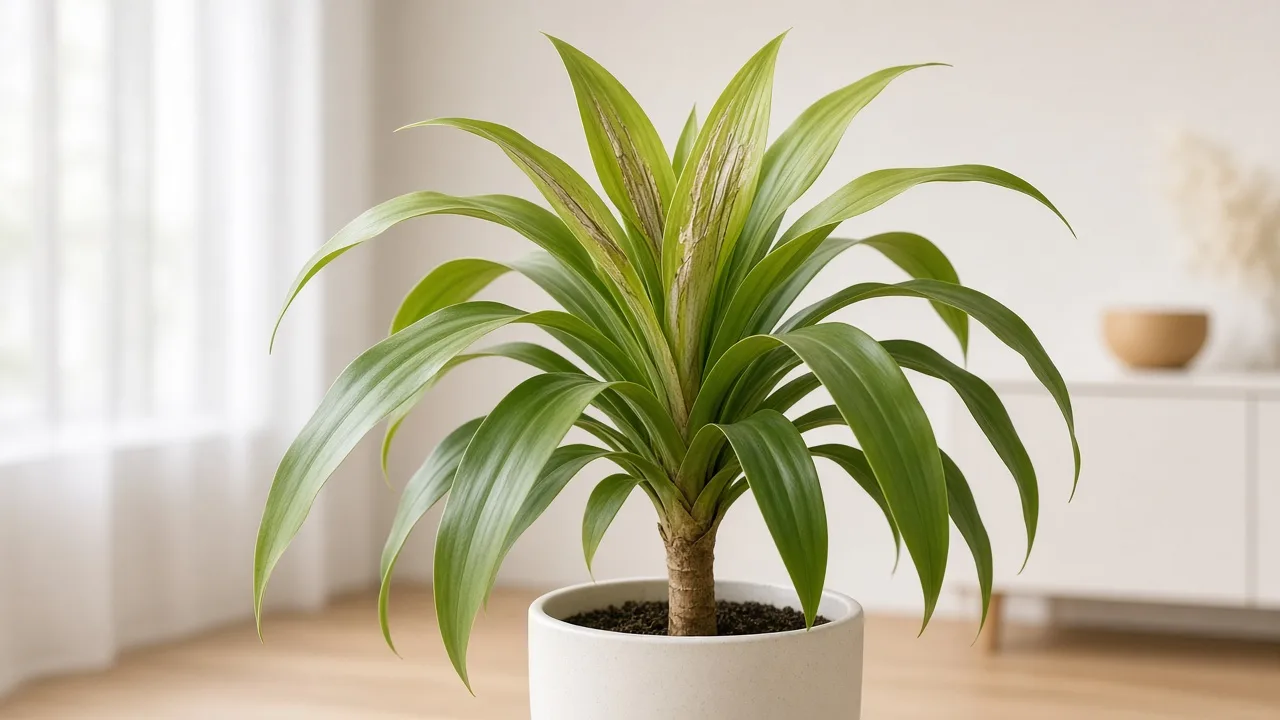
Thrips on Dracaena: Causes, Checks & Fixes
This guide covers thrips on Dracaena. See also the general Thrips guide, watering, and light pages for this plant.
Thrips on Dracaena: Causes, Checks & Fixes
Quick answer
Thrips on Dracaena—corn plant (Dracaena fragrans), dragon tree (D. marginata), Janet Craig, Warneckii, and related cane types—show up as silvery or bronze scrape marks on strap leaves, often with black varnish-like frass specks and distorted new growth at the crown. Thrips rasp leaf surfaces with mouthparts, leaving streaks highly visible on long dracaena blades and scarring tissue still unfurling at each cane tip.
First step: isolate the plant and shake suspect new leaves over white paper to confirm thrips before rinsing every leaf underside. Pesticides alone rarely control thrips on houseplants—forceful washing plus repeat insecticidal soap on schedule beats a single spray. For genus-wide care context, see the Dracaena overview.
Why Dracaena gets thrips
Thrips are not a watering mistake—they are tiny rasping insects that hitchhike on nursery stock and feed on tender new tissue. Indoor plants lack natural enemies that would control them outdoors, and warm rooms let populations reproduce year-round.
Dracaena’s slow crown growth makes thrips damage persistent:
Crown rosettes with unfurling leaves. Each cane section pushes new strap leaves from its tip. Thrips feed hidden in buds and shoot tips—the tight rosette at each crown is their primary feeding zone on Dracaena.
Long strap leaves show scarring for months. Unlike fast-growing pothos that replaces damaged leaves in weeks, Dracaena keeps the same strap leaf for months. Silvery scrape marks on a corn plant blade remain visible long after treatment succeeds.
Crowded shelf placement. Thrips walk and fly short distances between pots. An infested Dracaena beside philodendron or pothos spreads pests during shared watering days.
Nursery hitchhikers. Pests arrive on new nursery stock tucked under lower leaves. Quarantine new Dracaena before placing beside established floor plants.
Do not overwater in response. Distorted crown leaves are not cured by soggy soil. Increasing water invites overwatering and crown rot while thrips persist on dry upper foliage.
What thrips look like on Dracaena
On Dracaena strap foliage, thrips damage has recognizable patterns once you separate pest feeding from fluoride tip burn or wet-soil yellowing.
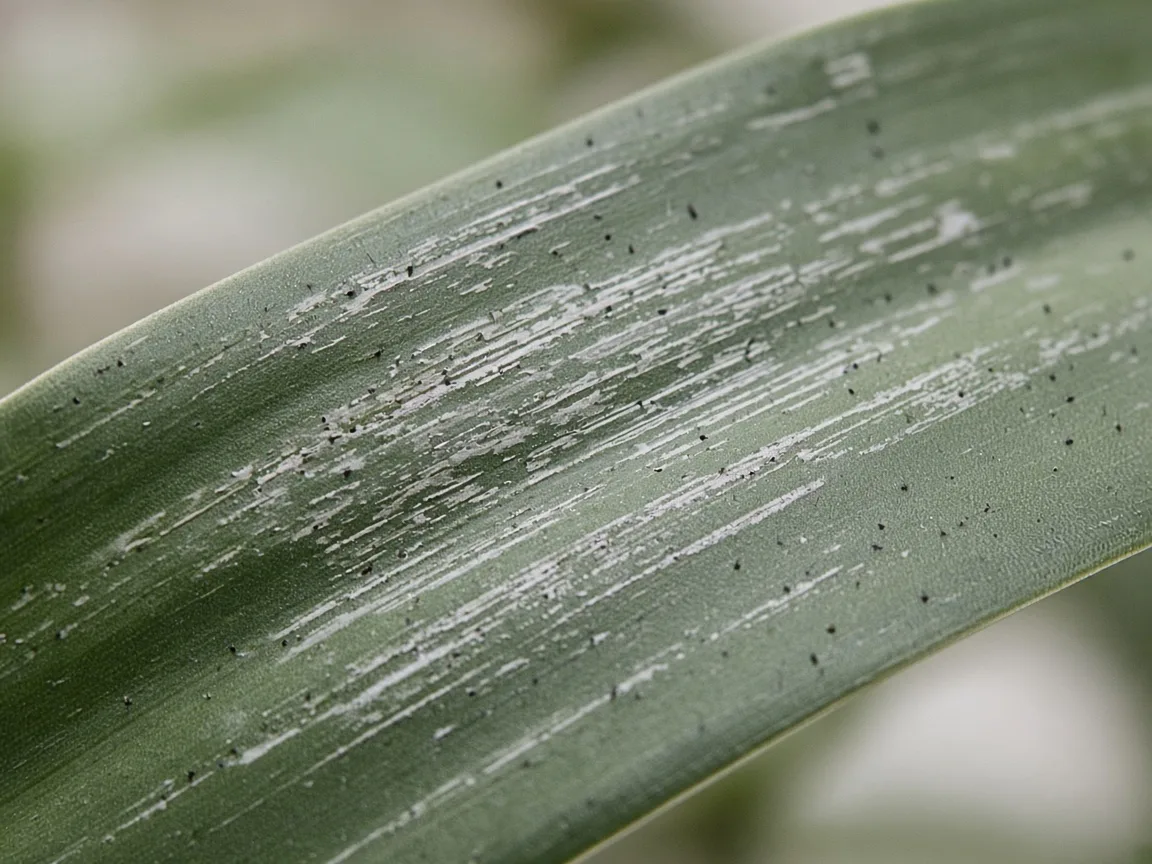
Silvery streaks and black frass specks on a strap leaf—compare with clean tissue on the same plant.
Classic thrips signature:
- Silvery or bronze scrape marks on upper leaf surfaces—each streak is rasped epidermis
- Black varnish-like frass specks scattered on foliage near feeding sites
- Distorted or scarred new leaves still unfurling at crown rosettes
- Bronzed patches on newest growth when feeding is heavy on the growing tip
- Stalled or crinkled crown leaves that fail to open flat when the tip is heavily fed
On dragon tree (D. marginata): silvery streaks show on narrow blades; distorted new leaves at the crown curl before opening. On corn plant and Janet Craig types: wide strap leaves display long silvery bands visible from across the room.
What thrips damage is not: fine stippling with webbing (spider mites); cottony wax clusters (mealybugs); flying white adults with honeydew (whiteflies); uniform brown tips only without silvery streaks (brown tips).
Lookalikes to rule out on Dracaena
Dracaena owners often search “thrips” when the real problem is water quality, another pest, or soil moisture. Run this check before buying insecticide.
| Pattern | Likely cause | First direction |
|---|---|---|
| Silvery streaks + black frass + distorted new leaves | Thrips | Isolate, shake-test, rinse, repeat treatment |
| Stippling + webbing + moving specks on paper | Spider mites | Spider mites guide |
| Cottony white wax in leaf axils | Mealybugs | Mealybugs guide |
| Flying white adults + honeydew | Whiteflies | Whiteflies guide |
| Crispy tips only; no silvery streaks; tap water | Fluoride toxicity | Brown tips guide |
| Lower yellow leaves; wet soil; soft cane | Overwatering | Overwatering guide |
Spider mites vs. thrips: Mites leave fine yellow stippling and silk webbing at leaf axils. Thrips leave silvery scrape marks without webbing. The white-paper tap test shows slow-moving mite specks vs. slender thrips that move quickly when dislodged.
Fluoride vs. thrips: Fluoride concentrates at margins as tip or edge necrosis without silvery mid-blade streaks or black frass. Thrips scarring runs along the leaf blade and hits new crown tissue first.
How to confirm the cause
Work through these checks in order—each step narrows the diagnosis before you commit to sprays.
- White-paper shake test. Hold paper under a silvery strap leaf and tap firmly—thrips dislodge as tiny moving specks.
- Inspect crown rosettes first. New leaves still unfurling show distortion and silvery scarring before lower mature straps.
- Look for black frass. Varnish-like specks near silvery streaks confirm thrips feeding, not mite stippling.
- Rule out fluoride. If tips are crispy, water is tap, and there are no silvery streaks or frass, suspect fluoride toxicity instead.
- Rule out wet soil. If lower leaves yellow and soil feels wet several inches down, inspect cane firmness before pesticide use.
- Scan neighboring plants. Thrips spread on air currents and hands; check other plants within six feet.
Confirmed thrips require isolation and repeated treatment. Clean paper with no specks but ongoing tip burn means a water-quality fix, not thrips spray.
First fix for Dracaena
Isolate the plant first—move it away from other houseplants and avoid brushing infested leaves against clean foliage.
Rinse thoroughly before spraying. Take the Dracaena to a sink or shower and wash both sides of every strap leaf with lukewarm water. Forceful washing reduces thrips when you reach crown rosettes and leaf bases sprays miss. Tilt the pot so water runs off without pooling in the crown. Let the pot drain completely.
Apply insecticidal soap or horticultural oil. Use a product labeled for thrips or soft-bodied insects. Cover crown rosettes and every reachable underside—pesticides alone rarely control thrips without physical removal first.
Add blue sticky traps. Place traps near the infested plant to catch flying adults and monitor population decline.
Repeat on schedule. Plan two or more applications at five- to seven-day intervals until no new silvery scarring appears on crown leaves and shake tests show no movement for two consecutive weeks.
Step-by-step recovery
- Isolate before handling other plants on the same watering day.
- Shake-test crown leaves over white paper to confirm active thrips.
- Rinse every leaf on all cane sections—focus on crown rosettes and new unfurling straps.
- Apply insecticidal soap or horticultural oil after the first rinse.
- Set blue sticky traps at canopy height.
- Repeat rinse + spray on five- to seven-day intervals through at least three pest generations.
- Two clean weeks—no new silvery scarring, no frass on new growth—before returning to a shared display.
Recovery timeline
Silvery and scarred strap tissue is permanent. Success means stopped spread and clean new growth from the crown.
- After first rinse and treatment: Active thrips should drop within one to two weeks with consistent repeat applications.
- New crown leaves: Dracaena grows slowly—a clean replacement leaf may take four to twelve weeks depending on light, species, and season.
- Older scarred leaves: Can stay on the plant for photosynthesis or be trimmed once new growth looks healthy.
- Heavily distorted crown: If new leaves fail to open flat for multiple cycles, inspect for reinfestation from untreated neighboring pots.
If two consecutive new leaves open without silvery scarring and shake tests stay clean, consider the infestation controlled.
What not to do
- Do not increase watering to fight thrips—soggy soil causes yellow lower leaves and crown rot while thrips persist on dry upper foliage.
- Do not spray once and stop—thrips hide in crown buds; one application rarely finishes the job on Dracaena.
- Do not assume silvery marks mean spider mites without the shake test—mites stipple; thrips scrape.
- Do not trim every scarred leaf immediately—Dracaena replaces leaves slowly; keep functioning foliage until new crown growth is clean.
- Do not ignore pet safety—Dracaena is toxic to cats and dogs; wash hands after handling infested foliage.
How to prevent thrips on Dracaena
- Inspect crown rosettes weekly—new unfurling leaves show thrips damage first.
- Quarantine new purchases for two to three weeks and shake-test before placing beside existing Dracaena.
- Avoid crowding pots on shared shelves.
- Occasional foliage rinse in warm months knocks down early colonies—always drain the pot afterward.
- Treat neighboring plants if one Dracaena shows silvery scarring—thrips rarely stay on a single pot.
When to worry
Treat as urgent when new crown leaves emerge already scarred, silvery damage spreads across multiple cane sections, thrips appear on multiple plants in the same room, or new growth stalls entirely—thrips multiply quickly in warm indoor air and slow-growing Dracaena recovers slowly from crown damage.
Lower urgency: silvery marks on a few outer leaves on one side while the crown still pushes mostly clean growth, shake test shows sparse thrips, and neighboring plants test clean. Isolate, rinse, and start the repeat-treatment schedule.
Cultivar notes
Dragon tree (Dracaena marginata) shows silvery streaks early on narrow blades—inspect crown rosettes first. Corn plant (Dracaena fragrans) and Janet Craig types display long silvery bands on wide straps—check the warmest outer canopy beside sunny glass. Match post-rinse watering to species rules in the watering guide.
Related Dracaena problems
- Dracaena overview — species differences and placement basics
- Spider mites — stippling and webbing lookalike
- Whiteflies — flying adults with honeydew lookalike
- Mealybugs — cottony wax lookalike
- Distorted leaves — cultural distortion without frass
- Dracaena problems hub — full symptom index
Conclusion
Thrips on Dracaena are manageable when you confirm moving specks on the shake test, rinse crown rosettes on repeat intervals, and judge recovery by clean new crown growth—but scarred strap leaves stay marked for months on this slow-growing genus. Early crown inspection beats waiting for silvery bands to cover every strap leaf. Quarantine new arrivals and cross-check lookalikes before you treat the wrong problem.
When to use this page vs other Dracaena guides
- Distorted leaves on Dracaena — Use when leaves curl or cup without silvery streaks or black frass.
- Spider mites on Dracaena — Use when stippling and webbing dominate, not silvery scrape marks.
- Dracaena problems hub — Browse all common issues on this species.