Fenugreek Care Guide
Trigonella foenum-graecum
Grow fenugreek for tender methi leaves or mature spice seed with direct sowing, full sun, well-drained soil, and crop-specific harvesting.
Fenugreek Care Guide
Start with wateringThe most common care mistake for FenugreekWatering guide → →Fenugreek care essentials
Light
Water
Keep the seedbed evenly moist through germination and establishment, then water when the upper 2–3 cm begins to dry. Leaf crops stay tender with steadier moisture; established seed crops tolerate moderate drying but should not be left drought-stressed during flowering and pod fill.
Soil
Well-drained loam or sandy loam with moderate fertility and a pH of 5.8–8.2. Avoid heavy clay and waterlogged beds.
Humidity
Temperature
Fertilizer
Compost can improve structure and moisture retention, but avoid turning the mix dense or loading it with high-nitrogen fertilizer.
About Fenugreek
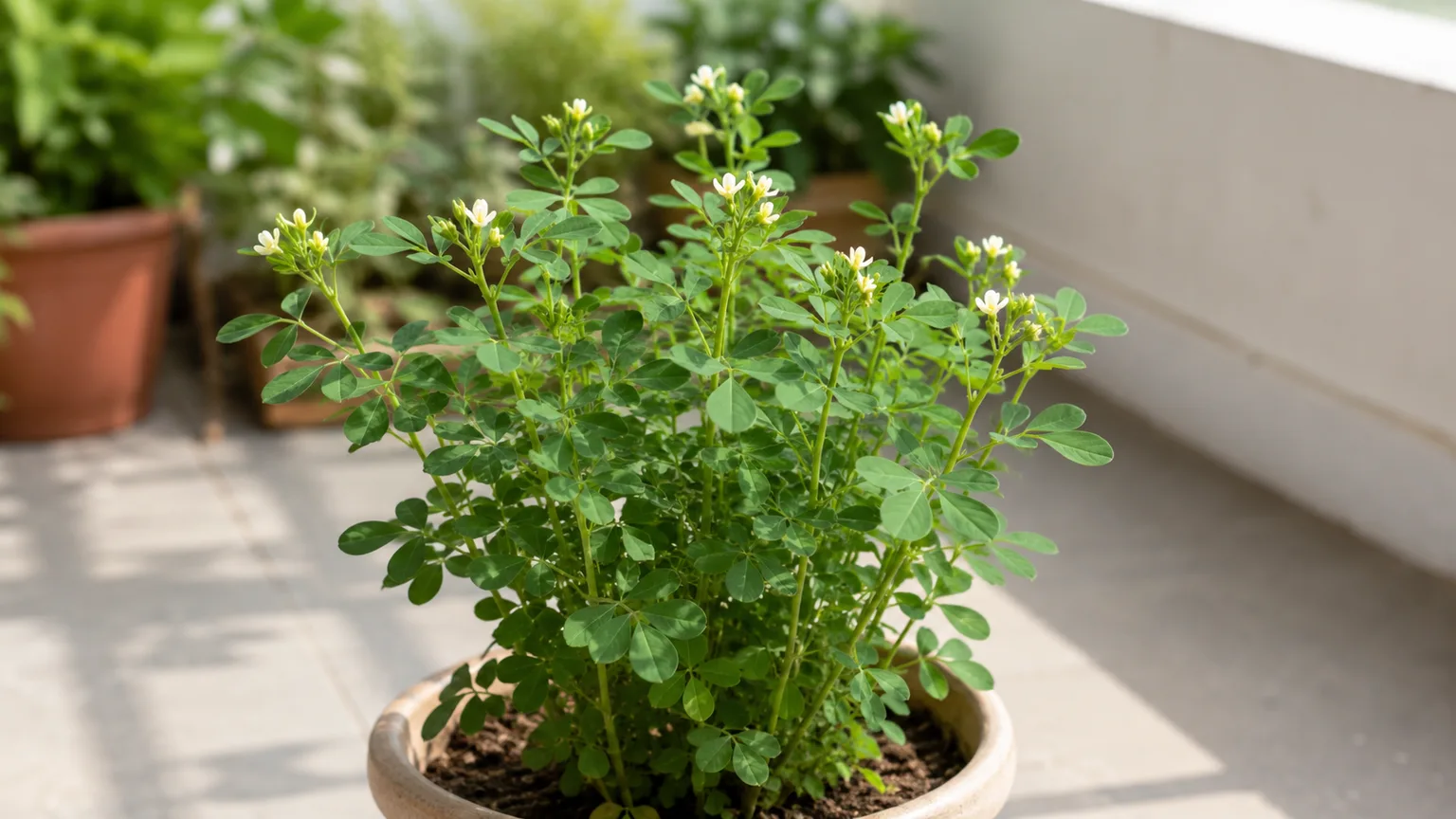
Fenugreek is native to Western Mediterranean and western Asia, typically reaches Up to 60 cm tall; usually 20–45 cm wide indoors, with fast - leafy methi can be cut about 20–30 days after sowing; seed crops need roughly 3–5 months growth. Fenugreek has a herbaceous annual legume growth habit and part of the Fabaceae family. It is also known as Methi, Greek hay, and Greek clover.
| Detail | Information |
|---|---|
| Also known as | Methi, Greek hay, Greek clover |
| Native region | Western Mediterranean and western Asia |
| Mature size | Up to 60 cm tall; usually 20–45 cm wide |
| Growth rate | Fast - leafy methi can be cut about 20–30 days after sowing; seed crops need roughly 3–5 months |
| Growth habit | Herbaceous Annual Legume |
| Scientific name | Trigonella foenum-graecum |
| Family | Fabaceae |
Fenugreek Care Guide
Content pending Tier B write agent.
How to care for Fenugreek?
When should you water Fenugreek?
Keep the seedbed evenly moist through germination and establishment, then water when the upper 2–3 cm begins to dry. Leaf crops stay tender with steadier moisture; established seed crops tolerate moderate drying but should not be left drought-stressed during flowering and pod fill.
- Feel 2–3 cm below the surface - Keep the seedbed evenly moist through germination and establishment, then water when the upper 2–3 cm begins to dry.
- water when that layer is beginning to dry - Keep the seedbed evenly moist through germination and establishment, then water when the upper 2–3 cm begins to dry.
- then drain the container fully - Keep the seedbed evenly moist through germination and establishment, then water when the upper 2–3 cm begins to dry.
- Drain excess water - Keep the seedbed evenly moist through germination and establishment, then water when the upper 2–3 cm begins to dry.
What soil works best for Fenugreek?
Well-drained loam or sandy loam with moderate fertility and a pH of 5.8–8.2. Avoid heavy clay and waterlogged beds.
- 60% quality potting mix or screened loam - Well-drained loam or sandy loam with moderate fertility and a pH of 5.8–8.2.
- 20% mature compost
- 20% perlite, pumice, or coarse sand - Well-drained loam or sandy loam with moderate fertility and a pH of 5.8–8.2.
Grower notes for Fenugreek
Decide between leaves and seeds first
Fenugreek produces two different garden crops. For tender methi, sow fairly densely and begin cutting leafy tops after about 20–30 days, before flowering reduces tenderness. For seed, give plants more space, avoid repeated leaf harvests, and leave flowers and pods to mature for roughly 3–5 months.
Direct-sow into the final container
Fenugreek is propagated by seed and resents transplanting. Sow about 1–2 cm deep in a sunny final bed or a container with drainage holes. Closely spaced seedlings suit baby leaves; thin seed-crop plants to about 7.5–15 cm apart so they can branch, flower, and form pods.
Match the season to the crop
This sun-loving legume performs as a cool-season crop where summers are hot and can withstand light frost once established. In warm Indian lowlands, use the cooler sowing window; persistent heat shortens leafy growth and makes tender methi harder to maintain.
Harvest leafy methi for regrowth
Cut the upper portion of established stems while leaving lower leaflets and growing points. The remaining plant can produce another flush if moisture stays even. Stop cutting any plants reserved for seed, because removing shoots delays flowering and reduces the crop available to fill pods.
Let seed pods dry on the plant
For spice seed, keep plants through flowering and pod fill. Harvest when pods turn yellow-brown and begin drying, before they split and shed seed. Reduce watering near maturity, cut the plants in dry weather, and finish drying them in an airy place before threshing.
Do not overfeed a legume
Fenugreek belongs to the pea family and can associate with nitrogen-fixing bacteria. Compost and a balanced soil are useful, but repeated high-nitrogen feeding can favor soft leaf growth over flowers and pods. Correct poor drainage, crowding, or weak light before adding fertilizer.
Is Fenugreek safe around pets?
Fenugreek is a human food crop, but that does not establish the plant or concentrated seed as safe forage for pets. Prevent unrestricted chewing and ask a veterinarian about any meaningful ingestion.
Species-specific veterinary safety classifications for Fenugreek were not established in the authoritative horticultural sources reviewed. Treat leaves, pods, and seeds as unsuitable for unsupervised pet access, especially where an animal has a known legume allergy or develops digestive symptoms.
Watering Fenugreek
For Fenugreek, feel 2–3 cm below the surface; water when that layer is beginning to dry, then drain the container fully and water check every 1–2 days after sowing and in containers; established plants are watered by soil dryness rather than a fixed calendar. Grow as a cool-season crop in hot regions; water more often in warm, windy container conditions and reduce irrigation as seed pods yellow and dry.
| Detail | Information |
|---|---|
| How often | Check every 1–2 days after sowing and in containers; established plants are watered by soil dryness rather than a fixed calendar |
| How to check | Feel 2–3 cm below the surface; water when that layer is beginning to dry, then drain the container fully |
| Seasonal changes | Grow as a cool-season crop in hot regions; water more often in warm, windy container conditions and reduce irrigation as seed pods yellow and dry |
Signs of overwatering
- persistently wet soil with yellowing seedlings
- soft or darkened stem bases
- wilting while the root zone remains wet
Signs of underwatering
- limp or folded leaflets
- dry soil pulling from the container edge
- stalled leaf regrowth or poor pod fill
Soil & potting for Fenugreek
Use a mix of 60% quality potting mix or screened loam, 20% mature compost, 20% perlite, pumice, or coarse sand for Fenugreek. Free drainage is essential; dense, saturated soil restricts roots and encourages seedling and root disease. Target soil pH around 5.8–8.2. Repot no routine repotting - direct-sow this annual in its final bed or container because fenugreek does not transplant well, ideally in sow during the local cool season or in spring after severe frost risk has passed.
| Detail | Information |
|---|---|
| Recommended mix | 60% quality potting mix or screened loam, 20% mature compost, 20% perlite, pumice, or coarse sand |
| Drainage | Free drainage is essential; dense, saturated soil restricts roots and encourages seedling and root disease |
| Soil pH | 5.8–8.2 |
| Repotting frequency | No routine repotting - direct-sow this annual in its final bed or container because fenugreek does not transplant well |
| Best season to repot | Sow during the local cool season or in spring after severe frost risk has passed |
Signs it needs repotting
- seedlings are overcrowded and need thinning rather than transplanting
- the container is too shallow to keep moisture stable
- drainage is failing before the crop is established
Humidity & temperature for Fenugreek
Fertilizer & pruning for Fenugreek
Use compost can improve structure and moisture retention, but avoid turning the mix dense or loading it with high-nitrogen fertilizer. for Fenugreek.
| Detail | Information |
|---|---|
| Fertilizer type | Compost can improve structure and moisture retention, but avoid turning the mix dense or loading it with high-nitrogen fertilizer. |
Common problems on Fenugreek
Yellow Leaves
MediumLikely cause: Common on this plant type; confirm with recent watering, light, and root checks.
Quick fix: Inspect the plant and correct the most likely care stressor before stacking treatments.
Full fix guide →Brown Tips
MediumLikely cause: Common on this plant type; confirm with recent watering, light, and root checks.
Quick fix: Inspect the plant and correct the most likely care stressor before stacking treatments.
Full fix guide →Root Rot
MediumLikely cause: Common on this plant type; confirm with recent watering, light, and root checks.
Quick fix: Inspect the plant and correct the most likely care stressor before stacking treatments.
Full fix guide →Overwatering
MediumLikely cause: Common on this plant type; confirm with recent watering, light, and root checks.
Quick fix: Inspect the plant and correct the most likely care stressor before stacking treatments.
Full fix guide →Underwatering
MediumLikely cause: Common on this plant type; confirm with recent watering, light, and root checks.
Quick fix: Inspect the plant and correct the most likely care stressor before stacking treatments.
Full fix guide →Spider Mites
MediumLikely cause: Common on this plant type; confirm with recent watering, light, and root checks.
Quick fix: Inspect the plant and correct the most likely care stressor before stacking treatments.
Full fix guide →Mealybugs
MediumLikely cause: Common on this plant type; confirm with recent watering, light, and root checks.
Quick fix: Inspect the plant and correct the most likely care stressor before stacking treatments.
Full fix guide →Aphids
MediumLikely cause: Common on this plant type; confirm with recent watering, light, and root checks.
Quick fix: Inspect the plant and correct the most likely care stressor before stacking treatments.
Full fix guide →Leggy Growth
MediumLikely cause: Common on this plant type; confirm with recent watering, light, and root checks.
Quick fix: Inspect the plant and correct the most likely care stressor before stacking treatments.
Full fix guide →Slow Growth
MediumLikely cause: Common on this plant type; confirm with recent watering, light, and root checks.
Quick fix: Inspect the plant and correct the most likely care stressor before stacking treatments.
Full fix guide →Wilting
MediumLikely cause: Common on this plant type; confirm with recent watering, light, and root checks.
Quick fix: Inspect the plant and correct the most likely care stressor before stacking treatments.
Full fix guide →Drooping Leaves
MediumLikely cause: Common on this plant type; confirm with recent watering, light, and root checks.
Quick fix: Inspect the plant and correct the most likely care stressor before stacking treatments.
Full fix guide →Low Humidity
MediumLikely cause: Common on this plant type; confirm with recent watering, light, and root checks.
Quick fix: Inspect the plant and correct the most likely care stressor before stacking treatments.
Full fix guide →Not Enough Light
MediumLikely cause: Common on this plant type; confirm with recent watering, light, and root checks.
Quick fix: Inspect the plant and correct the most likely care stressor before stacking treatments.
Full fix guide →Fungus Gnats
MediumLikely cause: Common on this plant type; confirm with recent watering, light, and root checks.
Quick fix: Inspect the plant and correct the most likely care stressor before stacking treatments.
Full fix guide →Mold on Soil
MediumLikely cause: Common on this plant type; confirm with recent watering, light, and root checks.
Quick fix: Inspect the plant and correct the most likely care stressor before stacking treatments.
Full fix guide →