Caterpillars on Fiddle Leaf Fig: Causes, Checks & Fixes
Quick answer
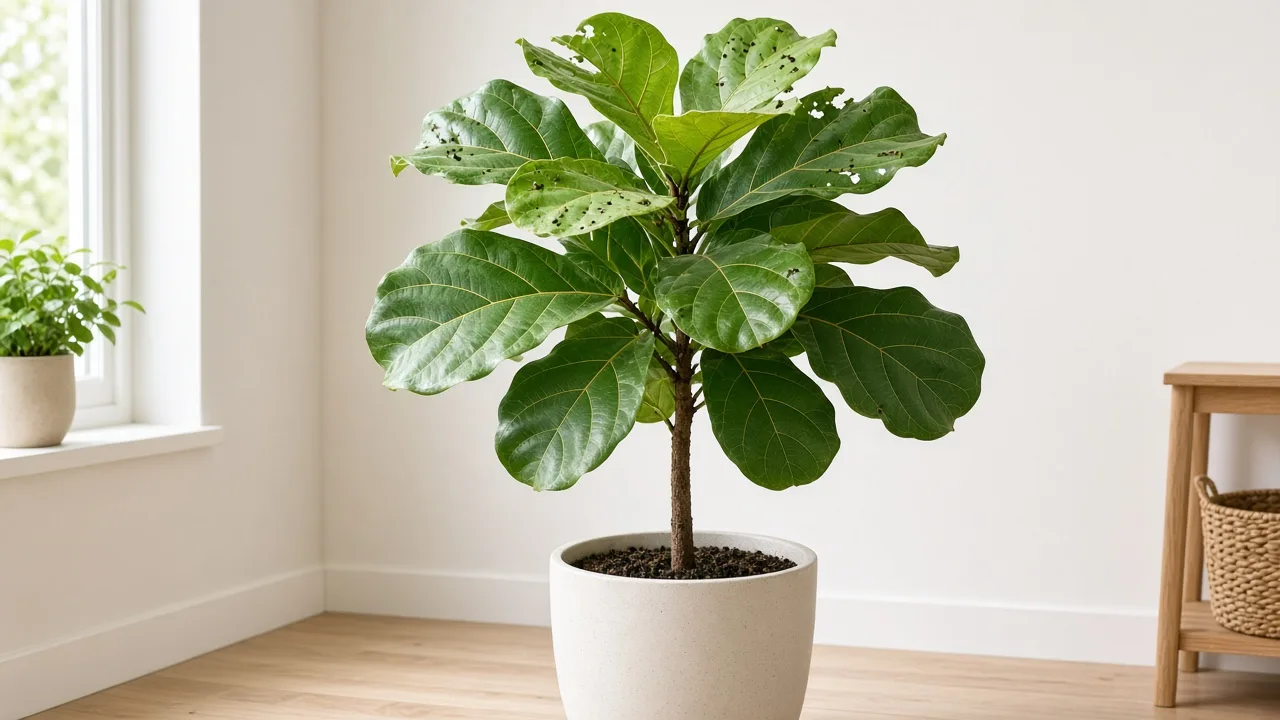
Caterpillars on fiddle leaf fig chew irregular holes through large violin-shaped leaves and leave dark pellet-like frass, often on the newest crown growth. First step: inspect the plant at night with a flashlight and hand-pick any caterpillars you find before treating remaining foliage.
Caterpillars on Fiddle Leaf Fig: Causes, Checks & Fixes
This guide covers caterpillars on Fiddle Leaf Fig. See also the general Caterpillars guide, watering, and light pages for this plant.
Caterpillars on Fiddle Leaf Fig: Causes, Checks & Fixes
Quick answer
Caterpillars on fiddle leaf fig (Ficus lyrata) chew irregular holes through foliage and leave ragged margins with dark pellet-like frass on glossy violin-shaped blades. Indoor cases usually trace to hitchhiking larvae after patio season, on nursery stock, or on cut flowers brought near the plant.
For general caterpillar biology and life cycle, see our caterpillars guide. On fiddle leaf fig, larvae often concentrate on the tender crown growing point and leaf axils where broad blades meet the woody trunk—places quick top-down watering checks miss on a six-foot floor specimen.
First step: inspect the plant at night with a flashlight and hand-pick any caterpillars you find before treating remaining foliage.
When to use this page vs other Fiddle Leaf Fig guides
| Pattern | Read next |
|---|---|
| Ragged holes through leaf blades, dark frass pellets, visible larvae | This page |
| Pale winding tunnels inside leaf tissue | Leaf miners |
| Silvery scrape marks and black frass, no holes | Thrips |
| Fine stippling and webbing on undersides | Spider mites |
| Uniform yellow leaves, wet soil, no frass | Overwatering |
| Clean mechanical tears, no frass or larvae | Physical damage — no pest treatment needed |
What caterpillars look like on fiddle leaf fig
Caterpillar damage is easy to miss on a tall floor tree because larvae feed at night and hide along stems and leaf backs during the day. On Ficus lyrata, the symptom signature is ragged holes chewed through stiff violin-shaped blades—not the bordered internal tunnels of leaf miners or the silvery stippling of thrips.
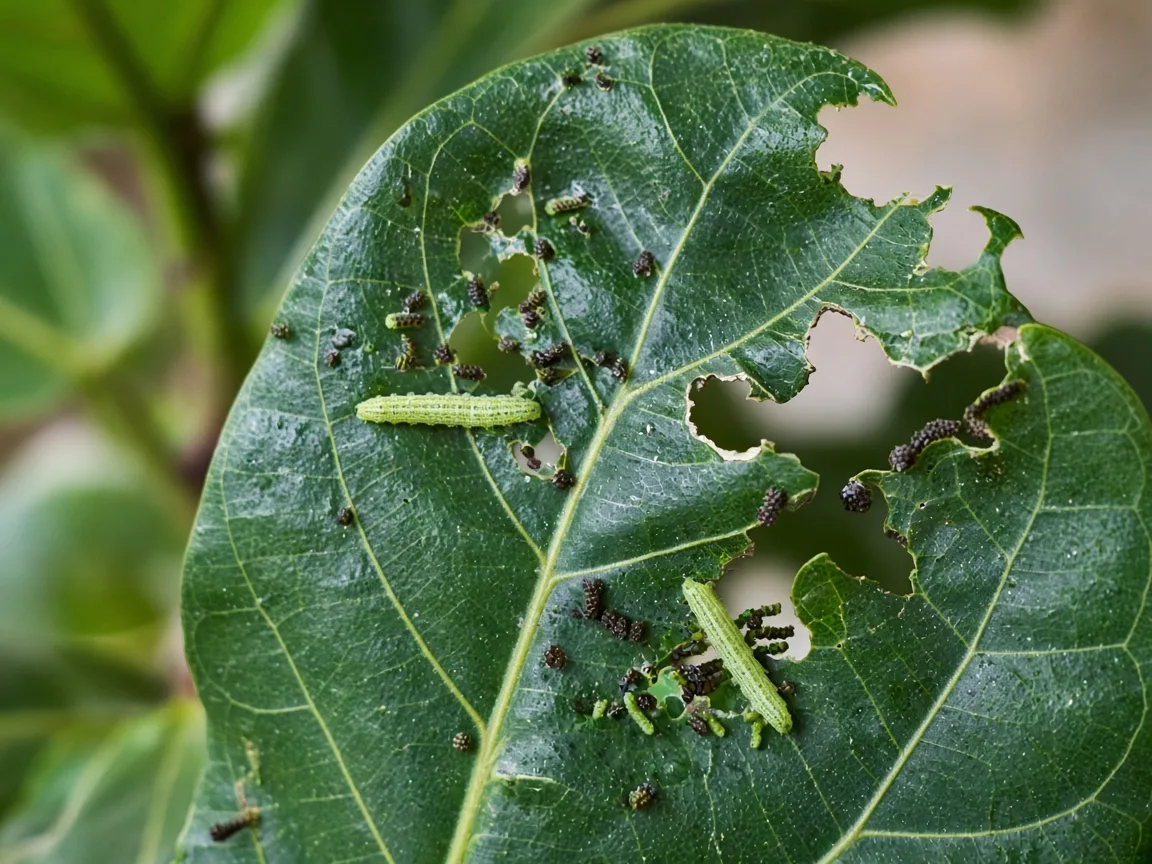
Irregular chewed holes and dark pellet-like frass on a fiddle leaf fig blade—compare with intact tissue on the same petiole.
Chewed holes and ragged margins:
- Irregular holes punched through large violin-shaped leaves up to 12–18 inches long—edges look torn, not cleanly cut
- Ragged margins on newest crown leaves where tissue is still soft and expanding
- Dark pellet-like frass on leaf surfaces, pot rims, or soil below feeding sites
Larva signs (when you can see them):
- Green, brown, or patterned caterpillars curled along petiole bases, leaf undersides, or stem joints
- Visible chewing on tender new growth at the crown before older lower blades show damage
- Unlike leaf miners, damage goes through the leaf—not inside a bordered tunnel visible when backlit
Growth impact on fiddle leaf fig:
- Stalled or shredded new crown leaves when feeding is heavy on the active growing point
- Premature leaf drop on lower branches if stress combines with defoliation—do not confuse relocation drop with caterpillar damage unless holes and frass are present
Unlike spider mites, caterpillars do not produce stippling or webbing. Unlike mealybugs, no cottony wax clusters appear—only chewing damage and frass.
Why fiddle leaf fig gets caterpillars
Caterpillars are less common on indoor houseplants than sap-sucking pests, but fiddle leaf fig setups create feeding sites that quick checks miss:
Outdoor patio hitchhikers. Ficus lyrata summered outdoors or near open windows can pick up moth or butterfly eggs laid on leaf undersides. Pests arrive on nursery stock and outdoor plants and continue feeding indoors where predators are absent.
Tender crown growth. Fiddle leaf fig pushes new violin-shaped leaves from the crown growing point. Caterpillars prefer soft, expanding tissue—one larva can shred an unfurling blade before you notice holes on mature lower foliage.
Sheltered petiole crevices. Larvae hide in the tight angle where each thick petiole meets woody stem tissue and along the undersides of overlapping lower canopy leaves—places a quick top-down glance never sees on a tall specimen.
Indoor warmth without predators. Indoor plants lack natural enemies that control caterpillars outdoors. A single egg mass can hatch into multiple larvae feeding on the same crown.
Dusty glossy leaves. Dust on large stiff violin-shaped blades hides frass pellets and small larvae on lower overlapping leaves until damage spreads to visible upper surfaces.
Lookalike symptoms
| What you see | Likely cause | Key difference on fiddle leaf fig |
|---|---|---|
| Ragged holes + frass pellets + visible larva | Caterpillars (this page) | Night inspection reveals larvae; holes go through blade |
| Bordered pale tunnel inside leaf | Leaf miners | Tunnel visible when backlit; no through-holes |
| Silvery streaks + black frass, no holes | Thrips | Mobile insects on paper shake; scrape marks not chewing |
| Pinhead dots + fine silk | Spider mites | Stippling on undersides; no frass pellets |
| Uniform yellow, wet mix | Overwatering | Base-up yellowing, sour soil—no insects |
| Clean tears at leaf edges | Physical damage | No frass, no larvae, no progressive spread |
How to confirm the cause
Work through these checks before you spray:
- Isolate first — Move the fiddle leaf fig away from other houseplants. Caterpillars walk between pots and eggs can be on neighboring foliage.
- Night inspection — Inspect plants at night with a flashlight; larvae feed actively and are easier to spot on leaf backs and petiole joints.
- Frass check — Look for dark pellet-like droppings on leaves or soil below chewed areas—not sticky honeydew or silvery scrape marks.
- Backlight test — Hold a suspect leaf to light. Internal bordered tunnels confirm leaf miners, not caterpillars.
- Crown priority — Examine the highest unfurling leaves and growing point where tender tissue attracts feeding first.
- Neighbor scan — Inspect ficus, rubber plants, and other trees from the same nursery batch or patio group on the same shelf.
- Rule out watering stress — Yellow leaves from overwatering start at the soil line with wet mix and no frass.
If you find a larva with ragged holes and pellet frass, caterpillars are confirmed. If only internal tunnels appear, switch to the leaf miners guide.
First fix for fiddle leaf fig
Inspect the plant at night with a flashlight and hand-pick any caterpillars you find before treating remaining foliage.
Work petiole by petiole from crown to lowest leaves on tall specimens. Hand-picking is effective when you reach hidden crevices sprays miss. Drop larvae into soapy water or seal them in a bag—do not crush on furniture because cut ficus tissue oozes milky latex sap that irritates skin.
Wear gloves when pruning chewed leaves. This single physical pass knocks down the active colony and gives you a clean baseline before any spray. Do not stack Bt application, heavy pruning, and repotting on the same day—Ficus lyrata drops leaves easily under stacked stress.
Step-by-step recovery
After the initial hand-pick, follow severity:
Days 1–7: Physical control (a few holes on one or two leaves)
- Repeat night inspections every two to three days; catch newly hatched larvae before they reach the crown
- Wipe frass from glossy leaf surfaces with a damp cloth
- Inspect leaf axils and crown growing point where larvae hide during daylight
Days 7–21: Targeted sprays if holes spread (moderate infestation)
- Apply Bacillus thuringiensis (Bt) labeled for caterpillars on houseplants, coating leaf backs and crown tissue until runoff
- Bt must be eaten—spray at dusk when larvae feed; repeat on label intervals through at least two hatch cycles
- Insecticidal soap or narrow-range horticultural oil can supplement Bt on reachable foliage when larvae are small
Heavy infestation (crown shredded, holes on multiple branches)
- Trim and bag only leaves too damaged to photosynthesize; avoid heavy crown pruning that triggers leaf drop
- Treat every plant on the same shelf or patio group, not just the worst-looking fiddle leaf fig
- Hold fertilizer until new growth emerges without fresh holes
Recovery timeline
Judge recovery on clean new crown leaves and frass-free petiole joints, not old chewed blades:
- 3–7 days after first hand-pick: No fresh frass on highest leaves; night inspection finds zero larvae
- 2–4 weeks: New violin-shaped leaves emerge without ragged margins—this is your main success signal
- 6+ weeks on large floor plants: Several intact leaves and a clean crown confirm the population is broken; continue monthly spot checks after patio season
Mature leaves with holes do not heal—the stiff glossy tissue stays marked. Success means clean new growth, not a cosmetic reset of every foot-long blade on a six-foot tree.
Crown growing point: where fiddle leaf fig hides caterpillars
This is the Ficus lyrata pattern generic caterpillar pages miss. Damage follows the tender tissue at the crown and highest unfurling leaves:
- One larva can shred a new blade before it fully opens—holes may look worse once the violin shape expands
- Larvae curl along petiole bases at the crown where spray coverage is hardest to achieve from across the room
- For tall upright specimens, prioritize the top three reachable leaves and active growing point over random lower canopy samples
Night feeding means daytime inspections miss active larvae. Plan repeated dusk or night passes rather than one rushed daytime check of visible leaf tops only.
Large violin leaves: hole damage vs relocation leaf drop
Fiddle leaf fig leaves are stiff, waxy, and often a foot long—chewing damage and stress drop can look similar from across the room:
- Caterpillar holes show ragged margins with frass pellets on or below the blade—drop from relocation stress leaves whole leaves yellow first without progressive hole enlargement
- Avoid moving a tall floor specimen to a shower for treatment unless necessary; rinse in place with a handheld sprayer when possible
- Overlapping leaves on a bushy specimen shield larvae on the back side of lower blades—walk around the pot during night inspection
Unlike thrips scrape marks, caterpillar damage is sudden and localized—fresh holes and frass appear within days of a larva establishing on tender crown tissue.
Mistakes to avoid
- Inspecting only during the day. Caterpillars feed at night and hide along stems—daytime glances miss larvae curled on leaf backs.
- Confusing leaf miners with caterpillars. Miners leave internal tunnels visible when backlit; caterpillars chew through the blade with pellet frass outside.
- Moving the plant unnecessarily. Relocation triggers leaf drop on Ficus lyrata—treat in place when possible and judge recovery by new growth, not every shed lower leaf.
- Spraying Bt during the day. Bt must be eaten; apply at dusk when larvae are actively feeding on leaf tissue.
- Ignoring nearby plants. Inspect every houseplant from the same patio batch or nursery shelf, not just the fiddle leaf fig with the most visible holes.
- Heavy fertilizer while treating. Hold to the usual fertilizer rhythm only after clean new leaves appear.
Prevention
- Quarantine new fiddle leaf figs two to three weeks before placing them beside an established floor specimen
- Inspect crown tips and leaf undersides after outdoor patio season or near open windows
- Brush off suspect egg masses during weekly watering checks—rotate the pot to see all sides of the trunk
- Keep bright indirect light and stable care so stress leaf drop does not mask new feeding signs
- Avoid crowding tall ficuses against walls where the back side of the crown cannot be seen
Related Fiddle Leaf Fig guides
Conclusion
Caterpillars on fiddle leaf fig are a night-feeding, crown-focused pest—ragged holes with pellet frass on violin-shaped leaves mean inspect after dark, hand-pick larvae, and treat the growing point before you reach for sprays. Judge recovery by clean new crown foliage, not perfect older blades.
Related tool
Use the Pest Identifier Tool to narrow causes for caterpillars on this plant before changing multiple variables at once.