Thrips on Hoya: Signs, First Steps, and Safe Control
Quick answer
If you suspect thrips on Hoya, first isolate the whole vine from nearby plants. Then inspect new leaves, leaf undersides, stem joints, and flower clusters for silvery scars, distorted growth, black specks, and live slender insects; damage alone is not confirmation.
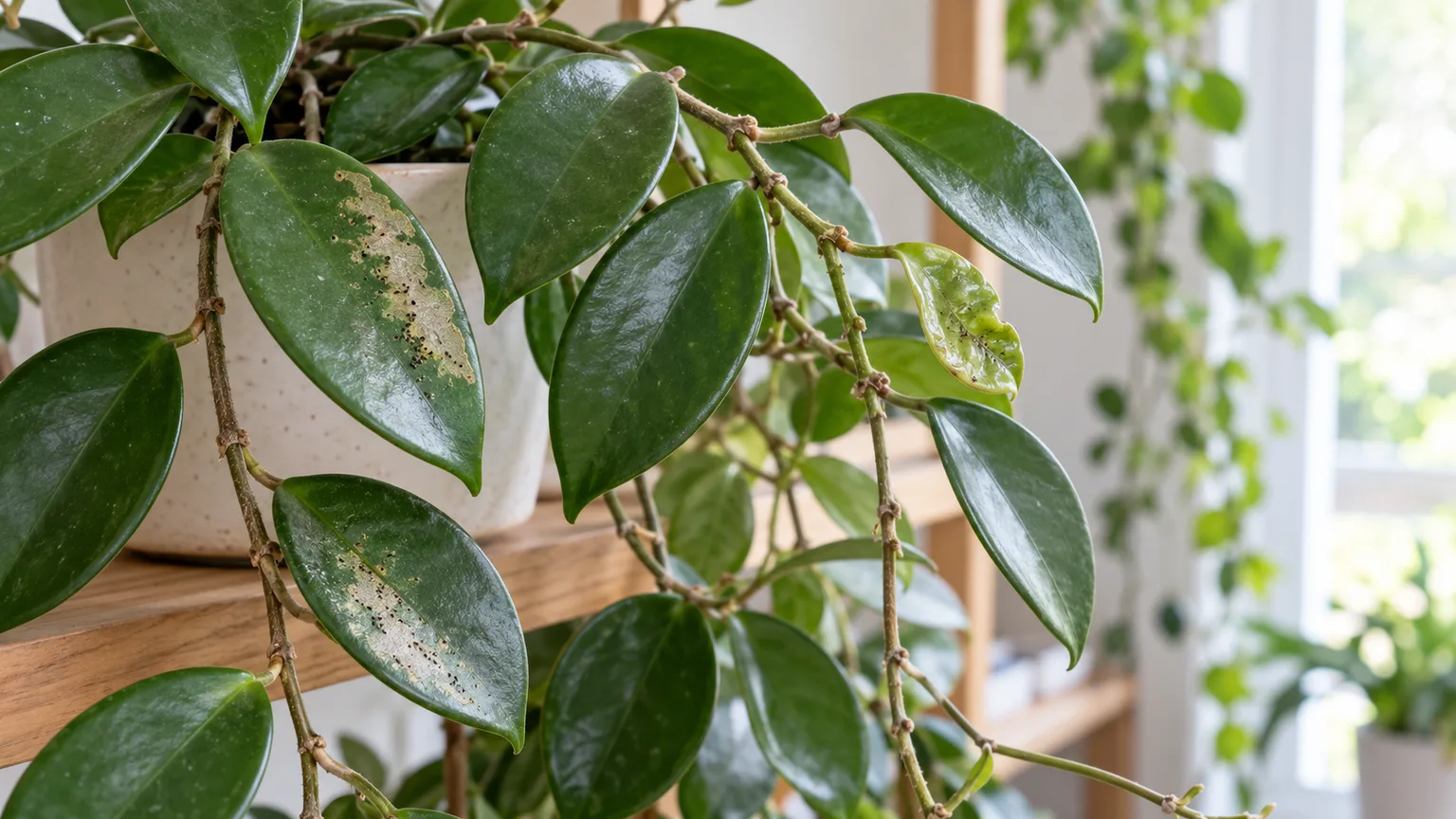
Thrips on Hoya: How to Spot and Stop Them Without Losing the Vine
This guide covers thrips on Hoya. See also the general Thrips guide, watering, and light pages for this plant.
Thrips on Hoya: How to Spot and Stop Them Without Losing the Vine
Quick answer
If you suspect thrips on Hoya, first isolate the whole vine from nearby plants. Then inspect new leaves, leaf undersides, stem joints, and flower clusters for silvery scars, distorted growth, black specks, and live slender insects. Damage alone is not confirmation: other pests and environmental problems can mark leaves, and the leaves that are already scarred will not regain their original surface.
Thrips are small insects that feed on plant tissue and can leave pale or silvery scars, distorted young growth, and dark specks of waste. On a trailing Hoya, the most useful inspection points are the growing ends and protected leaf joints, not only the broad, older leaves that are easiest to see. For the general pest overview, see the thrips guide; this page focuses on locating and managing suspected thrips on Hoya without disrupting its roots unnecessarily.
What thrips damage looks like on Hoya
Look for irregular silvered, tan, or bronze patches on leaves, especially where a new leaf has been expanding, along with small black dots near the damaged tissue. Thrips feed by scraping and puncturing plant cells; their feeding can scar leaves and flowers, distort shoots, and leave dark fecal specks. UC IPM’s thrips guidance describes those common signs and cautions that other disorders can look similar.
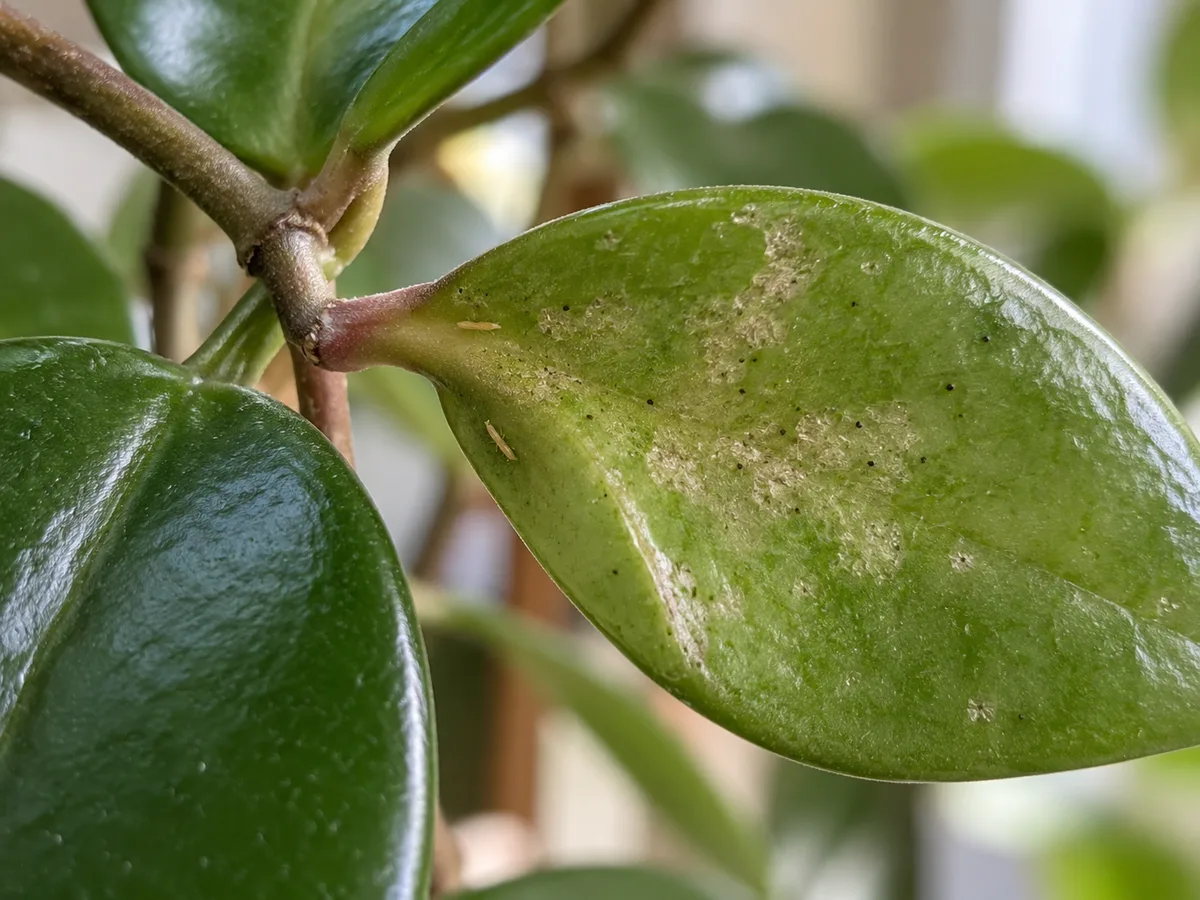
On Hoya, look for fresh scars on expanding leaves and check nearby joints for live insects before treating.
The mark may become easier to notice as a leaf unfurls and grows past an area that was fed on while it was tender. A damaged leaf may look puckered, streaked, or uneven rather than showing a neat ring or spot. Hoya leaves vary by species and cultivar, so use the combination of scars, black specks, and live insects rather than expecting every leaf to show the same color or shape.
Thrips themselves are narrow, very small insects. Adults may be dark, while immature stages are often pale and wingless; color varies, so do not identify them by color alone, as UC IPM’s identification notes explain. Gardening Know How’s indoor-thrips guide notes that they can be difficult to see on houseplants, which is why checking moving insects and characteristic damage together is more useful than scanning the plant from across a room.
Where to inspect on a trailing Hoya vine
Start at the newest growth on each active runner. Follow each vine from tip toward the pot and check both sides of the leaves, the point where each leaf joins the stem, and any tight folds around a leaf that has not fully opened. Thrips often shelter in buds and shoot tips, so these protected points deserve more attention than the smooth center of an old, fully expanded leaf. UC IPM notes that pest thrips can remain hidden in buds and shoot tips, with feeding damage sometimes visible before the insects are found.
Hoya’s trailing habit changes the inspection: damage can begin at a distant vine tip while the pot and central plant still look normal. Lay one runner across a light surface or support it gently with one hand so you can inspect the underside without bending or snapping the stem. Check every vine, not just the one closest to the window. If the plant is long, work in sections and mark which tips you have checked so you do not confuse an old scar with new spread.
If the Hoya is flowering, inspect the flower clusters and the short stalks that carry them. Thrips feed on flowers on many host plants, and small insects can be difficult to see among clustered blooms. Hoya carnosa has waxy, star-shaped flowers arranged in clusters, as described in the NC State Hoya carnosa profile; do not assume a spent flower cluster is harmless if it sits beside newly distorted leaves. Avoid pulling off healthy flower stalks simply to make inspection easier.
Use a hand lens if you have one, but a close phone photo can also help you compare a questionable insect with the leaf damage. Gently tap an affected leaf or flower over white paper and look for narrow insects that move. A blue or yellow sticky card placed near the Hoya can help show whether flying adults are present, but it does not tell you which plant they came from or whether they caused the scars. Treat the card as a monitor, not a diagnosis or a complete control method.
Confirm thrips before choosing a treatment
Look for two kinds of evidence at once: fresh damage on new Hoya growth and a live insect that fits the thrips shape. Black specks stuck near a silvered patch are useful clues, but dust, potting mix, and other insects can leave marks too. Shake the leaf gently over white paper, check the underside and the nearest joint, then repeat on another damaged leaf or flower. Finding only old scars with no insects or new damage means you should keep monitoring before spraying.
Thrips eggs are placed in or on plant tissue, larvae feed, and later stages may be found in protected plant crevices or soil and leaf litter, depending on the species, as UC IPM’s life-cycle notes explain. This is one reason a single rinse or spray may not cover every stage. Its landscape timing is not a fixed schedule for indoor Hoya, so follow the label interval for any product you use and recheck the plant rather than copying a calendar from another setting.
Check nearby plants, especially anything that touched the Hoya’s vines or shared its shelf. A thrips on a sticky card could have come from another pot, and some thrips found on plants are not the species causing damage. UC IPM recommends confirming that pest thrips are present and causing the injury before taking control action. If you see new scarring but no insects, compare the affected Hoya with a healthy vine and inspect the surrounding collection before deciding that the plant has thrips.
First fix: isolate the Hoya
Move the entire Hoya away from nearby plants before you begin treatment. Keep its runners from hanging over neighboring pots, and do not move it through the collection while loose insects could fall onto other leaves. Isolation is a single, immediate containment step; it does not depend on knowing the thrips species and gives you room to inspect the whole vine carefully.
Once the plant is isolated, check the neighboring plants that touched its leaves or shared a close shelf. Look first at fresh growth and leaf undersides, not just the soil surface. If a second plant has live thrips or new feeding marks, isolate it too. Keep the Hoya’s location stable after moving it so a sudden shift in light or watering does not create a second problem that masks the pest response. The Hoya light guide can help you choose a bright, steady spot away from direct contact with the collection.
Reduce active thrips without stripping Hoya roots
After you confirm active thrips, rinse the accessible leaves and stems with a gentle stream of lukewarm water, paying attention to undersides and folded new growth. Support long runners so they do not whip against the sink or shower wall. A damp soft cloth can lift visible debris from mature leaves, but do not scrub the waxy surface or force open a tender leaf. The goal is to knock insects off the foliage while preserving healthy leaves and stems.
If a flower cluster is heavily infested or a single leaf is badly distorted and still hosting insects, remove only that affected piece and discard it in a closed bag. Do not strip every leaf with a scar: the old mark is not an active insect, and Hoya needs its healthy leaves to keep growing. Pruning a long vine back to bare stems can remove future growth points and will not reach eggs or later stages sheltered elsewhere on the plant.
Some thrips species use soil or fallen debris for a protected stage, but that does not make repotting the automatic first response for Hoya. Its roots are epiphytic and do best in an airy, free-draining mix; NC State Extension’s Hoya profile describes that growth habit and cautions against persistently wet roots. Remove dead leaves and flowers from the pot surface, empty the saucer, and inspect the mix. Use the Hoya soil guide if the medium is already compacted or staying wet, but do not disturb healthy roots solely because thrips were found on foliage.
When a contact product is appropriate
If thrips keep appearing on fresh growth after isolation and physical knockdown, consider a product only when its label allows use on indoor ornamental plants and covers the pest you are treating. Follow the label exactly, including where and how often it can be applied; do not use a garden or greenhouse rate on a living-room Hoya. Test the product on a small, inconspicuous area only if the label permits, and observe the plant for the label’s stated interval before treating the rest.
Contact sprays work only where they reach insects, so an incomplete coat on the underside, leaf joints, or new growth can leave sheltered pests behind. Products can also injure foliage if used contrary to label directions or under unsuitable conditions. Do not substitute dish detergent or a homemade oil mixture for a labeled insecticidal product. If the label is unclear, the plant is valuable, or the infestation continues to spread, ask a local extension service or qualified horticulturist to help identify the pest and choose an appropriate option.
UC IPM recommends integrated management and selective products in landscape situations, but its examples do not establish a Hoya dose or indoor-use permission. The Ohio Tropics houseplant guide also describes rinsing and repeated monitoring, while product use still needs to follow the product label. Avoid stacking several sprays at once; one labeled method, used as directed and followed by inspection, is easier to assess and less likely to stress Hoya leaves.
Hoya thrips lookalikes
Compare the pattern and look for the pest itself before choosing a treatment. These checks help separate thrips from common Hoya lookalikes:
| What you see | More likely explanation | What to check next |
|---|---|---|
| Silvery or bronze scars, dark specks, and distorted new growth | Thrips feeding, especially if narrow moving insects fall onto white paper. UC IPM’s thrips guide shows the characteristic scarring and specks. | Recheck the same vine tips and nearby plants for fresh damage. |
| Fine pale stippling, webbing under a leaf, or tiny moving dots | Spider mites can cause stippling and webbing, as described in UC IPM’s spider-mite guide. | Compare with the Hoya spider-mites guide. |
| White cottony masses or waxy insects in protected joints | Mealybugs often appear in hidden leaf or stem joints; UC IPM’s mealybug guide describes these signs, and NC State lists them in its Hoya pest profile. | Use the Hoya mealybugs guide to inspect those joints. |
| Yellowing or wrinkling without fresh scars, dark specks, or insects | A care issue may fit better than thrips. | Compare with the Hoya watering guide and light guide before changing fertilizer or repotting. |
Normal Hoya growth can also be confusing: a new leaf may still be unfolding, and its color or shape may not match a mature leaf. Do not call every soft or pale new leaf thrips damage. Wait for it to expand, inspect the tissue for scars and dark specks, and use a white-paper tap test to look for active insects. If the leaf grows normally and no fresh marks appear, continue observing without treating.
Hoya recovery: scars stay, new leaves tell the story
Thrips do not polish scars out of a leaf after they are gone. Silvered patches, brown streaks, and deformed areas may remain until the damaged leaf naturally drops or you choose to prune it. UC IPM notes that pesticide use does not restore injured tissue; recovery is shown by healthy growth after the cause is controlled. Do not keep applying a product just because an old Hoya leaf still looks marked.
Under warm conditions, thrips can complete a generation in as little as two weeks, according to UC IPM’s life-cycle information. That is not a guaranteed treatment duration for an indoor Hoya: species, temperature, sheltered stages, and nearby host plants all affect how quickly a problem settles. Keep the Hoya isolated and monitor until new leaves and any developing flower buds stay free of fresh scars; use the pesticide label, not a guessed calendar, to set repeat applications.
Check the same vine tips every few days during active treatment and record whether new scars appear. A clean new leaf or an undamaged flower bud is a better sign than a green sticky card with no catches, since traps mainly sample flying adults. If new damage continues, check nearby plants again, inspect the underside of every new leaf, and verify that any product you used was applied exactly as labeled. Do not repeat or increase an application sooner than the label allows.
If the Hoya is losing many leaves, several stems are collapsing, or the plant keeps producing distorted growth despite repeated confirmation and careful treatment, reassess the diagnosis. Thrips may be only one part of the problem, or the insects may be coming from another plant in the room. The Hoya problems hub helps compare other signs, while the Hoya care guide gives the baseline for light, watering, and root care. Severely damaged foliage cannot be restored, but a firm vine with clean new growth may still be worth keeping.
Prevent another thrips outbreak on Hoya
Quarantine new Hoya plants before placing them beside established vines. During the first few weeks, inspect the undersides of leaves, terminal growth, flower clusters, and the surface of the potting mix. A few minutes of inspection can reveal an infestation before a trailing runner touches several other plants. Use a monitoring card if it helps you notice flying adults, but continue direct inspection because a trap does not sample every stage.
Keep the Hoya in the bright, stable conditions it already tolerates rather than exposing it to heat or direct sun as a pest treatment. Wipe away fallen flower parts and dead leaves, and clean tools after pruning infested tissue. Avoid unnecessary repotting and heavy fertilizer while the plant is under pest stress. The Hoya fertilizer guide covers feeding during normal growth; resume routine care only when the plant is stable and the product label permits it.
When to use this page versus other Hoya guides
Use this page when Hoya leaves or flowers have fresh silvery scars, dark specks, or distorted growth and you need to confirm thrips. If the main sign is fine webbing, start with the spider-mite guide; if you see cottony insects, use the mealybug guide. For wet or compacted mix, use the soil guide; for a broad yellowing or wrinkling pattern without feeding evidence, begin with the watering guide.
Related Hoya guides
- Hoya care guide: use for the plant’s normal trailing growth, light, and seasonal care.
- Hoya problems hub: compare symptoms when thrips evidence is absent.
- Hoya light guide: review light placement if new damage appeared after a move.
- Hoya soil guide: assess a compacted or persistently wet root zone before repotting.
Related tool
Use the Pest Identifier Tool to compare visible thrips signs with other common Hoya pests before selecting a treatment.