Holes in Leaves on Jade Plant: Causes, Checks & Fixes
Quick answer
Holes in Jade Plant leaves are almost always chewing damage, not disease: caterpillars, earwigs, or slugs on plants summered outdoors, or a pet bite indoors. First step: isolate the plant and inspect leaf undersides and the pot rim with a flashlight after dark, then handpick any pest you find.
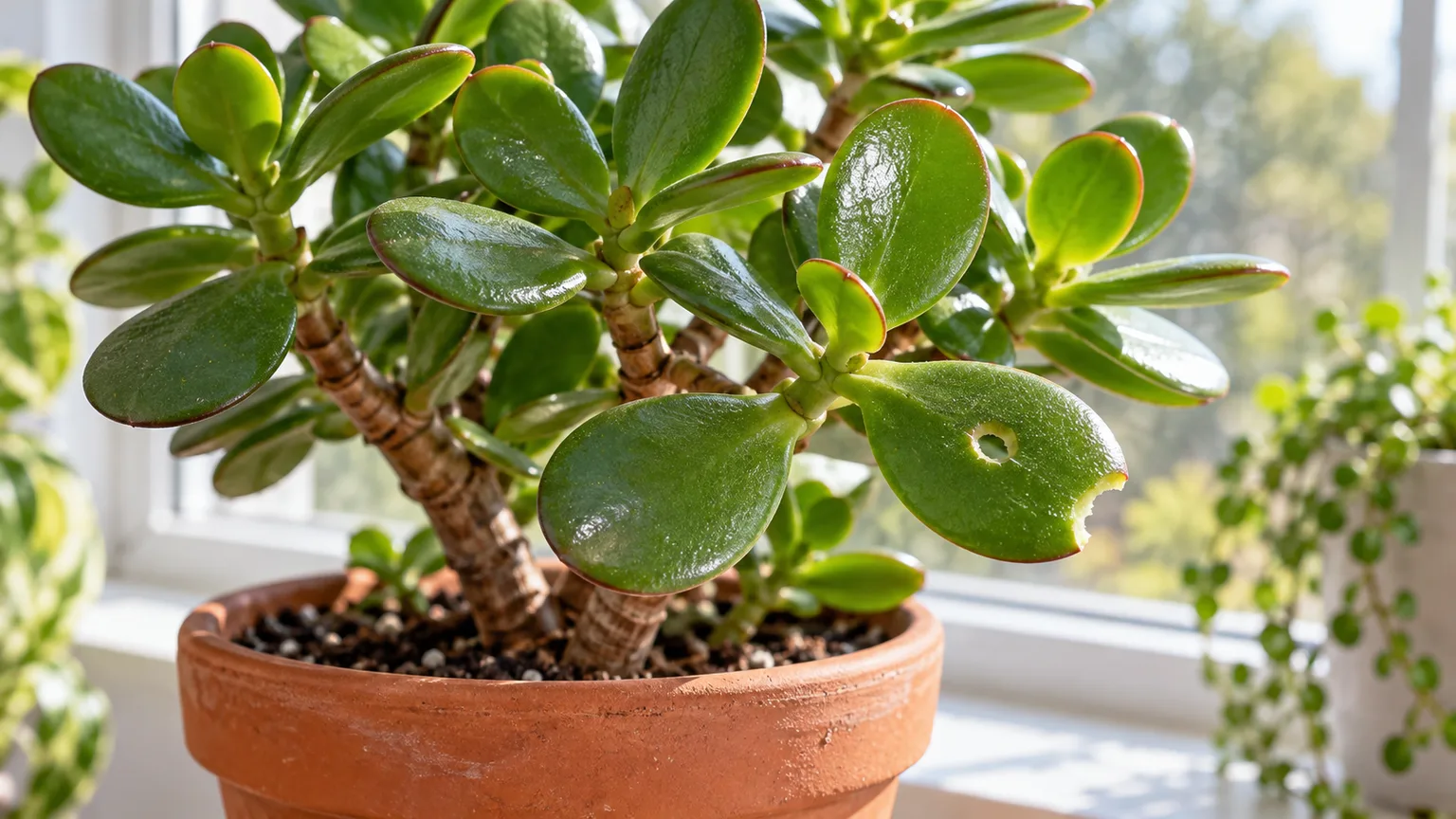
Holes in Leaves on Jade Plant: Causes, Checks & Fixes
This guide covers holes in leaves on Jade Plant. See also the general Holes in Leaves guide, watering, and light pages for this plant.
Holes in Leaves on Jade Plant: Causes, Checks & Fixes
Quick answer
Holes in Jade Plant leaves are chewing damage, not a leaf disease. Indoors, the usual culprits are a hitchhiking caterpillar or slug on a plant that summered outside, an earwig hiding in a saucer, or teeth marks from a pet. Sap-feeding insects such as mealybugs distort jade growth but do not punch clean holes.
First step: isolate the plant and inspect it after dark with a flashlight. Check leaf undersides, stem joints, the pot rim, and the soil surface, and handpick anything you find. For the general mechanics of chewed foliage, see the holes-in-leaves symptom guide; the checks below focus on what matters for a thick-leaved, slow-growing Jade Plant.
What holes look like on a Jade Plant
Healthy jade carries thick, smooth, oval leaves in opposite pairs along fleshy stems, and those fleshy oval leaves store the plant’s water reserve. Because the blades are succulent rather than papery, chewing damage reads differently here than on a thin tropical leaf: edges look scooped, notched, or gouged, and the wound surface dries into a pale callus instead of browning crisply across a wide margin.
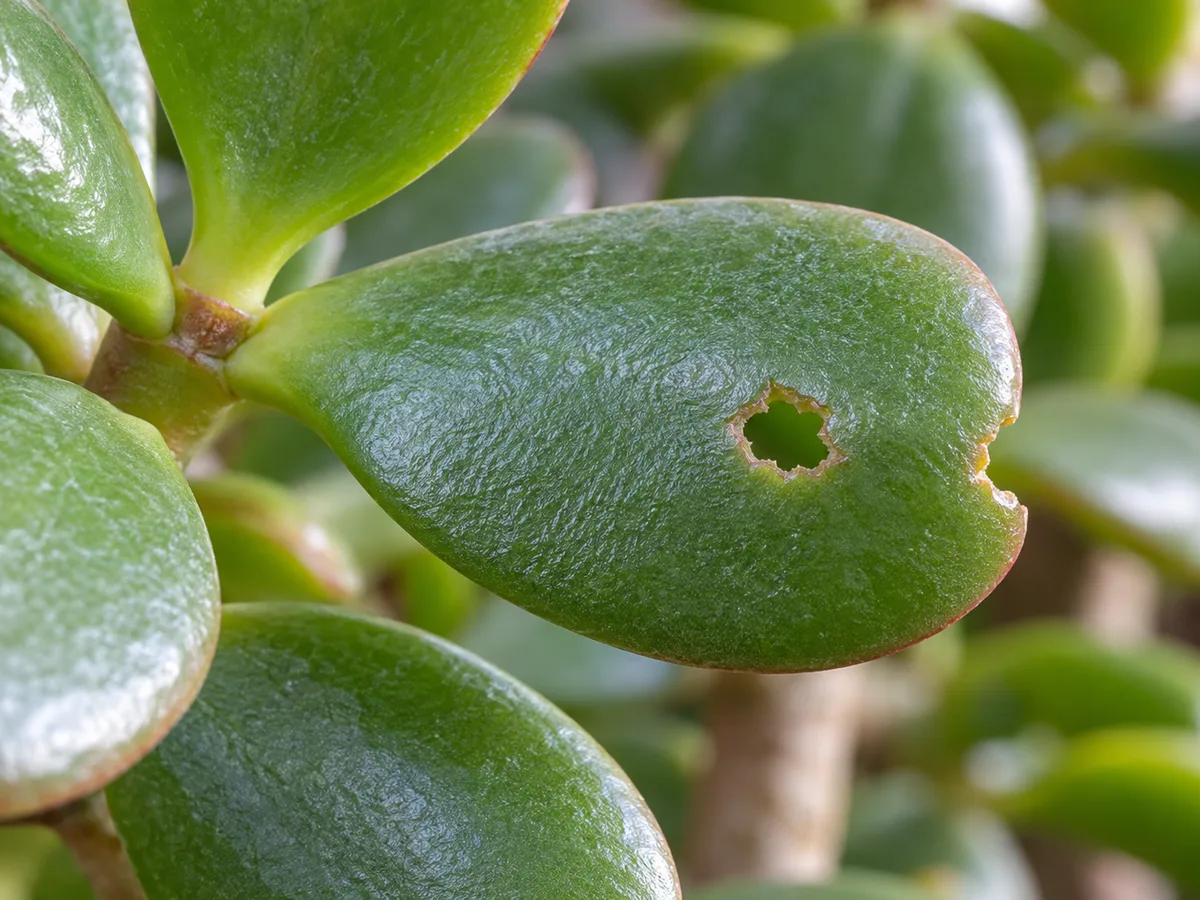
Fresh chew marks on jade stay moist and green at first, then callus into pale dry scars; compare suspect leaves with the newest pairs on the same branch.
Read the wound the way you would read a bite mark. Round holes in the middle of the blade with smooth margins point to a caterpillar that sat and fed. Ragged notches along the leaf edge, often several leaves on the same side, fit earwigs, grasshoppers, or slugs working from the outside in. Paired punctures or a torn flap on an otherwise reachable lower leaf suggest teeth, not insects. Tiny pits and puckering on unfolding new pairs, by contrast, are the signature of mealybugs feeding in the branch forks, not chewing.
One detail settles most cases: fresh damage versus old scars. New chew marks expose moist green tissue and may still show the feeder nearby. Old holes are dry, corky, and stable. If every hole is callused and the newest leaf pairs are whole, the pest is likely gone and the plant needs monitoring, not treatment.
Why Jade Plant gets holes in its leaves
Jade is not a preferred host for most indoor pests, which is exactly why holes narrow the suspect list so fast. Aphids, scale, spider mites, and mealybugs are the occasional problems on this species, and all four feed by sucking sap rather than chewing tissue. When actual chunks go missing, something with jaws visited the plant, and the visit usually traces back to one of three jade-specific situations.
Summering outdoors is the biggest risk window. Jade thrives on a bright patio in summer, and that is where caterpillars, earwigs, slugs, and grasshoppers find it. The damage often goes unnoticed until the plant comes back inside in autumn, when a hitchhiking feeder continues working through the collection in warm room air. If holes appeared within weeks of moving the plant indoors, treat the patio stay as the prime suspect.
Dense branch forks shelter nocturnal feeders. A mature jade grows like a miniature tree, with tight leaf pairs and woody crotches that stay humid after watering. Earwigs and slugs hide in saucers, cachepot gaps, and bark crevices by day and climb to feed at night, which is why daytime inspections of an affected jade so often find nothing. The plant’s architecture protects the pest, not just the foliage.
Plump leaves invite biting from pets and people. Jade leaves look and feel like something edible, and cats in particular bite the lowest, most reachable leaves. Unlike insect damage, bites cluster at pet height, appear as single events rather than nightly progression, and may coincide with knocked soil or a disturbed pot. Because jade is listed as toxic to cats and dogs, a bitten leaf is both a plant problem and a household safety signal.
What does not cause true holes: edema leaves corky bumps, sunburn leaves pale papery patches that may later tear, and old mechanical cracks split along the leaf length. Those can look alarming on a succulent, but none of them remove tissue the way jaws do.
How to confirm the cause
Work through these checks in order on the isolated plant. Stop at the first one that gives you a positive identification.
- Night inspection with a flashlight. Two to three hours after lights-out, check leaf undersides, stem joints, the pot rim, the saucer, and the top of the mix. Slugs, earwigs, and caterpillars feed after dark and are easy to spot on glossy jade leaves with a direct beam.
- Frass and trails. Look for small dark droppings (frass) lodged in branch forks or on leaves below the damage, a caterpillar sign. Silvery dried slime trails across the pot or lower leaves point to slugs or snails.
- Sticky residue test. Dab suspect leaves with a fingertip. Honeydew stickiness plus white cottony masses in the forks means mealybugs or scale insects are also present, but remember those cause distortion, not holes. Wipe the residue and keep hunting the chewer separately.
- Damage pattern map. Mark affected leaves with small stickers and photograph the plant. New holes appearing overnight confirm an active feeder still on the plant. No new damage over a week means the culprit has left or been removed.
- Pet-height check. If damage sits only on the lowest leaves within reach of a cat or dog, and soil is disturbed, suspect teeth. Move the plant out of reach immediately given the toxicity risk, and watch the animal rather than the plant.
Confirm before spraying anything. Jade’s thick cuticle and slow growth mean a misapplied treatment lingers on the leaves far longer than on a fast-growing tropical plant.
First fix for Jade Plant
Isolate the plant and handpick the feeder at night. Move the jade away from other pots, wait until after dark, and remove any caterpillar, slug, earwig, or snail you find by hand into soapy water. Check the saucer and cachepot gap, where nocturnal pests hide by day.
Handpicking first matters for jade specifically. This species is susceptible to damage from insecticide sprays, which can burn succulent foliage, so physical removal clears most single-pest cases with zero chemical risk. One careful night patrol followed by a week of monitoring resolves the majority of indoor jade chewing incidents without any product at all.
Step-by-step recovery
Once the feeder is removed, recovery is about protecting the wounds and confirming the plant is truly clear.
- Leave holed leaves in place for now. Damaged jade leaves still photosynthesize and still store water. Pruning them immediately costs the plant reserves it needs, especially going into winter dormancy. Remove only leaves that are mushy, blackened, or more than half destroyed.
- Keep wounds dry. Water at the soil line and keep the foliage dry for a week or two so callusing finishes cleanly. Wet wounds on succulent tissue invite secondary rot, and leaf fall and root rot follow overwatering on this species.
- Hold the soak-and-dry rhythm. Resume the normal jade watering guide pattern: drench only when the mix is fully dry, and never leave the saucer full. A stressed jade rots faster than it starves.
- Treat sap feeders separately if found. If your inspection revealed mealybugs in the forks, dab each cluster with 70% isopropyl alcohol on a cotton swab; alcohol dabbed onto mealybugs is a well-known control. Insecticidal soaps based on potassium salts of fatty acids and neem work on soft-bodied pests with good coverage, but patch-test one leaf cluster first and wait two days, since jade foliage burns easily.
- Quarantine for two full weeks. Keep the plant isolated until no new holes appear and fresh growth looks clean. Only then return it to the shelf.
Judge progress by whole new leaf pairs, not by old scars. Holed leaves never fill back in; the scar calluses and stays. Success looks like untouched new growth above the damaged zone and a stable, firm plant overall.
Lookalike symptoms
| What you see | More likely | Where to go |
|---|---|---|
| White cottony masses in branch forks with distorted new tips | Mealybugs, the most common jade pest | Mealybugs on Jade Plant |
| Hitchhiking chewer found after patio season | Caterpillars that rode indoors | Caterpillars on Jade Plant |
| Brown raised bumps that scrape off with a nail | Scale insects | Scale insects on Jade Plant |
| Corky bumps or blisters, no missing tissue | Edema from irregular watering | Edema on Jade Plant |
| Leaves softening and dropping in clusters | Overwatering or root stress, not chewing | Overwatering on Jade Plant |
| Pale papery patches after a light increase | Sunburn, which can later tear | Jade light guide |
Mistakes to avoid
- Spraying the whole plant on day one. Jade foliage is spray-sensitive, so test any soap, oil, or neem on one leaf cluster and wait a couple of days before wider use. Blanket spraying a succulent for a single caterpillar trades a cosmetic hole for chemical burns across the crown.
- Repotting during the investigation. Fresh holes do not implicate the root zone. Unpotting a chewed jade adds transplant stress to pest stress and tells you nothing about a caterpillar. Reserve repotting for confirmed soil or drainage failures.
- Fertilizing a chewed plant. Extra nitrogen pushes soft new growth that is more attractive to pests and more burn-prone under treatment. Feed only on the normal seasonal schedule once the plant is clean and growing.
- Tossing every holed leaf. On a slow grower like jade, each fleshy leaf is months of stored energy. Let callused leaves keep working until clean replacements expand above them.
- Assuming one pest explains everything. A plant that summered outdoors can host both a caterpillar and a mealybug colony. Clear the chewer, then re-inspect the forks before declaring victory.
Jade Plant care cross-check
Holes rarely reflect bad culture, but the conditions around the damage decide how fast the plant recovers. Confirm the jade overview basics: bright light with some direct sun, a fully drying mix between waterings, and a gritty fast-draining soil in a terracotta pot. Sharp drainage and appropriate light keep new growth firm and less inviting to opportunistic pests.
Check placement height as well. A jade sitting on a low table within pet reach will be bitten again no matter how well it is watered. Move chewed plants to a high shelf or a closed room, and review the household layout before blaming insects for a second round of damage.
How to prevent holes next time
- Inspect before bringing jade indoors. When patio season ends, night-check the plant twice over a week and hose the foliage (then let it dry fully) before it rejoins the collection. Most indoor chewing cases start as autumn hitchhikers.
- Remove daytime hiding spots. Empty saucers after watering, avoid tight cachepots with dark gaps, and clear fallen leaves from the soil surface where earwigs and slugs shelter.
- Quarantine new and returning plants. Two weeks of separation with a mid-quarantine night check catches feeders before they reach the shelf.
- Keep growth firm, not lush. Correct light and a lean seasonal feeding schedule produce compact, thick-cuticled leaves. Soft forced growth chews faster and scars worse.
- Pet-proof the placement. High shelves or hanging spots for small jades, closed doors for floor specimens. One bite incident is a warning; repeated access risks both the plant and the animal.
When to worry
Escalate when holes keep appearing nightly despite handpicking, when multiple leaves collapse or stems soften at the base, or when sticky honeydew and sooty mold spread alongside the chewing. Nightly progression means a breeding population or several individuals, not a lone caterpillar, and warrants a labeled product used exactly as directed after the patch test.
Seek a different diagnosis if leaves turn mushy and translucent without any missing tissue, if the soil smells sour, or if leaf drop accelerates while the mix stays wet. That pattern is root-zone failure wearing a chewing disguise, and no pest treatment will fix it.
Conclusion
Holes in jade leaves look dramatic on such perfect geometric foliage, but the diagnosis is usually simple: something with jaws visited, most often after a summer outdoors. Isolate the plant, patrol it at night, remove the feeder by hand, and let the thick leaves do what they do best by callusing over and carrying on. Clean new pairs, not healed old ones, are the sign you have won.
Related Jade Plant guides
- Jade Plant overview - light, soil, and seasonal rhythm behind firm growth
- Jade watering guide - soak-and-dry timing during wound recovery
- Mealybugs on Jade Plant - cottony fork colonies versus true chew holes
- Caterpillars on Jade Plant - the commonest hole-maker after patio season
- Scale insects on Jade Plant - sap-feeder bumps mistaken for damage
- Edema on Jade Plant - corky blisters that are not chewing
Related tool
Use the Pest Identifier Tool to narrow causes for holes in leaves on this plant before changing multiple variables at once.