Livistona Palm Care Guide: Light, Watering and Footstool
Livistona rotundifolia
Care for the round-leaf Livistona palm with bright filtered light, warm temperatures, lightly moist but well-drained soil, and room for its broad fan leaves.
Livistona Palm Care Guide
Start with wateringThe most common care mistake for Livistona PalmWatering guide →Livistona Palm care essentials
Light
Water
Keep the mix lightly moist while it is actively growing. Water when the top 2–3 cm has begun to dry, then let excess water drain fully; reduce watering in winter and never leave the pot standing in water.
Soil
Use a rich, moisture-retentive but airy palm or houseplant mix in a pot with drainage holes. The root zone should not remain waterlogged.
Humidity
Temperature
Fertilizer
About Livistona Palm
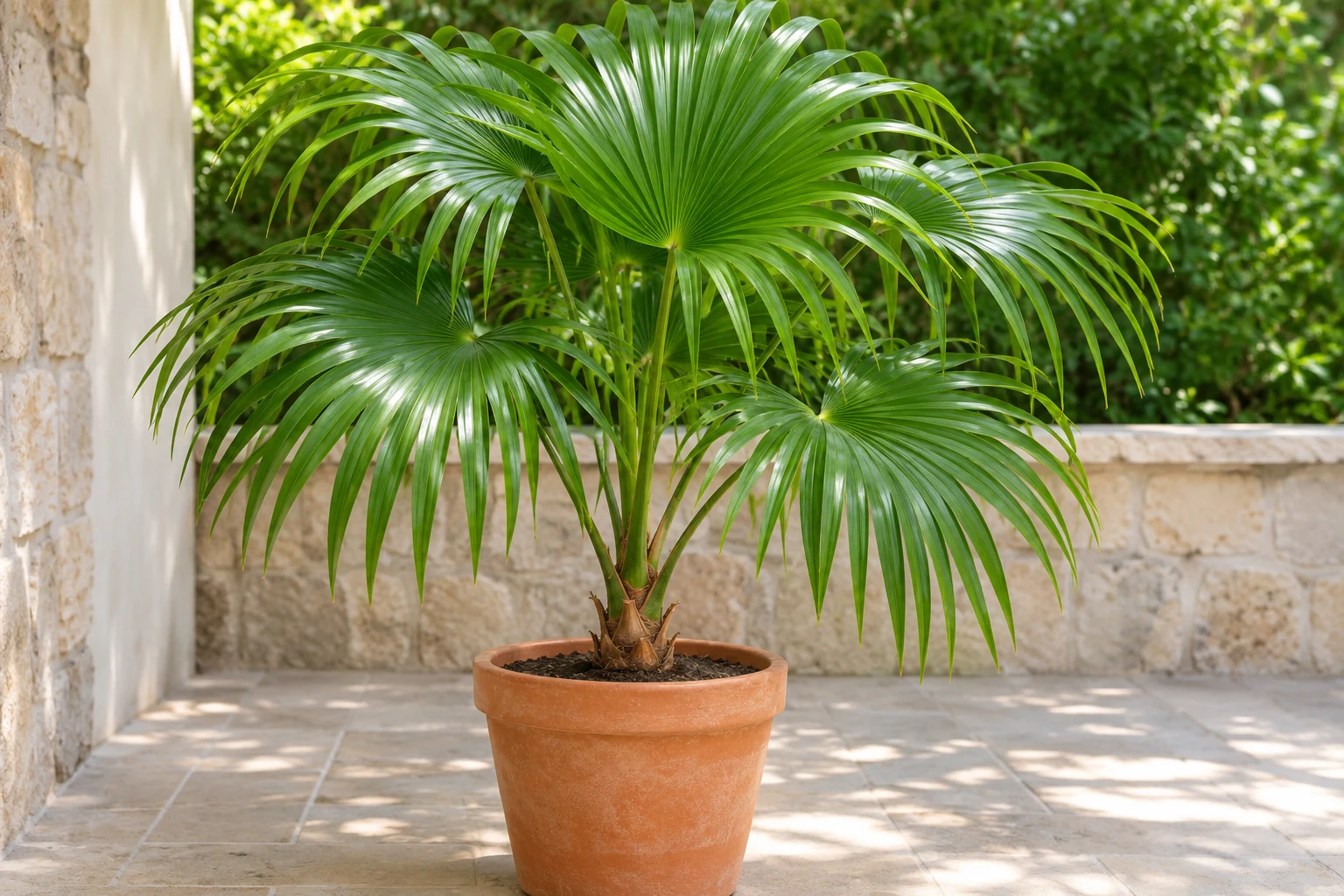
Livistona Palm is native to Southeast Asia and New Guinea, typically reaches About 2 m indoors; 4–8 m in warm outdoor cultivation indoors, with slow growth. Livistona Palm has a upright growth habit and part of the Arecaceae family. It is also known as Footstool Palm, Round-leaf fountain palm, and Malayan footstool palm.
| Detail | Information |
|---|---|
| Also known as | Footstool Palm, Round-leaf fountain palm, Malayan footstool palm |
| Native region | Southeast Asia and New Guinea |
| Mature size | About 2 m indoors; 4–8 m in warm outdoor cultivation |
| Growth rate | Slow |
| Growth habit | Upright |
| Scientific name | Livistona rotundifolia |
| Family | Arecaceae |
How to care for Livistona Palm?
When should you water Livistona Palm?
Keep the mix lightly moist while it is actively growing. Water when the top 2–3 cm has begun to dry, then let excess water drain fully; reduce watering in winter and never leave the pot standing in water.
- Check top 2 inches - Water when the top 2–3 cm has begun to dry, then let excess water drain fully; reduce watering in winter and never leave the pot standing in water.
- Drain excess water - Water when the top 2–3 cm has begun to dry, then let excess water drain fully; reduce watering in winter and never leave the pot standing in water.
What soil works best for Livistona Palm?
Use a rich, moisture-retentive but airy palm or houseplant mix in a pot with drainage holes. The root zone should not remain waterlogged.
- Well-draining mix - Use a rich, moisture-retentive but airy palm or houseplant mix in a pot with drainage holes.
Grower notes for Livistona Palm
Which Livistona this page covers
Livistona Palm here means the round-leaf fountain or footstool palm sold as Livistona rotundifolia. Some plant references use the name Saribus rotundifolius for this same palm. It is separate from Chinese fan palm (Livistona chinensis), which has its own plant profile.
Give it bright, filtered light
Place the palm near a bright window with filtered light. It tolerates partial shade, but a persistently dim spot weakens growth; strong midday sun can scorch leaves that have not acclimated. If you summer it outdoors, start in sheltered shade and increase exposure gradually.
Water for steady growth without a soggy root ball
Check the mix instead of following a fixed calendar. Once the surface couple of centimetres has started to dry, water thoroughly and empty the saucer. Keep the mix from drying hard during active growth, but reduce frequency in winter when growth slows and drainage takes longer.
Keep it warm through the year
This tropical palm is best grown indoors in temperate climates. Keep it above about 13°C, away from cold drafts and chilly glass. Outdoor growing is for frost-free warm climates; in cooler regions, use the patio only during reliably warm weather and bring it back inside before nights cool.
Plan for a slow but substantial palm
The round fan leaves rise on long, sometimes sharply spined stalks from a single trunk. It grows slowly and may reach about 2 m indoors; warm outdoor specimens grow several metres taller. Leave room for the spreading leaves and use gloves when pruning or moving it.
Pet safety needs caution
A species-specific non-toxic clearance was not confirmed. One houseplant reference says the palm is not known to be poisonous, but that is not the same as a verified safety listing. Keep it out of pets’ chewing range; the sharp leaf-stalk spines can also cause physical injury. Contact a veterinarian if a pet eats it or is injured.
Is Livistona Palm safe for pets?
Pet toxicity is not confirmed for Livistona rotundifolia. Keep it out of reach and prevent chewing; the leaf stalks can have sharp spines.
No verified species-specific pet-safety clearance was located. A horticulture reference describes the species as not known to be poisonous, but does not establish that it is safe. Sharp leaf-stalk spines are a separate physical hazard.
Watering Livistona Palm
Keep the mix lightly moist while it is actively growing. Water when the top 2–3 cm has begun to dry, then let excess water drain fully; reduce watering in winter and never leave the pot standing in water.
Soil & potting for Livistona Palm
Use a rich, moisture-retentive but airy palm or houseplant mix in a pot with drainage holes. The root zone should not remain waterlogged.