Mold on Soil on Maranta Leuconeura: Causes, Checks & Fixes
Quick answer
Fluffy white or gray fuzz on prayer plant soil means the top layer has stayed damp-often from fear of crisp tips and frequent shallow watering. First step: pause watering and let the top 2 cm dry completely before you scrape the mold or pour again.
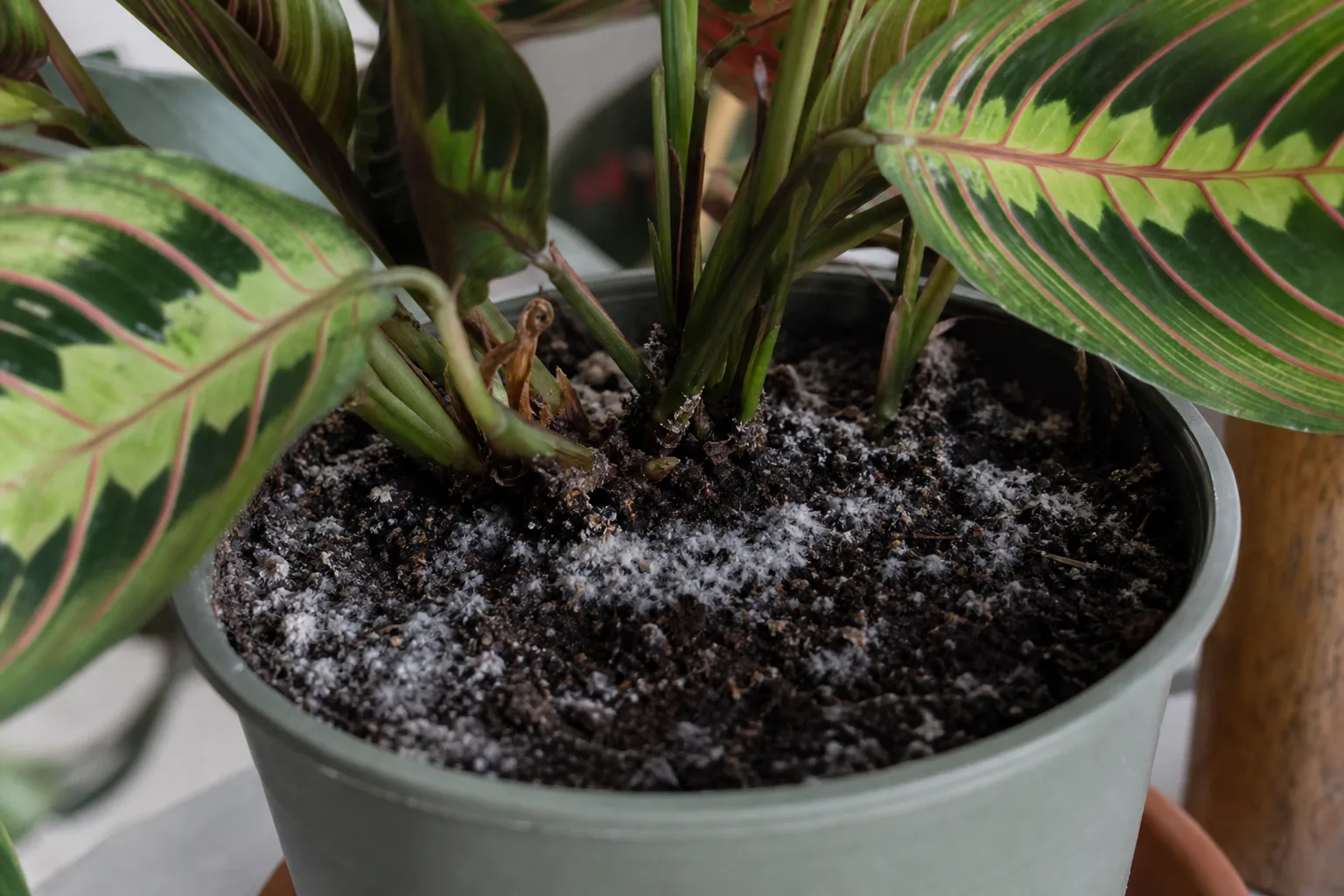
Mold on Soil on Maranta Leuconeura: Causes, Checks & Fixes
This guide covers mold on soil on Maranta Leuconeura. See also the general Mold on Soil guide, watering, and light pages for this plant.
Mold on Soil on Maranta Leuconeura: Causes, Checks & Fixes
Quick answer
White or gray fuzz on your Maranta leuconeura potting mix almost always means the soil surface has stayed damp too long. Prayer plants want moist but well-drained roots-not a slick crust that never dries between drinks. Saprophytic fungi colonize organic matter on wet growing media and are usually harmless to the plant itself. On Maranta, the real risk is the chronic surface wetness that grows the mold: shallow rhizomes, peaty mix, and humid room air can keep the top layer fungus-friendly even when you are trying to meet Maranta Leuconeura overview’ moisture needs.
First fix: stop watering and let the top 2 cm of mix dry completely before you scrape the mold or water again. Do not repot, spray fungicide, or drench cinnamon on day one.
What mold on soil looks like on Maranta leuconeura
On prayer plant pots, mold most often appears as a thin white, gray, or occasionally greenish fuzzy film across the soil surface. It may show up in patches between spreading stems or blanket the entire top of a small pot. You might notice it after several days without the surface drying, after heavy top watering that splashed mix onto crowns, or when a cachepot traps standing water in winter.
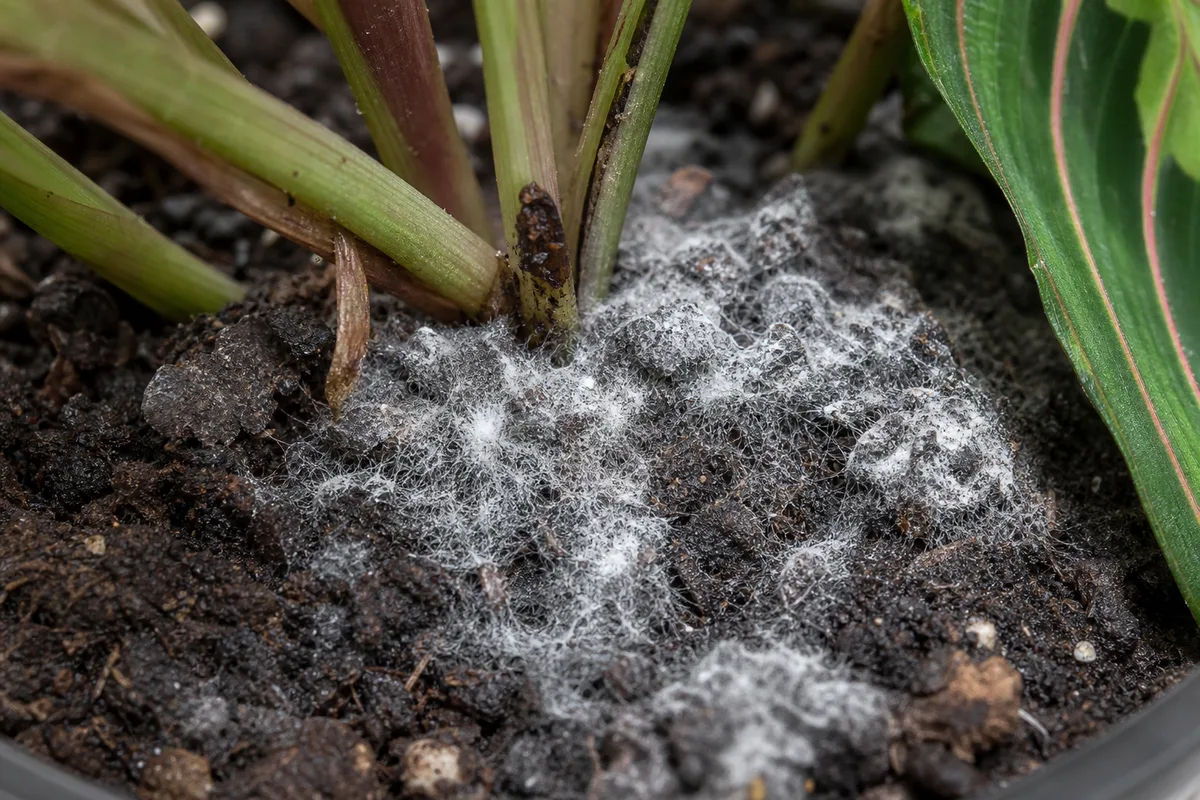
Mold on Soil symptoms on Maranta Leuconeura - compare with healthy tissue on the same plant.
Healthy Maranta should have a soil surface that loses its wet sheen within a few days of watering in Maranta Leuconeura light guide. Persistent fuzz still signals excess moisture or decaying debris-even in the high-humidity rooms this species prefers.
Watch for these patterns:
- Surface fuzz only - White or gray film on damp topsoil; leaves firm with crisp herringbone pattern; stems springy when pressed; leaves still fold up at night
- Debris-adjacent mold - Fuzz where fallen prayer plant leaves have decayed on the clump-forming soil mat
- Companion signs - Fungus gnats hovering at soil level, green algae on the pot rim, musty smell from organic mix
- Advanced trouble - Yellow lower leaves, soft tissue at stem bases, sour-smelling mix (these mean rot, not just cosmetic mold)
Mold on the soil is different from problems on leaves. Botrytis grey mould can affect humid foliage-but that shows as fuzzy gray patches on plant tissue, not a uniform film across the mix. Mealybugs leave cottony clusters in stem joints; mineral crust feels hard, not fluffy.
Why prayer plant gets mold on soil
Maranta leuconeura evolved on the humid tropical floor of Brazil, where leaf litter holds moisture in a loose organic layer. Indoors, that translates to moist, well-draining mix in bright filtered or indirect light-not a surface that stays slick for a week. Several care patterns push prayer plants toward surface mold more than many houseplants:
The moisture paradox. Illinois Extension advises to keep the soil moist while allowing soil to dry between waterings during winter. Many growers read “keep moist” as daily top watering and never let the surface breathe. Maranta needs moisture at depth; mold signals the top inch stayed wet too long.
Fear of crisp tips → surface flooding. Brown edges from dry air or fluoride push owners to water more often. Frequent shallow drinks keep the surface wet even when deeper mix has not used the last irrigation-exactly what attracts fungus gnat adults to moist organic media.
Overhead watering on crown-sensitive stems. Do not allow water to stand on the crowns; the stems rot easily. Splashing mix and debris onto wet crowns compounds decay that feeds surface fungi.
Peat-heavy or aged mix. Old potting media breaks down and holds more surface moisture. Dense peat without perlite crusts wet at the top while still feeling “moist” at depth-matching what fungus gnats need in over-watered soil.
Cool winter rooms and dim corners. Lower light slows transpiration and pot drying. A bathroom shelf or north window keeps the mix damp longer after each watering while watering habits continue unchanged.
Bottom-watering without saucer discipline. Bottom-watering can keep roots happy while the top stays drier-but leaving pots in standing water too long re-saturates the surface and invites mold alongside fungus gnat larvae in damp top layers.
Fallen leaves on the clump. Low clump-forming stems shed older leaves onto the mix. That debris is food for saprophytic fungi when moisture stays high.
How to confirm the cause
Work through these checks before Maranta Leuconeura repotting guide or spraying:
- Stem firmness at the crown. Pinch the lowest stems where they meet the mix. Springy green tissue is reassuring. Soft, mushy, or collapsing bases suggest crown or root trouble-not harmless surface fungus alone.
- Surface moisture. Press a finger into the top 2 cm. Clinging wet mix with a heavy pot means pause irrigation. Dry or just-cool surface with limp leaves may mean thirst-not mold prevention through more water.
- Skewer depth test. Slide a bamboo skewer to the pot bottom. Dark clinging mix throughout means chronic wetness. Dry at depth with only surface fuzz suggests top-layer issue from watering style or debris.
- Nyctinastic check. Healthy prayer plant leaves fold up at night. Loss of crisp folding with wet soil often precedes visible root decline on overwatered Maranta.
- Companion pests. Small flies when you disturb soil, or a thick fungal mat, share the same wet-surface habitat-see our fungus gnats guide when adults persist.
- Smell. Sour or swampy odor from drainage holes suggests anaerobic soil and possible root decline-shift to root rot checks, not just scraping.
If leaves look normal, stems are firm, and only the top centimeter is fuzzy after one heavy watering episode, you likely caught it early. Soft stems plus wet deep soil means escalate beyond surface mold treatment.
The first fix to try
Stop watering and let the top 2 cm of mix dry completely.
Do not scrape, repot, or spray on day one. Pausing irrigation clarifies whether the surface was simply over-saturated. In a warm humid room, a small prayer plant pot often dries at the surface in four to seven days.
Once the surface is dry:
- Scrape off the top quarter-inch of fuzzy soil with a spoon and discard it in the trash.
- Pull decaying leaves off the soil surface and wipe any mold splashed onto firm crowns-without leaving water pooled on stems.
- Move the pot to bright indoor light without strong direct sun with space around it for airflow.
- Resume watering only when the top 2 cm loses its wet sheen-then water thoroughly until runoff exits drainage holes, and empty the saucer.
That single dry-down cycle resolves most first-time mold cases on Maranta.
Step-by-step recovery if mold returns
Recurring fuzz means the environment still favors fungus:
- Bottom-water one cycle after the surface dries-roots absorb from below while the top stays drier, which reduces attractiveness to fungus gnats.
- Top-dress with a thin layer of dry peat-free mix plus perlite to replace the scraped surface.
- Yellow sticky traps if adult gnats persist-they share the wet-soil problem but need drying plus traps, not fungicide on leaves.
- Repot in spring if mix smells sour, stays wet more than a week after watering in warm light, or rots have already appeared from overwatering. Use moist-retentive but chunky blend with 15–20% perlite and a pot only slightly larger than the rhizome ball.
Repotting is a second-step fix, not day-one treatment for cosmetic fuzz on a healthy plant.
Mold vs. overwatering and root rot on Maranta
Surface mold and overwatering share the same trigger-too much moisture for too long-but they are not the same diagnosis:
| Signal | Harmless surface mold | Overwatering / root rot |
|---|---|---|
| Soil surface | White or gray fuzz on damp top only | May or may not show mold; often sour smell |
| Stems at crown | Firm and green | Soft, mushy, or collapsing |
| Leaves | Turgid pattern; night folding intact | Yellow lower leaves, limp foliage, lost folding |
| Pot weight | Heavy from recent water; dries slowly at top | Stays heavy days after watering |
| Urgency | Low if stems firm | High-inspect roots if sour smell |
Cosmetic mold on firm tissue is a moisture alarm. Mold plus soft crowns and sour mix is a root rescue situation-see root rot protocol.
Mistakes to avoid
Do not drench fungicide or heavy cinnamon washes across fuzzy soil on day one-surface mold is usually harmless when roots are healthy and disappears when the surface dries.
Do not keep pouring because you fear crisp tips without checking whether mix is already wet at the top. That deepens the moisture problem that grows mold.
Do not leave spent leaves piled on the clump-they decay into fungal food.
Do not assume mold is harmless and ignore softening stems at the crown. Surface saprophytes and root decline share the same cause: too much moisture for too long.
Do not mist heavily to compensate for wet soil-humidity helps leaves, but it does not replace the need for the top layer to dry occasionally.
Recovery timeline and warning signs
With firm stems and corrected watering, new rolled leaves should look crisp within one to two weeks. Surface mold should not return once the top dries between drinks.
Watch for:
- Good - Firm stems, dry surface before each watering, no new fuzz, leaves fold up cleanly at night after the dry-down resume
- Bad - Yellow lower leaves on wet mix, mushy stem bases, sour smell, mold returning within days of scraping, limp foliage that does not perk up after a careful drink
Old yellow leaves rarely re-green. Judge success by new growth and stable roots, not by reversing every discolored lower leaf.
How to prevent mold next time
Match watering to how fast this pot dries: check the top 2 cm before every major drink, not a fixed calendar. Full seasonal rhythm and dry-down checks live in our Maranta watering guide.
Remove fallen leaves promptly. Give pots airflow-especially grouped bathroom shelves and cachepots. Use drainage holes and empty saucers. Refresh the top layer or repot when peat-heavy mix never crusts over between drinks.
Treat the first white fuzz patch as a moisture alarm. On prayer plants, fixing wet surface soil early keeps herringbone leaves vivid, fungus gnats rare, and root rot out of the picture.
When to worry
Treat as urgent when stems go soft at the crown, the mix smells sour, yellow leaves spread while soil stays wet, or mold returns within days in a pot that never vents at the surface. Those patterns suggest rot, not a one-time overwater.
Cosmetic surface fuzz on a firm, colorful plant after a single heavy drink is a warning-act with dry-down and scraping, not panic.
Practical checks
Urgency check
Surface mold alone on firm stems is low urgency. Pair fuzzy soil with soft crowns, sour smell, or yellow leaves on wet mix for urgent root inspection-not spider mites or leaf pests.
Best inspection order
Surface moisture at 2 cm → crown stem firmness → night leaf folding → drainage holes and saucer water → companion gnats or algae.
About this guide
Author: sai-ananth · Reviewed by: LeafyPixels Review Board · Reviewed: 2026-06-16
Recommendations were cross-checked against University of Maryland Extension guidance on fungal growth on indoor plant soil, University of Minnesota houseplant pest resources, Illinois Extension prayer plant care, Royal Horticultural Society Maranta leuconeura culture, Missouri Botanical Garden PlantFinder, and LeafyPixels watering, overwatering, fungus gnats, and root rot guides.
Conclusion
Mold on Maranta leuconeura soil is usually a moisture and airflow signal, not a leaf disease. Let the surface dry, remove debris, scrape the fuzz, then adjust how you water this humidity-loving but oxygen-sensitive rhizome. Confirm stem firmness before you stack treatments. That path clears harmless saprophytes and catches the overwatering problems that actually threaten prayer plants.
When to use this page vs other Maranta Leuconeura guides
- Maranta Leuconeura watering guide - Use for routine moisture checks before assuming mold on soil is the main issue.
- Maranta Leuconeura problems hub - Browse all 40 common issues on this species.
- Overwatering on Maranta Leuconeura - Different entry point when symptoms overlap with mold on soil.
- Root Rot on Maranta Leuconeura - Different entry point when symptoms overlap with mold on soil.
- Slow Growth on Maranta Leuconeura - Different entry point when symptoms overlap with mold on soil.