Overwatering on Pearls and Jade Pothos: Causes, Checks &
Quick answer
Overwatering is the primary risk on Pearls and Jade Pothos-a slow variegated cultivar that uses water slowly. Stop watering when the top 3–5 cm is still damp, improve bright indirect light, and inspect roots if leaves yellow on wet soil.
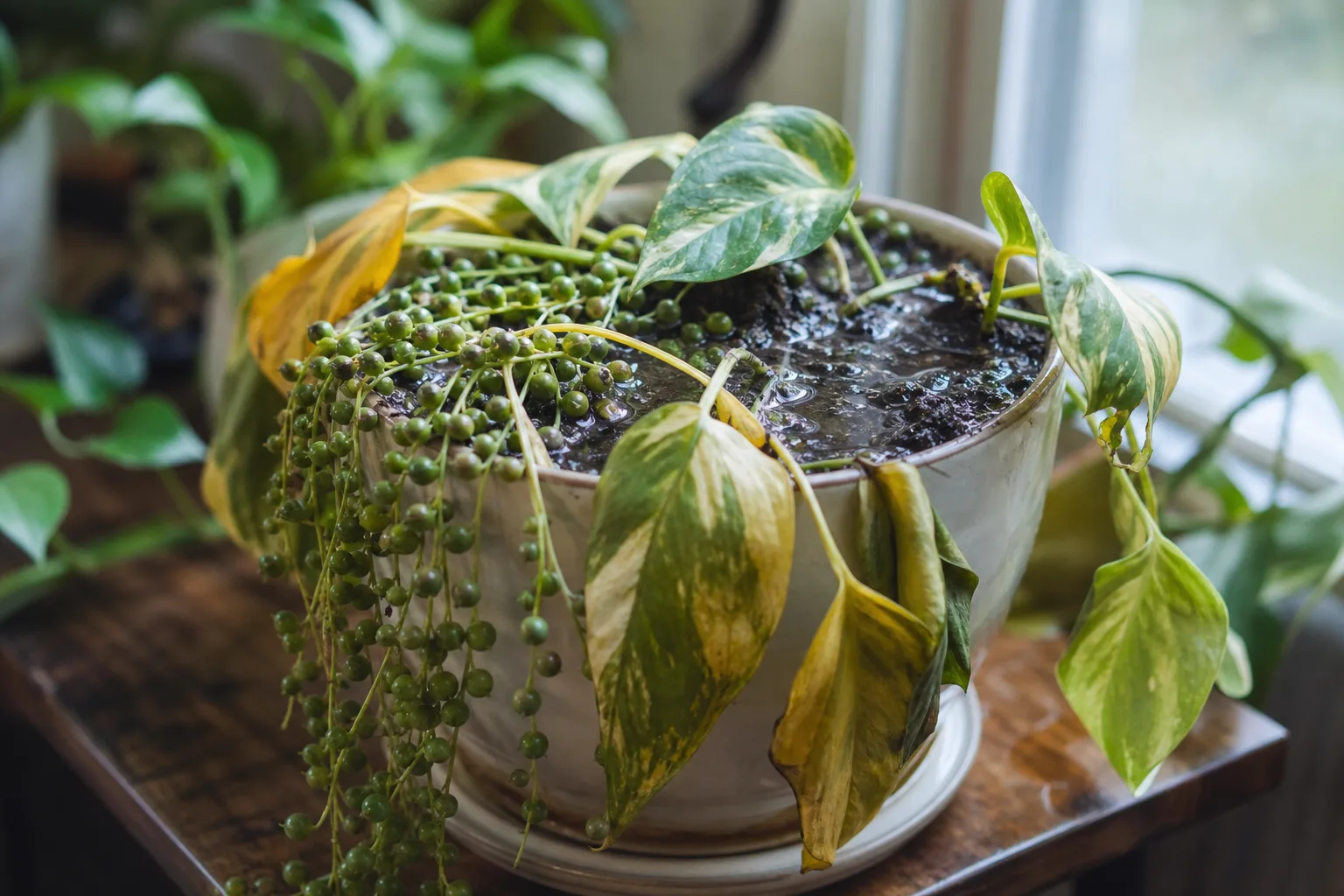
Overwatering on Pearls and Jade Pothos: Causes, Checks & Fixes
This guide covers overwatering on Pearls and Jade Pothos. See also the general Overwatering guide, watering, and light pages for this plant.
Overwatering on Pearls and Jade Pothos: Causes, Checks & Fixes
Quick answer
Overwatering is the most common way people stress Pearls and Jade Pothos (Epipremnum aureum ‘Pearls and Jade’). This slow-growing variegated cultivar with small white-and-green marbled leaves uses water more slowly than standard golden pothos, so soil that would be fine for a faster vine can stay soggy here for days. When roots sit in wet mix, they cannot absorb the oxygen needed to function normally-leaves may yellow or wilt even though the pot feels damp.
First step: stop watering immediately. Do not give another drink until you have checked moisture 3–5 cm deep and confirmed whether the mix is actually dry. If the pot is heavy, stems are soft, or soil smells sour, plan to unpot and inspect roots after that pause-not before you know the soil is wet.
What overwatering looks like on Pearls and Jade Pothos
On this compact cultivar, overwatering rarely announces itself with one obvious sign. Watch for a pattern:
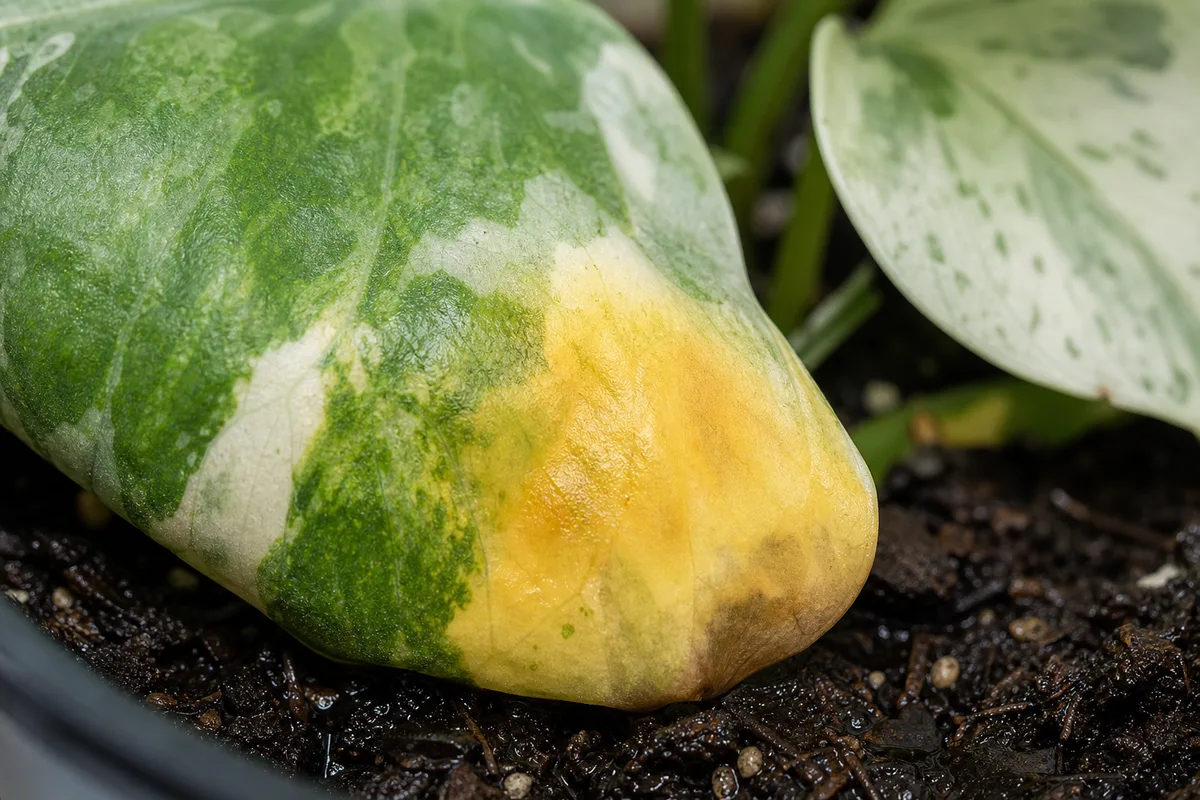
Overwatering symptoms on Pearls and Jade Pothos - compare with healthy tissue on the same plant.
- Yellow leaves on Pearls and Jade Pothos, often starting on lower vines while the pot still feels heavy
- Limp, drooping foliage despite moist soil-damaged roots cannot move water upward
- Soft or darkening stem bases where tissue meets wet mix
- Fading variegation as the plant weakens; new leaves may emerge smaller or mostly green
- White mold on the soil surface, fungus gnats, or a sour smell from the drainage hole
- Stalled growth for weeks even in spring and summer
Pearls and Jade leaves are smaller and thinner than golden pothos, so yellowing can look subtle at first. A single old leaf turning yellow near the soil line is normal senescence. Widespread yellowing with a wet root zone is not.
The confusing case is wilting with wet soil. That combination almost always means root damage from excess moisture, not thirst. Adding water because the vines look limp is the mistake that pushes mild stress into root rot on Pearls and Jade Pothos.
Why Pearls and Jade Pothos gets overwatered
Several traits stack the odds against this cultivar indoors.
Slow variegated growth. White and grey marbled tissue photosynthesizes less than all-green leaves, so the plant draws less water from the mix. What reads as “moderate” watering for golden pothos can be excessive here-especially in winter when growth slows further.
Low light slows dry-down. Pearls and Jade needs bright indirect light to hold its variegation. In a dim corner, transpiration drops and peat-based mix stays wet longer. Many growers water on habit while the plant is barely using moisture.
Calendar watering. Watering every Sunday regardless of pot weight is a common trigger. Cool rooms, short winter days, and dense soil all extend wet periods. Continuing a summer schedule through winter often leaves this slow grower sitting in saturated mix.
Container and mix mistakes. Oversized pots hold a large wet zone around a small root ball. Cache pots without drainage trap runoff. Heavy, aged potting mix that has broken down holds water like a sponge-even “light” drinks add up.
Misreading wilt. Because pothos is drought-tolerant once established, owners often assume limp leaves mean “needs water.” On Pearls and Jade with damp soil, wilt means roots are failing-not that the plant is dry.
Epipremnum roots may rot in poorly drained soils-that risk rises when culture keeps the mix wet rather than allowing dry-down between drinks.
How to confirm the cause
Work through these checks in order before Pearls and Jade Pothos repotting guide or pruning:
- Moisture at depth - Push your finger 3–5 cm into the mix. If it is cool and clings to your skin, the root zone is still wet. Surface dryness with wet depth below still counts as overwatered conditions.
- Pot weight - Lift the container. A heavy pot days after watering means slow drainage or too-frequent drinks for this cultivar.
- Stem firmness - Pinch vines near the soil line. Firm green tissue suggests early stress; soft, mushy bases point toward advancing rot.
- Smell and drainage - Sniff the drainage hole. Sour or swampy odor confirms chronic wetness. Confirm saucers are empty and holes are open.
- Light context - Note placement. Variegated pothos in low light plus frequent watering is a classic overwatering setup.
- Root inspection (if wet + declining) - Slide the plant out. Healthy pothos roots are firm and white or tan. Brown, translucent, or mushy roots confirm damage from excess moisture.
If the pot is light, mix is dry throughout, and leaves are limp with crispy edges, underwatering is more likely-one thorough soak after dry-down is appropriate. Do not treat every sad vine as overwatering without touching the soil first.
First fix for Pearls and Jade Pothos
Stop all watering until you have tested moisture 3–5 cm deep.
That single pause prevents more oxygen loss while you decide severity. If the mix is wet and stems are still firm, leave the plant in bright indirect light and wait until the top 3–5 cm is dry before one thorough soak-then discard saucer water within 30 minutes.
Do not fertilize, mist heavily, or repot on day one unless stems are soft or roots are clearly mushy on inspection. Stacking fixes while the root zone is saturated usually slows recovery.
Step-by-step recovery
After the watering pause, choose a path based on what you find:
Mild overwatering (firm stems, wet mix, early yellowing)
- Move to brighter indirect light so the pot dries faster-without direct hot sun on stressed foliage.
- Wait until the top 3–5 cm is dry, then water once until a little runs from the drainage hole.
- Empty the saucer. Do not water again until the same depth test reads dry.
- Remove fully yellow leaves for hygiene; they will not re-green.
Moderate damage (sour smell, some soft roots, spreading yellow)
- Unpot and gently rinse away wet mix from roots.
- Trim brown or mushy roots with clean scissors; sterilize blades between cuts.
- Let the root ball air on newspaper for several hours in bright indirect light.
- Repot into fresh standard potting mix with 20–25% perlite, in a pot sized to the trimmed root mass-not much larger.
- Wait five to seven days before the first light watering so cut roots are not plunged back into saturated mix.
- Hold fertilizer until new growth looks stable for two weeks.
Severe rot (soft stems, mostly mushy roots)
- Trim all decay back to firm tissue. If little root mass remains, take healthy stem cuttings with nodes as backup.
- Repot the main plant only if firm stem tissue remains above the rot line.
- Expect partial recovery over weeks; severe cases may survive only through propagated cuttings.
Recovery timeline
One to two weeks: Mild cases often stabilize once the root zone dries and watering matches dry-down. Yellowing should stop spreading; stems stay firm.
Three to six weeks: Moderate root trimming and repotting may show new small leaves with white-and-green variegation. Old damaged leaves drop rather than recover color.
Two to three months: Plants that lost significant root mass rebuild slowly-this cultivar never pushes growth as fast as golden pothos even when healthy.
Judge success by firm stems, no new yellowing on wet soil, and new variegated leaves-not by saving every old yellow blade.
Worsening signs: stems softening further after dry-down, blackening climbing from soil line, fungus gnats increasing while mix stays wet, or collapse without new buds after six weeks in warm bright conditions.
Lookalike symptoms
- Underwatering - Very light pot, dry mix throughout, limp vines with slightly crispy leaf edges. Deep soak once, then resume dry-down schedule.
- Low light / green reversion - Long gaps between small leaves, mostly green new growth, but pot dries normally. Fix placement before changing water volume.
- Normal old-leaf drop - One or two lower yellow leaves on an otherwise firm plant with appropriate dry-down. Remove the leaf; no emergency repot needed.
- Root rot (advanced overwatering) - Same wet-soil wilt but with mushy roots and sour odor. Requires trimming and repotting, not just a skipped watering.
- Cold draft stress - Darkened patches after exposure below about 10°C (50°F); soil may be appropriately moist. Warm stable placement, not more water.
What not to do
Do not water because leaves look limp while soil is still wet-that deepens root damage. Avoid repotting into a much larger pot “to help drainage”; extra wet soil volume slows drying on a slow grower. Do not fertilize a stressed plant in soggy mix. Skip misting as a substitute for fixing soil moisture.
Do not assume Pearls and Jade can follow golden pothos watering schedules-the variegated compact form uses less water. Never leave the pot sitting in a full saucer after watering.
When trimming damaged tissue, keep the plant away from pets-golden pothos is toxic to cats and dogs via calcium oxalate crystals.
How to prevent overwatering next time
Match watering to how fast your pot dries in bright indirect light, not a calendar. In most homes that means checking every few days and watering only when the top 3–5 cm is dry-roughly every 7–10 days in active growth and every 10–14 days in cooler winter months, but always confirm with your finger or pot weight.
Use well-draining mix with perlite, pots with open drainage holes, and saucers emptied after every drink. Place the plant where it gets enough light to use water predictably-variegated pothos in dim corners stay wet and lose pattern.
After repotting, learn the new dry-down rhythm before assuming the old schedule still fits. Quarantine new purchases and check pot weight weekly during the first month home.
When to worry
Escalate immediately if stems dent or soften at the base, soil smells strongly sour, or yellowing reaches new growth while mix stays wet. Those signs mean root rot may already be underway-unpot and inspect rather than waiting another week.
If more than half the root mass is mushy after trimming, survival odds drop. Propagate firm stem cuttings while tissue is still healthy.
Slow cosmetic yellowing on one lower leaf with firm stems and normal dry-down can wait for a simple schedule adjustment.
Conclusion
Overwatering on Pearls and Jade Pothos is a timing and drainage problem shaped by slow variegated growth-not bad luck. Confirm it with wet soil at depth, pot weight, and stem firmness; stop watering first; then dry out, trim, or repot only as severity demands. Bright indirect light and perlite-amended mix help this cultivar use water at a pace that keeps roots breathing-far more reliably than watering on habit.
When to use this page vs other Pearls and Jade Pothos guides
- Pearls and Jade Pothos watering guide - Use for routine moisture checks before assuming overwatering is the main issue.
- Pearls and Jade Pothos problems hub - Browse all 4 common issues on this species.
- Root Rot on Pearls and Jade Pothos - Different entry point when symptoms overlap with overwatering.
- Yellow Leaves on Pearls and Jade Pothos - Different entry point when symptoms overlap with overwatering.