Problems

Phalaenopsis Orchid Problems: Causes & Quick Fixes

Quick answer

Phalaenopsis Orchid is prone to 6 common issues - each link below is a plant-specific fix guide.
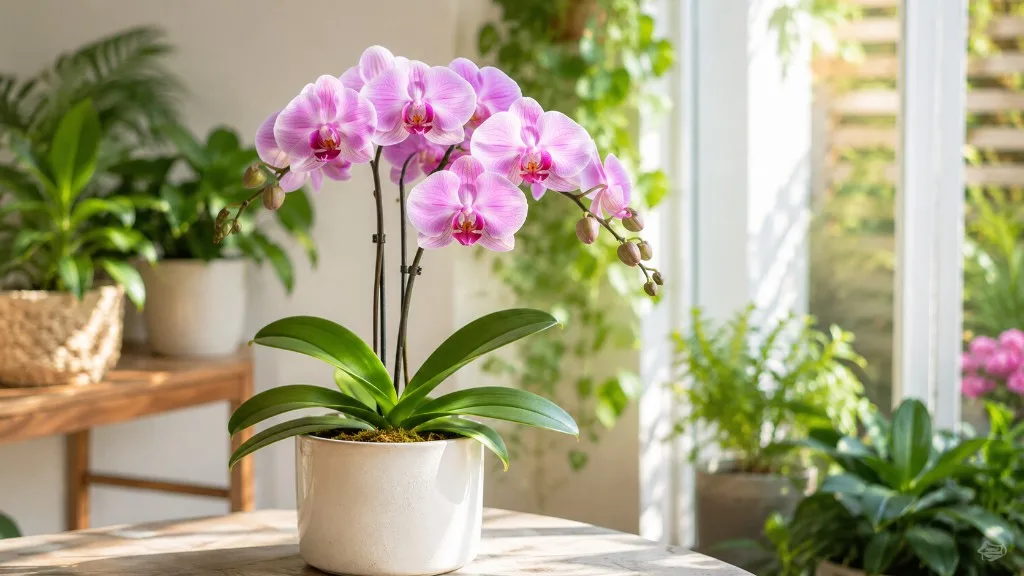
Phalaenopsis Orchid houseplant

Phalaenopsis Orchid problems

Use the guides below to diagnose and fix common issues on Phalaenopsis Orchid. Each problem page explains why it happens on this species and what to do first.

Or use our problem diagnosis tool to narrow down symptoms.

Common problems on Phalaenopsis Orchid

Likely cause: Phalaenopsis (/ ˌfælɪˈnɒpsɪs /), also known as moth orchids, [2] is a genus of about seventy species of plants in the family Orchidaceae. Orchids in this genus are monopodial epiphytes or lithophytes with …

Quick fix: Confirm diagnosis on your Phalaenopsis Orchid, then address the most likely care or pest factor described in current extension guidance.

Full fix guide →

Likely cause: Cold draft, sudden temperature change, or exposure to ethylene from ripening fruit

Quick fix: Keep away from drafts and fruit; maintain stable conditions

Full fix guide →

Likely cause: Phalaenopsis (/ ˌfælɪˈnɒpsɪs /), also known as moth orchids, [2] is a genus of about seventy species of plants in the family Orchidaceae. Orchids in this genus are monopodial epiphytes or lithophytes with …

Quick fix: Confirm diagnosis on your Phalaenopsis Orchid, then address the most likely care or pest factor described in current extension guidance.

Full fix guide →

Root Rot

Medium

Likely cause: Bark broken down and staying wet, or growing in standard soil

Quick fix: Repot in fresh orchid bark; correct to wet/dry watering cycle

Full fix guide →

Likely cause: Insufficient light preventing leaf growth between bloom cycles

Quick fix: Move to brighter indirect position

Full fix guide →

Frequently asked questions

How often should I water Phalaenopsis Orchid?

Every 7–10 days - run water through bark until draining, then allow bark to dry almost completely. Silver-grey roots = dry = time to water. Bright green roots = moist.

What light does Phalaenopsis Orchid need?

Phalaenopsis Orchid grows best in bright indirect light (east or north-facing window), medium indirect light.

Is Phalaenopsis Orchid safe for cats and dogs?

Phalaenopsis Orchid is generally considered non-toxic to cats and dogs. Always monitor pets around new plants and contact your vet if unusual symptoms appear.

How do I propagate Phalaenopsis Orchid?

Propagate Phalaenopsis Orchid from healthy stem or root divisions during active growth.

What soil is best for Phalaenopsis Orchid?

Use orchid bark chips or sphagnum moss. Never standard potting soil. Repot in fresh bark every 1–2 years.

When should I repot Phalaenopsis Orchid?

Repot Phalaenopsis Orchid when roots circle the pot or growth slows despite good care.

Why does my Phalaenopsis Orchid have ants on plant?

Phalaenopsis (/ ˌfælɪˈnɒpsɪs /), also known as moth orchids, [2] is a genus of about seventy species of plants in the family Orchidaceae. Orchids in this genus are monopodial epiphytes or lithophytes with … Quick fix: Confirm diagnosis on your Phalaenopsis Orchid, then address the most likely care or pest factor described in current extension guidance.

How this Phalaenopsis Orchid problems guide is reviewed?

Editorial policyReview board

Written by · Reviewed by LeafyPixels Review Board · Updated September 10, 2026

This Phalaenopsis Orchid problems problem guide was researched and written by . Problems symptoms on Phalaenopsis Orchid, lookalike causes, and step-by-step fixes are cross-checked against extension pest, disease, and care references before publication.

We prioritize sources that hold up under scrutiny:

  • University cooperative extension bulletins and fact sheets (Penn State, Clemson, UMD, NC State, and similar programs)
  • Botanical garden and horticultural society publications
  • Peer-reviewed plant science and veterinary toxicology references where pet safety matters (including ASPCA Animal Poison Control)
  • Established reference works on indoor plant culture

The LeafyPixels editorial team then reviews the draft for clarity, step-by-step usefulness, and fit with real apartment and home conditions-not ideal greenhouse setups. When guidance changes materially, we update the page and note the revision date.


Sources used

  1. average home temperatures (n.d.) Phalaenopsis. [Online]. Available at: https://gardens.si.edu/collections/plants/orchids/orchid-care-sheets/phalaenopsis/ (Accessed: 10 September 2026).
  2. build sufficient vegetative mass before it can bloom again (n.d.) Why Wont My Orchid Re Bloom. [Online]. Available at: https://www.aos.org/orchids/why-wont-my-orchid-re-bloom (Accessed: 10 September 2026).
  3. cooler night temperatures around 55–65°F for several weeks (n.d.) Faq.Php. [Online]. Available at: https://ask.extension.org/kb/faq.php?id=855557 (Accessed: 10 September 2026).
  4. daytime temperatures around 70–80°F and nighttime temperatures around 60–70°F (n.d.) What Proper Care Moth Orchid. [Online]. Available at: https://yardandgarden.extension.iastate.edu/faq/what-proper-care-moth-orchid (Accessed: 10 September 2026).
  5. ethylene gas from ripening fruit (n.d.) Bud Blast. [Online]. Available at: https://www.aos.org/orchid-care/orchid-pests-and-diseases/bud-blast (Accessed: 10 September 2026).
  6. has no major water-storage organs other than its leaves (n.d.) Phalaenopsis Culture Sheet. [Online]. Available at: https://www.aos.org/orchid-care/care-sheets/phalaenopsis-culture-sheet (Accessed: 10 September 2026).
  7. has no pseudobulbs to store water (n.d.) Care Phalaenopsis Orchids Moth Orchids. [Online]. Available at: https://extension.umd.edu/resource/care-phalaenopsis-orchids-moth-orchids (Accessed: 10 September 2026).
  8. insufficient bright indirect light (n.d.) Online resource. [Online]. Available at: https://hgic.clemson.edu/?s=indoor+plants+light+requirements (Accessed: 10 September 2026).
  9. It is normal for the oldest leaves of moth orchids to turn yellow and dry up as they age (2018) Qa What Causes Orchid Leaves To Turn Yellow And Shrivel. [Online]. Available at: https://marylandgrows.umd.edu/2018/12/26/qa-what-causes-orchid-leaves-to-turn-yellow-and-shrivel/ (Accessed: 10 September 2026).
  10. Phalaenopsis is listed as non-toxic to cats and dogs (n.d.) Phalaenopsis Orchid. [Online]. Available at: https://www.aspca.org/pet-care/aspca-poison-control/toxic-and-non-toxic-plants/phalaenopsis-orchid (Accessed: 10 September 2026).