Repot Florida Beauty Without Losing Variegation
Repot Florida Beauty Without Losing Variegation
Repot Florida Beauty Without Losing Variegation
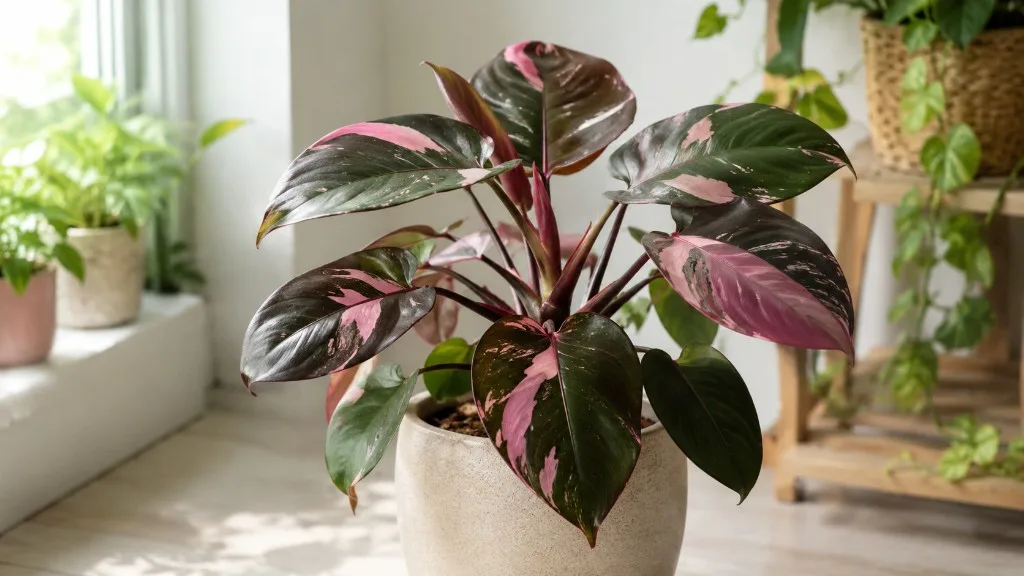
Philodendron Florida Beauty (Philodendron ‘Florida Beauty’) is a climbing hybrid of Philodendron pedatum and Philodendron squamiferum — lobed leaves splashed with cream and yellow, red petioles, and a vine that matures only when it has something to climb. Repotting refreshes compacted peat, gives fibrous aroid roots room to breathe, and is often the best moment to install or reset a moss pole before internodes stretch and juvenile spear-shaped leaves stay small. Done on schedule in spring with a modest pot increase and chunky mix, a Florida Beauty usually pushes a firm new lobed leaf within three to five weeks. Done in winter with an oversized container and dense bagged soil, the same plant may sit wet for weeks, push temporarily greener leaves, and look fine in photos while roots fail below the soil line.
This guide covers when Florida Beauty actually needs a new pot — not just because the calendar says so — how to choose container size and mix, how to anchor a moss pole during the same session, and how to read cream splashes on the first post-repot leaf as your clearest recovery signal.
Illustrative Scenario: A Typical Indoor Florida Beauty Repot
The following walkthrough is an illustrative indoor scenario — a composite of common collector situations, not a photo-documented case study from a single repot session.
Imagine a Florida Beauty in a 12 cm nursery pot on a bright east windowsill with a short bamboo stake. New lobed leaves have slowed despite consistent watering. Roots circle the drainage holes, water runs through in under a minute without wetting the center, and the mix smells slightly sour. In mid-April, you choose a routine upgrade repot: slide into a 15 cm pot, refresh with the chunky aroid blend from our soil guide, install a proper moss pole with fresh sphagnum wrap, and skip fertilizer for one month. Mild wilt on the top leaf lasts about four days — normal transplant adjustment. At week four, a new leaf opens with deep lobes and stable cream sectors on firm tissue. That pattern tells you roots have reconnected; the repot succeeded.
If your plant matches only one symptom — say, a single yellow lower leaf — this scenario does not apply. Read the signs section and the routine vs rescue table before you unpot.
Quick Answer — When to Repot Florida Beauty
Repot Philodendron Florida Beauty every one to two years indoors, or on the RHS schedule of every 2–3 years if growth is slow and the mix still drains well. Repot sooner when roots circle drainage holes, water runs straight through without absorbing, growth stalls in spring despite good light, or the mix smells sour. Spring through early summer is the safest window because active growth helps roots colonize fresh mix faster. Choose a pot only 2–5 cm (1–2 inches) wider than the current one, refresh with a chunky aroid blend, install or reset the moss pole during the same session, and skip fertilizer for four to six weeks after the move. Mild wilting for one to two weeks is normal; the first firm new lobed leaf with stable cream splashing is your best sign that roots have reconnected.
Why Florida Beauty Repotting Differs From Other Philodendrons
Florida Beauty is not a self-heading rosette philodendron you can drop into any pot and forget. The RHS profile describes a climbing hybrid whose juvenile leaves start spear-shaped and develop deep lobes as the plant matures — a maturation pattern tied to vertical support, not just age on a calendar. That biology changes how repotting feels in your hands and how fast the plant recovers afterward.
Pedatum × squamiferum climbing habit and moss poles
Both parent species are climbers. Indoors, Florida Beauty produces adventitious roots from nodes along reddish stems and wants to attach to moist support — a moss pole, bark board, or trellis — not sit in a dense peat cylinder with no air channels. The RHS philodendron guide notes that climbing philodendrons are best given support and will eventually root into a moss pole if it is kept moist. When you repot, you are managing two root zones: the fibrous mass in the pot and aerial roots wrapped around support material. Self-heading cultivars like ‘Birkin’ fill a pot symmetrically from a central crown; Florida Beauty often looks modest above soil while roots have already spiraled the entire bottom third of a nursery container.
Repotting is the natural moment to install or reset the moss pole — not a separate project you schedule later. Stabbing a pole through an established root ball after the fact damages fine roots and delays climbing growth for another season.
Variegation, lobed leaves, and transplant stress
Florida Beauty keeps cream and yellow splashes on mature foliage when light is adequate — unlike Florida Ghost, where new leaves emerge white and age green. Cream sectors contain less chlorophyll than green lobes, so the whole plant has less photosynthetic buffer during transplant shock. Mild stress can push temporarily greener new leaves, especially if light drops after repot or if roots sit in wet unused soil in an oversized pot. Stable mixed variegation on firm new lobed foliage means recovery is on track. Long-term cream splashes still depend on bright filtered light and healthy roots — repotting alone cannot fix a dim corner.
Signs Your Florida Beauty Needs a New Pot
Calendar repotting wastes effort and risks shock. Penn State Extension lists practical pot-bound signals that apply directly to Florida Beauty: mix drying out very quickly, roots growing through drainage holes, slowed growth despite regular feeding in spring and summer, and a root ball so dense you can barely see potting mix in the bottom third when you unpot.
Root-bound and drainage-failure symptoms
Watch for these together rather than in isolation. Water running through in minutes while the center of the root ball stays dry means roots have formed a hydrophobic mat — common in year-old peat without enough perlite or bark. Yellow lower leaves in bright light with wet-feeling soil may indicate root decline in compacted mix, not thirst. Long internodes and smaller new leaves on a staked plant can mean the root zone is exhausted even when top growth looks acceptable. Sour smell from the pot is a drainage emergency — refresh mix at repot or rescue sooner rather than waiting for spring.
When not to repot
Do not repot solely because one lower leaf yellowed, because you bought a decorative cachepot, or because a social post says “spring repot everything.” NC State Extension is clear: confirm roots are the problem before you disturb them. Skip routine repotting when the plant is actively pushing new lobed leaves, when you cannot provide bright indirect light for recovery, or when pests are present — resolve insects first so wounded roots are not stressed further. If the only issue is a moss pole too short, extend the pole or add sphagnum without a full repot when the root zone is still healthy.
Best Season and Timing for Florida Beauty Repots
Spring is the best time to repot houseplants so roots can grow into fresh mix during the active season, according to both NC State and Penn State Extension. For Florida Beauty indoors, March through June is the sweet spot — days lengthen, new lobed leaves emerge more reliably, and wet-dry cycles in chunky mix normalize within a week or two.
Clemson HGIC notes that overcrowded philodendrons can be repotted at any season with a general-purpose potting soil, but indoor collectors should still prefer spring for variegated climbers unless facing root rot or a broken pot. Avoid winter routine repots when growth pauses and cold wet mix lingers around semi-dormant roots. Winter repot is justified only for severe root-binding, active root rot, or container failure — then use a modest size increase, temperatures above 18°C (65°F), bright indirect light, and cautious watering until spring growth returns.
Choosing Pot Size, Material, and Drainage
Oversized pots are the most common repot mistake on collector philodendrons. Excess soil holds moisture the root system cannot use, and saturated compost causes roots to rot — especially in variegated plants already running closer to their energy limit.
The one-size-up rule
NC State Extension recommends a container no more than 2 inches (about 5 cm) larger in diameter than the current pot. For Florida Beauty, that usually means moving from a 12 cm nursery pot to 15 cm, or from 15 cm to 18 cm — not jumping to a statement planter “for future growth.” The RHS philodendron guide adds that if the pot is much bigger, compost stays wet longer and roots suffocate.
Choose plastic or glazed ceramic with drainage holes for most indoor setups — lighter weight makes moisture checks easier. Unglazed terra-cotta dries faster, which can help heavy-handed waterers but may stress a moss-pole specimen in bright light. Never repot directly into a decorative cachepot without drainage; use the nursery pot inside or drill holes. Penn State warns that excess water must drain freely — standing water at the bottom creates disease pressure within days.
Skip the gravel layer at the pot bottom; NC State research cited in their repot guide shows it reduces drainage by keeping the soil above saturated longer. Use a small screen over the hole if mix escapes, not a deep stone layer.
Soil Mix Refresh at Repot Time
Florida Beauty needs an open, well-drained, moisture-retentive aroid mix — not straight bagged indoor soil. The RHS Florida Beauty profile recommends under-glass culture in an ericaceous, well-drained mix that can include lava rock or pumice, fine fir bark, and leafmould or chopped sphagnum moss, in bright but diffused light. Indoors, translate that into the chunky blend in our soil guide: roughly 45–50% potting base, 25–30% perlite, 15–20% orchid bark, optional worm castings.
Replace compacted or sour old mix entirely — do not reuse degraded peat from a root-bound ball. Clemson HGIC ties most philodendron failures to soil that does not drain quickly or overly frequent watering; fresh structure at repot resets that failure mode. Moisten the new mix before backfilling so it absorbs water evenly, as Penn State recommends.
Installing a Moss Pole During the Repot Session
Florida Beauty without vertical support develops long internodes and smaller leaves — repotting is your chance to fix architecture, not just roots. The RHS advises training climbing philodendrons onto a moss pole kept moist so adventitious roots can attach.
Set the pole 2–3 cm from the main stem with its base in the lower third of the new pot before the mix firms. Tie the lowest node with an aerial root to damp sphagnum using soft plant ties — do not bury the stem deeper just to stabilize the vine. Install the pole during the repot session rather than stabbing through roots afterward. If you are upgrading an existing pole, wrap fresh sphagnum and retie nodes after the plant is seated at the correct depth.
Step-by-Step Florida Beauty Repot Procedure
Follow this sequence for a routine upgrade repot. Wear gloves if sap irritates your skin — philodendrons contain calcium oxalate crystals that can irritate on contact, and the RHS lists Florida Beauty as harmful if eaten with skin/eye irritant potential.
1. Water lightly the day before so the root ball slides out without shattering fine roots. 2. Prepare the new pot — clean used containers with dilute bleach solution if reusing, per NC State guidance. 3. Unpot gently — hold the pot upside down and tap the rim; never pull the plant by the stem. 4. Inspect roots — trim soft brown roots with sterile shears; tease circling roots outward so they grow into fresh mix instead of continuing the spiral. 5. Place the moss pole before backfilling. 6. Seat the rootball so the top sits about 2.5 cm (1 inch) below the rim, as Penn State recommends. 7. Backfill with moist chunky mix around the sides; firm gently without compacting. 8. Water thoroughly once until runoff clears, then drain fully. Do not pack wet media — that reduces air space and invites root problems, per NC State.
Root inspection, trimming, and backfilling
Healthy Florida Beauty roots are firm and white or tan. Mushy brown roots indicate rot — trim back to solid tissue and consider a rescue repot with extra perlite rather than a routine upgrade. If the root ball is severely bound, make two or three vertical scores on the outer mat with a clean knife, then tease outward. Do not bare-root a healthy collector specimen unless resolving advanced rot; stripping fine root hairs extends shock on variegated tissue.
Leave the original soil line on the stem — do not bury nodes deeper “for stability.” If surface salts accumulated, scrape the top 2.5 cm of old mix before seating, as extension guides suggest for long-potted houseplants.
Post-Repot Care and Reading Recovery Signals
After repotting, place Florida Beauty in bright filtered light — the same window it thrived in before, not a dim “recovery corner” that pushes greener leaves. Hold fertilizer for four to six weeks until new growth resumes; the RHS Florida Beauty profile stops feeding in winter and resumes in spring, and freshly disturbed roots do not need salt load.
Water once thoroughly after repotting, then return to the top 3–5 cm dry-down cycle from our watering guide — do not keep mix constantly moist “to help it settle.” Mild wilt on one or two leaves for five to ten days is normal. Worry when multiple leaves collapse, petioles soften at the base, or new growth stays absent beyond four weeks in warm bright conditions — inspect drainage and root health before watering again.
Your best recovery signal is botanical, not emotional: a firm new lobed leaf with cream or yellow splashes proportional to the stem pattern means roots are working. Temporary all-green new leaves after repot often mean light dropped or soil stayed too wet — brighten placement and verify pot size before assuming genetic reversion.
Routine Upgrade Repot vs Root-Rot Rescue
| Situation | Action | Pot size | Mix | Moss pole |
|---|---|---|---|---|
| Roots circling, mix exhausted, plant stable | Routine upgrade | +2–5 cm | Fresh chunky aroid blend | Install or refresh |
| Sour smell, mushy roots, wilt in wet soil | Rescue repot | Same size or +2 cm only | Extra perlite, less peat | Reset if needed; do not wrap wet rotted roots into moss |
| One yellow lower leaf, healthy roots | No repot | — | — | — |
| Wants larger leaves, roots fine | Moss pole upgrade only | — | — | Taller pole + sphagnum |
Rescue repots may require trimming more root mass and cutting back top growth so the remaining roots can support the vine — a trade-off Penn State describes when keeping plants at current size versus letting them grow larger. After rescue, treat the plant like a fresh propagation for four weeks: bright light, sparse water, no feed. If rot was advanced, consider taking a stem cutting from a node with cream patterning per our propagation guide as insurance.
When to Use This Page vs Other Florida Beauty Guides
Use this repotting guide when roots have outgrown the pot, mix has collapsed, you need to install a moss pole, or you are resolving root-bound drainage failure. For day-to-day moisture rhythm, see the watering guide. For window placement and variegation stability, see the light guide. For mix recipes and drainage tests before you repot, see the soil guide. For feeding after the post-repot waiting period, see the fertilizer guide. For stem-tip cuttings if repot reveals damaged roots, see the propagation guide. For overall identity and cluster navigation, start with the overview.
Related Florida Beauty Guides
Watering — dry-down checks that matter more than ever in the first month after repot. Light — bright filtered light keeps cream splashes stable on new lobed leaves. Soil — the chunky aroid recipe to prepare before unpotting. Fertilizer — when to resume feeding after roots recover. Propagation — backup plan if rescue repot reveals advanced rot.
Conclusion
Philodendron Florida Beauty repotting is straightforward when you treat it as root-zone maintenance for a climbing variegated hybrid, not a generic houseplant chore. Repot in spring when roots circle holes or mix fails drainage, move up one pot size, refresh with chunky aroid blend, install the moss pole in the same session, and read firm new lobed leaves with stable cream splashes as proof the plant has recovered. Skip calendar repots, skip oversized pots, and skip winter moves unless you are rescuing rot — Florida Beauty forgives careful delay more easily than careless haste.