Pot Too Large on Heartleaf Philodendron: Causes, Checks &
Quick answer
A pot too large on Heartleaf Philodendron surrounds a modest root ball with wet, unused mix that roots never colonize. First step: stop watering on schedule, unpot to compare root mass to pot width, and repot into a container only 1–2 in. wider with fresh airy mix.
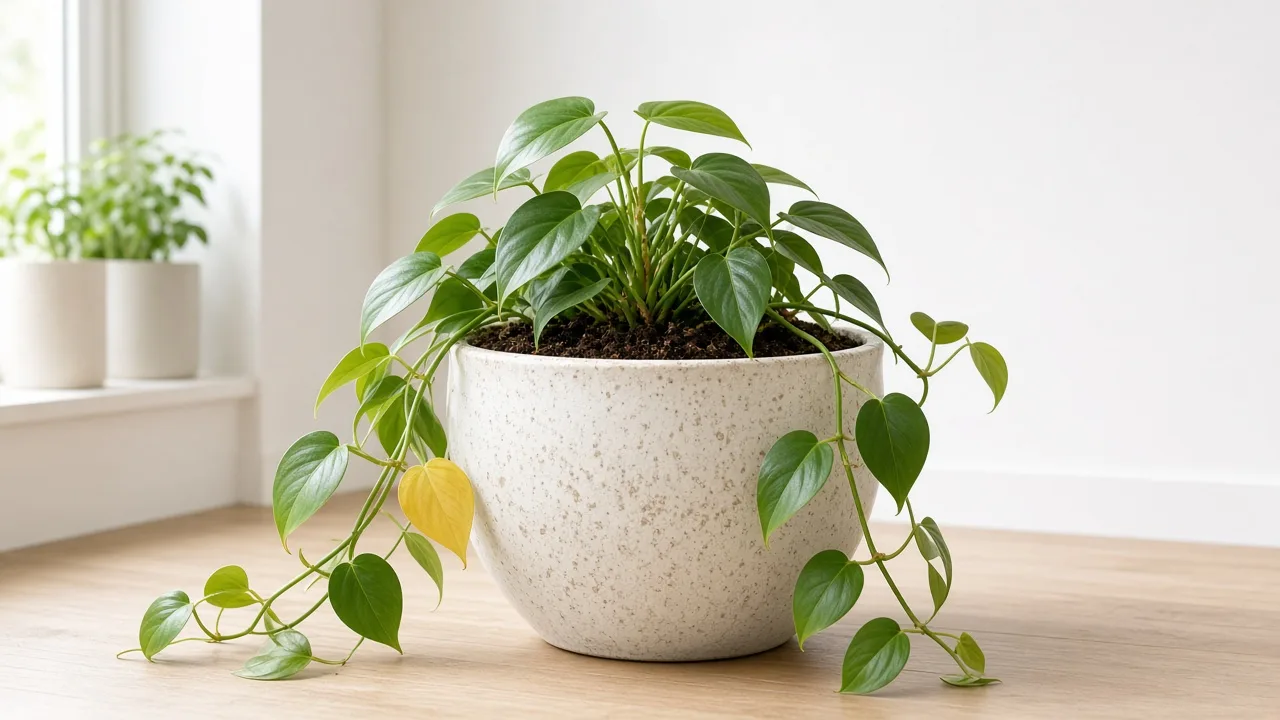
Pot Too Large on Heartleaf Philodendron: Causes, Checks & Fixes
This guide covers pot too large on Heartleaf Philodendron. See also the general Pot Too Large guide, watering, and light pages for this plant.
Pot Too Large on Heartleaf Philodendron: Causes, Checks & Fixes
Quick answer
A pot too large on Heartleaf Philodendron (Philodendron hederaceum) surrounds a modest root ball with wet, unused mix that roots never colonize. The soggy outer ring reduces oxygen and mimics chronic overwatering—even when you water carefully.
First step: stop watering on a calendar. Unpot the plant, compare root mass to pot width, and repot into a container only 1–2 in. wider with fresh airy mix. Wait until the new mix is dry before the first drink.
Heartleaf is a fast trailing aroid that tolerates being slightly root-bound. That tolerance makes oversized pots easy to miss: long vines look full while roots occupy only the center of a generous container. For how excess soil volume keeps mix wet in general, see our pot too large guide—on Heartleaf, the pattern usually shows up as yellow lower leaves, stalled nodes, and fungus gnats over a wide wet soil surface.
Why Heartleaf Philodendron gets a pot too large
Well-meaning Heartleaf repotting is the usual trigger. Owners jump from a 4-in. nursery pot to a 10-in. decorative planter so the trailing vine has “room to grow.” Overpotting adds compost that stays wet long after roots could use a drink. Philodendron roots explore only part of the volume; the outer ring never dries at the same pace as a properly sized pot.
Day-one upsizing reinforces the mistake. Many new Heartleaf plants arrive in a cache pot or sealed decorative container with no drainage. Moving a small plant into a tall glazed planter hides inches of idle wet mix below the root zone—NC State Extension notes that root rot can occur in overly wet soil, and oversized containers make every watering riskier.
Why full trailing vines mislead pot sizing
Heartleaf fills a hanging basket quickly above soil level. Three feet of glossy vine does not mean the root ball has caught up. Iowa State Extension notes philodendrons tolerate being slightly pot-bound and only need upgrading when overcrowded—yet owners often upsize because the cascade looks impressive, not because roots circle drainage holes.
Winter and low light compound the issue. In cooler, dimmer rooms, evaporation drops. A pot that barely dried in summer may stay saturated for weeks in winter, softening roots at the edges where wet outer soil meets live tissue. RHS guidance warns that overpotting done after June is worse when plant growth slows and conditions stay wetter.
What an oversized pot looks like on Heartleaf Philodendron
Overpotting on Heartleaf mimics overwatering because the mechanism is the same: roots sit in wet mix too long.
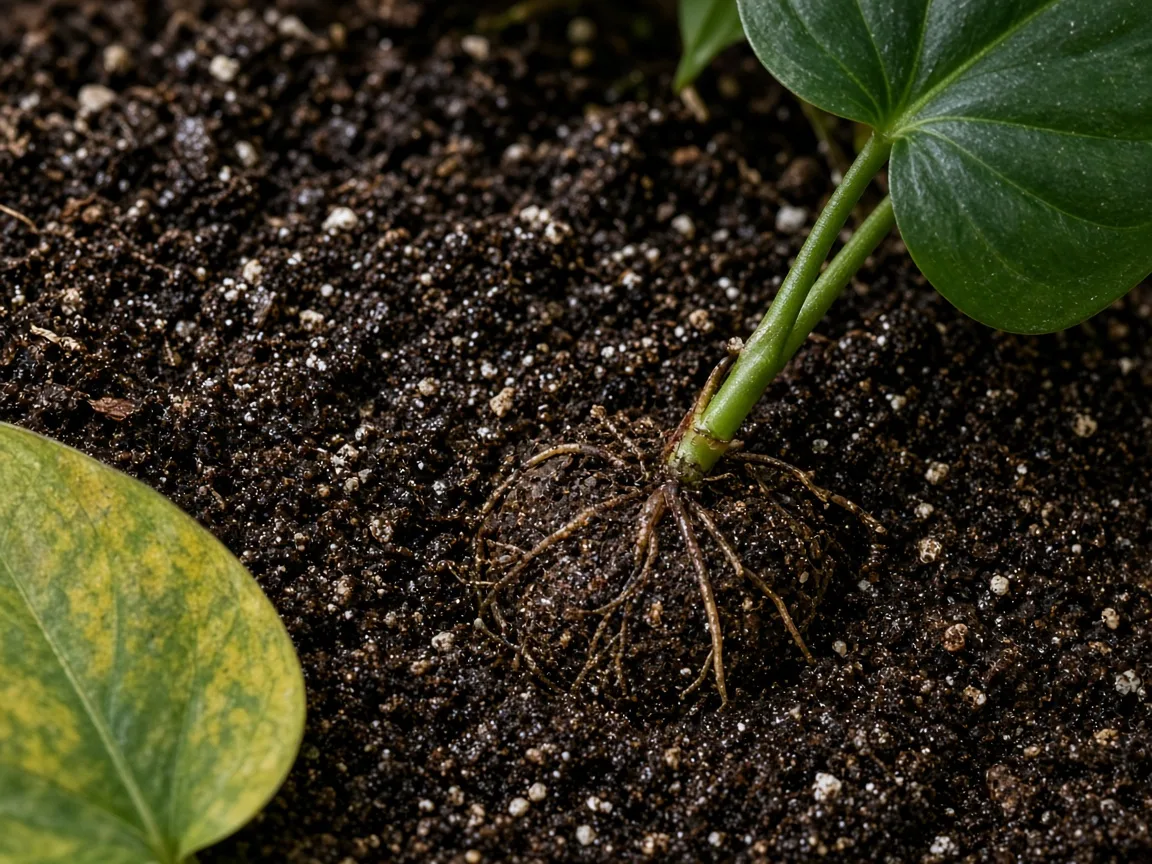
Pot Too Large symptoms on Heartleaf Philodendron—compare with healthy tissue on the same plant.
Typical patterns:
- Root ball sits low in a tall pot with inches of unused mix below and around it
- Outer soil stays dark and cool while the surface looks merely dry
- Pot stays heavy for 10+ days between waterings; fungus gnats hover over the wide wet surface
- New leaves stall or emerge smaller despite otherwise adequate light
- Lower leaves yellow while upper vines still look perky—Heartleaf stores water in stems, so wilting can lag behind root damage
- No roots visible near drainage holes seasons after a dramatic upsize
- Musty or sour smell when lifting the pot
Unlike a root-bound Heartleaf that dries within days of watering, an overpotted plant often stays wet too long—opposite dry-down timing, same root-zone stress.
Hanging-basket bottom curve and wet outer rings
In plastic hanging baskets, the lowest curve of the pot holds the most mix relative to roots. When you upsize a hanger for aesthetics, that bottom bulge becomes a permanent wet zone. Water runs to the curve, outer compost stays saturated, and adventitious roots along trailing stems never reach the excess volume. Lift the basket after watering: if the bottom half stays cool and heavy while the top 2 in. look dry within a day, you are likely dealing with oversizing plus gravity pooling—not thirst.
How to confirm the cause
Work through these checks before repotting again:
- Pot-to-root ratio - Slide the plant out gently (water lightly the day before if mix is bone dry). If root width is less than half the pot diameter, the container is likely too large.
- Moisture profile - After one thorough watering, probe outer edge soil vs. center over the next week. A persistent wet outer ring with a small root mass confirms oversizing.
- Repot history - Did the last repot jump more than 1–2 in. in diameter? Did you repot on day one into a decorative planter?
- Root health - Mushy brown outer roots with firm white center roots suggest rot in the wet perimeter soil—escalate to the root rot guide if smell or stem softness is present.
- Growth rate - Zero new nodes for months in a large pot with damp outer mix points to environment, not necessarily disease—but rot may follow if wetness continues.
Lookalike symptoms to rule out
| What you see | More likely cause | Where to go |
|---|---|---|
| Yellow lower leaves on chronically wet outer soil | Oversized pot or overwatering | This page or overwatering |
| Pot dries in 2–3 days; roots circle holes | Root-bound—modest upsize needed | Repotting guide |
| Pale, stretched vines; soil dries normally | Low light, not pot volume | Light guide |
| Yellow leaves with firm dry mix | Underwatering or salt buildup | Watering or yellow leaves |
| Dense peat mix stays wet in a correctly sized pot | Poor drainage or heavy mix | Soil guide |
Confirm whether the problem is excess volume, excess retention, or both before repotting.
First fix for Heartleaf Philodendron
Downsize or right-size the pot the same week you confirm oversizing. Choose a container only 1–2 in. wider than the root ball with open drainage holes. Use dry, airy potting mix with added perlite—RHS recommends only 2.5–5 cm (1–2 in.) wider at each repot for container plants.
Steps:
- Unpot and shake or brush away wet outer soil from the unused volume.
- Trim any mushy roots back to firm white or tan tissue.
- Repot at the same depth with fresh mix snug around the root ball—not loose fill in a cavernous pot.
- Do not water for five to seven days unless leaves visibly droop and the new mix is fully dry at 2 in. depth.
- Place in Heartleaf light so the smaller soil mass dries predictably.
Do not add fertilizer, hard-prune every vine, and move the plant to a new room on the same day. One correction—right-sized container and dry-down watering—comes first.
Node-cuttings salvage when wet outer mix triggers rot
If stems soften at the soil line but upper nodes remain firm, downsizing may not save the base. Heartleaf roots easily from stem cuttings with visible nodes—this is the standard propagation path when lower tissue is compromised.
- Cut healthy vines above the damage, leaving at least two nodes per cutting.
- Remove lower leaves; place stems in water or moist airy mix in a small container sized to the cutting cluster.
- Keep cuttings in bright indirect light; roots often form within one to two weeks.
- Discard mushy base material rather than repotting it into yet another large pot.
Wear gloves when handling cut stems—Heartleaf sap contains calcium oxalate crystals that irritate skin.
Step-by-step recovery
After the downsizing repot:
- Water on dry-down only - Check the top 2 in. of soil, not the calendar. Iowa State Extension advises watering when the top 2 in. are dry so roots regain oxygen.
- Bright indirect light - Avoid dark recovery corners; moderate light helps the plant use water at a steady pace.
- Empty saucers - Never let runoff sit beneath the pot or inside cache pots.
- Hold fertilizer - Wait until new firm leaves or nodes appear, usually two to four weeks after the root zone stabilizes.
- Trim damaged foliage - Remove yellow or soft leaves once growth resumes; they rarely recover.
Recovery timeline
Most Heartleaf plants with mostly firm roots show new root tips within two to three weeks. Expect one to two months before the vine looks full again above the pot. Old yellow leaves may drop; judge success by firm stems, no sour smell, and fresh nodes—not by restoring every blemished leaf.
Mistakes to avoid
- Watering more when leaves yellow - Yellowing on wet outer soil often means too much moisture, not drought. RHS notes that symptoms are often mistaken for underwatering, which makes overpotting worse.
- Adding gravel at the bottom instead of downsizing - A false drainage layer does not fix excess soil volume.
- Fertilizing a stressed plant - Nutrients cannot compensate for anaerobic roots.
- Repotting into an even larger pot - Hoping fresh soil in a bigger container solves stagnation usually accelerates rot.
- Bare-rooting healthy plants - Unless rot is severe, keep the root ball intact to limit transplant shock.
Heartleaf Philodendron care cross-check
Right-sized pots work only with the rest of this plant’s routine:
- Mix - Light potting mix with perlite and orchid bark; avoid heavy peat that holds moisture in plastic hanging baskets.
- Light - Medium to bright indirect light; weak light slows evaporation from any pot size.
- Water - Top 2 in. dry before the next drink; lift the pot to learn its weight when properly dry.
- Repot cadence - Every one to two years when roots demand it, not when the vine trails long.
How to prevent an oversized pot on Heartleaf Philodendron
Follow the 1–2 in. sizing rule at every repot. Repot in spring or early summer when growth is active. Use nursery pots inside decorative cache pots—and empty runoff after watering. Size for the root ball you see at unpotting, not the trailing spread you want next season.
When to worry
Treat as urgent when stems soften at the base, blackening climbs the vine, or the plant wilts on soggy soil. Those signs suggest root rot has started in the wet outer compost—act within days, not weeks. If roots are mostly mushy after trimming, propagate firm stem cuttings above healthy nodes and discard the base.
Conclusion
An oversized pot is one of the most common hidden causes of yellow leaves and stalled growth on Heartleaf Philodendron. The fix is not less light or more patience with wet soil—it is matching container volume to the root mass, using airy mix, and watering only when the top 2 in. are dry. Downsize once, let the plant stabilize, and size up gradually from there.
When to use this page vs other Heartleaf Philodendron guides
- Heartleaf watering guide - Use for routine moisture checks before assuming pot too large is the main issue.
- Heartleaf overwatering - Use when watering habits—not container volume—are the primary problem.
- Heartleaf problems hub - Browse all common issues on this species.