Calcium Deficiency on Pilea: Check New Growth First
Quick answer
On Pilea Peperomioides, persistent distortion and poor expansion in the newest leaves can justify checking for calcium deficiency, but appearance alone cannot confirm it. First photograph the central growth and inspect the root zone; pause calcium amendments until watering, drainage, pH, salts, pests, and physical injury are considered.
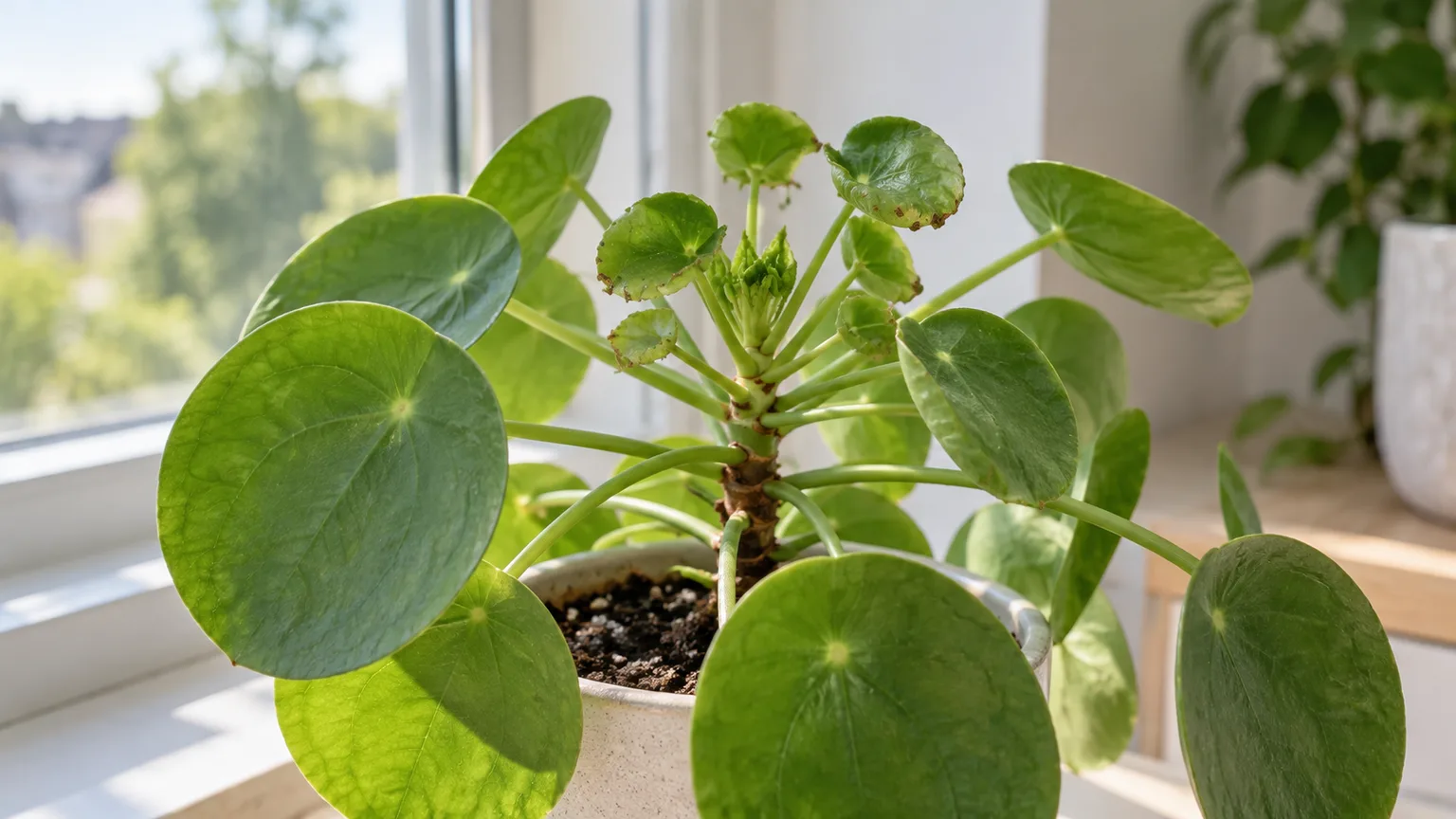
Suspected Calcium Deficiency on Pilea Peperomioides: What to Check First
This guide covers calcium deficiency on Pilea Peperomioides. See also the general Calcium Deficiency guide, watering, and light pages for this plant.
Suspected Calcium Deficiency on Pilea Peperomioides: What to Check First
Quick answer
On Pilea Peperomioides, a calcium problem is only a suspected cause when the newest leaves repeatedly emerge poorly expanded or distorted. A single curled blade, brown fleck, or leaf that is still opening is not enough to diagnose a mineral deficiency. First photograph the crown and inspect the potting mix and roots; do not add calcium while the cause is unclear.
This guide focuses on the coin-leaf plant’s central growing point and container conditions. Use the Pilea Peperomioides overview for its full care profile and the Pilea problems hub to compare other diagnoses. The general calcium-deficiency guide explains the nutrient pattern across plants; the checks below help decide whether that pattern fits this Pilea.
What suspected calcium deficiency looks like on Pilea Peperomioides
In general plant references, calcium deficiency is associated with poorly expanded or curled young leaves and, in more affected tissue, dead patches. Calcium is relatively immobile within plants, so symptoms often appear first in new growth; drought can also restrict calcium uptake and movement, creating similar signs. These are broad diagnostic clues, not a confirmed Pilea-specific signature, and the consulted sources do not establish a visual test that proves calcium deficiency in this species (UConn’s nutrient-deficiency guide).
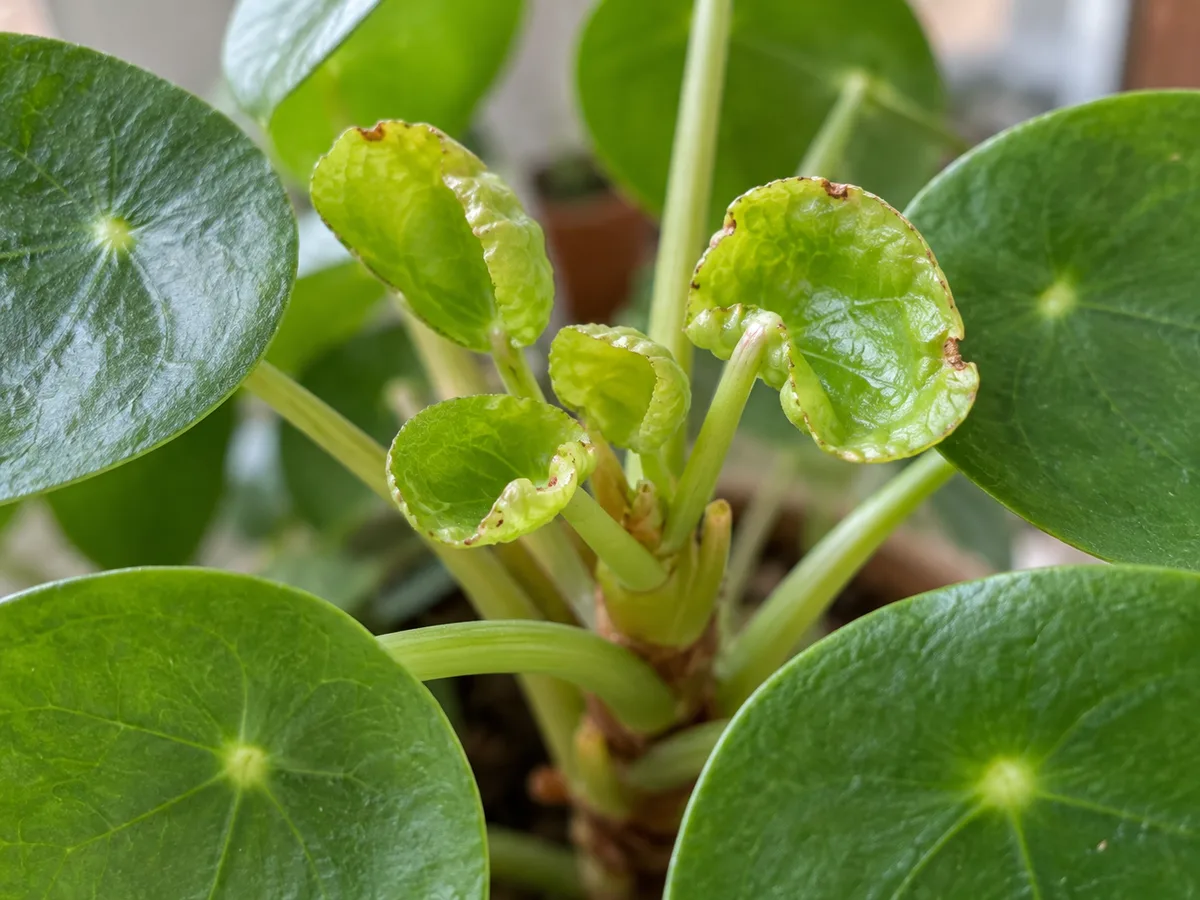
The image shows a possible new-growth symptom pattern only; leaf shape cannot identify a calcium deficiency by itself.
On Pilea, read the leaves that are forming at the top of the upright stem. The round blades attach to long petioles near the center of each leaf, and new leaves emerge folded before opening into their familiar coin shape. A leaf photographed mid-unfurl can look pleated, cupped, or smaller than the mature leaves around it. Wait for it to finish opening before deciding that the shape is persistent. Pilea’s coin-shaped leaves, central stem, and tendency to make basal offsets are useful landmarks when you compare one week’s growth with the next (Savvy Gardening’s Pilea care guide).
The more concerning pattern is repetition: several successive new leaves stay unusually small, fail to flatten, or develop expanding dead tissue while the growing point itself continues to produce leaves. That earns a closer investigation, but it still does not separate low calcium from a damaged root system, a mix whose chemistry is unsuitable, or injury to the tender crown. A photo can preserve the pattern; it cannot measure the calcium available to the plant.
Read the central crown against Pilea’s older coin leaves
Follow a single leaf from the central stem as it opens. Note its size, whether the blade becomes round, whether its edge remains intact, and whether the next leaf repeats the same problem. Marking the date on a phone photo is more useful than comparing a new leaf with a mature leaf that formed months earlier. New leaves are naturally smaller before they expand, so compare them only after they have stopped unfolding.
Older lower leaves tell a different story. One aging leaf near the bottom of the stem, while the crown continues to produce normal foliage, does not match the classic “young tissue first” clue used for calcium deficiency. It may reflect age, a care change, or a separate issue; do not treat it as evidence that the whole plant needs a calcium amendment. If lower leaves yellow or drop repeatedly, compare the pattern with the Pilea yellow-leaves guide.
Basal pups can offer a second view of the plant, but they are not a laboratory control. A pup that grows normally while the mother’s crown is damaged can suggest that the injury is localized, while several affected growth points may point to a shared condition in the pot or environment. Pups still share the same root zone and may have different ages, so one healthy offset does not rule out a problem in the parent plant.
Check Pilea’s root zone before blaming calcium
Before changing the feed, check the pot’s weight and the mix at more than the surface. A dry top can sit over a dense, wet lower layer, especially when a small Pilea is planted in a large container or in mix that has settled. Feel several centimeters down with a clean finger or wooden skewer, note whether the pot is unusually heavy, and check that water can leave through open drainage holes. Compare those observations with the plant’s recent watering history rather than following a fixed calendar.
Pilea needs a mix that drains well; its roots should not sit in standing water. A chronically wet pot, a sour smell, or dark soft roots points toward a root-zone problem, which can interrupt water and nutrient uptake even when nutrients are present in the mix. In that situation, the next step is to correct the confirmed moisture or drainage issue and use the Pilea watering guide and Pilea soil guide to review the routine and mix. If roots are soft or collapsing, follow the more relevant Pilea root-rot guide instead of treating a suspected nutrient shortage. Pilea care references also emphasize well-drained potting media and warn against leaving its roots in water (Savvy Gardening).
Do not unpot the plant just to look for calcium deficiency. If the plant is stable, the mix drains, and roots are firm, leave them undisturbed while you review light and fertilizer history. Unpotting can damage fine roots and adds another variable, making it harder to tell whether new growth changed because of the suspected nutrient or because of the inspection itself. Reserve repotting for evidence of failing mix, severe compaction, blocked drainage, or damaged roots.
Treat pH and fertilizer salts as separate clues
Potting-mix pH can affect how available some nutrients are, but a pH reading is not a measurement of calcium in a leaf. Extension guidance for field soils explains that pH changes nutrient availability and that soil corrections should be based on testing; those crop recommendations do not translate directly into a dose for a small houseplant pot (University of Nebraska–Lincoln Extension). A general Pilea care reference lists a mildly acidic to neutral mix around pH 6–7, but that range is a care reference, not proof that a Pilea outside it has calcium deficiency (Bob Vila’s Pilea care guide).
If you already have a reliable test of the potting mix and it is far outside the range recommended for Pilea, investigate the mix and water source before adding anything. Repeat an unusual reading with a suitable sample or ask a local soil lab how it tests soilless media before applying lime or gypsum on guesswork. Lime changes pH and supplies calcium or magnesium in soil, so an unmeasured dose can shift more than one part of the root environment. Field-soil guidance describes those effects, but does not give a houseplant-pot dosing rate.
Look separately for soluble salts. A whitish or tan crust on the mix or pot rim can be a salt buildup from fertilizer, potting mix, or irrigation water; excess soluble salts can damage roots and interfere with water uptake, producing wilt or leaf scorch that may look like another problem (Colorado State University’s crust guide). That is a distinct root-zone issue, not evidence that Pilea needs calcium. If a crust appeared after repeated feeding, review the product rate; if softened water is used, record that as another possible salt source. Avoid countering either possibility with a concentrated mineral product.
Keep a short record of fertilizer brand, dilution, dates, and whether the mix was already moist when fed. Also note whether the plant receives softened water or unusually mineral-rich water, if that is known. This history will not diagnose calcium, but it can reveal that an amendment or routine changed just before the crown began to deform. If there is no crust, no recent heavy feeding, and the mix is stable, do not assume salinity simply because the leaves look unusual.
Rule out light, pests, and injury to new Pilea leaves
Pilea’s central leaves can be damaged while they are tightly folded, and a mechanical crease may remain on one blade even when the rest of the crown is healthy. Check whether the injury is limited to a leaf that was bumped, trapped against a window, or handled while opening. One isolated scar that does not repeat on later leaves fits a local injury better than a continuing deficiency pattern.
Inspect the crown, petiole bases, and leaf undersides with a hand lens. Look for actual insects, webbing, sticky residue, or fresh stippling before you label distortion a nutrient problem. Pilea care references list pests such as spider mites, scale, and mealybugs among possible problems, so visible signs should send you to pest identification and treatment guidance rather than a calcium product (Bob Vila’s Pilea pest notes). Do not spray a plant simply because a leaf is puckered; confirm the pest and follow the label of any product you later choose.
Light also changes the shape and rate of Pilea growth. The leaves orient toward a window, and an unrotated plant can grow toward its light source (Bob Vila’s Pilea light notes). Weak or abruptly changed light can also affect how quickly the crown grows and the pot dries. If the stem is leaning strongly toward the glass or the plant has recently been moved into direct sun, review the Pilea light guide before adding nutrients. Light stress can coexist with other issues, so correct a clear placement problem gradually and judge the next leaves rather than expecting old tissue to straighten.
What to do first when calcium deficiency is only a suspicion
The safest first action is to pause calcium supplements and document the newest growth while checking the root zone. Take a dated photo of the crown, feel the mix below the surface, check the drainage holes, and review recent fertilizer and water changes. This short inspection protects the plant from an unnecessary amendment and gives you a baseline for the next leaves.
Then act on evidence in this order:
- If the mix is still wet and the pot stays heavy, wait until the upper layer dries appropriately for the plant before watering again; empty any standing water and correct a blocked drainage path.
- If roots are soft, the mix smells sour, or the plant collapses despite wet soil, treat the root problem first and consult the root-rot guide.
- If the mix dries normally but the plant receives poor or harsh light, make a modest placement correction and let it acclimate.
- If there is a crust and the pot drains freely without staying waterlogged, use an extension-recommended method to leach soluble salts; Colorado State describes rinsing the mix with drainage between rinses. Do not flush a pot with blocked holes or saturated roots, and stop additional feeding while you review the label (Colorado State’s salt-leaching instructions).
- If the roots and routine look sound but new leaves keep deforming, ask a qualified lab or horticulturist whether a sample of the potting medium or tissue can be assessed for calcium and pH.
Do not fertilize, repot, prune the crown, and change the water source all at once. A single targeted correction makes the response interpretable. If the evidence points to wet roots, correct moisture and drainage; if it points to a confirmed pest, use the appropriate pest guide; if the cause remains uncertain, observe and test rather than guessing at a nutrient recipe.
What confirms the diagnosis—and what a home check cannot prove
The pattern that justifies a calcium investigation is repeated trouble in new leaves at the growing point, especially when their expansion is poor and the issue persists across several leaves. A healthy, firm root system and a stable watering routine make a root problem less likely, but neither confirms calcium shortage. Likewise, a normal-looking old leaf, a single distorted blade, or an isolated brown spot does not rule a shortage in or out.
Home checks can sort the likely category: root moisture, drainage, fertilizer history, visible pests, direct injury, and light changes. They cannot measure the concentration of calcium in the plant or show whether calcium in the medium is available to its roots. If a diagnosis would lead you to add a mineral, seek a test that is appropriate for container media or plant tissue, and ask how the result should be interpreted for an indoor foliage plant. A pH-only result cannot answer the calcium question.
The plant’s response is useful evidence but not a retrospective lab result. If new leaves normalize after you corrected chronic wetness, the evidence favors a root-zone cause. If the crown improves after a pest treatment that was based on visible insects, the pest was the better-supported explanation. Improvement after an amendment alone can be difficult to interpret because several care conditions may have changed at the same time; record changes so you do not repeat an unnecessary supplement.
Recovery: follow new leaves, not damaged tissue
A mature leaf with dead patches, torn edges, or a permanent crease is unlikely to regain its original shape. Keep it while it is mostly green and firm, since removing healthy surface area will not correct the cause. If a leaf is mostly dead or has become a source of decay, remove only that leaf with clean scissors once the plant is stable; do not cut into the central growing point to make the plant look symmetrical.
Use the next leaves as your recovery measure. On a recovering Pilea, new blades should continue opening, hold their petioles, and stop developing fresh dead areas. The timing depends on light, season, and how much the roots were affected, so there is no reliable fixed number of days for recovery. In dim conditions or during slower growth, it may take longer to see a useful comparison. A photo every week or two can make subtle changes easier to see.
If each new leaf is more distorted, the crown stops expanding, the stem softens, or the soil remains wet for unusually long periods, revisit the root and pest checks. Do not respond to continued damage by increasing calcium dose. Continued decline after the root zone is corrected is a reason to get a second diagnosis or test the medium, not to keep adding amendments.
Prevent a repeat by keeping Pilea’s growth conditions steady
Give Pilea bright indirect light and rotate it gradually so the central stem does not keep stretching toward one side of the window. This plant’s round leaves make leaning and uneven growth easy to spot; light changes also alter how quickly the pot uses water. Review the plant’s light-care guide if the growth point is pale, stretched, or exposed to sudden direct sun.
Use an airy, well-drained potting mix in a container with open drainage. Water when the upper part of the mix has begun to dry, then let excess water leave the pot rather than sitting in a cachepot. Do not copy a fixed weekly schedule from another home: a cool, low-light room and a warm, bright window will not dry the same way. The watering guide and soil guide describe the Pilea-specific routine and mix without turning a symptom into a feeding diagnosis.
Feed only while the plant is actively growing, and follow the product label rather than increasing concentration to repair a damaged leaf. A balanced houseplant fertilizer used as directed is a maintenance input, not a treatment for every case of distorted new growth. Review the Pilea fertilizer guide if you have been feeding more often than the label recommends or if residue has collected on the mix. Do not add eggshell powder, lime, gypsum, or a calcium spray unless a qualified diagnosis supports that choice.
Related diagnosis tool
If the Pilea also has yellowing, drooping, spots, or visible pests, use the plant-problem diagnosis tool to compare symptom combinations. Treat its result as a shortlist: check the pot, crown, and recent care before following a treatment.
Related Pilea Peperomioides guides
- Use this page when repeated distortion or poor expansion is concentrated in Pilea’s newest central leaves and you are evaluating a possible nutrient issue.
- Use the root-rot guide when roots or stems are soft, the mix smells sour, or the pot remains wet.
- Use the yellow-leaves guide when older coin leaves are yellowing or dropping without repeated crown distortion.
- Use the Pilea problems hub to compare other symptoms before choosing a treatment.