Problems

Polka Dot Plant Problems: Causes & Quick Fixes

Quick answer

Polka Dot Plant is prone to 4 common issues - each link below is a plant-specific fix guide.
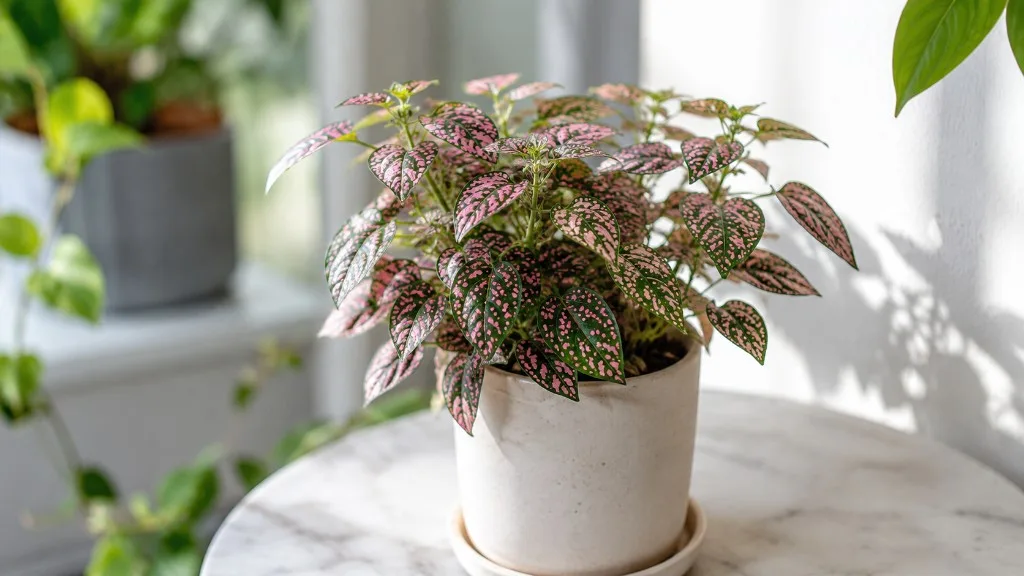
Polka Dot Plant houseplant

Polka Dot Plant problems

Use the guides below to diagnose and fix common issues on Polka Dot Plant. Each problem page explains why it happens on this species and what to do first.

Or use our problem diagnosis tool to narrow down symptoms.

Common problems on Polka Dot Plant

Likely cause: Not pinching regularly or insufficient light - most common issue

Quick fix: Pinch every 1–2 weeks; move to better light; remove flowers immediately

Full fix guide →

Likely cause: Too little or too much light fading spot pattern

Quick fix: Adjust to medium-bright indirect light

Full fix guide →

Likely cause: Overwatering in warm humid conditions

Quick fix: Repot in fresh mix; allow surface to dry slightly between waterings

Full fix guide →

Frequently asked questions

How often should I water Polka Dot Plant?

Every 2–4 days - check top 1–2 cm. Water when surface begins to dry. Do not let the plant wilt repeatedly - shallow roots stress quickly.

What light does Polka Dot Plant need?

Polka Dot Plant grows best in medium to bright indirect light, low indirect light.

Is Polka Dot Plant safe for cats and dogs?

Polka Dot Plant is generally considered non-toxic to cats and dogs. Always monitor pets around new plants and contact your vet if unusual symptoms appear.

How do I propagate Polka Dot Plant?

Propagate Polka Dot Plant from healthy stem or root divisions during active growth.

What soil is best for Polka Dot Plant?

Use standard potting compost + 15 % perlite + 10 % worm castings. Slightly moisture-retaining but well-draining. pH 5.5–7.0.

When should I repot Polka Dot Plant?

Repot Polka Dot Plant when roots circle the pot or growth slows despite good care.

Why does my Polka Dot Plant have drooping leaves?

Underwatering - shallow roots dry quickly Quick fix: Water immediately; establish more frequent check schedule

How this Polka Dot Plant problems guide is reviewed?

Editorial policyReview board

Written by · Reviewed by LeafyPixels Review Board · Updated June 17, 2026

This Polka Dot Plant problems problem guide was researched and written by . Problems symptoms on Polka Dot Plant, lookalike causes, and step-by-step fixes are cross-checked against extension pest, disease, and care references before publication.

We prioritize sources that hold up under scrutiny:

  • University cooperative extension bulletins and fact sheets (Penn State, Clemson, UMD, NC State, and similar programs)
  • Botanical garden and horticultural society publications
  • Peer-reviewed plant science and veterinary toxicology references where pet safety matters (including ASPCA Animal Poison Control)
  • Established reference works on indoor plant culture

The LeafyPixels editorial team then reviews the draft for clarity, step-by-step usefulness, and fit with real apartment and home conditions-not ideal greenhouse setups. When guidance changes materially, we update the page and note the revision date.


Sources used

  1. 30–60 cm (12–24 inches) above the leaf canopy (n.d.) Lighting Indoor Plants. [Online]. Available at: https://extension.umn.edu/planting-and-growing-guides/lighting-indoor-plants (Accessed: 17 June 2026).
  2. firm up within two to six hours (n.d.) How To Grow Hypoestes. [Online]. Available at: https://www.rhs.org.uk/plants/hypoestes/how-to-grow-hypoestes (Accessed: 17 June 2026).
  3. Madagascar's warm, humid understory (n.d.) PlantFinderDetails. [Online]. Available at: https://www.missouribotanicalgarden.org/PlantFinder/PlantFinderDetails.aspx?kempercode=a515 (Accessed: 17 June 2026).
  4. Medium moisture in well-drained soils (n.d.) PlantFinderDetails. [Online]. Available at: https://www.missouribotanicalgarden.org/PlantFinder/PlantFinderDetails.aspx?taxonid=275332 (Accessed: 17 June 2026).
  5. Missouri Botanical Garden recommends pinching tips to promote bushiness (n.d.) PlantFinderDetails. [Online]. Available at: https://www.missouribotanicalgarden.org/PlantFinder/PlantFinderDetails.aspx?taxonid=277072 (Accessed: 17 June 2026).
  6. non-toxic to cats and dogs (n.d.) Polka Dot Plant. [Online]. Available at: https://www.aspca.org/pet-care/aspca-poison-control/toxic-and-non-toxic-plants/polka-dot-plant (Accessed: 17 June 2026).
  7. ovate leaves (n.d.) Hypoestes Phyllostachya. [Online]. Available at: https://plants.ces.ncsu.edu/plants/hypoestes-phyllostachya/ (Accessed: 17 June 2026).
  8. overwatering wet soil (n.d.) Overwatering. [Online]. Available at: https://www.missouribotanicalgarden.org/gardens-gardening/your-garden/help-for-the-home-gardener/advice-tips-resources/insects-pests-and-problems/environmental/overwatering (Accessed: 17 June 2026).
  9. pathogens spread through wet, poorly drained soils (n.d.) Root Rots Houseplants. [Online]. Available at: https://hort.extension.wisc.edu/articles/root-rots-houseplants/ (Accessed: 17 June 2026).
  10. roots in waterlogged soil lose oxygen (n.d.) Watering Houseplants. [Online]. Available at: https://extension.umn.edu/yard-and-garden-news/watering-houseplants (Accessed: 17 June 2026).