Brown Leaves on Pothos: Causes, Checks & Fixes
Quick answer
Brown leaves on pothos are dead tissue-brown blades do not re-green. First step: touch the brown area and probe soil 2 inches (5 cm) deep. Crispy dry brown with a light pot usually means severe underwatering or low humidity; soft dark brown on wet heavy soil points to root damage or advancing disease.

Brown Leaves on Pothos: Causes, Checks & Fixes
This guide covers brown leaves on Pothos. See also the general Brown Leaves guide, watering, and light pages for this plant.
Brown Leaves on Pothos: Causes, Checks & Fixes
Quick answer
Brown leaves on golden pothos (Epipremnum aureum) mean tissue has died-whether from drought, root failure, sun scorch, salt burn, or disease lesions that advanced into necrosis. On this trailing vine, a single browned heart-shaped leaf can look alarming even when the growing tip still pushes green foliage. For general causes of whole-leaf browning, see our brown leaves guide. On pothos, texture and soil moisture matter more than color alone: crispy dry brown differs from soft dark brown on a heavy wet pot.
First step: touch the brown tissue and probe soil 2 inches (5 cm) deep. Crispy, papery brown with a feather-light pot points to severe thirst or chronic low humidity. Soft dark brown on cool wet mix with limp vines points to overwatering on pothos or root stress. Tan patches only on the window-facing side of leaves point to direct sun-not a watering problem.
What brown leaves look like on Pothos
Healthy pothos holds glossy green, heart-shaped leaves on firm trailing stems. Browning breaks that pattern in distinct ways:
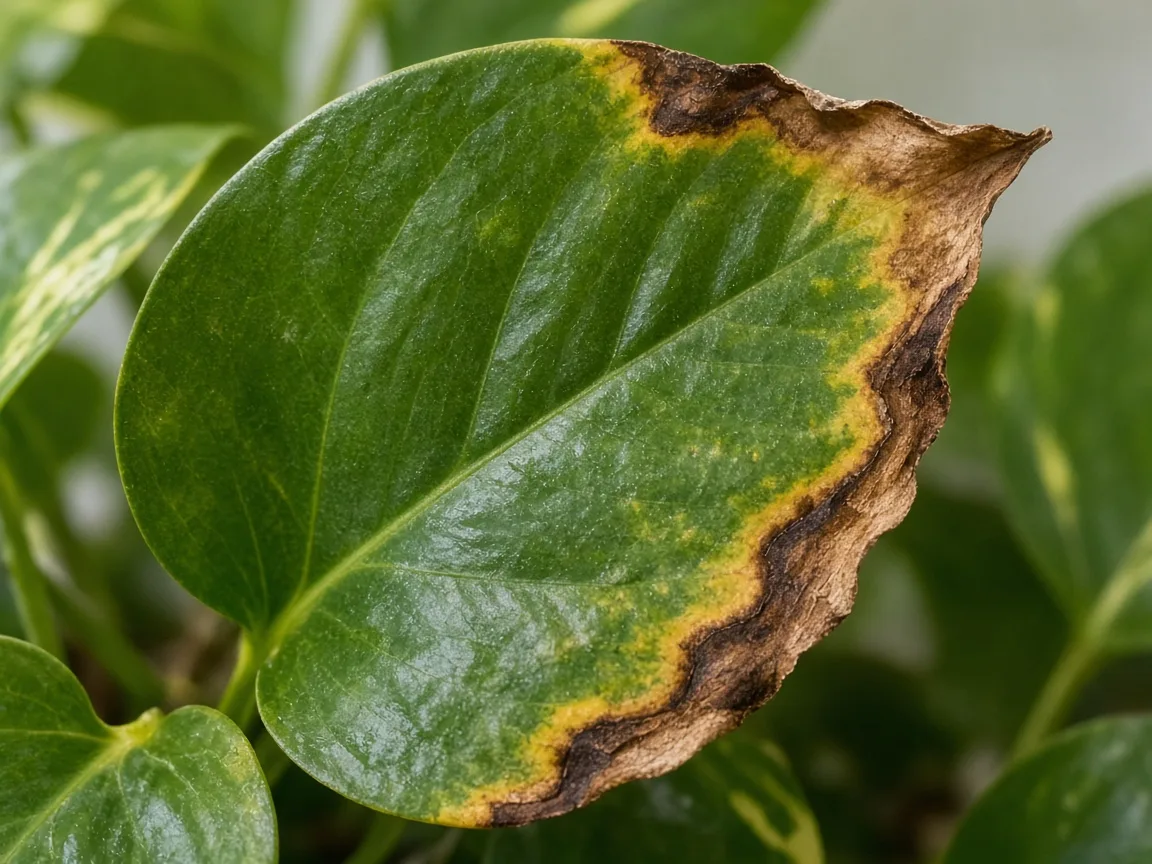
Brown Leaves symptoms on Pothos - compare crispy necrotic margins with healthy green tissue on the same blade.
- Crispy brown margins or whole dry blades, light dry pot - Edges desiccate before the center; tissue feels like paper. Severe underwatering on pothos or low humidity on fast-growing vines.
- Soft dark brown lower leaves, wet heavy soil - Limp vines even though mix feels damp. Root oxygen loss from chronic wet mix.
- Tan or brown patches on the sun-facing side only - Papery bleached areas where afternoon rays hit foliage. Direct sun on shade-adapted leaves.
- Dark spots that enlarge into brown patches with yellow halos - Wet-looking lesions merging on heart-shaped blades. Fungal or bacterial issues after wet foliage or poor airflow-see black spots on pothos.
- Uniform brown edges after heavy feeding - Salt accumulation; white crust on soil rim may be present. Fertilizer stress on stressed roots.
- Single lowest leaf on a long vine turning brown slowly - Often normal senescence while apical growth stays green.
Always check the newest leaves at the vine tip. Brown on new growth is more urgent than one aging lower blade fading out.
Reading brown along a trailing pothos vine
Pothos grows as a climbing vine with nodes every few inches. That growth habit makes where brown appears as diagnostic as how it looks.
Oldest-node senescence: On a healthy hanging basket, the lowest one or two leaves may turn fully brown and drop while stems stay firm and the tip keeps producing glossy new foliage. That is normal aging on a long runner-not a crisis.
Bottom-up spread on wet soil: When several lower leaves turn soft dark brown within a week and the pot stays heavy, suspect root stress. Pothos can look thirsty while soil is saturated because damaged roots cannot move water upward.
Mid-vine dieback: Brown appearing between healthy tip growth and older lower leaves often follows a cold draft, heat blast from a register, or a missed watering cycle on a long bare section of vine. The node above the damage may still be viable.
Tip dieback: Brown on the newest small leaves at the growing end points to active stress-rot, severe drought, or sun hitting tender new tissue. Treat this as higher urgency than one spent lower leaf.
Variegated pothos and whole-leaf brown
Solid Jade pothos tolerates dim corners better than heavily variegated cultivars, but all pothos types scorch in direct sun. Marble Queen and Golden Pothos show bleached tan patches on white or yellow-splashed zones before solid green tissue browns. Neon pothos can look washed out before edges crisp.
Variegated leaves also transpire faster and have less chlorophyll buffer-so whole-leaf brown from drought may hit variegated sections first while a Jade pothos on the same shelf still looks fine for another week. When only one cultivar on a shelf browns, compare light exposure and dry-down speed before assuming disease. Cultivar notes: pothos light guide.
Why Pothos gets brown leaves
Severe dehydration
Extended dryness on a fast-growing vine causes irreversible margin death before the whole blade browns. Pothos survives missed waterings better than many houseplants, but a very light pot with bone-dry mix throughout can crisp several leaves at once-especially on long hanging runners far from the root zone.
Root injury from overwatering
NC State Extension notes that root rot and blackening of leaf margins can occur with overwatering on pothos. Compromised roots fail to supply water evenly. Lower leaves turn soft dark brown while mix stays damp-the classic wilt-on-wet-soil paradox.
Sun scorch on heart-shaped foliage
Pothos wants bright, indirect light, not direct sun. As a forest understory climber, it lacks protection from baking glass. Afternoon rays bleach exposed tissue into tan necrotic patches. Details: sunburn on pothos.
Low humidity and heat drafts
Winter heating and AC vents desiccate leaf edges until whole sections necrose on firm vines with otherwise appropriate watering. Clemson Extension recommends 50-70% humidity when practical for pothos indoors. See low humidity on pothos when margins crisp in dry air.
Salt and fertilizer burn
Chronic overfeeding or skipped flushing leaves salts in mix. Brown tips and edges are a classic sign on houseplants; advanced burn can involve larger brown patches on older leaves.
Pests and disease progression
Spider mites on pothos stipple tissue until patches brown in dry heat. Untreated black spots can merge into larger necrotic areas. Bacterial wilt is rare indoors but causes rapid whole-leaf collapse on wet stems-escalate immediately if stems ooze or collapse.
How to confirm the cause
- Texture - Crispy = dry stress, sun, or salts. Soft = rot, disease, or wet-root failure.
- Soil moisture at 2 inches (5 cm) - Dry throughout with light pot = thirst. Wet and heavy = pause watering.
- Position on the vine - Lowest node only, slowly = senescence. Multiple lower leaves on wet soil = roots. Tip brown = active stress.
- Leaf location on the blade - Window-facing patches = sun. Uniform margins vs circular lesions with halos.
- Recent changes - Moved to brighter window, skipped waterings, repotted into oversized pot, heavy fertilizer dose.
- New growth - Green tips = lower urgency. New leaves opening brown = escalate.
First fix for Pothos
Touch the brown tissue and probe soil at 2 inches (5 cm) depth-then match treatment to crispy-dry versus soft-wet, not to panic over one browned leaf.
- If dry and crispy: Water thoroughly once, drain fully, and move out of direct hot sun while rehydrating. Raise humidity if edges were desiccating in heated air.
- If wet and soft: Stop watering until the top 2 inches of mix dry. Improve airflow; unpot only if browning spreads after appropriate dry-down.
- If sun-facing patches only: Move to bright indirect light; add sheer curtain on south or west glass.
- If spreading wet spots: Remove worst affected leaves with sterile tools; water at soil level only; see black spots on pothos.
Do not fertilize burned or rotting foliage on day one.
Salvaging nodes when leaves brown mid-vine
Unlike rosette plants, pothos stores backup energy in its stems. If brown has killed several leaves but the stem between nodes is still firm and green, the vine can branch from healthy nodes below the damage.
- Identify the lowest node with firm green stem above the browned section.
- Trim dead leaves and any mushy stem tissue with clean shears.
- Optionally take a single-node cutting in water or moist mix from a healthy section as insurance-the species roots easily from nodes.
- Give corrected light and watering; watch for a new leaf from the axillary bud within two to four weeks.
If stems soften at the soil line on wet mix, skip propagation and shift to root rot on pothos protocol instead.
Step-by-step recovery
Drought recovery
- Soak dry mix thoroughly or bottom-water 20-30 minutes, then drain.
- Trim fully brown leaves; leave partial green tissue in place.
- Resume watering when top 2 inches dry-full rhythm on the watering guide.
- Run a humidifier if margins were crisp in dry winter air.
Wet-root recovery
- Stop watering; empty saucers.
- If brown spreads on still-wet soil after a week of corrected dry-down, inspect and trim mushy roots.
- Repot into fresh airy mix-same size or one step up, not a huge decorative pot. See soil guide.
- Hold fertilizer until new growth looks healthy for two weeks.
Sun scorch recovery
- Relocate to filtered light within a few feet of east or shaded south window.
- Trim fully necrotic patches if unsightly; green tissue will not refill bleached areas.
- Acclimate gradually if increasing light later.
Pest-related browning
- Rinse leaf undersides in lukewarm water.
- Raise humidity slightly and follow spider mites on pothos if webbing is present.
- Do not apply oil sprays in direct sun.
Recovery timeline
Thirst brown: Existing crisp tissue stays brown; turgor returns in 12-48 hours after soaking. The next leaf from the vine tip should open green within one to two weeks.
Overwatering brown: Spread should halt within three to seven days once mix dries appropriately. Root-trim repots may need two to four weeks before confident new growth.
Sun scorch: Bleached patches are permanent; new leaves should avoid scorch within two to three weeks in corrected light.
Normal senescence: One lower leaf browning and dropping while tips stay green needs no recovery timeline-beyond routine care.
Lookalike symptoms
| Pattern | Likely cause | Page |
|---|---|---|
| Brown tips only, firm leaves | Dry air, salts, uneven water | Brown tips |
| Yellow before brown, wet soil | Overwatering | Overwatering |
| Crisp edges, dry soil | Underwatering | Underwatering |
| Dark spots with halos | Leaf spot / black spots | Black spots |
| One old lowest leaf on long vine | Normal senescence | No action if tip green |
| Rapid collapse, oozing stems | Bacterial wilt | Bacterial wilt |
What not to do
Do not assume all browning means underwatering and soak a plant in wet soil.
Do not leave scorched plants in afternoon direct sun hoping leaves will recover color.
Do not fertilize heavily to “green up” brown leaves-salts worsen edge burn.
Do not remove every partially green leaf-the plant needs photosynthetic surface during recovery.
Do not mist instead of watering when the whole pot is bone dry-misting does not rehydrate roots on a heavy hanging basket.
How to prevent brown leaves next time
Water when the top 2 inches of light well-drained mix dry. Keep pothos in bright indirect light, not baking glass. Maintain 40-60% humidity through heating season. Flush salts periodically if you feed regularly. Remove spent lower leaves promptly and avoid overhead watering on crowded shelves at night.
When to worry
Urgent if new leaves open brown, stems soften at the base on wet soil, spots spread across most of the canopy within days, or mix smells sour. Slow browning of one lowest leaf while the vine tip pushes green is lower urgency.
When to use this page vs sibling guides
| Your question | Best page |
|---|---|
| Whole leaves or large brown patches | This page |
| Tips and margins only | Brown tips |
| Crispy texture, drought | Underwatering |
| Dark spots before necrosis | Black spots |
| Wet soil, soft brown lower leaves | Overwatering |
| Bleached patches from hot windows | Sunburn |
Related Pothos guides
Conclusion
Brown leaves on pothos will not turn green again-focus on stopping spread and growing clean new foliage at the vine tips. Feel the brown tissue, probe soil depth, note where brown sits along the vine, then fix the matching cause. Prevention comes from predictable dry-down, filtered light, stable humidity, and early response while damage is still at the margins.
Related tool
Use the Plant Problem Diagnosis Tool to narrow causes for brown leaves on this plant before changing multiple variables at once.