Low Humidity on Pothos: Causes, Checks & Fixes
Quick answer
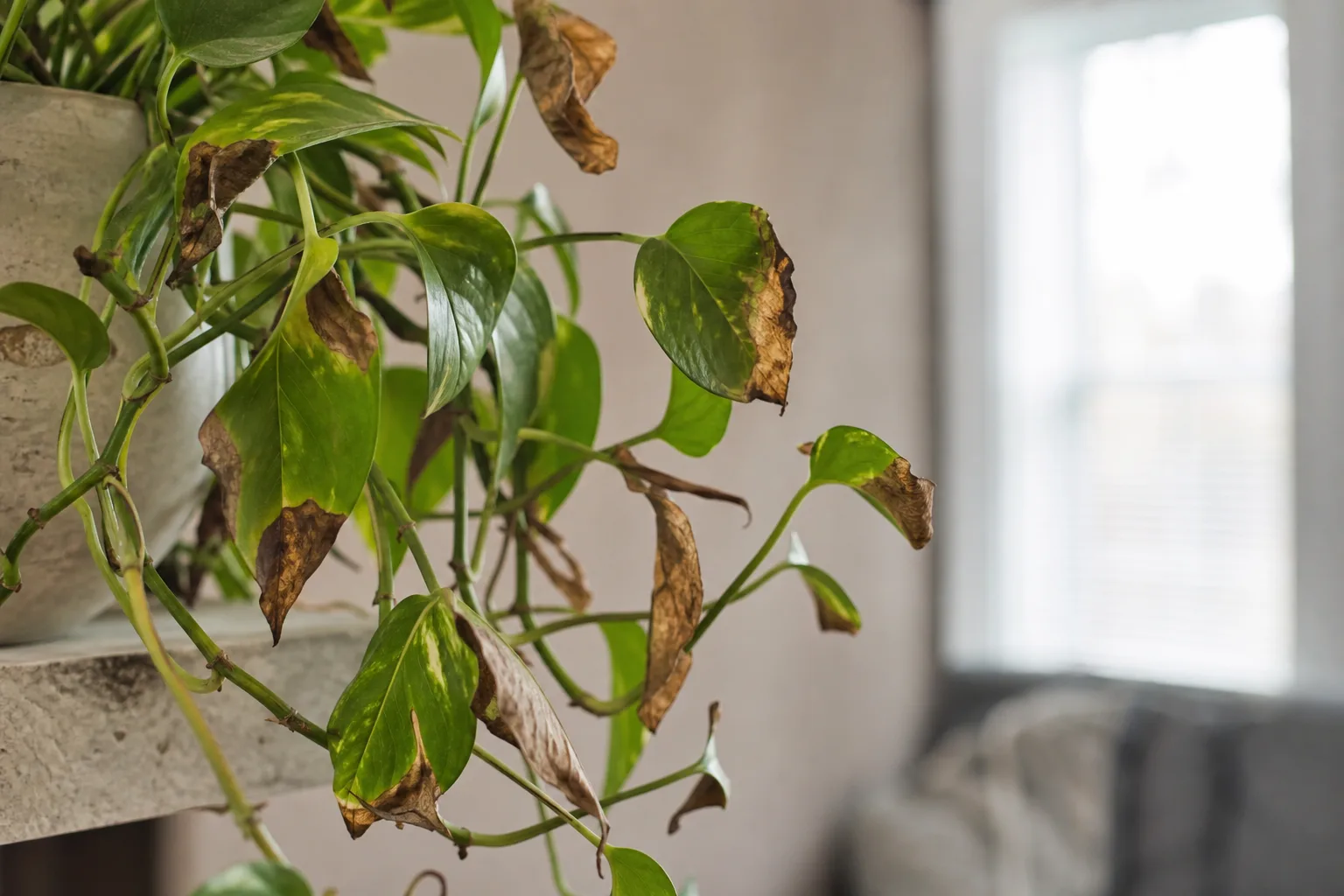
Low humidity on Pothos shows as crispy brown leaf tips and edges, often after winter heat or AC dries the air. First step: raise ambient humidity to 40–60% with a humidifier or pebble tray-not extra watering or daily misting alone.
Low Humidity on Pothos: Causes, Checks & Fixes
This guide covers low humidity on Pothos. See also the general Low Humidity guide, watering, and light pages for this plant.
Low Humidity on Pothos: Causes, Checks & Fixes
Quick answer
Use this page for dry-air stress only-crispy margins that worsen when heating runs and a hygrometer reads below 40%. For fluoride, salt buildup, tap-water quality, and multi-cause tip burn, see brown tips on pothos. For species baseline, see the pothos overview.
Pothos is one of the most humidity-forgiving houseplants, but extended dry air still shows up on leaf edges-especially when winter heating pulls indoor humidity into the 20–30% range. Brown, papery tips on otherwise firm, glossy leaves are the classic signal.
First step: raise ambient humidity to 40–60% with a humidifier or a pebble tray-water in the tray, pot sitting above the water line. That range stops edge burn on most home vines; Clemson Extension notes pothos prefers 50–70% when you can hold it for fastest growth. Do not compensate with extra watering-pothos rots easily in wet soil. Do not rely on daily misting alone, especially if the plant sits in low light where wet leaves linger overnight.
What low humidity looks like on Pothos
Dry-air damage on Epipremnum aureum has a recognizable pattern:
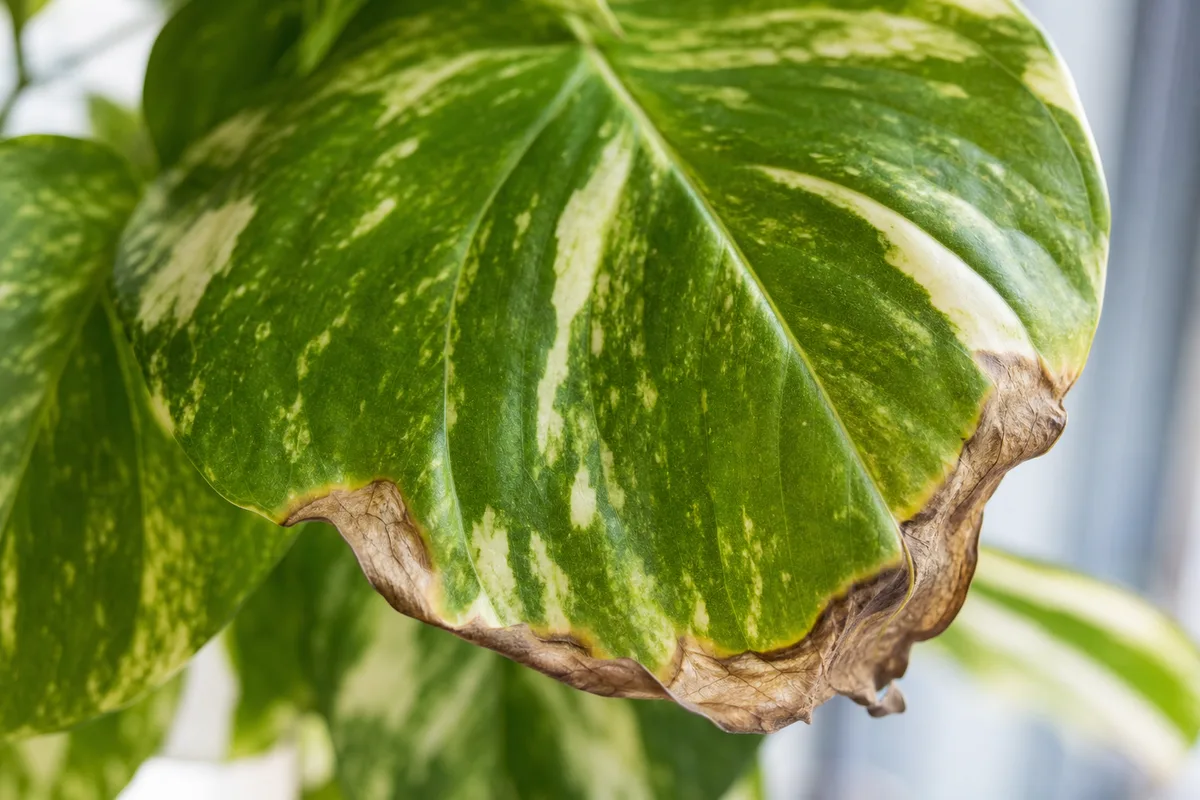
Low Humidity symptoms on Pothos - compare with healthy tissue on the same plant.
- Brown, papery tips and margins on otherwise firm, heart-shaped leaves
- Damage worse on variegated yellow or cream sections than on solid green tissue
- No webbing, sticky residue, or moving specks on leaf undersides
- Symptoms that appear or worsen when heat runs, AC dries the air, or a hanging basket sits under a ceiling vent
- Stems stay firm; the vine does not collapse the way it does with root rot
On Golden Pothos, yellow-splashed zones often crisp first because they transpire differently from all-green tissue. Jade Pothos (solid green) may hide dry-air stress longer, but long trailing stems near heat registers still brown at the tips. Neon and heavily variegated cultivars-Marble Queen, Pearls and Jade-show edge burn one to two weeks sooner than solid Jade in the same dry room because thinner variegated tissue has less moisture reserve.
This is usually a low-severity problem. Pothos rarely dies from dry tips alone-it is built to tolerate average home humidity of 30–60%. Left unchecked through a full heating season, however, brown margins can spread, new leaves may emerge smaller, and spider mites-which prefer warm, dry environments-can move in on stressed foliage.
Cultivar sensitivity at a glance
| Cultivar type | Dry-air signal speed | Typical first damage zone |
|---|---|---|
| Neon, Marble Queen, Pearls and Jade | Fast (1–2 weeks in heated dry rooms) | Cream or yellow leaf margins |
| Golden Pothos | Moderate | Yellow splashes before solid green |
| Jade / solid green | Slow | Vine tips farthest from the pot |
Why Pothos reacts to dry air
Pothos evolved in warm, tropical understory with dappled sunlight and high humidity. Indoors, it sits in a forgiving middle ground: tough enough to survive office fluorescent light and average winter dryness, but visibly happier when air moisture is steadier.
Several traits explain why dry air still marks pothos leaves:
Broad, glossy foliage. Heart-shaped leaves have a large surface area for water loss. In dry air, moisture escapes through stomata faster than roots always replace it, concentrating damage at tips and margins where evaporation is highest.
Trailing and hanging habit. Baskets and high shelves put foliage in the path of rising heat from radiators and descending dry air from vents. Leaves at the end of long vines-farthest from the pot-often crisp first. Move hanging pots at least 60–90 cm (2–3 feet) from forced-air registers so warm, dry drafts do not hit the canopy directly.
Winter heating. Forced-air heat can pull indoor humidity well below what most indoor plants need, especially in winter. Hot and cold air from vents can dry leaves and damage plant cells. The problem is environmental, not infectious-no fungus or bacteria causes those uniform edge burns.
Low-light co-stress. When new leaves are smaller with long gaps between nodes, not enough light may be stacking on dry air-the plant cannot use added humidity efficiently until brightness improves.
Fast growth when conditions are good. Pothos bounces back quickly once humidity stabilizes, but that same vigor means you may not notice gradual tip browning until half a trailing vine has crisp edges.
Recovery example
A hanging Golden Pothos above a ceiling heat register showed margin burn on variegated zones while a hygrometer held at 26% for two weeks in January. After moving the basket 90 cm from the vent and running a cool-mist humidifier on low through the day, readings stabilized near 52%. The next three heart-shaped leaves opened with clean margins in three weeks-old crisped tissue stayed brown, but new growth confirmed the fix.
How to confirm low humidity (and rule out lookalikes)
Work through these checks before changing your whole care routine:
- Hygrometer reading - Place a meter near the plant for 24 hours. Readings consistently below 40% during heating season support dry-air stress.
- Damage pattern - Even brown margins on multiple leaves fit humidity. Random spots, holes, or yellow halos do not.
- Soil moisture - Stick your finger 5 cm into the mix. If the top layer is appropriately dry and stems are firm, extra water is not the fix. Soggy mix with yellowing leaves points to overwatering.
- Airflow sources - Note heat registers, radiators, fireplace drafts, and cold window glass the foliage touches. Localized crisping on one side of the plant often traces to placement.
- Pest inspection - Check leaf undersides with light for webbing (spider mites) or cottony clusters (mealybugs). Dry air encourages mites but the pests still leave distinct signs.
- Light level - If new leaves are smaller with long gaps between nodes, low light may be a co-stress; humidity fixes alone will not restore full growth-see pothos light needs.
Confirmed diagnosis: firm stems, normal watering rhythm, pest-free leaves, humidity below 40%, and margin-focused browning that started with seasonal dryness.
Suspected but not confirmed: brown tips with very dry soil throughout (underwatering), wet soil and soft stems (root rot), or bleached patches on leaves facing a sunny window (sun scorch).
Lookalike quick reference
| Pattern | Leaf texture | Soil / stems | Key differentiator | Next step |
|---|---|---|---|---|
| Low humidity | Crisp papery margins; firm leaves | Top 5 cm dry; stems firm | Worsens when heat runs; hygrometer below 40% | Humidifier + vent distance (this page) |
| Underwatering | Crisp edges; may curl first | Dry throughout; light pot | Improves after one deep soak | Underwatering guide |
| Overwatering / root rot | Soft yellow; not just margins | Wet mix; soft stems | Sour smell possible | Overwatering → root rot |
| Salt / fertilizer burn | Brown tips; white soil crust | Normal moisture | Follows heavy feeding | Brown tips + flush |
| Sun scorch | Bleached or brown leaf face | Normal moisture | Window-side patches, not margins only | Move off hot glass; see light guide |
| Spider mites | Stippling; dull gray-green | Often dry air too | Fine webbing under leaves | Spider mites + raise humidity |
First fix: raise ambient humidity
Set up a humidifier or pebble tray and move the plant at least 60–90 cm off the direct path of heating vents.
A cool-mist or evaporative humidifier near the pothos is the most reliable way to hold 40–60% humidity through winter. Size the unit to the room-a small bedroom humidifier often suffices; open-plan living areas need a larger reservoir or a unit rated for the square footage. Aim mist into the room, not directly onto leaves 24 hours a day.
If you use a pebble tray, fill a shallow dish with stones and water so the pot base sits above the water line-roots must never sit in the tray. NC State Extension recommends a humidifier or tray of wet pebbles for pothos; Maryland Extension notes pebble trays and automatic humidifiers both raise humidity around houseplants. Caveat: trays boost moisture only in a small zone near the pot and may add just a few percentage points in very dry heated rooms-enough to help marginally, but not a substitute for a humidifier when readings sit in the mid-20s.
While humidity climbs over the next few days:
- Hold your watering schedule. Let the top 5 cm of mix dry before watering, as you normally would-see pothos watering.
- Shift the pot a few feet from the nearest heat register or drafty window.
- Group it with other houseplants so shared transpiration raises local moisture slightly.
Do not mist heavily as your only strategy. Misting is questionable for raising humidity and a light mist evaporates within minutes. Wet foliage in dim corners can invite fungal spotting without solving dry air.
Step-by-step recovery
Once ambient humidity is addressed, support the plant in this order:
- Stabilize placement - Bright to medium indirect light supports efficient water use in humid air. Avoid bouncing the pot between rooms daily.
- Trim cosmetic damage - Snip fully brown tips with clean scissors if you prefer a neat look. Partial edge crispness can stay until new growth arrives.
- Flush salts if tips stay brown - If you fertilize regularly and see white crust on soil, brown tips may combine humidity stress with soluble salt buildup. Water deeply until excess drains, and pause fertilizer until new growth looks healthy. Cross-check brown tips on pothos if water quality may be involved.
- Watch for spider mites - Dry, warm conditions favor mites on pothos. Spider mites and mealybugs are common houseplant pests on pothos. If fine webbing appears, rinse leaf undersides and treat the pest per the spider mite guide; raising humidity alone will not clear an established infestation.
- Hold Pothos repotting guide and feed - Do not repot or fertilize a stressed vine until new leaves emerge clean and the plant has been stable for two to three weeks.
Recovery timeline
Within one to two weeks of steadier humidity, leaf edges should stop getting worse.
New heart-shaped leaves with clean margins are the real success signal. Expect them in two to four weeks during spring and summer growth-pothos recovers faster than slow-growing variegated cultivars. Recovery can take longer if the plant sits in weak light or cool winter temperatures.
Permanent damage: browned tissue on old leaves does not green up again. Only new foliage replaces the look.
Worsening signs: yellowing across whole leaves while soil stays wet, soft stems at soil line, widespread leaf drop, or mite webbing spreading-those mean a different or additional problem and need a new diagnosis path.
What not to do
Do not water more because leaf tips look dry while the soil is already moist-pothos rots in wet mix. Avoid heavy evening misting near dark corners. Do not blast a humidifier directly onto leaves 24 hours a day; aim for room-level moisture. Skip fertilizer as a first response to brown tips. Do not assume humidity if pests, wet soil, or direct sun better explain the pattern.
Wet soil + yellowing + soft stems = overwatering, not a humidity fix. Redirect to overwatering before adding moisture to the air.
Pothos care cross-check
Low humidity fixes work best when the rest of the routine matches Pothos overview:
- Light: Bright to medium indirect light; tolerates low light but grows slower-see pothos light.
- Water: Top 5 cm dry before watering; roughly every 7–10 days in summer, less in winter-watering guide.
- Soil: Well-draining mix with perlite; soggy roots mimic drought stress above ground.
- Temperature: Comfortable at 18–29°C (65–85°F); keep away from cold window glass and hot vents.
- Humidity target: 40–60% stops edge burn on most home vines; 50–70% supports fastest growth when you can hold it without condensation on windows.
How to prevent dry-air damage
- Run a humidifier from first frost through spring, or keep a pebble tray topped up near the plant-knowing trays alone may not reach 40% in very dry heated rooms.
- Hang baskets away from ceiling vents and radiator updrafts (minimum 60–90 cm).
- Group plants on the same shelf to share moisture.
- Check a hygrometer in October before damage appears, not after half the vine has crisp edges.
- Maintain bright indirect light so new leaves expand fully in humid air.
- Wipe leaves occasionally to remove dust so stomata function efficiently.
When to worry
Low humidity alone rarely kills Pothos. Treat it as urgent when:
- Stems soften or blacken at nodes while soil is wet
- More than a third of leaves yellow and drop within a week
- Spider mites or mealybugs spread despite humidity improvements
- New growth stays stunted for a month after you fixed light and moisture
Those patterns suggest root failure, pest takeover, or chronic low light-not just dry winter air.
Related Pothos problems
Use this page as the dry-air hub for Epipremnum aureum; follow the link that matches what you found:
- Pothos overview - species care baseline
- Brown tips on pothos - fluoride, salt, tap water, and multi-cause tip burn
- Spider mites on pothos - dry-heat pest escalation
- Underwatering on pothos - dry soil lookalike
- Overwatering on pothos - wet soil lookalike
- Root rot on pothos - soft stems on wet mix
- Pothos watering - prevention rhythm
- Pothos light - co-stress with low light
- Not enough light on pothos - small leaves and long internodes
Conclusion
Low humidity on Pothos announces itself on leaf tips and variegated edges long before the vine fails. Measure the room, raise ambient moisture to 40–60% with a humidifier or pebble tray, and keep the plant in bright indirect light away from heating vents. Old brown tips will not heal-judge success by the next clean, heart-shaped leaves unfurling at the growing tips.
How we wrote and verified this guide: Recommendations were checked against Clemson Cooperative Extension, NC State Extension, University of Maryland Extension, and University of Minnesota Extension references cited inline. Author: sai-ananth. Reviewer: LeafyPixels Review Board. Methodology: plant problem guidance is reviewed against botanical references, extension resources, and LeafyPixels plant-care data before publication. Claims validation: claims-validator-v1 pass with inline external links documented below. Last reviewed: 2026-06-17.
When to use this page vs other Pothos guides
- Pothos watering guide - Use for routine moisture checks before assuming low humidity is the main issue.
- Pothos problems hub - Browse all 39 common issues on this species.
- Brown Tips on Pothos - Different entry point when symptoms overlap with low humidity.
- Curling Leaves on Pothos - Different entry point when symptoms overlap with low humidity.
- Leaf Drop on Pothos - Different entry point when symptoms overlap with low humidity.