Not Enough Light on Pothos: Causes, Checks & Fixes
Quick answer
Pothos survives dim corners but stops thriving-internodes stretch, variegation fades, and new leaves shrink. First step: move the pot to bright indirect light within a few feet of a window, or add a full-spectrum grow light for 12–14 hours daily.
Not Enough Light on Pothos: Causes, Checks & Fixes
This guide covers not enough light on Pothos. See also the general Not Enough Light guide, watering, and light pages for this plant.
Not Enough Light on Pothos: Causes, Checks & Fixes
Quick answer
Pothos (Epipremnum aureum) survives dim corners but stops thriving there. Internodes stretch, variegation fades, new leaves shrink, and growth stalls while vines lean toward whatever light they can find.
First step: move the pot to Pothos light guide within a few feet of a window, or add a full-spectrum grow light for 12–14 hours daily.
Pothos tolerates lower lighting conditions but prefers bright, indirect light. In deep shade it stays alive as a plain green vine, but you lose the bushy, colorful look most owners want-and weak light sets up a second problem when soil stays wet too long.
Why pothos struggles in low light
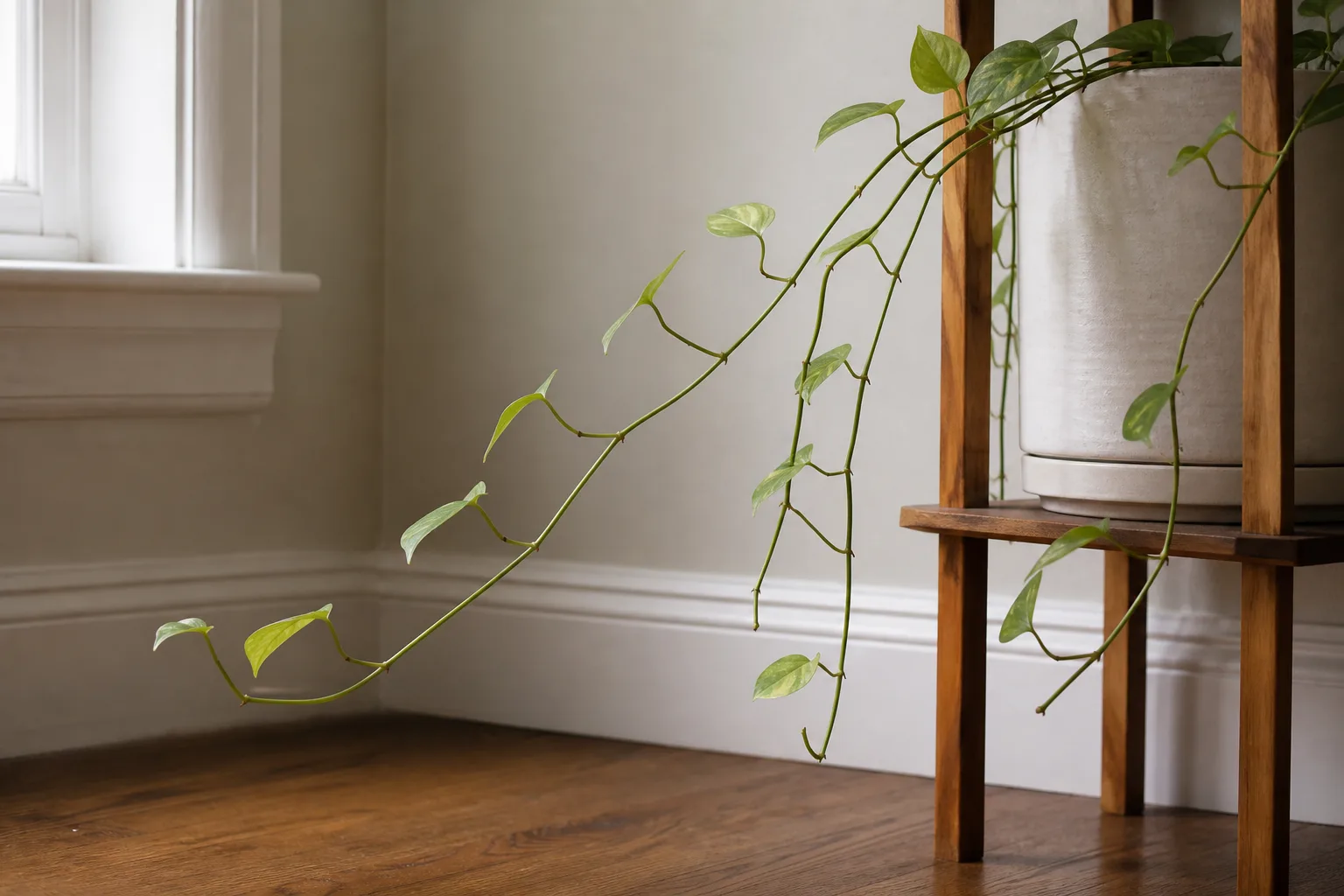
In the wild, pothos is an understory climber that scrambles tree trunks toward brighter patches using aerial roots. Indoors, the same survival instinct shows up as etiolation: the plant lengthens stems and spaces leaves farther apart to reach a usable light source rather than building dense foliage.
That behavior is normal for a shade-tolerant vine, but it becomes a problem when the spot is so dim that photosynthesis cannot keep pace with growth. Clemson Extension notes that lower light may cause variegated varieties to lose coloring-Marble Queen, Pearls and Jade, and Snow Queen need brighter placement than solid-green Neon or Jessenia types.
Low light also slows water use. Pothos in a dark hall may sit in damp mix for weeks because the plant is not actively transpiring. That pattern overlaps with overwatering and can yellow lower leaves or invite root rot on Pothos even when you are watering on a reasonable schedule.
What insufficient light looks like on pothos
Stretch and lean:
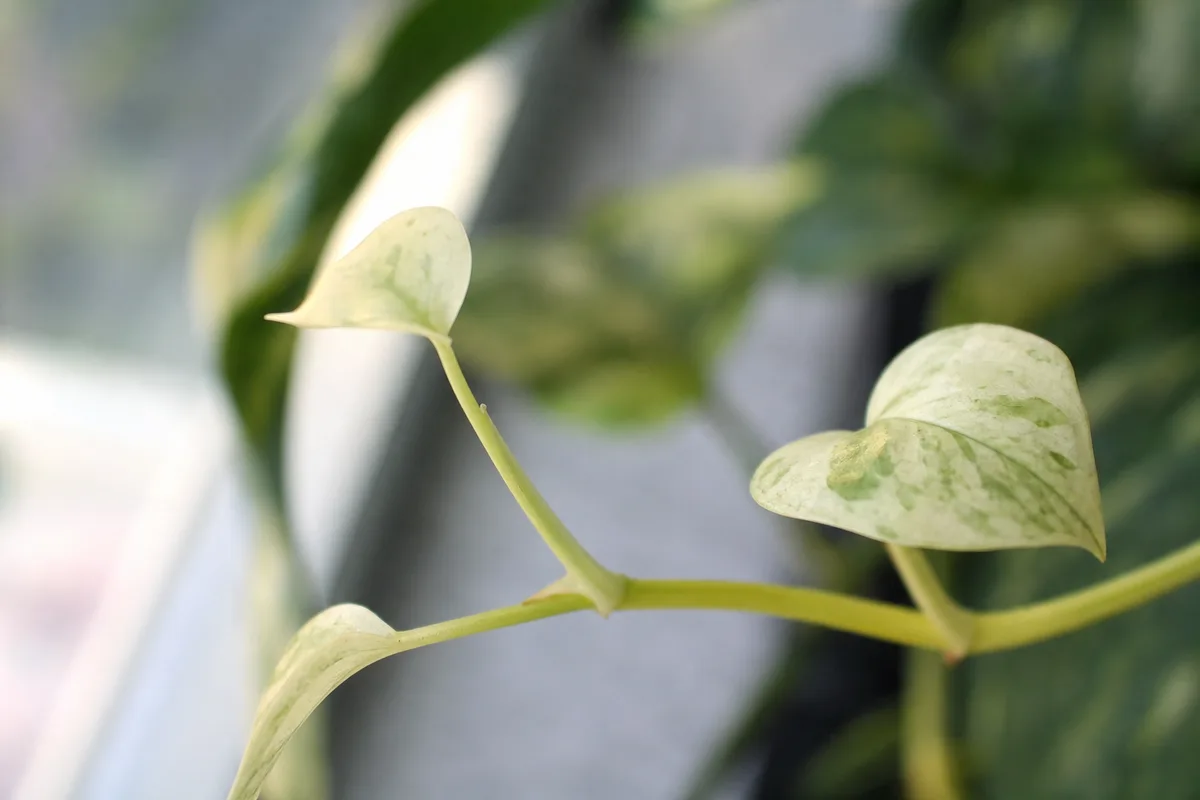
Not Enough Light symptoms on Pothos - compare with healthy tissue on the same plant.
- Long bare sections between leaf nodes-internodes of 3 inches (8 cm) or more on new growth
- Vines growing toward a window, lamp, or doorway instead of filling the pot evenly
- Thin, weak stems that feel floppy compared with firm vines in good light
Leaf changes:
- New leaves noticeably smaller than mature ones farther down the vine
- Variegation fading to solid green, especially on white-heavy cultivars
- Dull, washed-out green on Golden or Jessenia types instead of bright chartreuse or gold
- Slow or stalled new leaf production despite warm temperatures and regular watering
Secondary signs:
- Lower leaves yellowing over months as the plant sheds foliage it cannot support
- Soil staying wet longer than expected between waterings
- Hanging baskets looking sparse on top while only the tips near a window stay full
These signs develop gradually. A pothos moved to a dark office may look fine for months before stretch becomes obvious-compare newest growth to leaves from when you first bought the plant.
How to confirm the cause
Work through these checks before you repot, fertilize, or prune heavily:
- Window distance - Within 2 feet of an unobstructed east or filtered south window usually counts as bright indirect for pothos. More than 6 feet back, or in an interior room with no supplemental light, is typically too dim for healthy growth.
- Shadow test - At midday, hold your hand between the plant and the window. A soft, defined shadow means moderate light. A faint or absent shadow means the spot is low light by extension standards for indoor plants.
- Internode comparison - Measure spacing between the last three new leaves. Tight nodes under an inch suggest adequate light; long gaps confirm stretch.
- Variegation check - On a variegated cultivar, fading toward all-green new growth strongly supports low light over nutrient deficiency.
- Water-use check - Stick a finger 2 inches into the mix. If it stays damp for 10+ days without watering, the plant may not be using moisture because growth is stalled-not because you are overwatering on purpose.
- Rule out lookalikes - Confirm soil is not waterlogged, roots are not mushy, and leaf undersides have no pest clusters before blaming light alone.
If you move the plant to a brighter spot for two weeks and new leaves open closer together with stronger color, light was the primary issue.
First fix for pothos
Relocate the pot to bright indirect light-ideally within a few feet of an east-facing window or a south- or west-facing window filtered by sheer curtains.
Do not jump straight to direct midday sun on a vine that has lived in shade for months. RHS guidance for Epipremnum recommends bright light but not direct sun, and sudden harsh exposure can scorch leaves adapted to dim conditions.
If a brighter window is not available, add a full-spectrum LED grow light 12–18 inches above the foliage for 12–14 hours daily. University of Maryland Extension notes that plants stretch and lean when light reaches them from one direction-position the lamp over the canopy, not off to one side, and rotate the pot weekly for even growth.
Make this one change first. Wait two weeks before pruning, Pothos repotting guide, or feeding so you can read the plant’s response clearly.
Step-by-step recovery
After the light move:
- Monitor new growth for two to four weeks - Look for smaller internodes and larger new leaves. That confirms the fix is working.
- Adjust watering - Brighter light means faster drying. Recheck the top 2 inches of soil before every watering instead of following an old calendar schedule.
- Prune stretched vines - Cut leggy stems back to just above a leaf node. Pothos sprouts new side shoots from nodes below the cut, which helps fill sparse tops.
- Pin or loop stems - For hanging baskets, tuck long vines back into the pot surface or pin nodes to moist moss to encourage roots and bushier growth.
- Wipe leaves monthly - Dust blocks light absorption on broad pothos leaves. A damp cloth removes buildup without needing leaf shine products.
- Add grow-light hours in winter - Shorter days reduce window light even if the plant stays in the same spot. Extending artificial light prevents renewed stretch from seasonal drop.
Variegated cultivars may need one step brighter than solid-green types throughout recovery. Marble Queen and Pearls and Jade require more light than Neon or Jessenia per Clemson cultivar notes-match placement to your specific type.
Recovery timeline
Expect visible improvement in new growth within two to four weeks of better light. Internodes on the next two or three leaves should shorten before older stretched sections look different.
Bare stem between existing leaves does not revert-those gaps stay unless you prune and wait for new shoots from nodes below. Fully faded variegation on old leaves rarely returns; judge success by variegation on new foliage, not by hoping old leaves re-pattern.
If growth stays stalled after four weeks in bright indirect light plus adequate watering, look for root-bound pots, chronic overwatering damage, or pest stress-not more light alone.
Lookalike symptoms to rule out
Overwatering and root rot yellow lower leaves on wet soil with soft stems and sour-smelling mix. Light-starved pothos usually has firm stems and slow drying, not mushy roots.
Underwatering wilts leaves and crisps edges while soil pulls away from the pot. Low-light pothos more often stays limp with damp soil because growth is slow.
Normal aging drops one or two bottom leaves on an otherwise full vine in good light. Low light causes wider yellowing spread up the stem over months.
Nutrient deficiency can pale leaves but rarely causes long internode stretch by itself. Fix light first; fertilize only after placement and watering are stable.
Too much direct sun bleaches or browns patches on sun-facing leaves-the opposite problem. Moving a dim pothos into unfiltered south glass without acclimation causes scorch within days.
Mistakes to avoid
Do not assume “low-light tolerant” means a dark bathroom or hallway is ideal long term. Tolerance is survival, not thriving.
Do not increase fertilizer to force growth in a dim spot. Clemson lists yellow leaves from low fertility as a separate issue-feeding a light-starved plant before fixing placement can burn roots on slow-growing tissue.
Do not move instantly from deep shade to harsh direct sun. Acclimate over one to two weeks by stepping closer to the window or adding sheer curtains first.
Do not ignore wet soil in dim corners. Slow growth plus damp mix is a common path to root rot on pothos.
Do not expect pruned cuttings from etiolated vines to bush out in the same dark spot. Root cuttings in brighter light or they will stretch again.
Pothos care cross-check
Light interacts with every other care variable on Epipremnum aureum:
- Watering - Water when the top 2 inches of soil are dry. In low light, that may take longer than the 7–10 day summer rhythm; in brighter light after a move, check more often.
- Temperature - Pothos prefers 60°F to 85°F day and night ranges. Cold drafts near windows in winter can stall growth even when light is adequate.
- Humidity - Pothos tolerates average home humidity (30–60%). Low light is not fixed by misting alone.
- Varietal needs - Match light to cultivar. Heavy white variegation needs the brightest spot in your home; Neon and Jessenia tolerate moderate indirect light better.
How to prevent insufficient light on pothos
Place new pothos within a few feet of appropriate windows from day one rather than waiting for stretch to appear. Rotate pots every one to two weeks so vines do not lean permanently toward one side.
Keep windows clean and unobstructed-sheers, tinted glass, and furniture between plant and glass cut usable light more than many owners realize.
Use grow lights in offices, north-facing rooms, and during short winter days. Aim for 12–14 hours of supplemental light when natural levels drop.
Choose cultivars that match your space. If you only have moderate light, pick Neon, Jessenia, or solid golden pothos rather than Snow Queen or Pearls and Jade.
Prune proactively once or twice a year to keep hanging baskets dense instead of letting vines run toward the nearest window indefinitely.
When to worry
Low light alone rarely kills pothos-it is one of the most shade-tolerant houseplants. Worry when low light pairs with:
- Wet soil for weeks and spreading yellow leaves
- Soft stems at the soil line or sour-smelling mix
- Complete stall in new growth for two months despite warm temperatures and corrected light
In those cases, unpot and inspect roots before assuming more light will solve everything. Wear gloves when handling cut tissue-pothos contains calcium oxalate crystals toxic to cats and dogs if chewed.
Practical checks
Urgency check
Act within days if yellowing spreads quickly on wet soil, stems soften, or the pot smells sour. Low light plus chronic moisture is the dangerous combination-not stretch alone.
Best inspection order
Newest internode spacing, variegation on the latest leaf, window distance and shadow test, soil dryness at 2 inches, then roots only if wet-soil symptoms appear.
When to use this page vs other Pothos guides
- Pothos watering guide - Use for routine moisture checks before assuming not enough light is the main issue.
- Pothos problems hub - Browse all 39 common issues on this species.
- Leggy Growth on Pothos - Different entry point when symptoms overlap with not enough light.
- Slow Growth on Pothos - Different entry point when symptoms overlap with not enough light.
- Yellow Leaves on Pothos - Different entry point when symptoms overlap with not enough light.