Wilting on Rhaphidophora Tetrasperma: Causes, Checks & Fixes
Quick answer
Wilting on Rhaphidophora Tetrasperma means water is not reaching the leaves-either the mix is too dry or roots cannot absorb moisture in wet soil. First step: feel soil moisture at 2–3 cm depth and lift the pot before you add any water.
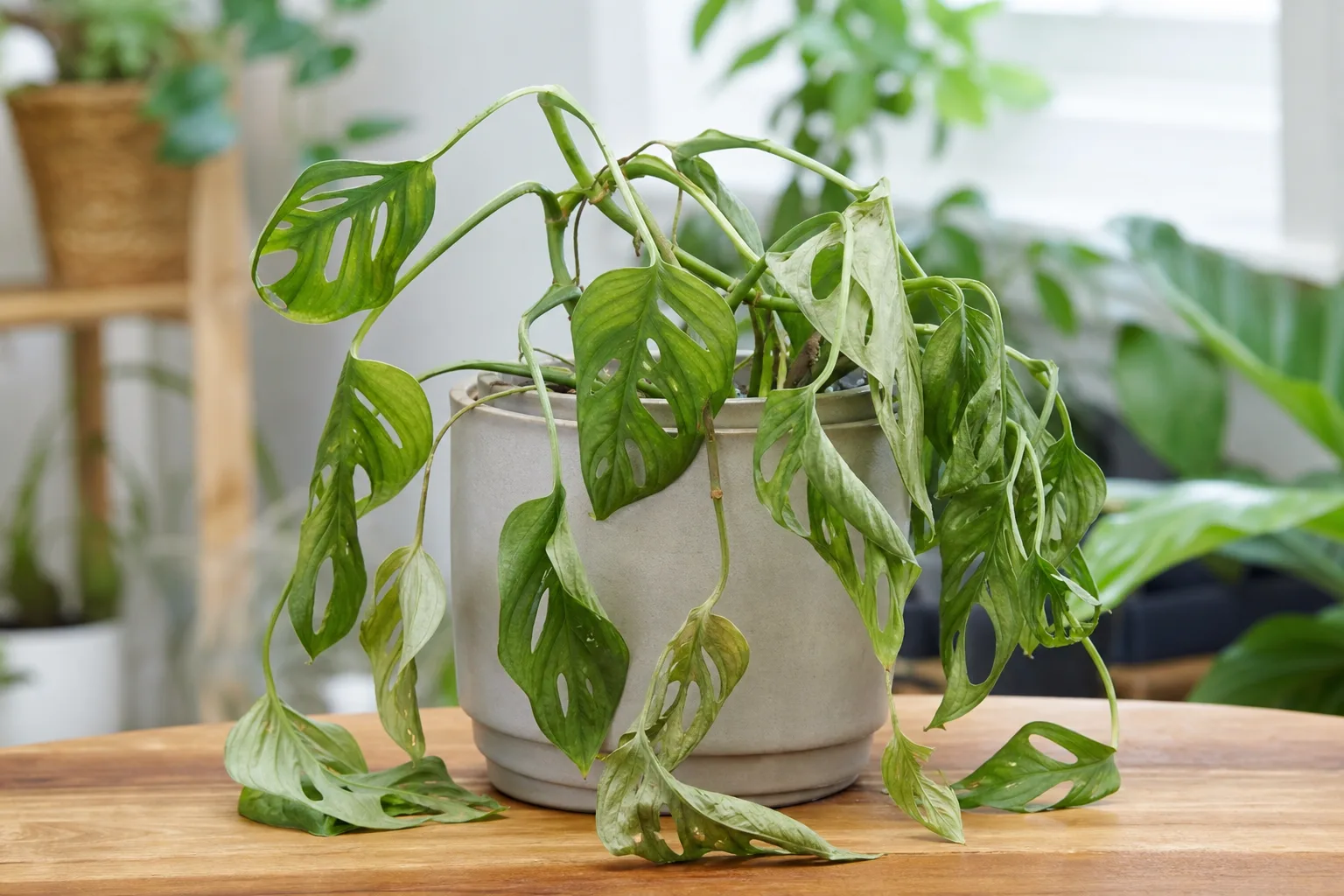
Wilting on Rhaphidophora Tetrasperma: Causes, Checks & Fixes
This guide covers wilting on Rhaphidophora Tetrasperma. See also the general Wilting guide, watering, and light pages for this plant.
Wilting on Rhaphidophora Tetrasperma: Causes, Checks & Fixes
Quick answer
Wilting on Rhaphidophora Tetrasperma (Mini Monstera) looks alarming because thin petioles and split leaves collapse fast when turgor drops. Drooping or curling of leaves result from lack of water-but the same limp look appears when overwatering damages roots and limits uptake, leaving the plant wilted on soggy soil.
First step: feel soil moisture at 2–3 cm depth and lift the pot before you pour. Dry and light gets one thorough soak with saucer emptied. Wet and heavy means stop watering and inspect stem bases-not another drink.
What wilting looks like on Rhaphidophora Tetrasperma
Healthy Rhaphidophora tetrasperma holds dark green, fenestrated leaves on slender climbing stems with firm petioles. When turgor fails, entire leaf blades hang limply and split tips fold inward. Long vines may sag from their support even before stems soften.
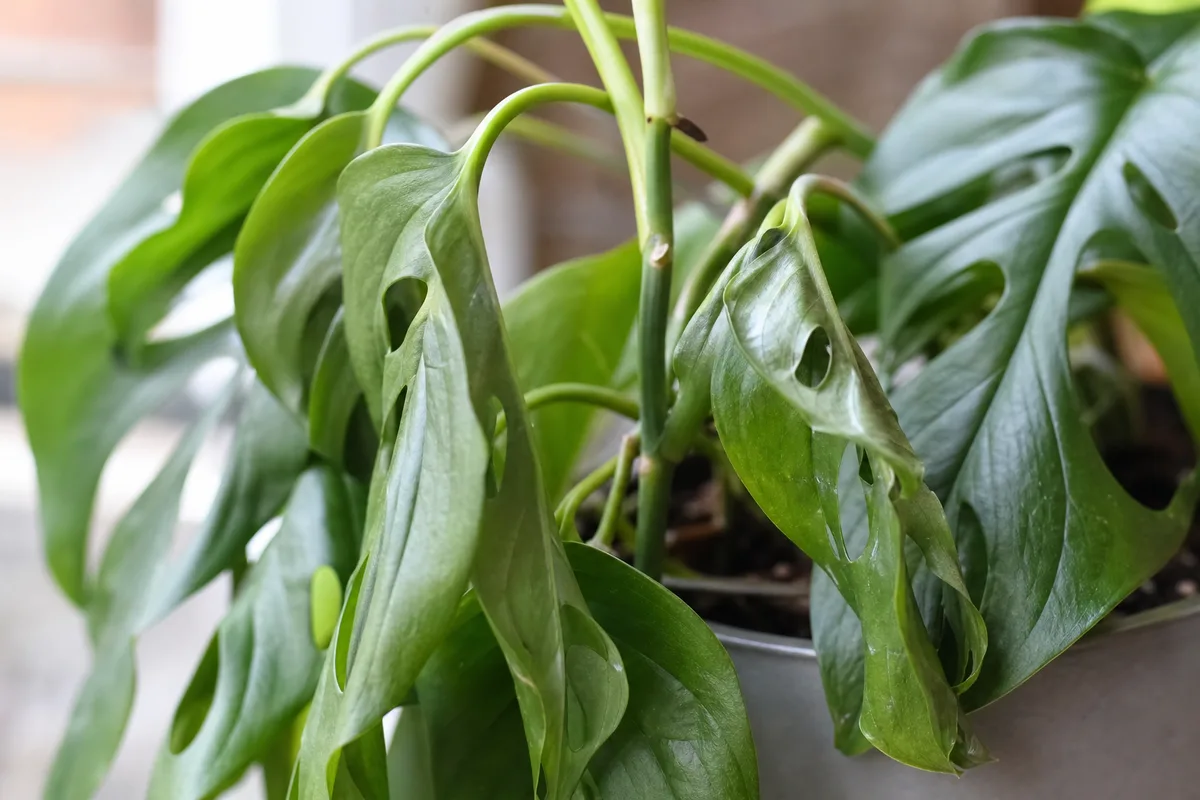
Wilting symptoms on Rhaphidophora Tetrasperma - compare with healthy tissue on the same plant.
Dry wilt shows floppy leaves on a noticeably light pot. The top 2–3 cm of mix is dry, and older mix may pull away from the pot edge. Leaves feel thin rather than crisp. Petioles droop along the full vine length.
Wet wilt is the trap that catches many growers. Soil stays damp for days, yet leaves hang limp and lower foliage may yellow. The pot weighs heavy when lifted. Stem bases near the soil line can feel soft. A sour smell from the mix suggests advanced root decay. Wilting from a damaged root system is a classic overwatering symptom.
Heat wilt appears on hot afternoons near sunny windows or heating vents. Leaves droop during peak warmth and may partially recover overnight if roots and soil moisture are otherwise healthy. This pattern is temporary; all-day collapse with wet soil is not.
Repot shock can cause mild wilt for a few days after disturbance. Wilt with wet soil and soft stems after repot is not normal shock-it signals root damage that needs inspection.
Why Rhaphidophora Tetrasperma gets wilting
This tropical Araceae climber is a rapid grower that drinks heavily in bright light during summer. In homes it often sits in dense peat mix inside decorative pots, getting watered on a calendar instead of when the mix actually dries. That mismatch drives most wilting cases.
Overwatering and root failure is the most dangerous cause because it mimics drought. Saturated mix displaces air from the root zone; oxygen-starved roots die and cannot absorb water. The plant wilts while sitting in wet soil-a feedback loop where owners water more and deepen the damage. NC State lists root rot among potential diseases on Rhaphidophora Tetrasperma overview.
Underwatering removes turgor when the mix has been dry too long. This fast grower in bright, indirect light can exhaust a small pot in a week during active growth. Hydrophobic dry pockets in chunky bark mix can also leave the center dry while the surface looks slightly damp.
Low light plus wet soil slows water use without slowing your watering habit. The mix stays saturated longer, roots weaken, and wilt follows even though care has not changed on the surface.
Cold drafts and temperature swings stress uptake. NC State recommends keeping the plant out of drafts in the 65 to 80 degrees Fahrenheit comfort range. Exposure below about 15°C (59°F) can slow root function and show as sudden wilt.
Oversized pots keep a large volume of mix wet around a relatively small root ball. Wilting on a big new pot with always-damp soil is a strong overwatering signal.
Recent Rhaphidophora Tetrasperma repotting guide can cause temporary wilt while roots re-establish in fresh mix. Mild wilt for a few days after repot into appropriate aroid mix and light is normal; wilt with wet soil and soft stems after repot is not.
How to confirm the cause
Work through these checks in order. The goal is one clear diagnosis before you act.
- Pot weight - Lift the pot. Light suggests dryness; heavy suggests saturation.
- Moisture at 2–3 cm - Stick a finger or bamboo skewer into the mix. Dry throughout supports underwatering. Damp or wet deep down with wilt on top supports root uptake failure.
- Stem firmness - Pinch green stems at the base where petioles attach. Firm and green is reassuring. Soft, mushy, or collapsing tissue means rot involvement-do not water into this.
- Leaf pattern - Yellow lower leaves with wet soil and wilt point to chronic overwatering. Uniform floppy leaves on dry soil point to drought.
- Drainage check - Water should run freely from drainage holes and saucers should empty within minutes. Standing water in saucers keeps roots wet and worsens wet wilt.
- Light and heat context - Afternoon-only wilt near a hot window with otherwise healthy dry-down rhythm suggests heat stress, not root rot.
If soil is wet and stems are soft, unpot and inspect roots. Healthy roots are firm and pale; rotted roots are brown, mushy, or smell bad. That inspection confirms wet wilt beyond doubt.
First fix to try
Feel soil moisture at 2–3 cm depth, lift the pot, then choose one path-do not water by reflex.
If the pot is light and soil is dry throughout: Water once thoroughly until water runs from drainage holes, then discard all saucer water. Place the plant in Rhaphidophora Tetrasperma light guide and wait. Water when the top 1 inch of the potting mix is dry-resume only after the top 2–3 cm dries again.
If the pot is heavy and soil is wet: Do not add water. Move to brighter indirect light and airflow. If stems are still firm, let the mix dry completely before the next soak. If stems feel soft or soil smells sour, unpot immediately, trim mushy roots, and repot into fresh moist, well-drained potting mix with perlite and bark in a pot sized to the root ball.
Do not repot on day one for mild dry wilt. Do not fertilize a wilted plant. Do not move a wet, wilted plant into harsh direct sun-that increases stress without fixing roots.
Step-by-step recovery
Recovering from dry wilt
- Soak evenly until the root ball rewets; bottom-watering helps if the surface repels water.
- Drain completely and empty the saucer.
- Wait 12–24 hours. Firm leaves and lifted petioles mean the diagnosis was correct.
- Resume watering only after the top 2–3 cm dries-this species tolerates brief dry tops better than wet centers.
Recovering from wet wilt
- Stop all watering until the mix dries if stems are still firm.
- Improve light to bright indirect sun so the plant uses moisture predictably.
- If wilt persists beyond a few dry days or stems soften, unpot and inspect roots.
- Trim brown mushy roots with clean scissors; keep only firm pale tissue.
- Repot into chunky aroid mix with perlite and orchid bark, in a pot only slightly larger than the trimmed root ball.
- Avoid leaving the pot standing in water after recovery watering.
- Remove leaves that stay collapsed and necrotic-they will not reopen and drain energy from recovery.
Recovering from heat wilt
- Filter intense afternoon sun or move the pot back from the glass.
- Ensure even moisture without keeping the mix soggy-check dry-down rhythm, not the clock.
- Avoid cold drafts from AC hitting wet foliage after evening watering.
Recovery timeline
Mild dry wilt often shows improvement within hours to one day after proper rehydration. Moderate underwatering may need two to three days before new petioles feel firm.
Wet wilt from early overwatering improves over one to three weeks once the root zone dries and watering resets. Root rot with trimmed roots may take several weeks before new splits or fenestrations confirm stability-judge recovery by firm stems and fresh leaves, not old collapsed ones.
Heat-related afternoon wilt should ease overnight once light and moisture balance. If wilt is constant all day with wet soil, timeline depends on root damage severity, not heat alone.
Lookalike symptoms
Drooping leaves without full collapse can share the same water pathways-check moisture the same way. Drooping from low light alone tends to come with stretched stems and smaller new leaves, not sudden turgor loss across the whole vine.
Yellow leaves often accompany wet wilt but yellowing alone can mean overwatering before full collapse. NC State links yellowing to overwatering or inadequate light-confirm stem firmness and soil moisture together.
Curling leaves on this species more often signal drought or low humidity than classic wet wilt. Curling with firm leaves and appropriate moisture is a different problem.
Leggy growth reflects insufficient light over weeks, not acute turgor loss. Acute wilt happens faster than etiolation.
Mistakes to avoid
Do not water every wilted Rhaphidophora Tetrasperma without checking soil first-wet wilt gets worse with more water.
Do not assume a fast-growing climber cannot be underwatered. Summer growth in bright light dries small pots quickly.
Do not repot into a larger pot hoping to fix wilt. Bigger pots hold more wet mix around roots that need oxygen.
Do not fertilize while wilted. Extension troubleshooting guides recommend fixing water and light before stacking treatments.
Do not leave saucers full. Standing water re-saturates mix from below.
Do not discard a plant after one dry wilt episode if it perks up within a day-that was reversible drought, not rot.
Rhaphidophora Tetrasperma care cross-check
Wilting often exposes a care mismatch elsewhere:
- Watering: Water when the top 2–3 cm dries; confirm with finger depth, not a calendar. Summer growth may need weekly checks; winter slows the rhythm.
- Mix: Use well-draining aroid mix with perlite and bark; dense peat without structure stays wet too long.
- Light: Bright indirect light keeps water use steady; dim rooms prolong wet soil after each watering.
- Support: Provide a moss pole or trellis so long vines do not stress petioles from unsupported weight alone.
- Temperature: Keep in the 65–80°F range and away from cold windows and heat vents.
When these align, wilt episodes become rare and recovery faster when they happen.
How to prevent wilting next time
Learn your pot’s dry-down time in its actual window spot-two identical plants can differ by several days. Water only when the top 2–3 cm dries, soak fully once, drain every time.
Use pots with drainage holes and empty saucers within 30 minutes of watering. Overwatering is a common reason houseplants fail-establish a wet-dry cycle instead of keeping mix permanently damp.
Keep bright indirect light year-round so winter watering intervals lengthen naturally as growth slows.
Scout stem bases when you water. Softness at the crown is an early wet-wilt warning before the whole vine collapses.
Quarantine new plants and avoid repotting into oversized containers on day one unless mix or drainage is clearly failing.
When to worry
Treat as urgent when wilt persists after correct dry-side rehydration, when wet soil and soft stem bases appear together, or when multiple leaves collapse within days on a heavy pot. Root rot of houseplants spreads while roots are suffocating-delaying unpotting after mushy stems often means losing the crown.
A plant with mostly mushy roots and a soft stem base may not be saveable. Take healthy stem cuttings with at least one node above firm tissue if any exists, then discard the rotted base rather than waiting for total collapse.
Mild dry wilt that recovers within 24 hours after one good watering is not urgent-it is a reminder to check the pot, not panic.
Conclusion
Wilting Rhaphidophora Tetrasperma leaves are a water-movement alarm, not a single diagnosis. Feel soil at 2–3 cm depth, lift the pot, and check stem bases before you water. Dry and light gets one soak; wet and heavy gets a dry-down or root rescue-not more water. That one check prevents the most common mistake growers make on this fast-growing Mini Monstera and gives collapsed split leaves their best chance to firm up again.
When to use this page vs other Rhaphidophora Tetrasperma guides
- Rhaphidophora Tetrasperma watering guide - Use for routine moisture checks before assuming wilting is the main issue.
- Rhaphidophora Tetrasperma problems hub - Browse all 3 common issues on this species.
- Yellow Leaves on Rhaphidophora Tetrasperma - Different entry point when symptoms overlap with wilting.