Rhaphidophora Tetrasperma Problems: Causes & Quick Fixes
Quick answer
Rhaphidophora Tetrasperma is prone to 16 common issues - each link below is a plant-specific fix guide.
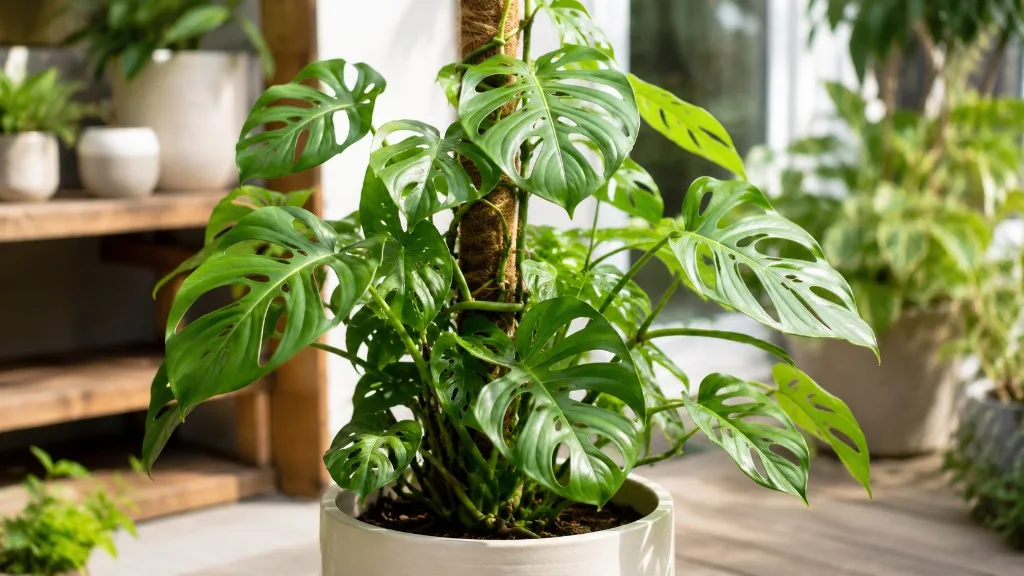
Rhaphidophora Tetrasperma problems
Use the guides below to diagnose and fix common issues on Rhaphidophora Tetrasperma. Each problem page explains why it happens on this species and what to do first.
Or use our problem diagnosis tool to narrow down symptoms.
Common problems on Rhaphidophora Tetrasperma
Leggy Growth
LowLikely cause: Insufficient light
Quick fix: Move to brighter indirect light; add a moss pole for vertical growth
Full fix guide →Spider Mites
MediumLikely cause: Dry air
Quick fix: Wipe leaves; treat with neem; increase humidity
Full fix guide →Yellow Leaves
MediumLikely cause: Overwatering or nutrient deficiency in fast-draining mix
Quick fix: Check soil; reduce watering or fertilize monthly
Full fix guide →Aphids
MediumLikely cause: Aphids on Rhaphidophora Tetrasperma cluster on soft new growth and leaf undersides, leaving sticky honeydew and curled unfurling leaves. First step: move the plant away from neighbors and rinse growin
Quick fix: See plant-specific guide for step-by-step fixes.
Full fix guide →Brown Tips
MediumLikely cause: Brown tips on Rhaphidophora Tetrasperma usually mean leaf margins are drying faster than roots can replace moisture-most often from low humidity at the canopy, inconsistent watering, or salt buildup.
Quick fix: See plant-specific guide for step-by-step fixes.
Full fix guide →Drooping Leaves
MediumLikely cause: Drooping leaves on Rhaphidophora Tetrasperma usually mean uneven watering or recent environmental shock. First step: Check whether soil is too dry or too wet at 2–3 cm depth, then make one correction-
Quick fix: See plant-specific guide for step-by-step fixes.
Full fix guide →Fungus Gnats
MediumLikely cause: Fungus gnats on Rhaphidophora Tetrasperma almost always mean the top of the potting mix stays too wet. First step: pause watering until the top 2–3 cm is dry, then apply a Bti soil drench to knock dow
Quick fix: See plant-specific guide for step-by-step fixes.
Full fix guide →Low Humidity
MediumLikely cause: Low humidity on Rhaphidophora Tetrasperma shows as brown leaf edges, stuck unfurling, and spider mites in dry winter air. First step: place a humidifier near the plant and aim for roughly 50–60% humid
Quick fix: See plant-specific guide for step-by-step fixes.
Full fix guide →Mealybugs
MediumLikely cause: Mealybugs on Rhaphidophora Tetrasperma show up as white cottony clusters in leaf axils, at stem nodes, and on new unfurling split leaves-often hidden on the moss-pole side before top foliage looks cle
Quick fix: See plant-specific guide for step-by-step fixes.
Full fix guide →Mold on Soil
MediumLikely cause: Surface mold on Rhaphidophora Tetrasperma is usually harmless saprophytic fungus feeding on damp organic mix-not a leaf disease. First step: scrape off the top 1–2 cm of moldy soil and pause watering
Quick fix: See plant-specific guide for step-by-step fixes.
Full fix guide →Not Enough Light
MediumLikely cause: Rhaphidophora Tetrasperma is a fast climber that needs bright indirect light-not a dim corner. First step: move the pot within a few feet of an east or filtered south/west window, or add a full-spectr
Quick fix: See plant-specific guide for step-by-step fixes.
Full fix guide →Overwatering
MediumLikely cause: Overwatering on Rhaphidophora tetrasperma shows as yellow lower leaves and a heavy pot while the top 2–3 cm of mix stays wet, with drooping that does not improve after watering. First step: stop water
Quick fix: See plant-specific guide for step-by-step fixes.
Full fix guide →Root Rot
MediumLikely cause: Root rot on Rhaphidophora Tetrasperma means mushy brown roots after chronic wet soil-not just yellow leaves on damp mix. First step: unpot, trim all rotted tissue, repot in fresh chunky aroid mix, and
Quick fix: See plant-specific guide for step-by-step fixes.
Full fix guide →Slow Growth
MediumLikely cause: Slow growth on Rhaphidophora Tetrasperma means almost no new nodes for six or more weeks in warm months-not vines that keep reaching with long gaps. First step: check light at the leaf canopy and move
Quick fix: See plant-specific guide for step-by-step fixes.
Full fix guide →Underwatering
MediumLikely cause: Underwatering on Rhaphidophora Tetrasperma shows as drooping split leaves on a feather-light pot with dry soil 2–3 cm (about 1 inch) down. First step: water thoroughly until drainage runs, then reset
Quick fix: See plant-specific guide for step-by-step fixes.
Full fix guide →Wilting
MediumLikely cause: Wilting on Rhaphidophora Tetrasperma means water is not reaching the leaves-either the mix is too dry or roots cannot absorb moisture in wet soil. First step: feel soil moisture at 2–3 cm depth and li
Quick fix: See plant-specific guide for step-by-step fixes.
Full fix guide →