Underwatering on Rhaphidophora Tetrasperma: Causes, Checks
Quick answer
Underwatering on Rhaphidophora Tetrasperma shows as drooping split leaves on a feather-light pot with dry soil 2–3 cm (about 1 inch) down. First step: water thoroughly until drainage runs, then reset to watering when the top 2–3 cm dries.
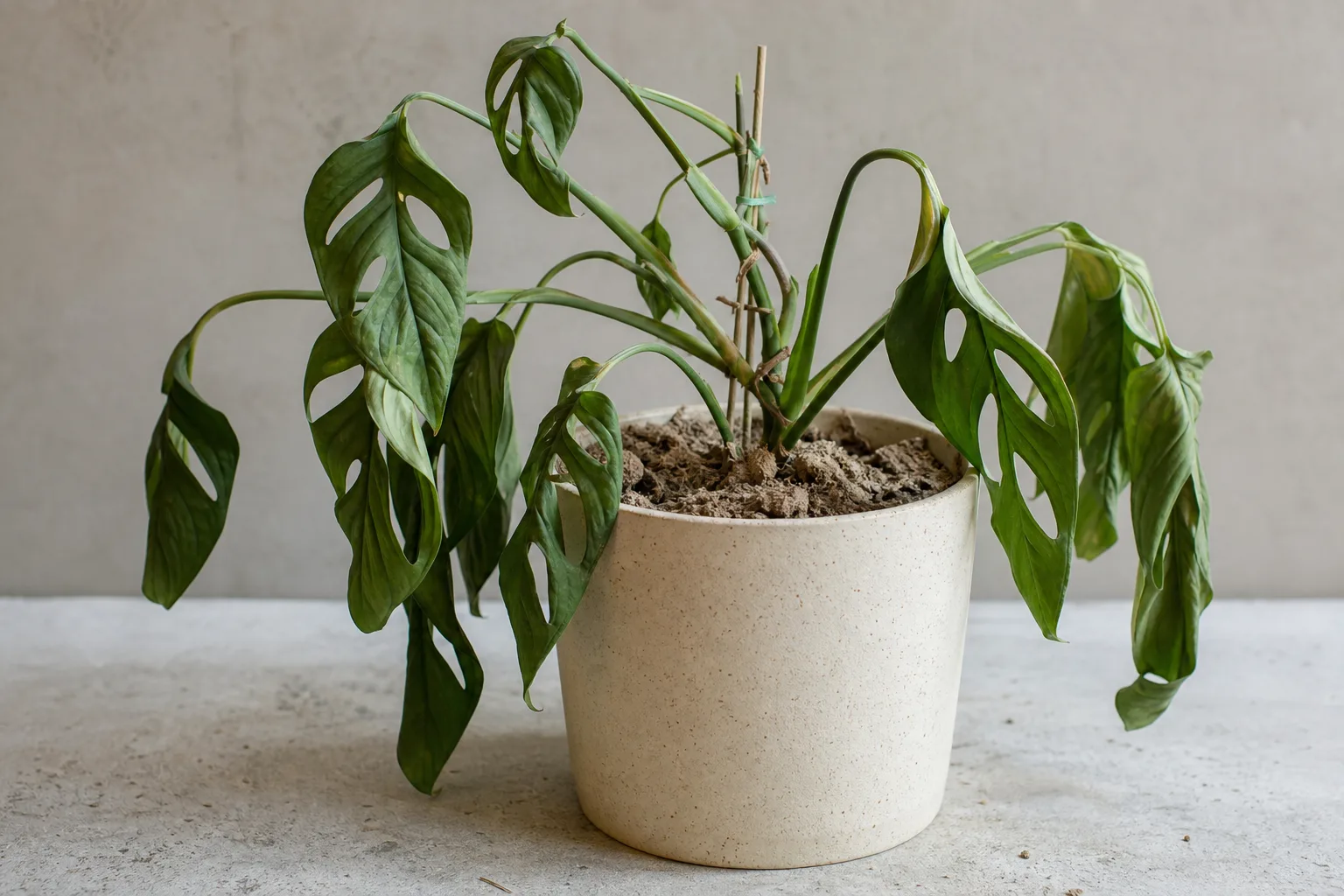
Underwatering on Rhaphidophora Tetrasperma: Causes, Checks & Fixes
This guide covers underwatering on Rhaphidophora Tetrasperma. See also the general Underwatering guide, watering, and light pages for this plant.
Underwatering on Rhaphidophora Tetrasperma: Causes, Checks & Fixes
Quick answer
Underwatering on Rhaphidophora Tetrasperma (Rhaphidophora tetrasperma, Mini Monstera) shows as drooping or curling split leaves on a feather-light pot with bone-dry soil 2–3 cm down (about 1 inch). This page is drought-only triage-when you already suspect the mix is too dry. If wilt might come from wet soil or root failure instead, start with the wilting guide before you pour.
First step: water thoroughly until drainage runs from the holes, empty the saucer, then wait. NC State Extension notes that drooping or curling of leaves result from lack of water on Rhaphidophora Tetrasperma overview. Resume normal rhythm only after the top 2–3 cm (about 1 inch) dries again-matching NC State’s water when the top 1 inch of potting mix is dry guidance.
This tropical climbing epiphyte from Thailand and Malaysia is a rapid grower in bright, indirect light. A 4-inch nursery vine on a moss pole in a bright east window can go from healthy to visibly limp in under a week during summer if checks slip-split leaves on slender petioles collapse before crispy margins appear.
What underwatering looks like on Rhaphidophora Tetrasperma
Healthy Mini Monstera holds dark green fenestrated leaves on firm climbing stems. Drought stress reverses that picture quickly on this thin-leaved vine.
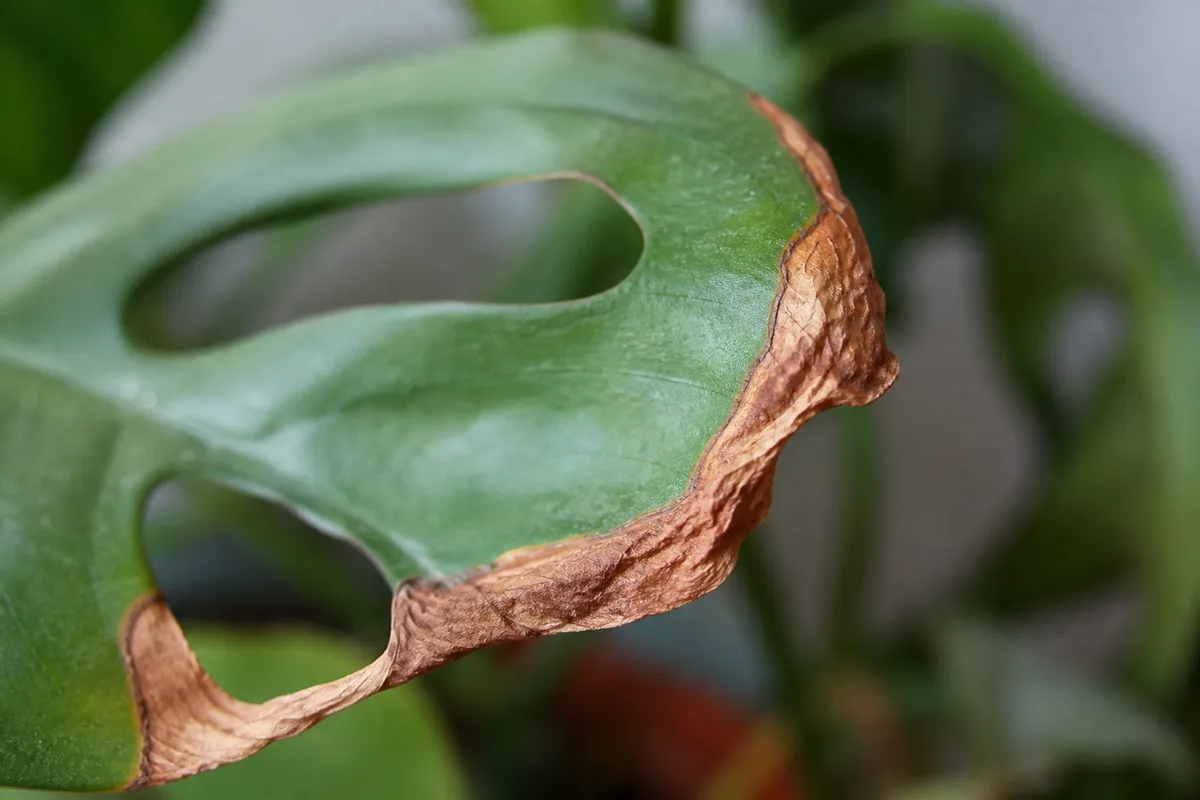
Underwatering symptoms on Rhaphidophora Tetrasperma - compare with healthy tissue on the same plant.
Early drought - Split leaf blades hang limply along the vine. Petioles feel soft rather than turgid. The top 2–3 cm of mix is dry and crumbly. The pot feels noticeably lighter than after your last thorough watering.
Moderate drought - Leaves curl inward at the edges to reduce water loss. Older mix may pull away from the pot wall, leaving a gap where water runs down the sides. Lower leaves may start yellowing after repeated wilt-and-recover cycles.
Severe drought - Whole vines collapse. Leaf margins turn brown and crispy. Brown margins and spots relate to lack of moisture or humidity on this species. The root ball may be so dry that surface watering beads off without penetrating-the hydrophobic soil trap.
Underwatering vs. wilting on Rhaphidophora Tetrasperma
Both pages address limp leaves, but they serve different search moments.
| Your check | Route |
|---|---|
| Dry top 2–3 cm + light pot - you know the plant has not been watered in too long | This page - drought rescue |
| Unsure whether soil is wet or dry - wilt appeared suddenly and you have not checked yet | Wilting guide - wet-vs-dry fork first |
| Heavy wet pot + limp leaves | Wilting or root rot - not more water |
| Ongoing rhythm and seasonal schedule | Watering hub |
The perk-after-soak test is your best confirmation: leaves that firm within hours after one thorough drink were thirsty. Leaves that stay limp on wet soil need a different rescue path entirely.
Why Rhaphidophora Tetrasperma gets underwatered
Fear of root rot is the most common trigger. After reading warnings about soggy mix, many owners wait too long-especially on this fast-growing aroid that drinks heavily in summer. The overwatering guide covers the opposite mistake; drought rescue should not swing you into daily shallow sips.
Small pots and fast growth shrink the dry-down window. A 4-inch nursery pot in bright light may need water every 3 to 5 days in peak summer per the watering guide-far faster than a mature Monstera deliciosa in the same room.
Airy aroid mix with orchid bark and perlite drains well-which protects against rot but dries faster on top. That is correct for this species, which wants moist, well-drained mix-not bone-dry desert conditions throughout the root ball.
Heat near windows accelerates transpiration. A moss pole in direct afternoon sun can exhaust a small pot in days while a calendar reminder still says “water next Tuesday.”
Hydrophobic dry pockets in aged peat let the surface look slightly damp while the center stays dry-so owners think they watered when roots never drank.
How to confirm underwatering
Work through these checks in order before you soak:
- Pot weight - Lift the container. A dramatic lightness since the last watering supports drought.
- Moisture at 2–3 cm - Finger or bamboo skewer into the mix near the pot wall. Dry and crumbly throughout confirms thirst; damp deep down with wilt on top points elsewhere.
- Leaf turgor - Thin, floppy split leaves on dry soil perk after watering. Soft limp leaves on heavy wet soil do not.
- Soil pull-away - Visible gap between mix and pot wall means chronic dryness and likely hydrophobic repelling.
- Perk test - After one thorough soak and drainage, wait 4–12 hours. Lifted petioles confirm drought was the cause.
If soil is wet and stems are soft, do not use this page-route to wilting or root rot instead. Cultural diagnosis should precede treatment.
First fix to try
Water thoroughly until drainage runs, empty the saucer, then observe-do not sprinkle daily sips.
Choose one path based on how dry the root ball is:
Standard drought (dry top 2–3 cm, no hydrophobic gap)
- Water slowly at the soil surface, moving around the pot until excess exits drainage holes.
- Wait 10 minutes, then water once more so the center rewets-especially in chunky bark mix.
- Empty saucers and cachepots within 30 minutes.
- Place in Rhaphidophora Tetrasperma light guide and check perk within 4–12 hours.
Hydrophobic mix (water runs down sides, gap at pot wall)
- Bottom-water: set the pot in a shallow tray of water below the rim for 30–60 minutes until the surface darkens, then drain fully. UC Master Gardeners note this slow absorption rewets repelling mix better than a fast pour.
- If still dry at center, submerge the whole pot in a basin until air bubbles stop, then drain-UConn Extension recommends this when the root ball has shrunk away from the pot.
- Resume top watering on the normal dry-down rhythm once the root zone rewets.
Chronic drought with collapsed vines
If the plant has been dry for weeks and does not perk within 24 hours after rehydration, unpot and inspect roots. Firm white roots mean keep nursing with consistent soaks. Widespread brown mush means route to root rot rescue and take propagation cuttings from firm nodes above any soft tissue.
Recovery snapshot: A 4-inch nursery Mini Monstera on a moss pole in a bright east window showed dry top 2 cm and a light pot on a Monday morning. A double-pass soak with full drainage firmed split leaves within four hours; one crispy margin was trimmed after 72 hours when it did not reopen. New growth looked normal within two weeks once the owner reset to checking the top 2–3 cm every few days.
Recovery timeline
| Severity | Signs | Realistic timeline |
|---|---|---|
| Mild | Slight droop, dry top 2–3 cm, firm stems | Perk within hours to 1 day after one thorough soak |
| Moderate | Curling edges, one or two yellow lower leaves | 2–3 days before petioles feel firm; old yellow leaves may drop |
| Severe | Crispy margins, soil pull-away, vine collapse | 1–2 weeks for stability; crispy tissue will not green up |
Judge recovery by new split leaves and firm upper vines, not by old damaged blades reopening. Brown margins from drought may stay brown permanently even after roots recover.
Lookalike symptoms
| Pattern | Likely cause | What to check | Route |
|---|---|---|---|
| Light pot, dry top 2–3 in., perk after soak | Underwatering | Pot weight; finger depth | This page |
| Heavy pot, wet soil, yellow lowers | Overwatering | Stem firmness; smell | Overwatering guide |
| Wilting on wet soil, mushy roots | Root rot | Root squeeze test | Root rot guide |
| Afternoon droop, perks overnight | Heat stress | Light intensity; soil moisture OK | Wilting guide |
| Gradual sag, stretched stems | Low light | New leaf size; internode length | Not-enough-light guide |
| Drooping without full collapse | Drooping leaves hub | Multiple causes | Drooping-leaves guide |
What not to do
Do not sprinkle small daily sips-shallow watering keeps the top damp while the center stays dry, the same loop UConn Extension warns causes poor root growth.
Do not assume every droop means drought. Wilting on wet soil means damaged roots cannot absorb water-adding more water deepens rot.
Do not swing to overwatering after a drought scare. One thorough soak, then wait for the top 2–3 cm to dry again. See the overwatering guide if you are unsure where the line is.
Do not fertilize a drought-stressed vine to “wake it up.” Fix moisture first.
Do not repot on day one for mild dry wilt. Reserve repotting for hydrophobic mix that will not rewet or root balls that have gone completely dry for weeks.
How to prevent underwatering next time
Learn your pot’s dry-down time in its actual window spot. Check the top 2–3 cm (about 1 inch) every few days-not on a blind calendar. Many indoor Mini Monsteras need water every 5 to 7 days in summer active growth and every 10 to 14 days or longer in winter-see the full watering schedule for finger, chopstick, and pot-weight technique.
Use chunky aroid mix with perlite and bark so the root zone breathes between soaks while staying in the moist, well-drained range this species prefers.
Lift the pot before every drink. Weight change beats a fixed Tuesday schedule-and prevents both drought gaps and chronic overwatering from reflex watering.
Empty cachepot saucers after every soak. Standing water is an overwatering trap, not drought prevention.
When to worry
Treat as urgent when vines collapse completely, soil has pulled from the pot wall for more than a week, or most leaves crisp across the plant. Rehydrate today with bottom-water or double-pass soak-not tomorrow.
Escalate to root inspection when the plant does not perk within 24 hours after confirmed dry-soil rehydration. Chronic drought can kill fine roots; if mushy tissue appears on rinse, switch to root rot rescue.
Take propagation cuttings from firm nodes if the base vine is mostly collapsed but upper growth still feels green-salvage before total loss.
Mild droop that perks within a day after one good soak is not urgent-it is a reminder to check the pot, not panic.
Related Rhaphidophora Tetrasperma problems
- Wilting - wet-vs-dry fork when you are not sure which side you are on
- Overwatering - opposite mistake after drought rescue
- Root rot - when no perk after soak on wet soil or mushy roots
- Drooping leaves - broader droop hub beyond drought alone
- [Yellow leaves on Rhaphidophora Tetrasperma](/plants/rhaphidophora-tetrasperma/yellow-leaves/) - lower-leaf yellow after repeated dry cycles
- Watering guide - ongoing rhythm, seasonal cadence, drench-and-dry technique
- Rhaphidophora tetrasperma overview - full care hub
Conclusion
Underwatering on Rhaphidophora Tetrasperma is a dry-soil problem on a fast-drinking tropical vine-not every limp leaf. Confirm with pot weight and moisture at 2–3 cm down, soak thoroughly until drainage runs, and watch split leaves firm within hours. Route wet-soil wilt to the wilting guide; route long-term rhythm to the watering hub. Keep this page for drought rescue and hydrophobic rewetting when you already know the mix went too dry.
This guide was written by sai-ananth and reviewed by the LeafyPixels Review Board (reviewed June 2026) against botanical references and extension guidance before publication. Drought symptoms, hydrophobic rewetting, and cultural diagnosis workflow were cross-checked with NC State Extension - Rhaphidophora tetrasperma, Iowa State Extension - cultural diagnosis, UConn Extension - watering houseplants, UC Master Gardeners - hydrophobic soil, University of Minnesota Extension - houseplant watering, and the LeafyPixels Rhaphidophora tetrasperma overview.
When to use this page vs other Rhaphidophora Tetrasperma guides
- Rhaphidophora Tetrasperma watering guide - Use for routine moisture checks before assuming underwatering is the main issue.
- Rhaphidophora Tetrasperma problems hub - Browse all 3 common issues on this species.
- Yellow Leaves on Rhaphidophora Tetrasperma - Different entry point when symptoms overlap with underwatering.