Root Rot on Rhaphidophora Tetrasperma: Causes, Checks &
Quick answer
Root rot on Rhaphidophora Tetrasperma means mushy brown roots after chronic wet soil-not just yellow leaves on damp mix. First step: unpot, trim all rotted tissue, repot in fresh chunky aroid mix, and hold water until new growth firms up.
Root Rot on Rhaphidophora Tetrasperma: Causes, Checks & Fixes
This guide covers root rot on Rhaphidophora Tetrasperma. See also the general Root Rot guide, watering, and light pages for this plant.
Root Rot on Rhaphidophora Tetrasperma: Causes, Checks & Fixes
Quick answer
Root rot on Rhaphidophora Tetrasperma (Rhaphidophora tetrasperma, Mini Monstera) means mushy brown roots after soil stayed waterlogged long enough for fungi to attack feeder roots-not simply yellow lower leaves on damp mix. This page is the advanced rescue guide for confirmed decay. If roots still feel firm and you mainly need to dry out wet soil, start with the overwatering guide. For prevention rhythm and drench-and-dry technique, see the watering hub.
First step: unpot, trim all rotted tissue, repot in fresh chunky aroid mix, and hold water until new growth firms up. NC State Extension lists root rot among fungal diseases common on this fast-growing aroid indoors, usually after overwatering in dense mix or pots without airflow.
What root rot looks like on Mini Monstera
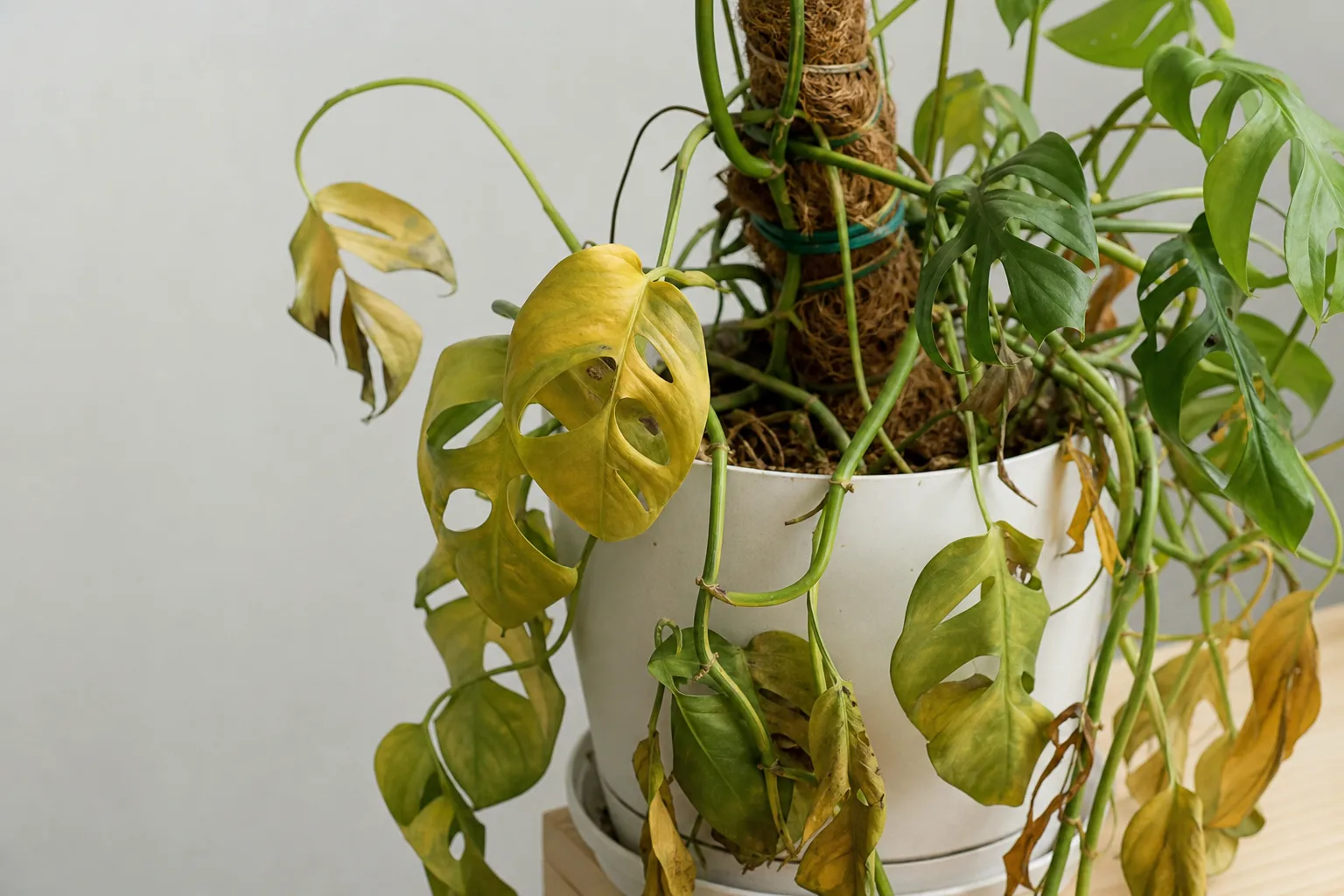
Above ground, rot disguises itself as thirst. Lower leaves yellow in waves while the pot stays heavy. Vines wilt despite wet soil-the classic mismatch that sends owners back to the watering can when they should be inspecting roots. Advanced cases add a sour or musty smell when you lift the plant, soft dark tissue at the soil line, and fungus gnats hovering over decomposing organic matter.
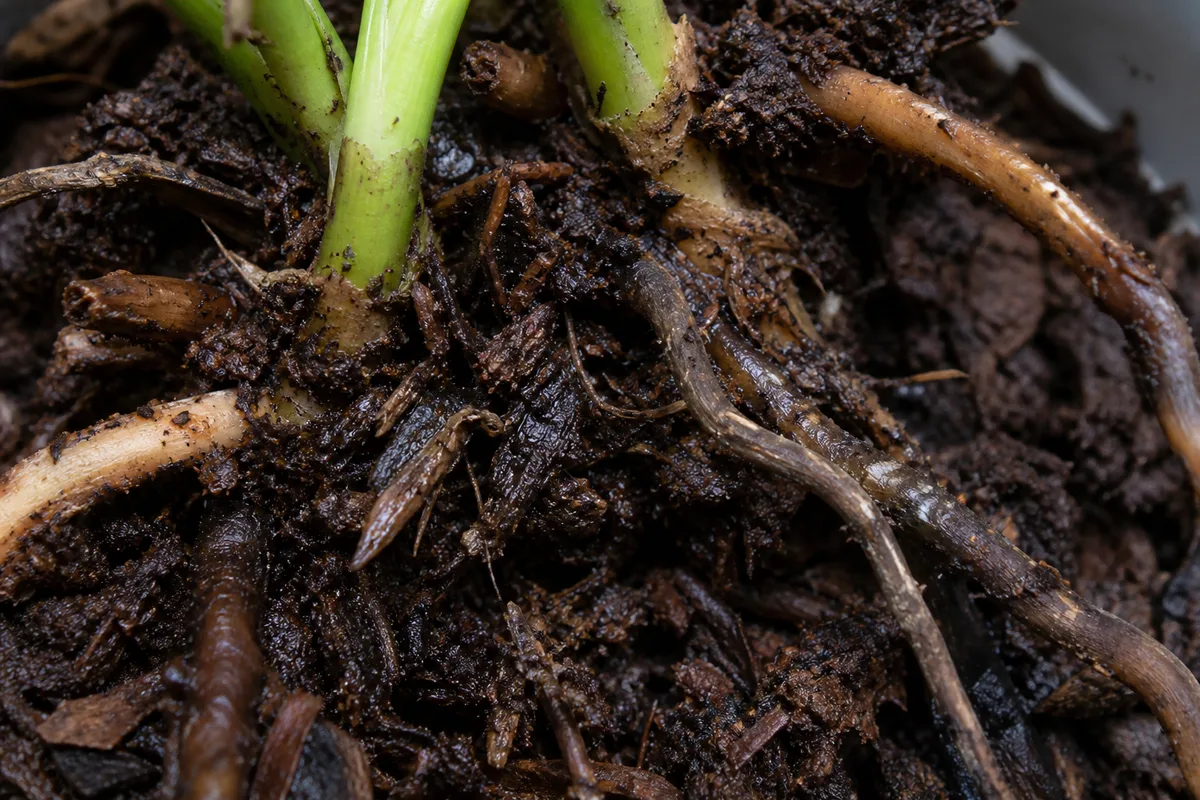
Root Rot symptoms on Rhaphidophora Tetrasperma - compare with healthy tissue on the same plant.
Below ground, healthy R. tetrasperma roots are white or tan and firm when rinsed. Rotted tissue is brown, slimy, or hollow and collapses between your fingers. A few dark tips on otherwise firm roots may trim cleanly; widespread mush means rescue repotting, not another dry-down week.
Why Rhaphidophora Tetrasperma gets root rot
Rhaphidophora Tetrasperma overview evolved as a climbing epiphyte from wet tropical forests in Thailand and Malaysia. Indoors it wants moist, well-drained mix under Rhaphidophora Tetrasperma light guide-not a swamp. Moist mix does not mean wet mix. Fast summer growth on a moss pole tempts frequent watering, but winter slowdown means the same calendar schedule keeps the core soggy for weeks.
Common triggers stack together: heavy peat blend without bark or perlite, oversized decorative pots that hold a wet reservoir at the bottom, cachepots that trap runoff, dim shelves where transpiration slows but watering does not, and treating Mini Monstera like a mature Monstera deliciosa with thicker leaves and slower dry-down. The watering guide explains why this thinner-leaved climber cycles faster in bright light-and why leggy specimens in corners rot on a summer schedule all year.
Root rot pathogens such as Pythium and Phytophthora thrive in waterlogged, poorly drained potting mix, especially when winter growth slows and owners keep pouring.
How to confirm root rot (inspection checklist)
Work through these checks before you repot-cultural diagnosis should precede any fungicide impulse:
- Moisture history - Has the top 1–2 inches (2.5–5 cm) stayed wet for five or more days after your last drink?
- Wilting vs. weight - Do leaves droop while the pot feels heavy? That pattern points to root failure, not drought.
- Smell at the soil line - Sour or rotten odor when you tilt the pot supports rot over simple underwatering.
- Stem squeeze - Firm green tissue above the mix is hopeful; soft, dark base tissue is urgent.
- Root rinse test - Unpot, rinse gently, and squeeze roots. Firm white or tan tissue may recover after trim; widespread mush confirms rot.
- Severity branch - Less than roughly one-third mushy roots: trim and repot. More than half gone or climbing stem blackening: propagate tip cuttings as backup per the propagation guide.
First fix for Rhaphidophora Tetrasperma
Unpot, trim all mushy roots, and repot in fresh chunky aroid mix-then hold water until the trimmed root zone can breathe.
Wear gloves when cutting: NC State notes calcium oxalate crystals in sap, roots, and stems can irritate skin during rescue work. Sterilize scissors between cuts. Do not return the plant to the same saturated soil or an oversized pot.
Step-by-step recovery
- Unpot and discard all wet, sour-smelling mix-do not shake healthy roots aggressively.
- Rinse roots under lukewarm water so decayed tissue is visible against firm zones.
- Trim rot back to firm white or tan roots; remove any soft stem tissue at the base.
- Air-dry the root ball on paper towels for two to four hours so cut surfaces callus slightly.
- Repot into a clean pot sized to the remaining root mass using chunky aroid mix with perlite and orchid bark. Follow repotting depth and support tips so vines do not sit deeper than before.
- Water once lightly, drain fully, then wait until the top 1–2 inches dry before the next soak. Skip fertilizer until new split leaves appear.
If the base is mostly gone, root healthy tip cuttings with nodes while the trimmed specimen recovers in parallel.
Recovery timeline by severity
| Severity | Signs | Realistic timeline |
|---|---|---|
| Mild | Few mushy tips, firm stem, most roots intact | New firm vine in 3–4 weeks in bright indirect light |
| Moderate | One-third to half of roots trimmed, some yellow leaves | 4–8 weeks before steady new growth; old yellow foliage will not green up |
| Severe | Majority of roots gone, soft base, or blackening climbing the stem | Weeks to months if any salvage; often propagation-only restart |
Judge success by new apical growth and firm stems, not by immediate perkiness of damaged leaves.
Lookalike symptoms
| Pattern | Likely cause | What to check | Route |
|---|---|---|---|
| Wet soil, firm white roots, yellow lowers | Early overwatering | Dry top 1–2 in.; improve light | Overwatering guide |
| Light pot, crispy edges, dry top 2–3 in. | Underwatering | Soak and drain; learn pot weight | Underwatering guide |
| Wilting 3–7 days after repot, firm roots | Transplant shock | Hold water slightly longer; avoid direct sun | Repotting guide |
| One old yellow leaf, firm vine, healthy roots | Normal senescence | No sour smell; stable new growth | Overview / watering rhythm |
| Mushy roots, sour smell, soft base | Root rot | Trim, repot, propagate backup | This page |
What not to do
Do not keep watering on a calendar when soil is still saturated-damaged roots need oxygen, not another soak. Do not blast the pot with direct sun to “dry it faster”; too much bright sun will cause leaf burn on this species. Do not fertilize stressed roots to force growth. Do not repot into garden soil or a pot more than one size up. Empty cachepot saucers-standing water re-saturates the lowest roots overnight.
How to prevent root rot next time
Water when the top 1 inch of mix is dry while keeping the root zone in moist, well-drained media-typically the top 1–2 inches (2.5–5 cm) dry between drinks per the watering guide. Use open drainage holes, chunky aroid substrate, and pot size matched to roots-not canopy size. Reduce frequency in winter when growth slows. Lift the pot before every drink; weight change beats a fixed Tuesday schedule.
Mini Monstera care cross-check
Root rot prevention aligns with bright indirect light, airy mix, and seasonal dry-down checks. A fast summer grower in dim light with peat-heavy mix will rot even if you “only water weekly.” Move the vine closer to an east- or west-facing window (with sheer curtain if needed) so the mix cycles predictably. Match watering rhythm to how fast your pot dries, not to a social-media schedule.
When to worry
Unpot immediately when wet soil pairs with sour smell and stem softening-do not wait for another dry-down cycle. Escalate to propagation salvage when blackening climbs the vine, most roots dissolve on rinse, or the plant collapses within days of wilting. Mild tip rot with firm green stems above the soil line still allows repot rescue-take cuttings early if base tissue fails the squeeze test.
Related Rhaphidophora problems
- Overwatering - wet soil with mostly firm roots; dry-down first
- Underwatering - light pot and crispy leaves; opposite root pattern
- [Yellow leaves on Rhaphidophora Tetrasperma](/plants/rhaphidophora-tetrasperma/yellow-leaves/) - primary symptom hub
- Wilting - wilt-on-wet-soil triage
- Fungus gnats - secondary signal of chronic wet mix
- Rhaphidophora tetrasperma overview - full care hub
Conclusion
Root rot on Rhaphidophora Tetrasperma begins with waterlogged mix starving roots of oxygen-not mysterious wilt. Confirm by rinsing and squeezing roots, trim all mush, repot into fresh chunky aroid mix, and hold water until new split leaves prove the root zone has stabilized. Route early wet-soil cases to overwatering and long-term rhythm to the watering guide; keep this page for confirmed mushy-root rescue and propagation backup when the base fails.
This guide was written by sai-ananth and reviewed by the LeafyPixels Review Board (reviewed June 2026) against botanical references and extension guidance before publication. Root-rot symptoms, cultural diagnosis workflow, and rescue steps were cross-checked with NC State Extension - Rhaphidophora tetrasperma, Missouri Botanical Garden - overwatering, Iowa State Extension - cultural diagnosis, Lee County NC Extension - watering and root rot, University of Minnesota Extension - houseplant watering, and the LeafyPixels Rhaphidophora tetrasperma overview.
When to use this page vs other Rhaphidophora Tetrasperma guides
- Rhaphidophora Tetrasperma watering guide - Use for routine moisture checks before assuming root rot is the main issue.
- Rhaphidophora Tetrasperma problems hub - Browse all 3 common issues on this species.
- Yellow Leaves on Rhaphidophora Tetrasperma - Different entry point when symptoms overlap with root rot.