Mold on Soil on Rhaphidophora Tetrasperma: Causes, Checks &
Quick answer
Surface mold on Rhaphidophora Tetrasperma is usually harmless saprophytic fungus feeding on damp organic mix-not a leaf disease. First step: scrape off the top 1–2 cm of moldy soil and pause watering until the top 2–3 cm of mix feels dry.
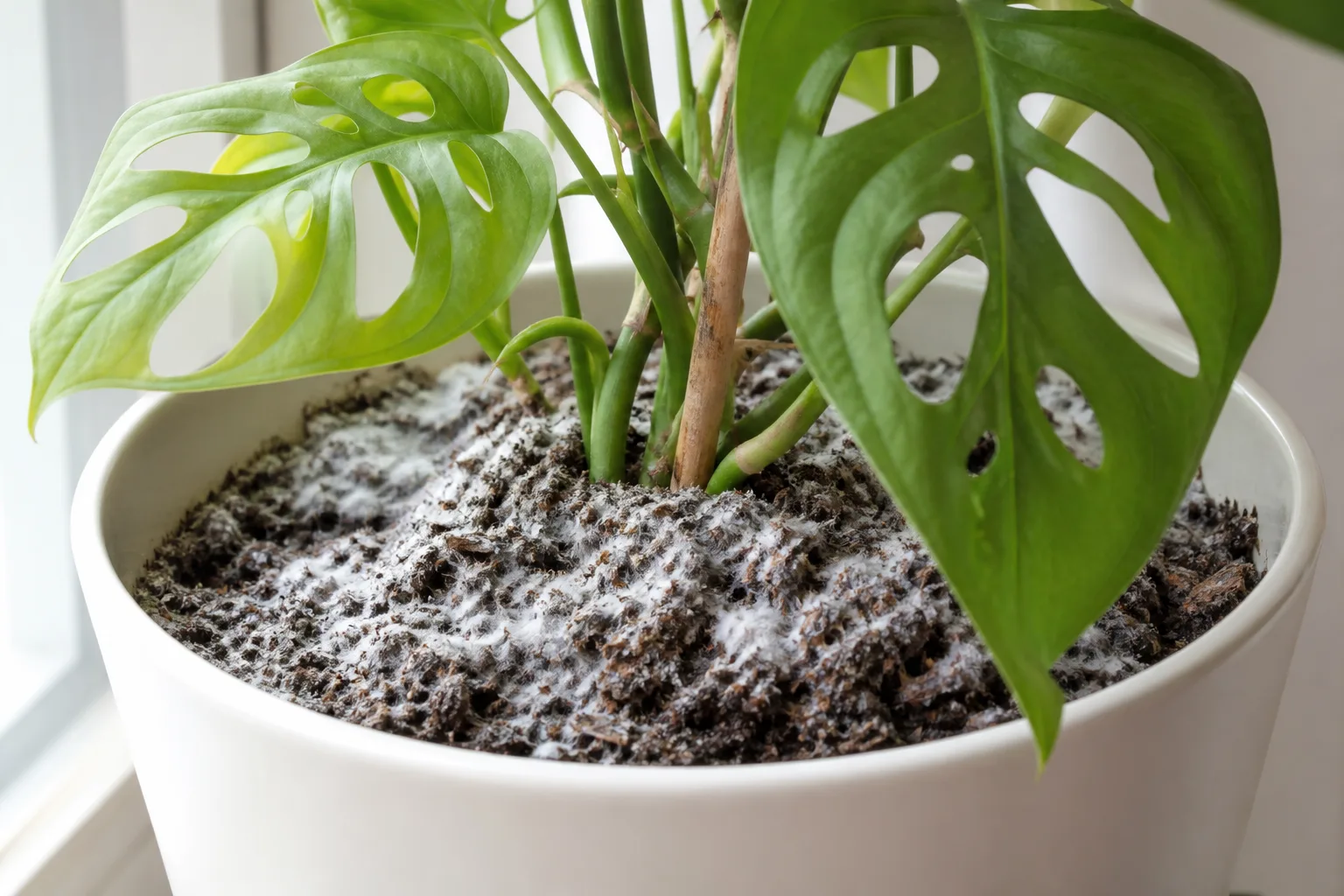
Mold on Soil on Rhaphidophora Tetrasperma: Causes, Checks & Fixes
This guide covers mold on soil on Rhaphidophora Tetrasperma. See also the general Mold on Soil guide, watering, and light pages for this plant.
Mold on Soil on Rhaphidophora Tetrasperma: Causes, Checks & Fixes
Quick answer
White or gray fuzzy growth on the soil surface of Rhaphidophora Tetrasperma-often sold as Mini Monstera or Piccolo Monstera-is usually saprophytic mold feeding on damp organic matter in the pot, not a fungus attacking the leaves. The plant can look perfectly healthy while the top layer tells you moisture and airflow are off.
First step: scrape off the top 1–2 cm of moldy mix, discard it, and stop watering until the top 2–3 cm of soil feels dry to your finger. That single action removes active spores and breaks the wet surface cycle that keeps mold returning.
What mold on soil looks like on Rhaphidophora Tetrasperma
On this fast-growing aroid, surface mold often appears before any leaf symptoms show up. Common patterns include:
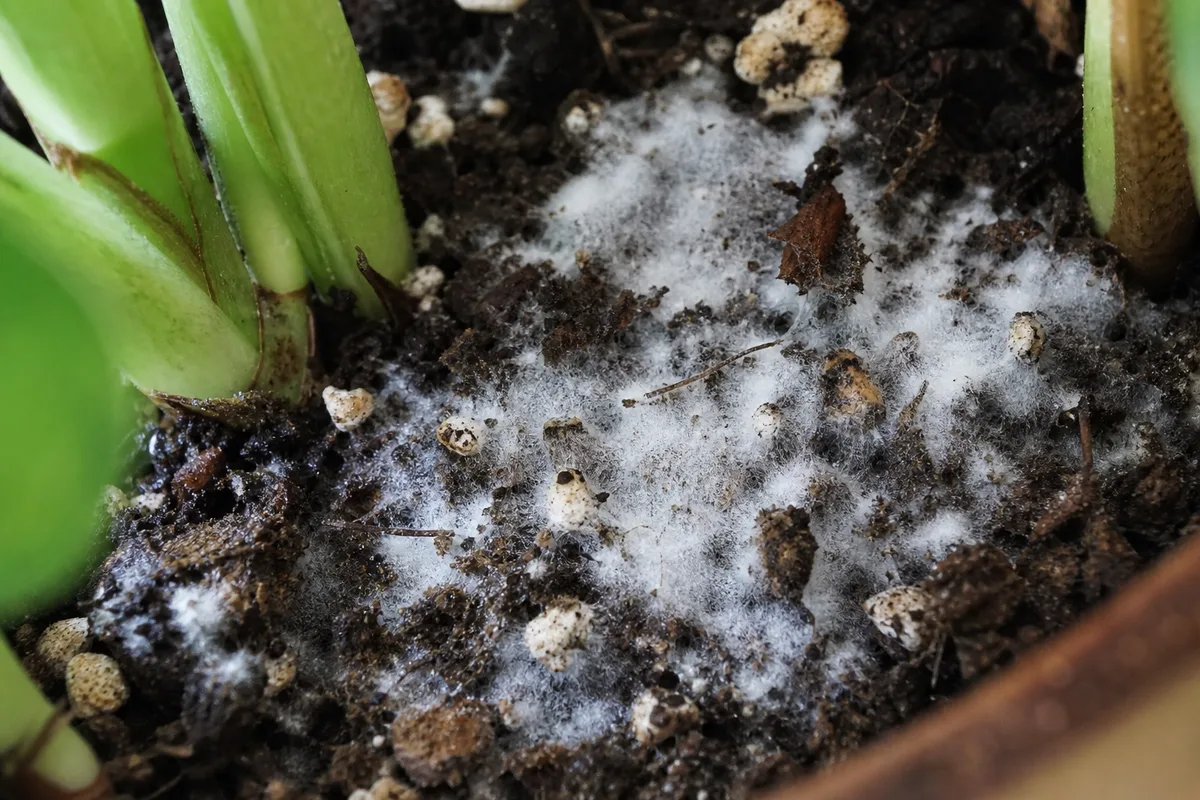
Mold on Soil symptoms on Rhaphidophora Tetrasperma - compare with healthy tissue on the same plant.
- White or gray fuzzy film spreading in patches across the top of the mix, sometimes in rings after watering
- Green algae on the soil surface or pot rim in dim, constantly moist setups
- Damp top layer that stays cool and wet for several days after you water
- Musty smell when you lift the pot or disturb the surface
- Small dark flies hovering near the soil when you water or bump the pot
- Healthy-looking foliage in early cases-fenestrated leaves and new growth may continue while only the soil surface looks wrong
Rhaphidophora Tetrasperma pushes new leaves quickly when light and roots are good, so do not assume the plant is fine just because the vine looks green. Surface mold is a moisture alarm, not a cosmetic issue you can ignore.
Why Rhaphidophora Tetrasperma gets mold on soil
This species wants bright indirect light and a moist but well-drained potting mix, and watering when the top layer dries-not a constantly wet surface. Several habits common with Mini Monstera setups create mold habitat.
Overwatering and slow surface drying
The most frequent trigger is watering before the top 2–3 cm of mix has dried. In weak light or cool rooms, a fast-growing aroid cannot use water quickly enough, so the surface stays damp and saprophytic fungi colonize organic particles in peat and bark.
Calendar watering-every seven days in summer regardless of how the pot feels-often overfeeds moisture in winter or when the plant sits in a shady corner. Rhaphidophora Tetrasperma is thirsty in bright active growth, but a wet surface in low evaporation conditions is a different problem than deep root moisture.
Peat-heavy or compacted aroid mix
Many growers use high-organic aroid blends with fine peat that holds water at the surface longer than the chunky interior suggests. Decomposing bark fines, old roots, and fallen leaf bits give mold a food source. An oversized pot with a small root ball amplifies this: the outer soil mass stays wet while the plant uses only a fraction of the volume.
Low light and poor airflow
Dim placement slows transpiration and evaporation from the soil surface. Grouped shelves, closed terrarium cabinets, and pots tucked in corners trap humid air. University of Maryland Extension notes that moist media surfaces with poor air circulation favor fungal mats that can crust over and interfere with water soaking in.
Shared conditions with fungus gnats
NC State Extension lists fungus gnats among common pests on Rhaphidophora tetrasperma. Gnats and surface mold share the same habitat: persistently moist organic soil. Larvae feed on fungi and decaying matter in the top inches of mix. Seeing both is a strong sign your Rhaphidophora Tetrasperma watering guide-not just bad luck-is off.
How to confirm the cause
Work through these checks before you repot or spray anything:
- Surface vs. root problem - Mold limited to the top 1–2 cm with firm green stems and no sour smell points to cultural moisture, not active root rot.
- Finger test - Insert your finger to the second knuckle (about 2–3 cm). If it feels cool and wet several days after watering, the surface is drying too slowly.
- Pot weight - Lift the container. A heavy pot days after watering means excess moisture is still held in the mix.
- Drainage check - Confirm drainage holes are open and no saucer is holding standing water. Decorative pot covers that trap humidity count too.
- Light level - Ask whether the plant gets bright indirect light most of the day. Leggy stretched growth plus wet soil often means the plant is not using water fast enough.
- Gnat check - Tap the pot rim or water lightly. Tiny flies that rise from the soil surface suggest larvae are feeding in moist top layers.
- Probe below the mold - Gently scrape aside surface fuzz and check roots an inch down. White firm roots support a surface-mold diagnosis; brown mushy roots mean escalate to root rot care.
If stems are firm, new leaves keep opening, and roots below the mold are healthy, treat this as a watering and airflow fix-not an emergency repot.
First fix for Rhaphidophora Tetrasperma
Scrape off the top 1–2 cm of moldy soil, bag it, and discard it outside. Then pause watering until the top 2–3 cm of mix feels dry.
That is the whole first response. Do not repot, drench with fungicide, or blanket the surface with cinnamon on day one. Removing the active fungal layer and letting the surface dry breaks the cycle that keeps spores reproducing.
After scraping:
- Replace the removed layer with a thin topping of dry, chunky mix similar to your aroid blend-orchid bark and perlite, not wet peat
- Empty any saucer water and make sure drainage holes are clear
- Move the pot to brighter indirect light if it has been sitting in a dim spot
Wait to water again until your finger test shows dryness at 2–3 cm depth. When you do water, soak until a little runs from the drainage holes, then discard the runoff.
Step-by-step recovery
If mold was mild and stems are healthy, follow this sequence over the next two to three weeks:
- Scrape and top-dress - Remove visible mold and add a thin dry layer of airy mix.
- Adjust watering - Switch from calendar schedules to the finger test. NC State Extension recommends watering when the top 1 inch of mix is dry; the top 2–3 cm check matches that guidance and suits fast-draining aroid blends.
- Improve airflow - Space pots slightly apart or run gentle room airflow so the surface can dry between drinks.
- Clean debris - Pick off fallen leaves and old bark chips from the soil surface so mold has less organic food.
- Monitor gnats - If flies persist after the surface dries, add yellow sticky traps for adults and let the top layer stay dry longer. UC IPM notes that allowing container soil surfaces to dry between waterings is key to fungus gnat control.
- Repot only if mold returns - If fuzz reappears within a week despite dry surface conditions, the whole mix may be too water-retentive or the pot oversized. Repot in spring into a slightly smaller well-draining aroid mix with bark and perlite.
Do not fertilize while correcting moisture. Stressed roots do not need extra salts on top of a wet-soil problem.
Recovery timeline
| Timeframe | What you should see |
|---|---|
| 24–48 hours | Scraped area looks clean; surface begins to lighten as it dries |
| 3–7 days | Top layer feels dry before the next watering; no new fuzzy patches |
| 1–2 weeks | Gnat numbers drop if you dried the surface; new leaves open normally |
| 2–4 weeks | Mold does not return; watering rhythm feels predictable for your room |
If white fuzz is back within three to five days of scraping, the mix is staying wet too long or the pot is too large. Move to Rhaphidophora Tetrasperma repotting guide with better drainage rather than scraping again.
Lookalike symptoms
Root rot - Yellowing lower leaves, wilting on wet soil, sour smell, and mushy stem bases. Mold may be present, but soft roots below the surface are the urgent issue.
Powdery mildew on leaves - White coating on leaf blades and petioles, not confined to soil. Rhaphidophora Tetrasperma mold problems are almost always substrate-surface growth.
Mineral or fertilizer crust - Hard white or tan crust from tap water or excess fertilizer. Crust feels gritty, not fuzzy, and does not spread in cottony patches after watering.
Normal mycorrhizal or beneficial fungi - Occasional fine threads in very chunky outdoor-style mixes are different from thick recurring mats that appear within days of watering.
Mistakes to avoid
- Scraping repeatedly without drying the surface - You remove spores but invite them back the next time you water into a wet top layer.
- Watering on a calendar - Summer thirst in bright light is real, but winter and shady placements need slower intervals judged by the finger test.
- Using a pot much larger than the root ball - Excess soil volume holds moisture at the surface where mold grows fastest.
- Leaving standing water in saucers - Roots and surface mix stay saturated even when you think you watered lightly.
- Sealing pots in decorative covers - Trapped humidity mimics greenhouse conditions without the light to match.
- Repotting immediately for mild mold - Unnecessary repotting stresses a fast-growing vine that may only need surface drying and scraping.
- Spraying fungicide as a first response - Chemical sprays do not fix overwatering and add stress without solving the moisture source.
Rhaphidophora Tetrasperma care cross-check
Surface mold means your current watering rhythm does not match how this pot dries in your home. Cross-check these baseline needs:
- Light - Bright indirect light so the plant uses water steadily; weak light plus frequent watering is a common mold pairing.
- Mix - Well-draining aroid blend with bark and perlite; avoid fine peat-heavy bags that crust and stay wet on top.
- Water - Top 2–3 cm dry between waterings; reduce frequency in winter when growth slows.
- Humidity - 50–70% is fine, but high humidity without airflow still slows surface drying.
- Support - Moss poles and trellises do not cause mold, but crowded foliage can reduce air movement at soil level-give the pot breathing room.
Yellow leaves on wet soil or drooping despite moisture point past surface mold toward overwatering or root issues-address those before pushing new growth with fertilizer.
How to prevent mold on soil next time
Long-term prevention is environmental, not a one-time scrape:
- Water only when the top 2–3 cm is dry, not on a fixed weekday schedule
- Use pots with drainage holes sized to the root ball, not dramatically oversized containers
- Top-dress with chunky bark or perlite if your mix compacts at the surface over time
- Remove fallen leaves and debris promptly
- Keep bright indirect light and gentle airflow around the pot
- Empty saucers within 30 minutes of watering
- Quarantine new plants so gnat-infested soil does not spread to your Mini Monstera bench
Healthy Rhaphidophora Tetrasperma dries predictably between waterings. When the surface never dries, mold is telling you to listen to the pot-not the calendar.
When to worry
Treat mold as urgent when it comes with:
- Wilting or yellowing lower leaves on soil that feels wet
- Soft, dark stem bases or a sour rotting smell from the mix
- Mold returning within days after scraping and drying the surface
- Heavy gnat larvae visible in the top soil layer alongside stunted new growth
- Water pooling on the surface because a fungal or algal crust blocks absorption
Those patterns suggest root stress or chronic saturation, not harmless surface fungus alone. Inspect roots, improve drainage, and repot into fresh airy mix if tissue below the surface is declining.
Conclusion
Mold on Rhaphidophora Tetrasperma soil looks alarming but is usually a harmless saprophytic fungus flagging wet, stagnant conditions at the surface. Scrape the top layer, let the mix dry properly, and improve light and airflow-that fixes most cases without repotting. Take recurring mold and fungus gnats seriously as moisture warnings on a plant that needs well-drained mix and careful watering. Firm stems, healthy roots, and new fenestrated leaves mean you caught it early; soft stems on wet soil mean look deeper than the fuzz.
When to use this page vs other Rhaphidophora Tetrasperma guides
- Rhaphidophora Tetrasperma watering guide - Use for routine moisture checks before assuming mold on soil is the main issue.
- Rhaphidophora Tetrasperma problems hub - Browse all 3 common issues on this species.