Drooping Leaves on Rhipsalis: Causes, Checks & Fixes
Quick answer
Drooping on Rhipsalis usually means segments lost turgor from too-dry soil or roots that cannot take up water on wet soil. Before watering, check moisture halfway down the pot and squeeze a mid-stem segment for firmness.
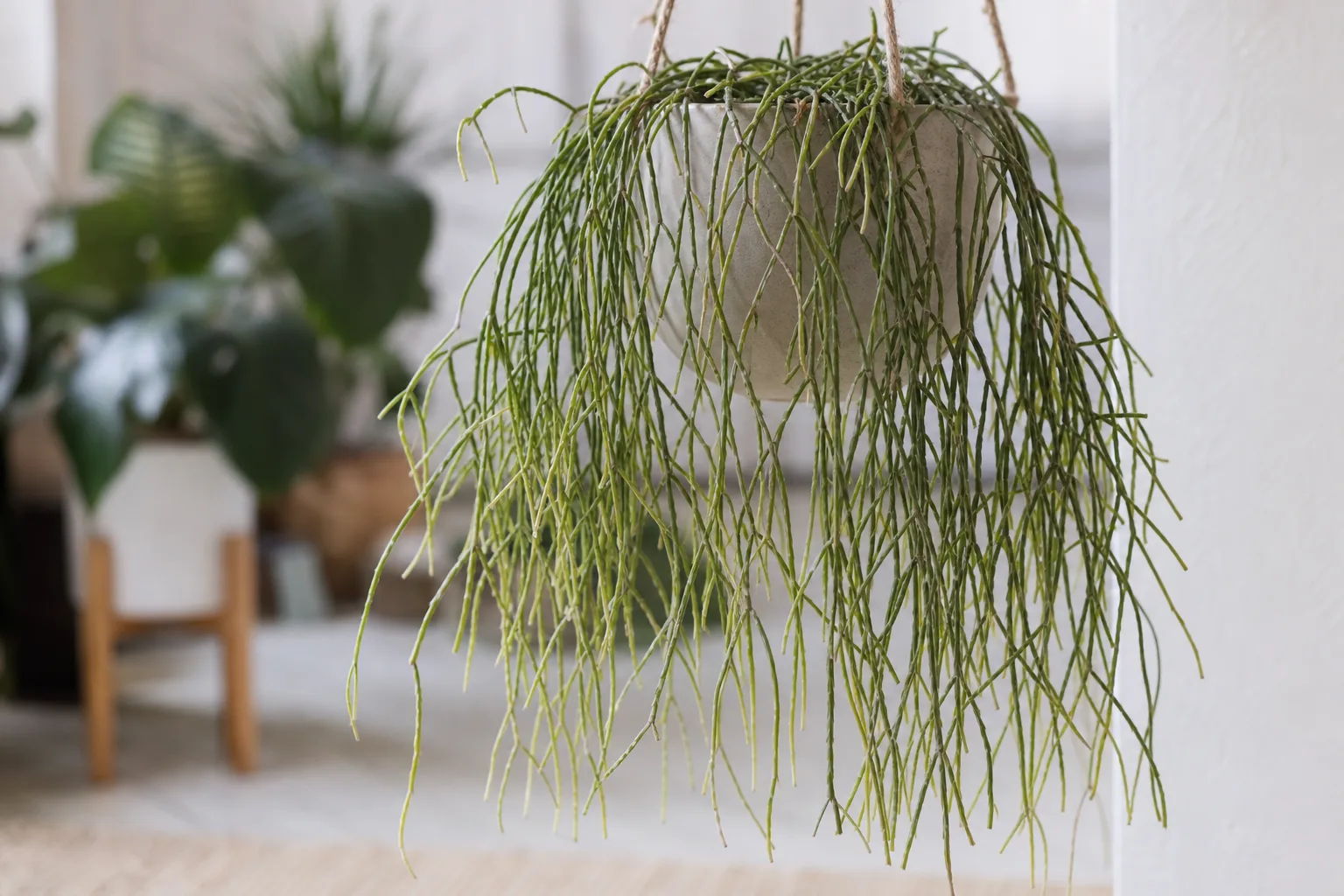
Drooping Leaves on Rhipsalis: Causes, Checks & Fixes
This guide covers drooping leaves on Rhipsalis. See also the general Drooping Leaves guide, watering, and light pages for this plant.
Drooping Leaves on Rhipsalis: Causes, Checks & Fixes
Quick answer
Drooping on Rhipsalis (Mistletoe Cactus) means the trailing stems lost internal water pressure-turgor-and hang with less spring than usual. On this trailing epiphytic succulent, that almost always traces back to water imbalance at the roots, not a leaf disease. Segments may droop because soil is too dry, or because roots are damaged on wet soil and cannot move water even when the mix feels damp.
First step: check soil moisture halfway down the pot and squeeze a mid-stem segment before you water. A light, dry pot with puckered segments needs a thorough soak. A heavy, wet pot with soft or yellowing segments needs drying out and possible root inspection-not another drink.
What drooping looks like on Rhipsalis
Rhipsalis does not carry broad leaves. What people call “drooping leaves” are the cylindrical stem segments-the cladodes-that trail from the basket. Healthy Rhipsalis naturally cascades downward, so the first question is whether stems look gracefully weeping or genuinely limp.
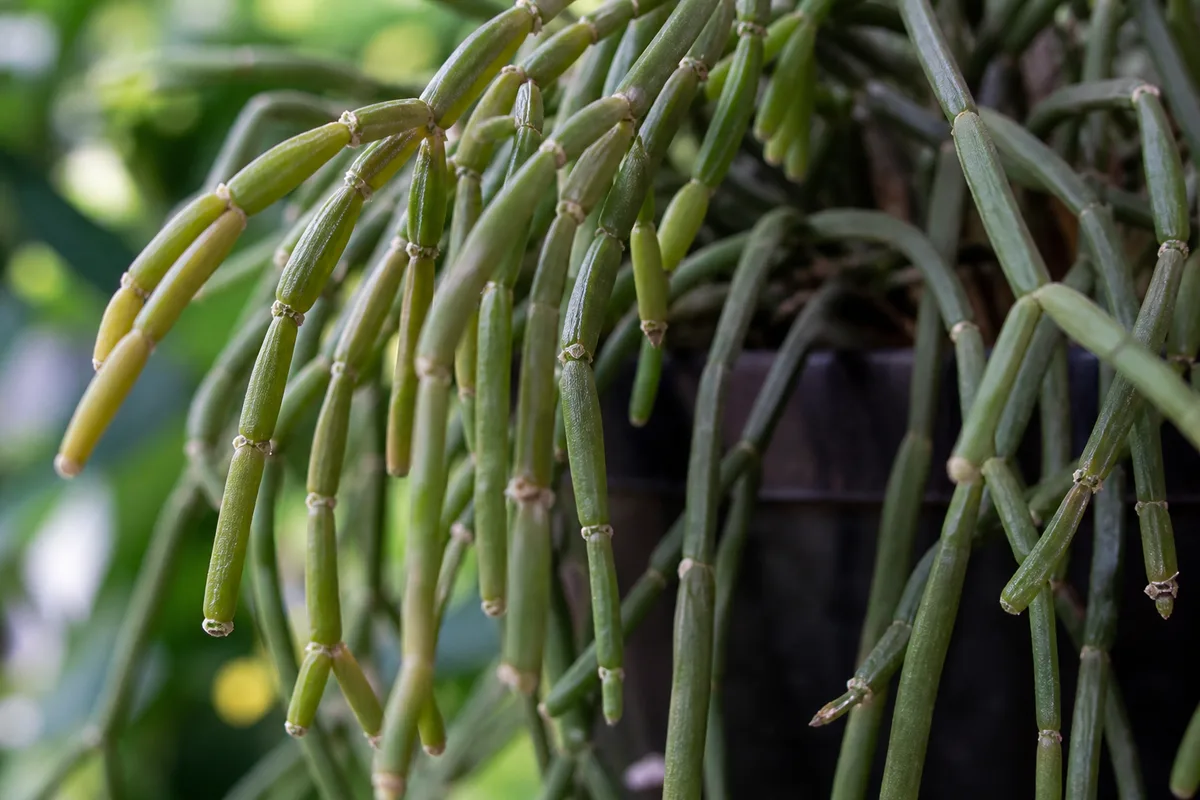
Drooping Leaves symptoms on Rhipsalis - compare with healthy tissue on the same plant.
Unhealthy droop:
- Whole branches hang with a soft, deflated look instead of a slight spring when lifted
- Segments feel thin, flattened, or puckered between your fingers
- Tips lose their usual plump gloss and may turn light brown at the very ends
- The plant looks lower in the hanger than it did a week ago despite no new length
- Drooping affects newer growth near the pot as well as older trailing sections
Underwatering droop pairs with a very light basket, soil pulling away from the pot edge, and segments that pucker and lose their rigidity when they are thirsty. Color often stays green at first; the change is texture more than hue.
Overwatering or root-stress droop pairs with a heavy pot, soil that stays damp for many days, and segments that may yellow or feel soft at the base while the mix is still moist. Overwatering can cause mushy stems and root rot on Rhipsalis overview.
Environmental droop appears after a recent move, repot, cold draft, or sudden jump to a much brighter window. Segments sag temporarily even though your normal Rhipsalis watering guide has not changed.
Why Rhipsalis segments droop
Rhipsalis evolved as a rainforest epiphyte in tropical canopies. Its stems store some water but still depend on functioning roots in an airy, well-drained mix. When uptake fails, segments lose turgor and droop.
Underwatering is common because growers treat Rhipsalis like a desert cactus. This genus prefers consistent moisture in comparison to other cacti while still drying between drinks. Hanging baskets in bright windows lose water fast. Long gaps without watering-especially in warm rooms-flatten segments from the tips inward.
Overwatering and root damage produce the confusing mirror image: wilted foliage may indicate soil that is too dry or too wet. Saturated mix drives out oxygen, roots decay, and the plant cannot supply stems even though you watered recently. Winter is risky when growth slows but saucers still hold water.
Light or temperature shock after moving the basket can trigger temporary droop. Rhipsalis wants bright, indirect light and temperatures roughly between 60 and 80°F. A sudden shift to harsh sun, a heating vent, or a cold draft slows root function until the plant acclimates.
Rhipsalis repotting guide stress disturbs fine roots. Drooping within a week of repotting on otherwise stable moisture usually reflects transplant shock, not a new disease.
Mechanical sag happens on mature plants with long trailing length. If segments look plump and green but the mass hangs lower, support the pot hook or trim length after the plant is otherwise stable-do not confuse healthy weight with thirst.
How to confirm the cause
Work through these checks in order. You are separating drought from root failure from a recent environmental change.
- Pot weight - Lift the basket. A very light pot strongly suggests dry soil. A heavy pot that stays heavy days after watering suggests saturation or poor drainage.
- Mid-depth moisture - Insert a finger or skewer halfway down, not just at the surface. Surface dust can hide wet soil below on epiphytic mixes with bark and perlite.
- Segment firmness - Pinch a middle segment. Firm and plump with slight give is healthy. Flat, wrinkled, or mushy tissue confirms stress.
- Base inspection - Look where stems meet soil. Soft, translucent, or yellowing tissue at the base on wet mix points to root trouble.
- Smell and drainage - A sour odor from the pot or water sitting in the saucer for days supports overwatering. Confirm the pot has open drainage holes.
- Recent changes - Note repotting, relocation, or heat-wave timing within the last two weeks. Temporary droop after one change often needs acclimation, not aggressive treatment.
- New growth - Firm tips forming at stem ends mean the plant still has reserves. No new growth plus spreading limpness on wet soil is more serious.
If soil is bone dry and segments are puckered, treat as underwatering. If soil is wet and segments are soft or yellowing, treat as root stress before adding water.
First fix for Rhipsalis
Match your first action to moisture at mid-depth-do not water by reflex.
When soil is dry and the pot is light: Water thoroughly until excess runs from drainage holes, then empty the saucer. For very dry, repelling mix, bottom-water the pot in a basin for 20–30 minutes, then drain fully. Recheck segment firmness in 6–12 hours. Mild dehydration often shows visible perk within a day.
When soil is wet and the pot is heavy: Stop watering immediately. Move the basket to bright, indirect light with good air circulation and no cold drafts. Let the top half of the mix dry before the next drink. If segments keep softening over 48 hours on still-damp soil, unpot and inspect roots-trim mushy tissue and repot into fresh airy mix only if rot is confirmed.
When droop followed a recent move or repot: Hold your normal watering rhythm, keep light stable, and wait one to two weeks. Do not stack repotting, fertilizer, and heavy pruning during this window.
Hold fertilizer until segments regain firmness. Stressed epiphytic cacti recover faster with stable basics than with extra inputs.
Step-by-step recovery
Once the first fix matches the cause, follow this sequence:
- Correct water once - Either one full soak with full drainage, or a dry-down period for wet roots. Avoid alternating flood and drought every day.
- Stabilize placement - Keep the basket in one bright, indirect spot. Filter harsh midday sun through a sheer curtain if the plant was recently moved closer to a window.
- Monitor daily for three days - Check segment firmness each morning. Underwatering recovery shows plumping at tips first. Root-stress recovery is slower and depends on how much healthy root remains.
- Trim only dead tissue - After firmness returns to new growth, snip fully crisp or mushy segment tips with clean scissors. Leave slightly marked but firm sections in place.
- Resume normal rhythm - Water when the top half of soil feels dry, typically every 7–14 days in active growth and less often in winter dormancy.
If you confirm rot, follow root-rescue steps: remove wet soil, cut brown mushy roots, air-dry the root ball briefly, and repot into cactus mix amended with perlite and orchid bark. Salvage firm stem tips as cuttings if the base is lost.
Recovery timeline
Expectations depend on cause and severity:
- Simple underwatering: Segments often look plumper within 6–24 hours after a proper soak. Full visual recovery along long stems may take one to two weeks as new tissue fills out.
- Overwatering without advanced rot: One to three weeks after drying out and improving light, new tips should look firm. Old flattened sections may stay slightly thin permanently.
- Root rot with partial salvage: on Rhipsalis Several weeks to months. Judge success by new growth and stable stem bases, not by old damaged length.
- Repot or relocation shock: Usually improves within 7–14 days if moisture and light stay consistent.
Worsening signs include spreading softness up stems, sour smell intensifying, or new droop on freshly corrected dry soil-those mean roots still are not functioning and need inspection.
Lookalike symptoms
Normal trailing habit: Healthy Rhipsalis weeps by design. Plump segments that spring back slightly when lifted are fine even if they hang low.
Wilting: Acute collapse with rapid limpness overlaps with severe droop. The diagnostic path is the same-check soil moisture and root health-but wilting often signals more urgent root failure on wet soil.
Leggy pale growth: Thin, stretched segments in dim corners may hang weakly from low light rather than water stress. If soil moisture is stable but stems are pale and spaced out, increase indirect light before changing water.
Brown tips only: Dry brown tips without whole-segment droop often mean low humidity or inconsistent watering at the ends of long trails-not necessarily root failure. Fix the watering rhythm first; misting alone will not rehydrate roots.
Pest-related weakness: Heavy mealybug or spider mite infestations can weaken segments over time. Look for white cottony clusters, fine webbing, or sticky residue before assuming water alone is the issue.
Mistakes to avoid
- Watering without checking moisture - The classic error on Rhipsalis is soaking a plant whose roots are already drowning. Always probe mid-depth first.
- Assuming droop always means thirst - Rotting roots produce droop on wet soil. More water accelerates decay.
- Moving the basket repeatedly - Each relocation resets acclimation. Pick one stable spot while recovering.
- Heavy pruning during active droop - Removing large sections adds stress before turgor returns. Trim dead tips only until new growth looks firm.
- Fertilizing a stressed plant - Feed monthly at half strength only after recovery, during active spring and summer growth.
- Treating Rhipsalis like a desert cactus - Long droughts between soaks cause repeated droop cycles on an epiphyte that needs periodic full hydration.
How to prevent drooping next time
Build a routine around how this plant actually uses water:
- Water when the top half of soil dries, not on a fixed calendar. Adjust for season-reduce frequency in winter dormancy but do not abandon watering entirely.
- Use a well-draining epiphytic mix with perlite and bark; avoid dense peat that stays wet in dim corners.
- Hang the basket where it gets Rhipsalis light guide so the plant metabolizes water predictably.
- Empty saucers after every watering. Never let the pot sit in standing water.
- Acclimate slowly when moving to a brighter or cooler spot-shift over a week rather than one day.
- Maintain moderate humidity (around 40–60%) and good air circulation without cold blasts on the trailing stems.
Rhipsalis is non-toxic to cats and dogs, so you can hang it at a convenient height for regular moisture checks-a small advantage when diagnosing droop early.
When to worry
Escalate beyond basic correction if:
- Stems soften at the soil line and the softness climbs upward
- Soil smells sour or fungal while segments keep collapsing
- Drooping persists more than 48 hours after a confirmed soak on dry soil, or after a dry-down period on wet soil
- Multiple branches fail at once while the mix stays saturated
- No firm new tips appear within three weeks of corrected care
In those cases, unpot, inspect roots, and salvage healthy cuttings if the base is compromised. Partial plants can restart from firm segments even when the original root ball is lost.
When to use this page vs other Rhipsalis guides
- Rhipsalis watering guide - Use for routine moisture checks before assuming drooping leaves is the main issue.
- Rhipsalis problems hub - Browse all 3 common issues on this species.
- Root Rot on Rhipsalis - Different entry point when symptoms overlap with drooping leaves.