Rhipsalis Problems: Causes & Quick Fixes
Quick answer
Rhipsalis is prone to 16 common issues - each link below is a plant-specific fix guide.
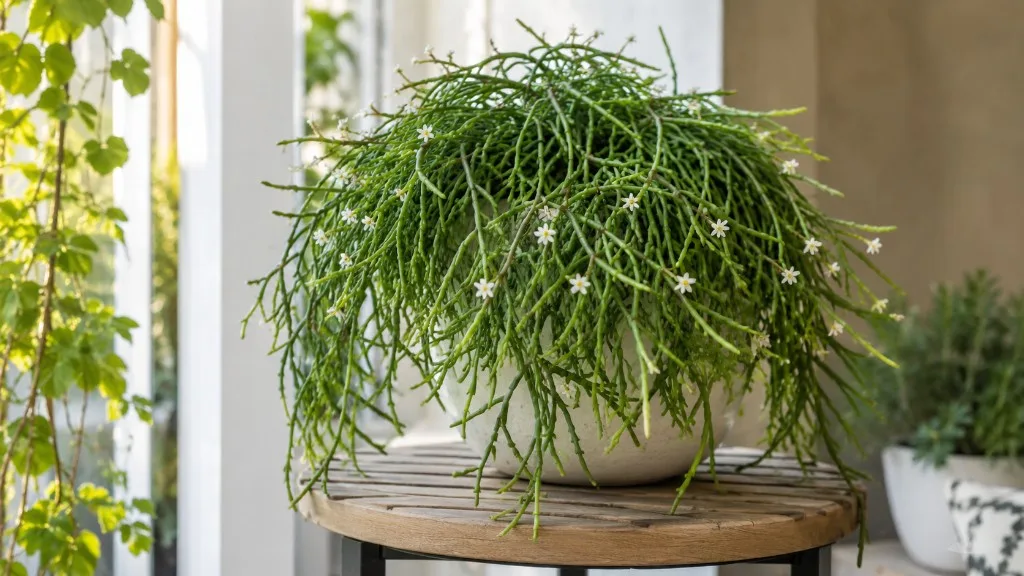
Rhipsalis problems
Use the guides below to diagnose and fix common issues on Rhipsalis. Each problem page explains why it happens on this species and what to do first.
Or use our problem diagnosis tool to narrow down symptoms.
Common problems on Rhipsalis
Brown Tips
LowLikely cause: Too dry or direct sun exposure
Quick fix: Water more consistently; move from direct sun
Full fix guide →Root Rot
MediumLikely cause: Overwatering; sitting in water
Quick fix: Allow to dry more; repot if roots are rotten
Full fix guide →Slow Growth
LowLikely cause: Low light
Quick fix: Move to medium indirect light
Full fix guide →Aphids
MediumLikely cause: Aphids on Rhipsalis target tender new segment tips and flower buds on trailing epiphytic cacti-especially after outdoor summer hangs or new plant introductions. First step: isolate the basket and rins
Quick fix: See plant-specific guide for step-by-step fixes.
Full fix guide →Drooping Leaves
MediumLikely cause: Drooping on Rhipsalis usually means segments lost turgor from too-dry soil or roots that cannot take up water on wet soil. Before watering, check moisture halfway down the pot and squeeze a mid-stem s
Quick fix: See plant-specific guide for step-by-step fixes.
Full fix guide →Fungus Gnats
MediumLikely cause: Fungus gnats on Rhipsalis signal chronic surface moisture, not a primary stem disease. Let the top half of mix dry per the watering guide while keeping the surface dry between drinks, set yellow stick
Quick fix: See plant-specific guide for step-by-step fixes.
Full fix guide →Leggy Growth
MediumLikely cause: Leggy growth on Rhipsalis means thin, pale trailing stems with wide gaps between segments as the plant reaches for light. Move the basket to medium bright indirect light and rotate it weekly before fe
Quick fix: See plant-specific guide for step-by-step fixes.
Full fix guide →Low Humidity
MediumLikely cause: Low humidity dries Rhipsalis segment tips in heated winter rooms because this trailing rainforest cactus evolved in humid canopy air-not desert dryness. First step: measure humidity near the basket an
Quick fix: See plant-specific guide for step-by-step fixes.
Full fix guide →Mealybugs
MediumLikely cause: Mealybugs on Rhipsalis hide as white cottony clusters in stem joints, basket hangers, and sometimes roots. Isolate the plant, dab visible bugs with 70% alcohol on a swab, then inspect roots if segment
Quick fix: See plant-specific guide for step-by-step fixes.
Full fix guide →Mold on Soil
MediumLikely cause: White or gray fuzz on Rhipsalis potting mix is almost always harmless surface mold feeding on damp organic soil. The real problem is moisture: stop watering until the top half dries, scrape the mold,
Quick fix: See plant-specific guide for step-by-step fixes.
Full fix guide →Not Enough Light
MediumLikely cause: Not enough light makes Rhipsalis stretch toward windows, fade to pale green, and stall growth while potting mix stays wet too long. First step: move the hanging basket to medium bright indirect light-
Quick fix: See plant-specific guide for step-by-step fixes.
Full fix guide →Overwatering
MediumLikely cause: Overwatering on Rhipsalis means epiphytic roots sit in saturated mix too long-not that you poured too much in one drink. First step: stop watering, lift the pot for weight, and check whether segments
Quick fix: See plant-specific guide for step-by-step fixes.
Full fix guide →Spider Mites
MediumLikely cause: Spider mites on Rhipsalis attack thin trailing segments in dry, warm indoor air-especially hanging baskets near heating vents. First step: isolate the plant and rinse every stem joint and segment unde
Quick fix: See plant-specific guide for step-by-step fixes.
Full fix guide →Underwatering
MediumLikely cause: Underwatering on Rhipsalis shows as flattened, puckered stems on bone-dry, lightweight soil because this rainforest epiphyte needs regular dry-down watering-not desert-style drought. First step: confi
Quick fix: See plant-specific guide for step-by-step fixes.
Full fix guide →Wilting
MediumLikely cause: Wilting on Rhipsalis means water is not reaching the stems-but dry soil and wet soil need opposite fixes. First step: probe soil halfway down and lift the pot before you water or repot.
Quick fix: See plant-specific guide for step-by-step fixes.
Full fix guide →Yellow Leaves
MediumLikely cause: Yellow segments on Rhipsalis usually mean overwatering, root stress, or too little light-not hunger. Check soil moisture deep in the pot and stem firmness before changing fertilizer or watering more.
Quick fix: See plant-specific guide for step-by-step fixes.
Full fix guide →