Wilting on Rhipsalis: Causes, Checks & Fixes
Quick answer
Wilting on Rhipsalis means water is not reaching the stems-but dry soil and wet soil need opposite fixes. First step: probe soil halfway down and lift the pot before you water or repot.
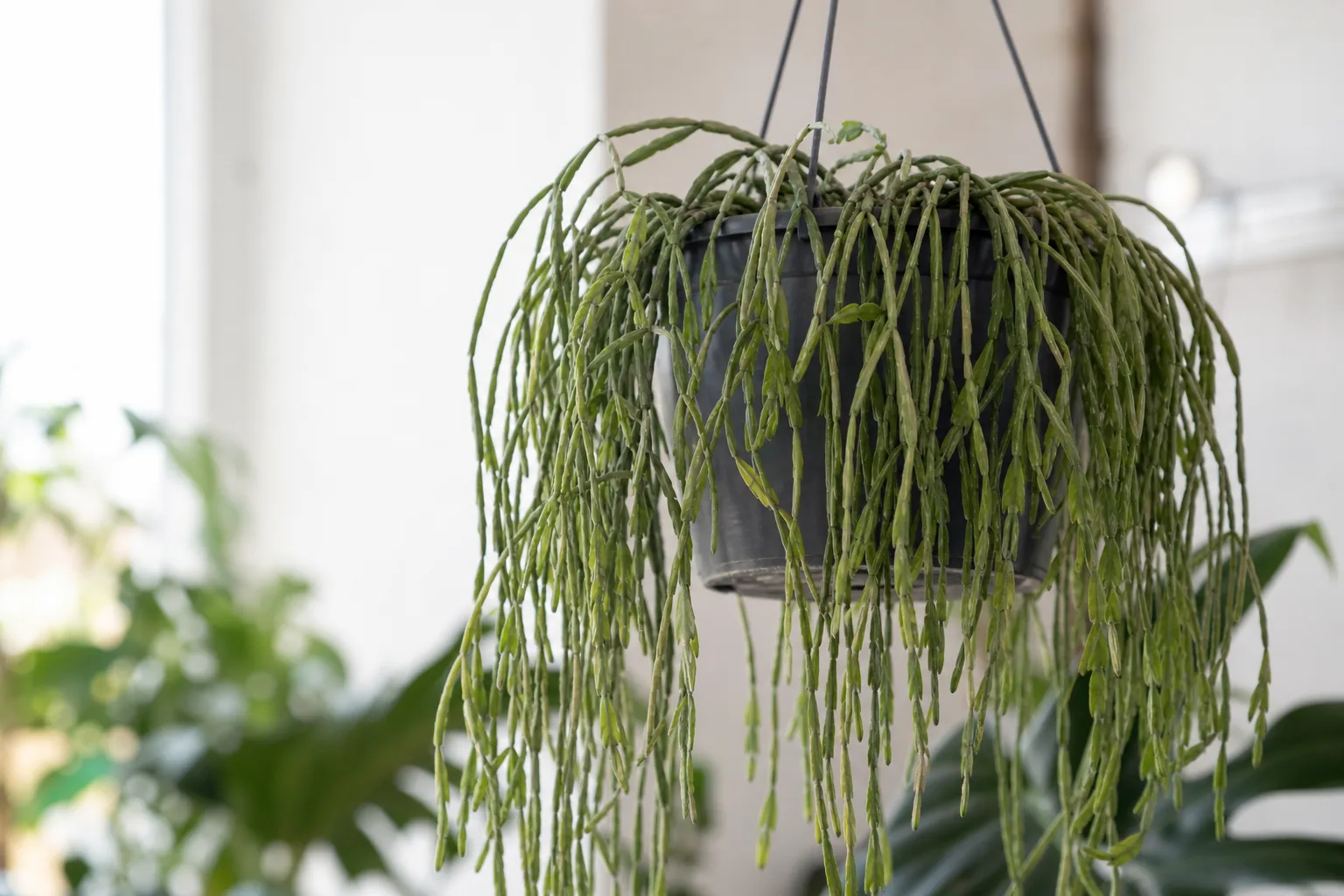
Wilting on Rhipsalis: Causes, Checks & Fixes
This guide covers wilting on Rhipsalis. See also the general Wilting guide, watering, and light pages for this plant.
Wilting on Rhipsalis: Causes, Checks & Fixes
Quick answer
Wilting on Rhipsalis (Mistletoe Cactus) always means the trailing stems are losing turgor-internal water pressure-but the cause is not always thirst. This trailing epiphyte succulent needs consistent moisture compared to other cacti, yet its thin stem segments still collapse when roots cannot supply water. That failure happens from bone-dry soil or from soggy, oxygen-starved roots that can no longer absorb moisture.
First step: probe soil halfway down and lift the pot before you add water. Dry, lightweight mix with puckered segments needs a thorough soak. Wet, heavy mix with limp yellow segments needs watering paused and root inspection-not another drink.
Why Rhipsalis wilts
Rhipsalis evolved in rainforest canopies, where roots cling to bark and leaf litter and water drains instantly. In a pot, the same stems that store some moisture still depend on healthy roots to stay plump. When something breaks that water pathway, segments hang limp even though the problem may look identical from across the room.
Underwatering is the straightforward case. If you treat Rhipsalis like a desert cactus and let the entire root ball go dry for weeks, segments flatten, pucker and lose their rigidity. The pot feels light. Surface soil may look dusty while deeper mix is also dry.
Overwatering and root rot on Rhipsalis produce the opposite trap: stems wilt while soil stays wet. Rotting roots cannot take up water even when the mix is saturated, so segments droop exactly as they would in drought. Winter makes this worse-cool rooms and short days slow growth, so a summer Rhipsalis watering guide keeps soil wet too long.
Heat and airflow stress on hanging baskets can push transpiration faster than roots supply water on hot afternoons. Segments may look limp by late day and recover overnight if soil moisture is even-different from chronic wilt that never improves.
Recent Rhipsalis repotting guide or root disturbance can temporarily limit uptake. Trailing stems may sag for several days after a rough transplant even when soil moisture is correct.
Sap-feeding pests such as mealybugs or spider mites damage stems and reduce vigor. Heavy infestations sometimes show limp tips alongside sticky residue or fine webbing-not a watering issue at all.
What wilting looks like on Rhipsalis
Rhipsalis has no true leaves-what you see are slender, trailing stem segments, often compared to green spaghetti or beads depending on species. Wilting shows up on those segments, not on broad leaf blades.
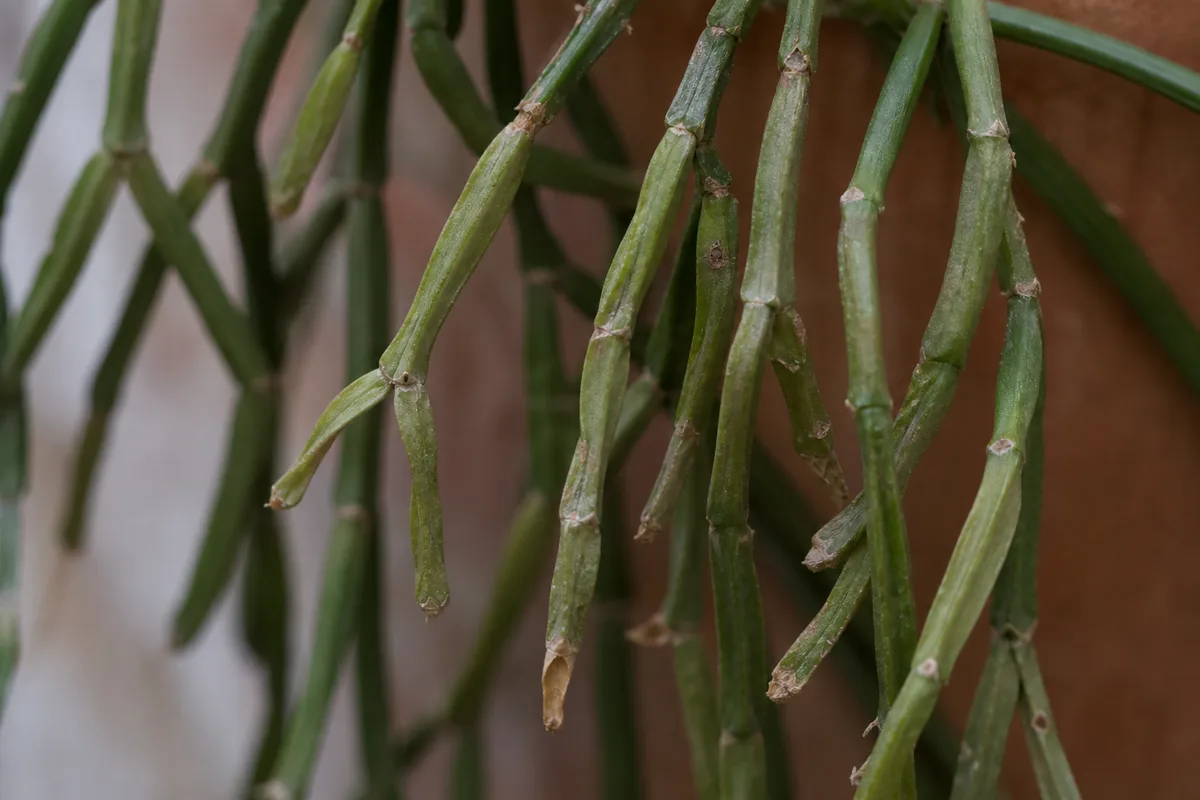
Wilting symptoms on Rhipsalis - compare with healthy tissue on the same plant.
Thirst-related wilt:
- Segments look thin, wrinkled, or flattened instead of plump and cylindrical
- Pot feels noticeably light when you support the hanger or lift the edge
- Soil is dry well below the surface
- Color stays green but texture looks dull or papery
- Newest tips may shrivel first on the longest trailing stems
Root-stress wilt (overwatering or rot):
- Segments hang limp while soil feels wet or smells sour
- Yellowing or translucent patches, especially near the base where stems meet soil
- Soft, mushy segments at the soil line
- Pot stays heavy days after watering
- Fungus gnats or mold on the surface may appear alongside chronic wetness
Temporary afternoon wilt:
- Limpness peaks in strong afternoon heat or direct sun exposure
- Segments firm up again by morning when soil moisture is adequate
- No yellowing or mushiness at the base
Healthy Rhipsalis segments feel firm with a slight succulence-like a fresh green bean, not a flat ribbon.
How to confirm the cause
Work through these checks in order before changing anything:
- Mid-pot moisture - Push a finger or dry skewer halfway into the mix. Dusty dry at depth confirms drought. Clinging wet soil at depth with a wilted plant confirms uptake failure, not thirst.
- Pot weight - Lift the basket or pot edge. Light weight plus dry soil supports underwatering. Heavy weight plus limp stems supports root stress.
- Stem firmness - Pinch a segment near the soil line. Firm and green with dry soil means soak. Soft, translucent, or yellow with wet soil means stop watering and inspect roots.
- Smell and drainage - Sour or rotten odor from the pot, blocked drainage holes, or a full saucer confirms chronic overwatering.
- New growth check - Plump new tips with only older segments shriveled often means uneven drying in a large basket-not necessarily rot.
- Recent changes - Repotting within the last week, a move to a hot window, or a skipped winter dry-down all shift the likely cause.
If dry soil and a light pot align with puckered segments, treat as underwatering. If wet soil and soft bases align with limp segments, treat as root stress-even though the visible symptom is wilt, not yellow leaves alone.
First fix for Rhipsalis
Probe soil halfway down and lift the pot-then match your action to what you find.
If the mix is dry and the pot is light: water thoroughly until excess runs from drainage holes, then empty the saucer completely. Let the plant drain in Rhipsalis light guide the same day. Do not give small sips; epiphytic roots need an even recharge through the root ball.
If the mix is wet and the pot is heavy: stop all watering. Move the plant to bright indirect light with good airflow, empty any standing water, and wait 48 hours while you monitor stem bases. If segments stay limp on wet soil or bases soften further, unpot and inspect roots before the next watering.
Do not repot, fertilize, or mist heavily on day one. One clear correction based on soil state beats stacking fixes that worsen root stress.
Step-by-step recovery
When underwatering caused the wilt
- Bottom-soak if soil repels water - If dry mix sheds water off the surface, sit the pot in a tray of room-temperature water for 20–30 minutes, then drain fully.
- Resume the top-half-dry rule - After recovery, water when the upper half of the mix dries during active growth, roughly every 7–14 days indoors depending on light and season.
- Trim only fully collapsed segments - Severely shriveled tips that stay papery after the root ball is moist can be cut back to firm tissue with clean scissors.
- Adjust placement if the basket dries unevenly - Trailing outer stems often dry faster than the center; rotate the hanger weekly in bright indirect light.
When overwatering or root rot caused the wilt
- Withhold water until you understand root condition-do not water because segments look thirsty on wet soil.
- Unpot and inspect - Healthy roots are firm and pale; rotted roots are brown and soft, mushy, or foul-smelling.
- Trim decay - Cut away mushy roots and any soft stem bases with sterile tools.
- Air-dry and repot - Let trimmed roots dry 24–48 hours, then repot into fresh airy mix with perlite and orchid bark. See the root rot guide if most of the root mass is gone.
- Salvage firm tips - If the base is lost but upper segments are firm, those tips can become cuttings after callusing.
When heat or repot shock caused temporary wilt
- Filter harsh sun - Move out of direct afternoon rays; direct sunlight can scorch stems.
- Keep soil evenly moist, not soggy - One thorough watering after dry-down, then wait for the top half to dry again.
- Wait five to seven days after repotting before changing mix, pot size, or location again.
Recovery timeline
Mild drought wilt on Rhipsalis often shows firmer segments within 24–48 hours after a proper soak. Severely dehydrated plants may need a second bottom-soak one week later if the pot still feels too light.
Root-stress wilt improves slowly. Expect one to three weeks before new tips look plump again once rotted tissue is removed and fresh mix drains well. Segments that stayed yellow or mushy will not revert-they remain as scars while new growth carries recovery.
Temporary afternoon wilt should resolve overnight once heat exposure is reduced and soil moisture stays even.
Lookalike symptoms
Drooping from low light - Stems stretch pale and weak in dim corners but may not pucker. Improving light fixes structure over weeks; watering more does not.
Brown crispy tips without full wilt - Often dry air or uneven watering at stem ends, not whole-plant collapse. Tips stay brown even after soil correction; only new growth looks clean.
Normal trailing weight - Long mature stems naturally hang downward. If segments are plump and soil moisture is correct, gravity-not wilt-is what you see.
Post-bloom rest - After flowering, growth slows and water use drops. A slightly softer look in winter with correct dry-down is normal if new tips stay firm.
Mistakes to avoid
- Watering automatically because stems look limp - The most common error on Rhipsalis is drowning a plant whose roots are already failing on wet soil. Wilted tissue may indicate soil that is too dry or too wet-check before you pour.
- Using desert-cactus dry spells - Waiting until the entire pot is bone dry for weeks shrivels epiphytic stems; Rhipsalis needs more frequent-but still drained-watering than echeveria or barrel cactus.
- Ignoring saucer water - Standing runoff keeps roots anaerobic and mimics overwatering even when top soil looks dry.
- Repotting on day one - Unnecessary transplant shock on a thirsty plant delays recovery; fix moisture first unless roots are clearly rotting.
- Fertilizing wilted plants - Salt stress worsens uptake problems. Feed only after new growth resumes in spring.
- Moving to direct sun to “perk it up” - Scorched segments wilt further and turn brown; bright indirect light supports recovery.
How to prevent wilting next time
Match watering to how fast the pot dries in your room, not a calendar. During active growth, water when the top half of soil feels dry. In winter, stretch intervals to roughly every three to four weeks in cool, low-light conditions-but do not let stems shrivel repeatedly.
Use epiphytic mix with perlite and orchid bark in a pot sized to the root mass, with open drainage. Hang baskets where air reaches all sides so outer stems and center dry at a similar rate.
Give bright indirect light so the plant uses water predictably. Dim, cool rooms plus frequent watering invite rot; hot, bright rooms plus rare watering invite shriveling.
Scout stem joints and undersides monthly for mealybugs and spider mites before sap loss weakens segments.
When to worry
Treat wilt as urgent when:
- Soil is wet and sour-smelling while segments collapse further each day
- Stem bases turn mushy or black where they meet the mix
- More than one-third of roots are mushy on inspection
- Wilt spreads up the plant after you already soaked dry soil correctly
- No new firm tips appear within three weeks after correcting the cause
Salvage firm upper segments as cuttings if the base is lost. A basket with mostly firm roots and only limp outer stems usually recovers with corrected watering and patience.
Conclusion
Wilting on Rhipsalis is a water-pathway problem, not a single diagnosis. Thin trailing segments collapse when roots cannot deliver moisture-whether because soil is too dry or because overwatering causes mushy stems and root rot on wet mix. The fix starts with one check: soil halfway down and pot weight. Match thirst with a full soak and drainage, or match wet wilt with paused water and root inspection. Old shriveled segments may stay marked, but plump new tips within a few weeks tell you the plant is back on track.
When to use this page vs other Rhipsalis guides
- Rhipsalis watering guide - Use for routine moisture checks before assuming wilting is the main issue.
- Rhipsalis problems hub - Browse all 3 common issues on this species.
- Root Rot on Rhipsalis - Different entry point when symptoms overlap with wilting.