Fungus Gnats on Rhipsalis: Causes, Checks & Fixes
Quick answer
Fungus gnats on Rhipsalis signal chronic surface moisture, not a primary stem disease. Let the top half of mix dry per the watering guide while keeping the surface dry between drinks, set yellow sticky traps, and escalate to BTI drenches if flies persist after two weeks of corrected watering.
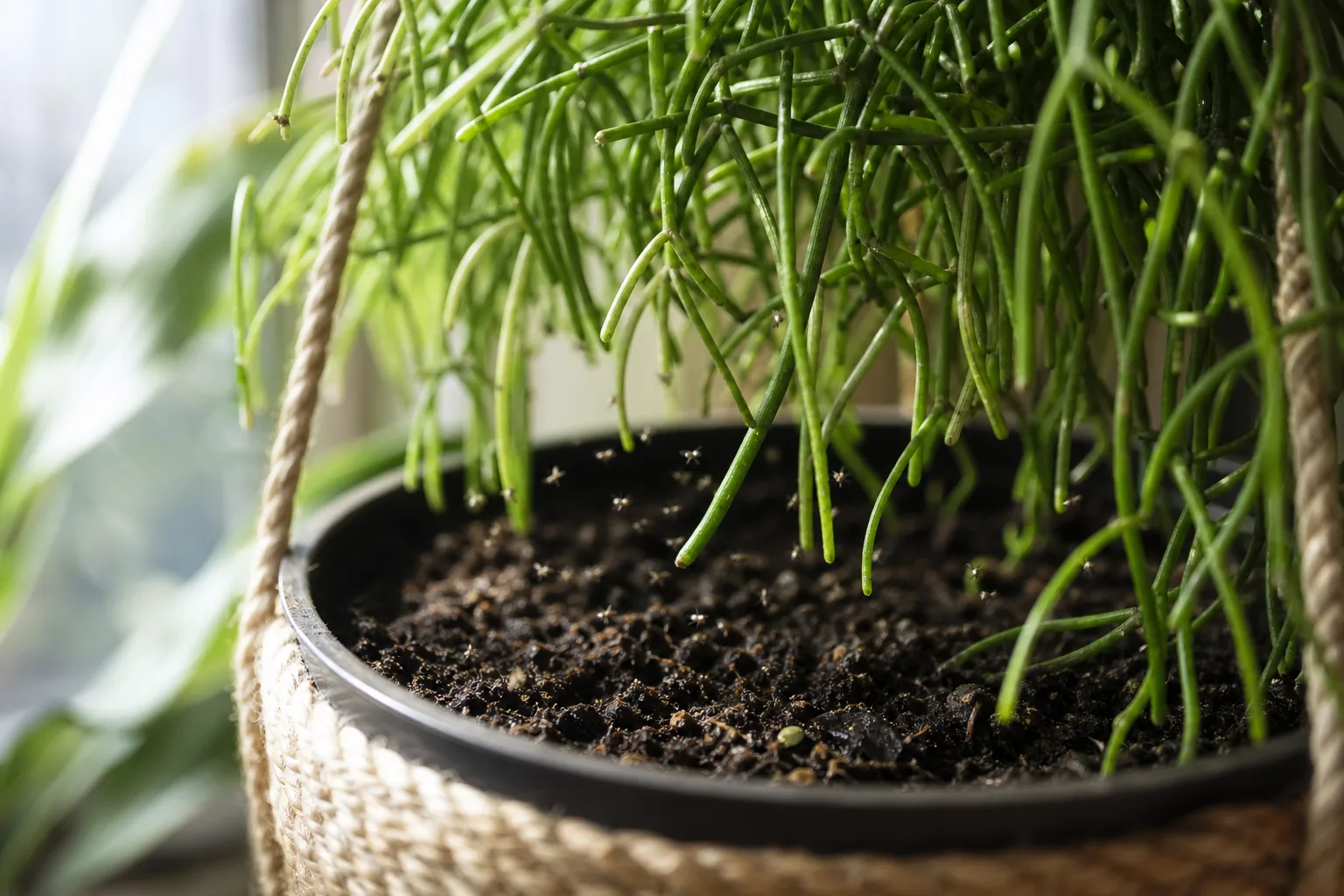
Fungus Gnats on Rhipsalis: Causes, Checks & Fixes
This guide covers fungus gnats on Rhipsalis. See also the general Fungus Gnats guide, watering, and light pages for this plant.
Fungus Gnats on Rhipsalis: Causes, Checks & Fixes
Quick answer
Fungus gnats on Rhipsalis (Rhipsalis spp., mistletoe cactus) are a moisture signal, not a random pest invasion. The tiny flies breed in the top layer of potting mix that stays damp too long-often while the trailing stems still look green and you believe you are watering this trailing epiphytic cactus correctly.
Here is the paradox that confuses most growers: Rhipsalis needs more frequent watering than desert cacti and follows a top-half-dry rhythm from the Rhipsalis watering guide during active growth. Gnat control, meanwhile, requires the soil surface to dry between drinks so eggs and larvae in the top inch cannot survive. Both can be true-you dry the surface for pest control while still waiting until mid-pot reads dry before the next thorough soak.
First step: pause watering until the top half of mix is dry and the surface stays matte for at least two to three days. Set yellow sticky traps at the basket rim to catch adults. If flies persist after two weeks of corrected dry-down, add a BTI soil drench on a five-to-seven-day repeat schedule while you fix the underlying wet-surface habit.
What fungus gnats look like on Rhipsalis
On a hanging mistletoe cactus, gnats announce themselves when you disturb the pot:
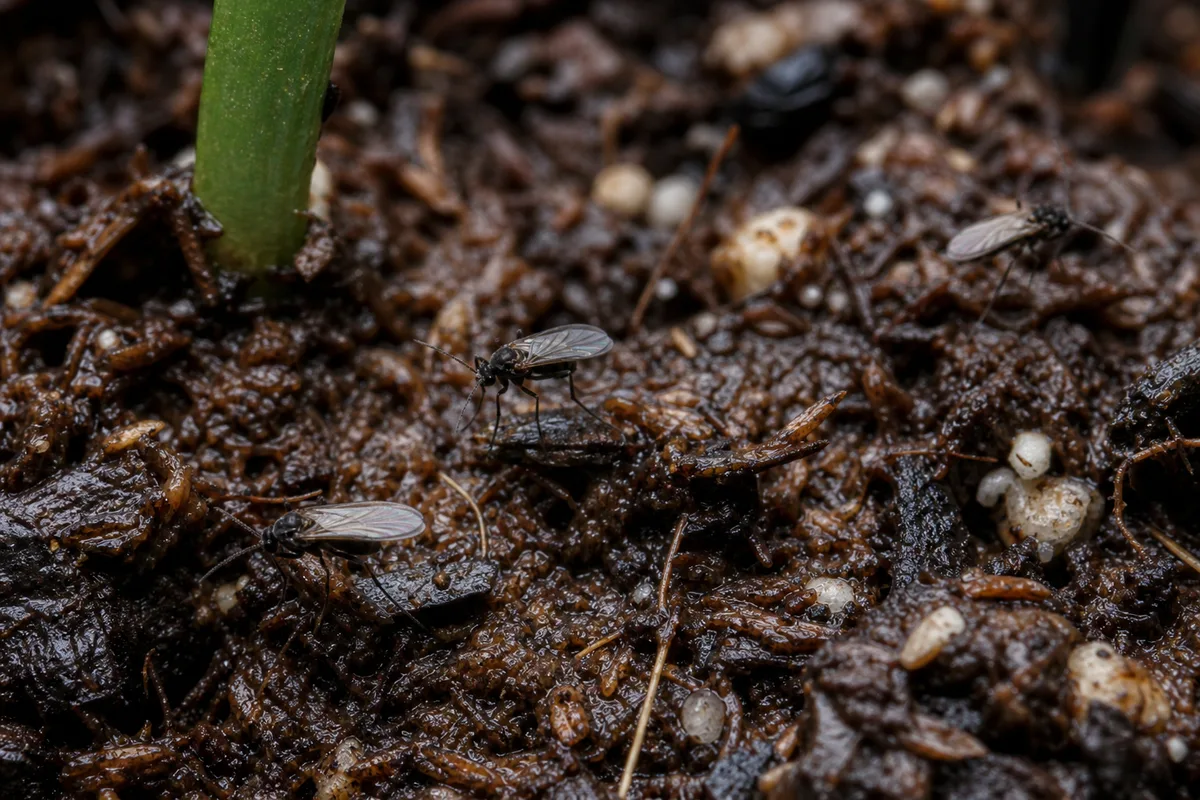
Fungus Gnats symptoms on Rhipsalis - compare with healthy tissue on the same plant.
- Tiny dark flies (about 1/8 inch) hovering over the soil line or rising in a cloud when you water or bump the hanger
- Slender white larvae in the top inch of mix-visible if you scrape the surface or place a potato slice on wet soil for a few days
- Otherwise healthy trailing segments early on; stems may stay firm and green while the habitat below is too wet
- Often alongside white mold on soil or algae on the pot rim-same chronic surface moisture that attracts fungus gnats to damp growing media
Adult fungus gnats do not feed on or damage plants directly and are mostly a cosmetic nuisance indoors. Larvae live in the upper soil layer where they feed on fungi, algae, and decaying organic matter; in high numbers they can damage roots by feeding on root hairs. On Rhipsalis with shallow epiphytic roots, the bigger threat is the wet mix that supports larvae, not the flies themselves.
Healthy vs. early stress: Firm, plump green segments with only flies above wet surface soil is the mild end. Yellowing or soft segments at the lowest point where chains meet the soil line-especially with a heavy pot and sour smell-means wetness may already be stressing roots. See overwatering on Rhipsalis and root rot if softness spreads.
Why gnats appear on Rhipsalis
Fungus gnat females lay eggs in moist organic debris or potting soil. Peat-heavy retail mix, fallen stem segments on the surface, and saucers left full create exactly the habitat larvae need in the top 5–8 cm of medium.
Several factors stack easily on this jungle cactus:
Jungle-cactus watering confusion. New owners hear “cactus” and underwater, then overcorrect with frequent shallow drinks that keep the surface damp without cycling the full root zone. Rhipsalis wants consistent moisture but not soggy roots-moist, well-drained, gritty mix that breathes between soaks, not a permanently wet cap.
Hanging-basket surface sogginess. Trailing stems shade the pot rim and trap humid air underneath. Water poured over dense foliage hits the surface unevenly; the mix under the drip line stays wet longer than an open shelf pot.
Winter low light and slow dry-down. In dim rooms, transpiration drops. The same watering that worked in brighter summer light leaves the top layer wet through cloudy weeks-gnats often appear seasonally while the watering schedule has not shifted for dormancy.
Heavy, water-retentive mix. Pure peat or moisture-control soil without enough perlite and orchid bark holds water at the surface. Moist media with high peat content is especially attractive to egg-laying females.
Oversized decorative pots. Shallow epiphytic roots occupy a small fraction of a large wet zone. The surface and upper layers stay damp for weeks while lower mix may read differently at mid-depth-masking the gnat problem until flies are everywhere.
Overlap with mold-on-soil. White fuzz on wet mix and gnats share one cause: surface moisture that never cycles. If you see both, treat the wet habit once; see mold on soil on Rhipsalis for surface-scrape and airflow steps that pair with gnat control.
How to confirm the cause
Work through these checks in order before Rhipsalis repotting guide or spraying:
- Surface moisture - Press a finger into the top inch. Cool, clinging soil that never dries between scheduled waterings confirms the gnat habitat. Compare with mid-pot depth from the watering guide: surface can stay wet even when you thought you waited for top-half dry.
- Fly emergence timing - Water slowly and watch the soil line. A burst of flies at first soak strongly points to fungus gnats, not shore flies or fruit flies from the kitchen.
- Larval proof - Place a raw potato slice on the wet surface for three to four days, then check underside for small maggots. Alternatively, scrape the top centimeter and look for translucent worms with dark heads.
- Pot weight - Lift the hanging basket. Heavy weight many days after watering means poor drainage, oversized pot, or too-frequent watering-conditions that sustain larvae.
- Lowest stem segments - Pinch bases where segments meet soil. Firm green tissue supports a moisture-and-pest diagnosis. Soft, yellow, or collapsing bases mean root stress may already be underway.
- Sticky-trap baseline - Set one yellow card at the rim for one week. Dozens of new adults daily on an otherwise healthy plant confirm an active breeding cycle in wet mix.
- Smell and mold - Sour odor, returning white mold within days of scraping, or algae on the rim reinforce chronic surface wetness-not a fly problem you can trap away.
If the pot is light, mid-pot is dry, stems are firm, and only a few flies appeared after bringing a summer patio plant indoors, one dry-down cycle plus traps may clear the issue without repotting.
First fix for Rhipsalis
Let the top half of mix dry and keep the soil surface dry between waterings.
Do not start with pesticide drenches or full repot on day one unless stem bases are already soft. The single most important step for fungus gnats indoors is allowing the growing medium to dry between waterings, especially the top 1–2 inches-on Rhipsalis that means aligning with the top-half-dry finger test from the watering guide while ensuring the surface is not staying wet from shallow frequent drinks or full saucers.
While you dry down:
- Empty saucers and drip trays so no standing water wicks back into the surface layer
- Move the basket to Rhipsalis light guide if it has been in a dim spot-better light helps the plant use water and speeds surface evaporation
- Part trailing stems so air reaches the soil line; lift chains off the wet rim
- Set yellow sticky traps at the pot edge and just above the soil-not buried in foliage. Traps catch adults and confirm improvement; they do not replace drying soil
- Remove fallen stem debris from the surface so larvae lose easy food
When you resume watering, soak thoroughly until a little runs from drainage holes, then empty the saucer within 30 minutes. Water at the pot edge or use bottom-watering (15–20 minutes in a tray, then drain completely) if top pours keep the surface soggy under trailing stems.
Step-by-step recovery
After the first dry-down cycle:
BTI drench if flies persist. Products containing Bacillus thuringiensis subsp. israelensis (Bti)-such as Mosquito Bits or Gnatrol-target fungus gnat larvae in soil. Apply with enough water to filter through the mix; repeat every five to seven days for several weeks to catch newly hatched larvae. Bti does not affect eggs, pupae, or adults, so keep sticky traps running and maintain surface dry-down between drenches.
Refresh the top layer if needed. Replace the top 2–3 cm of peaty mix with dry cactus mix heavy on perlite and orchid bark. Faster than full repot when roots are still firm but the surface never dries.
Bottom-water without re-wetting the cap. Set the pot in a water tray so moisture wicks up from below while the surface stays drier-useful for hanging baskets where top watering floods the rim daily.
Repot only when chronic wetness persists. If the surface never dries within ten days after correct watering, or stem bases soften on inspection, unpot gently, trim mushy roots, and move to a smaller pot with fresh fast-draining epiphytic mix. Follow root rot triage if sour smell or mushy roots appear.
Avoid misting the soil surface, watering on a calendar because stems look fine, or relying on traps alone while mix stays wet. Rhipsalis segments can stay green while roots struggle in stale soil.
Recovery timeline and signs of improvement
Gnat control takes longer than the flies’ short life cycle suggests because overlapping generations breed in wet mix.
Within 1–2 weeks: Fewer adults on sticky traps after surface dry-down; no new fly clouds when you water lightly; soil surface looks matte between drinks.
Within 2–3 weeks: Larvae decline on potato checks; BTI drenches (if used) cover two to three hatch cycles at five-to-seven-day spacing; firm stem bases with no new yellow segments at the soil line.
Within 4 weeks: Stable trap counts near zero; predictable dry-down after each soak per the watering guide; new tips plump and rigid if the plant is in active growth.
If nothing improves after four weeks of proper dry-down and BTI: Reinspect roots and mix structure. Chronic gnats with sour smell often mean compacted peat or an oversized pot-repot into fresh perlite-heavy epiphytic soil in a tighter basket.
Damaged yellow segments already formed will not revert; judge recovery by fewer flies, dry surface rhythm, and new firm growth-not by old marked tissue.
Lookalike symptoms
| What you see | Likely cause | What to do first |
|---|---|---|
| Tiny flies rising when watering wet surface soil | Fungus gnats | Dry surface and top half; sticky traps; BTI if needed |
| White fuzz on soil, few or no flies | Surface mold / saprophytic fungus | See mold on soil; same dry-down fix |
| Mushy yellow segments; heavy wet pot; sour smell | Overwatering / root decline | Stop watering; see overwatering |
| Brown mushy roots on inspection; collapsing base | Root rot | Root rot protocol |
| Fruit flies near kitchen, not just plants | Drosophila from food waste | Clean counters; still dry Rhipsalis soil |
| Shore flies on constantly wet saucers | Different small fly; wet drainage tray | Empty standing water; improve surface dry-down |
On Rhipsalis, gnats with firm green stems and dry-down-responsive soil is the manageable end. Gnats plus soft yellow bases and sour mix is the urgent end-even if the plant still trails long healthy-looking chains higher up.
What not to do
Water more often because you see flies. Shallow frequent drinks keep the surface wet-the opposite of larval control.
Rely on sticky traps alone. Traps monitor adults; drying soil is the primary management step.
Let the whole root ball go bone dry for weeks. Rhipsalis is not a desert cactus; extended drought while fighting gnats shrivels fine roots. Dry the surface and wait for top-half dry at mid-pot-not months of neglect.
Spray pesticides on trailing segments without label clearance. Rhipsalis is non-toxic to cats and dogs, but keep pets away from wet chemical residues on hanging chains.
Ignore gnats while stems soften. Flies confirm chronic wetness; softness means escalate beyond gnat treatment.
Repot into a larger hanging basket. More mix holds more surface moisture around shallow roots.
How to prevent fungus gnats
Match prevention to epiphytic biology and the watering guide rhythm:
- Water when the top half of mix dries during active growth; stretch intervals in cool, low-light winter months
- Use fast-draining epiphytic mix with perlite and orchid bark-not straight peat
- Hang where the plant gets bright indirect light most of the day so water cycles predictably
- Empty saucers after every soak; fix cachepots that trap runoff
- Part stems occasionally so air reaches the soil surface
- Remove fallen segments from the mix during routine care
- Size the pot to the root ball, not the length of trailing growth
If gnats appear once after buying from a humid greenhouse, one corrected dry-down cycle often clears them. Monthly recurring swarms mean the home setup-not bad luck-is feeding the life cycle.
When to worry
Treat gnats as urgent when they come with:
- Soft, yellow, or mushy stem bases at the soil line
- Sour-smelling mix or brown mushy roots on inspection
- Rapid yellowing on lower segments while the pot stays heavy
- Large fly clouds every watering despite two or more weeks of surface dry-down and BTI
- White mold returning within days of scraping-see mold on soil
Those patterns suggest root rot may already be underway. Stop watering, unpot carefully, and trim decay before repotting dry into a smaller container.
Pure gnats on dry-down-responsive soil, with firm green stems and healthy new tips, is low urgency. Fix the moisture rhythm at the surface and root zone together; the flies usually stop being a recurring issue within one care cycle.
Related tool
Use the Plant Problem Diagnosis Tool to narrow causes for fungus gnats on this plant before changing multiple variables at once.
Related guides
- Rhipsalis watering - top-half-dry rule, pot weight, skewer checks, and seasonal rhythm
- Mold on soil on Rhipsalis - white fuzz on wet mix, shared moisture cause with gnats
- Overwatering on Rhipsalis - mushy segments, saucer mistakes, and dry-down rescue
- Root rot on Rhipsalis - sour mix, mushy roots, trim-and-repot protocol
When to use this page vs other Rhipsalis guides
- Rhipsalis watering guide - Use for routine moisture checks before assuming fungus gnats is the main issue.
- Rhipsalis problems hub - Browse all 3 common issues on this species.
- Root Rot on Rhipsalis - Different entry point when symptoms overlap with fungus gnats.
- Slow Growth on Rhipsalis - Different entry point when symptoms overlap with fungus gnats.