Overwatering on Rhipsalis: Causes, Checks & Fixes
Quick answer
Overwatering on Rhipsalis means epiphytic roots sit in saturated mix too long-not that you poured too much in one drink. First step: stop watering, lift the pot for weight, and check whether segments are firm or mushy. Mild cases dry out here; confirmed mushy roots belong on the root-rot rescue guide.
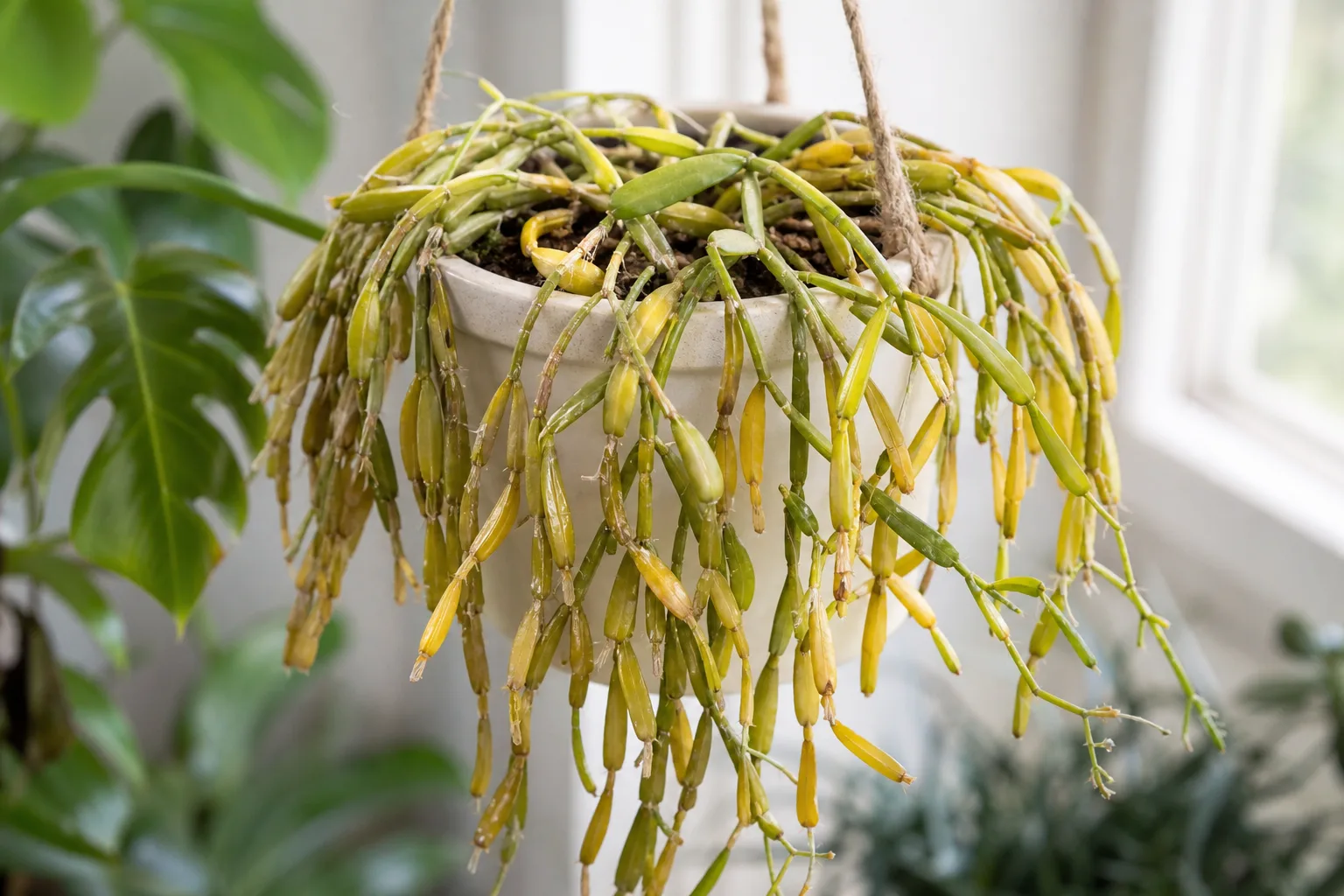
Overwatering on Rhipsalis: Causes, Checks & Fixes
This guide covers overwatering on Rhipsalis. See also the general Overwatering guide, watering, and light pages for this plant.
Overwatering on Rhipsalis: Causes, Checks & Fixes
Quick answer
Overwatering on Rhipsalis is keeping epiphytic roots in saturated mix-not giving too much water in one pour. This trailing rainforest epiphyte needs more moisture than desert cacti but still must avoid overwatering in a gritty, well-drained potting mix. The fix is dry-down timing, drainage, and light-not switching to desert-cactus neglect.
This page is early triage when you suspect too much water but have not confirmed root decay. If stems are mushy at the base, soil smells sour, or roots are brown and slimy on inspection, move to the root rot rescue guide. For seasonal watering rhythm and prevention, see the Rhipsalis watering guide.
First step: stop watering and lift the pot. A heavy, cool pot with soft yellow segments means pause all drinks, empty saucers, and move to brighter indirect light. Firm segments with only mild yellowing may recover after the mix dries-no repot needed yet.
What overwatering looks like on Rhipsalis
Rhipsalis shows water stress on jointed stem segments-the pencil-thin cladodes that trail from the crown-not broad leaves. Overwatering damage often starts at the soil line and climbs outward while outer cascade tips still look green, which delays diagnosis on hanging baskets.
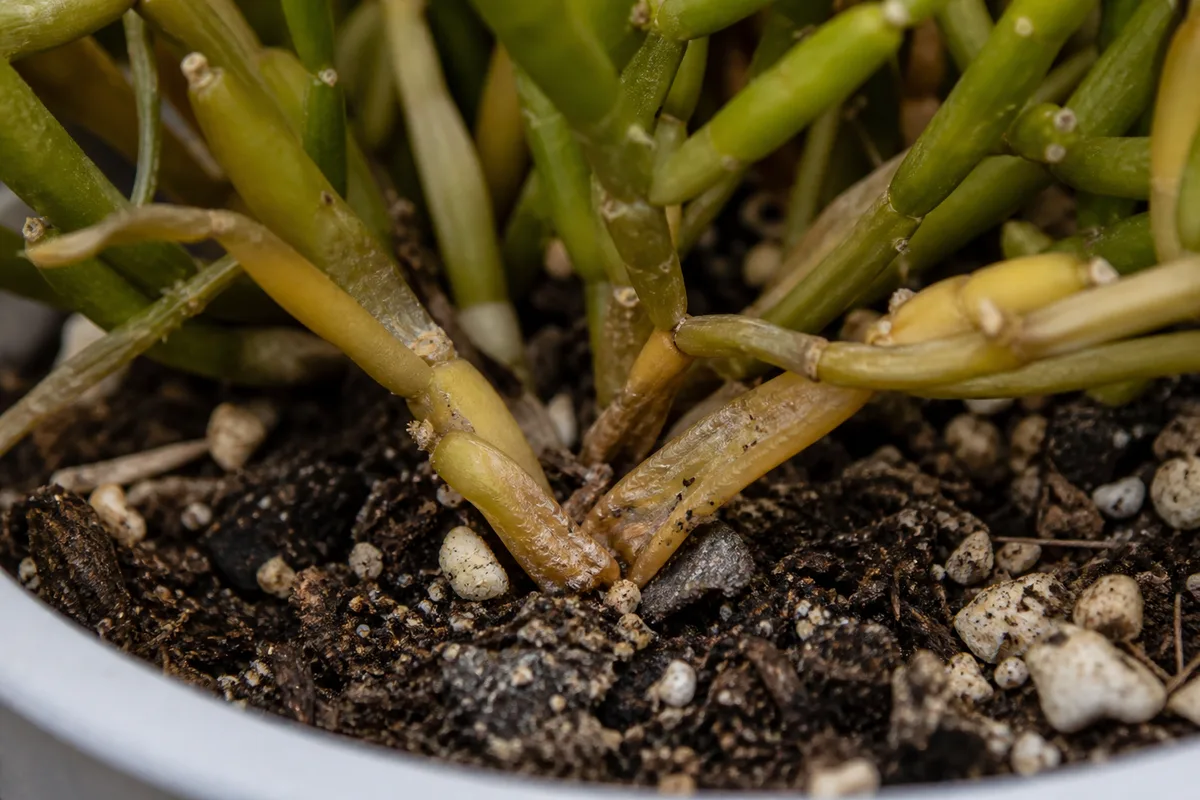
Overwatering symptoms on Rhipsalis - compare with healthy tissue on the same plant.
Mushy yellow segments and wet-soil wilt
Typical overwatering patterns:
- Segments turn yellow, translucent, or soft-especially near the crown where stems meet soil
- Trailing stems droop or look limp while the mix is still damp (the wet-soil wilt paradox)
- Soil stays dark, cool, and clings to your finger days after the last watering
- Pot feels noticeably heavier than after a proper dry-down
Progressive signs:
- Segments detach easily from the crown with a gentle tug
- Sour or musty smell when you lift the plant or slide it from the pot
- Fungus gnats hovering at the soil surface-chronic wetness invites them (see fungus gnats on Rhipsalis if infestation follows)
What overwatering does not look like:
- Uniform puckering and flattening along firm segments on bone-dry, lightweight soil-that is underwatering
- Only crisp brown tips on otherwise firm stems in dry winter air-that is usually humidity or sun stress, not saturation
- Black mushy roots with advanced stem collapse-that is confirmed root rot, not early overwatering alone
Fungus gnats and chronic surface wetness
Fungus gnats are a secondary signal, not the primary problem. Their larvae feed in consistently moist organic mix. If gnats appear after you increased watering frequency in a dim room, treat the wetness first-surface insect sprays alone will not fix saturated roots.
Why Rhipsalis is overwatered easily
Growers often swing between two mistakes: treating Rhipsalis like a desert cactus, then compensating with frequent shallow drinks that never dry the root zone. Both paths end with roots in stale, oxygen-starved soil.
Desert-cactus fear vs. compensatory shallow drinks
Rhipsalis is a jungle cactus-an epiphyte from tropical forests, not an arid succulent. It needs more consistent moisture than desert cacti during active growth. Fear of underwatering leads many owners to water on a calendar without checking soil, or to give small top-ups that keep the upper layer moist while the middle stays anaerobic.
BBC Gardeners’ World notes that although Rhipsalis needs more watering than a regular cactus, the exact frequency depends on light-and overwatering in low light is a common failure mode indoors.
Oversized pots, peat-heavy mix, dim light, and full saucers
Epiphytic roots are shallow. An oversized pot holds a water reservoir around a small root ball. Peat-heavy or fine potting soil stays wet for days in cool rooms. Dim light slows transpiration so the plant cannot use water as fast as you add it. Full saucers and sealed cachepots trap runoff at the bottom-exactly where fine roots suffocate first.
For mix that drains fast enough for epiphytic roots, see the Rhipsalis soil guide.
Winter dim-room evaporation slowdown
From autumn through winter, Rhipsalis growth slows. RHS mistletoe cactus guidance recommends keeping compost just moist in winter-not on the same weekly rhythm as summer. Cool rooms below about 15°C (60°F) slow metabolism further, so a summer watering schedule becomes excessive. The most common winter overwatering pattern: sympathy watering into already-wet mix because segments look slightly dull-not because the plant actually needs a drink.
How to confirm the cause
Run these checks in order before Rhipsalis repotting guide. Overwatering, underwatering, and root rot share wilted segments-but soil moisture and root firmness tell them apart.
Finger, pot weight, smell, and skewer checks
- Finger to mid-pot depth - Insert near the pot wall. Wet mix while segments decline strongly suggests overwatering.
- Pot weight - Lift the basket or pot. Heavy and cool days after watering means insufficient dry-down.
- Smell - Sour or rotten odor from drainage holes or when you tip the pot confirms anaerobic conditions.
- Wooden skewer - Push to the bottom, wait thirty seconds, pull out. Clinging wet soil at depth with a dry-looking surface means the root zone is waterlogged even when the rim looks pale.
Surface-dry vs. root-zone-wet on bark mix
Bark-heavy epiphytic mix dries unevenly. Water runs down pot sides and leaves a dry-looking rim while the core stays wet-especially in hanging baskets. Surface color lies. That is why the finger goes to mid-pot depth, not just across the top. If edges dry repeatedly but the center stays cool and clings, your mix may be too dense or the pot oversized for the root mass.
Lookalikes: underwatering vs. root rot vs. low light
| What you see | Soil / pot | Stem feel | Likely cause | First move |
|---|---|---|---|---|
| Yellow, mushy segments at base | Wet, heavy, cool | Soft, translucent | Overwatering (early) | Stop watering; empty saucers; improve light |
| Puckered, flat segments along length | Bone dry, light pot | Firm but flattened | Underwatering | Deep soak per watering guide |
| Wilt + yellow on wet soil | Wet, sour smell | Soft at crown | Root rot (confirmed decay) | Root rot rescue |
| Pale, stretched new growth | Variable | Firm | Low light (not overwatering) | See not enough light |
Overwatered plants may show yellowing, wilting, and root decay when roots cannot absorb oxygen-wilting on wet soil is a hallmark symptom across many houseplants, including epiphytic cacti.
First fix for Rhipsalis
The first fix is one action: stop all watering until you have confirmed severity. Do not repot, fertilize, or trim on day one unless stems are already mushy at the base.
Mild cases: stop watering, empty saucers, improve light
When segments stay mostly firm, yellowing is limited to lower stems, and smell is neutral:
- Stop watering immediately.
- Empty saucers and remove cachepot liners so runoff never pools.
- Move to brighter indirect light so the plant uses water faster and the mix dries evenly.
- Wait until the top half of soil feels dry and the pot lifts lighter before the next drink.
This path resolves many early overwatering cases without disturbing roots.
Moderate cases: inspect roots, trim if needed, repot into epiphytic mix
When yellowing spreads, segments soften at the soil line, or smell turns sour but upper stems remain firm:
- Gently unpot and brush away wet soil.
- Inspect roots-healthy Rhipsalis roots are firm and pale; rotted roots are brown, translucent, or mushy.
- Trim only clearly mushy roots with clean scissors; leave firm tissue intact.
- Repot into fresh airy mix with perlite and orchid bark per the soil guide. Use the same pot size or slightly smaller-not larger.
- Wait one week before light watering if you trimmed roots; the plant needs time to callus damaged tissue.
When to escalate to the root-rot rescue guide
Move to root rot on Rhipsalis when:
- More than one-third of roots are mushy on inspection
- Stem bases blacken and softness climbs multiple segments
- The plant collapses despite your dry-down attempt
- You need step-by-step salvage and cutting protocols for advanced decay
That page covers confirmed decay rescue. This page covers catching saturation before rot spreads-or deciding you have already crossed that line.
Recovery timeline
Recovery is judged by new growth and root stability, not by old damaged segments.
| Timeframe | What to expect |
|---|---|
| Days 1–7 | No new watering; pot weight should drop as mix dries. Stop if smell worsens-inspect roots instead of waiting. |
| Weeks 1–2 | Firm segments should stop softening. Yellowed tissue usually stays marked; that is normal. |
| Weeks 2–4 | New crown tips should look plump and green in Rhipsalis light guide. No new tips after four weeks with correct dry-down suggests hidden root damage-unpot and inspect. |
| Month 2+ | Trailing length recovers slowly. Old mushy segments do not regreen; prune cosmetically once new growth is established. |
Underwatering damage often reverses within days of a single soak. Overwatering damage-especially when roots have decayed-takes weeks and may require propagation of firm upper cuttings if the base is lost.
What not to do
- Do not water because segments look limp when soil is wet. That deepens root failure. Wilting on wet mix means roots cannot absorb-not that the plant needs more water.
- Do not repot into a larger pot to “help drying.” More soil holds more water around shallow epiphytic roots.
- Do not use pure desert sand without organic matter. Rhipsalis still needs consistent moisture during active growth-just not sogginess.
- Do not fertilize stressed, waterlogged roots. Nutrients cannot help failing roots and may burn tender tissue.
- Do not ignore fungus gnats as harmless-they signal chronic surface wetness worth correcting.
- Do not assume every yellow segment means rot. Confirm soil moisture and firmness before escalating to surgery.
How to prevent overwatering next time
Water when the top half of soil feels dry-not on a fixed calendar. During active growth, that often means every 7–14 days in bright light; in winter, stretch to every 3–4 weeks in cool rooms. The Rhipsalis watering guide covers finger, weight, and skewer checks in full.
Use pots with drainage holes and well-drained, gritty cactus potting mix amended with bark and perlite. Match pot size to root mass. Give bright indirect light so the plant uses water predictably. Empty saucers after every drink.
Reduce watering when growth slows in autumn-jungle cacti need less water in winter when cool temperatures and short days slow evaporation. A hygrometer at basket height helps in heated rooms, but soil moisture at the root zone remains the primary decision.
Related tool
Use the Root Rot Risk Checker to narrow causes for overwatering on this plant before changing multiple variables at once.
Related guides
- Rhipsalis watering - top-half-dry rule, pot weight, skewer checks, and seasonal rhythm
- Root rot on Rhipsalis - confirmed mushy-root rescue, trim protocol, and salvage cuttings
- Underwatering on Rhipsalis - puckered segments on bone-dry mix (wet-soil lookalike)
- Rhipsalis soil - epiphytic bark-perlite mix for fast dry-down
- Fungus gnats on Rhipsalis - when chronic surface wetness invites pests
- Rhipsalis overview - epiphytic biology, light, and hanging-basket basics
When to use this page vs other Rhipsalis guides
- Rhipsalis watering guide - Use for routine moisture checks before assuming overwatering is the main issue.
- Rhipsalis problems hub - Browse all 3 common issues on this species.
- Root Rot on Rhipsalis - Different entry point when symptoms overlap with overwatering.