Underwatering on Rhipsalis: Causes, Checks & Fixes
Quick answer
Underwatering on Rhipsalis shows as flattened, puckered stems on bone-dry, lightweight soil because this rainforest epiphyte needs regular dry-down watering-not desert-style drought. First step: confirm dryness at mid-pot depth, then soak until water runs from drainage holes. Mild cases perk within 12–24 hours.
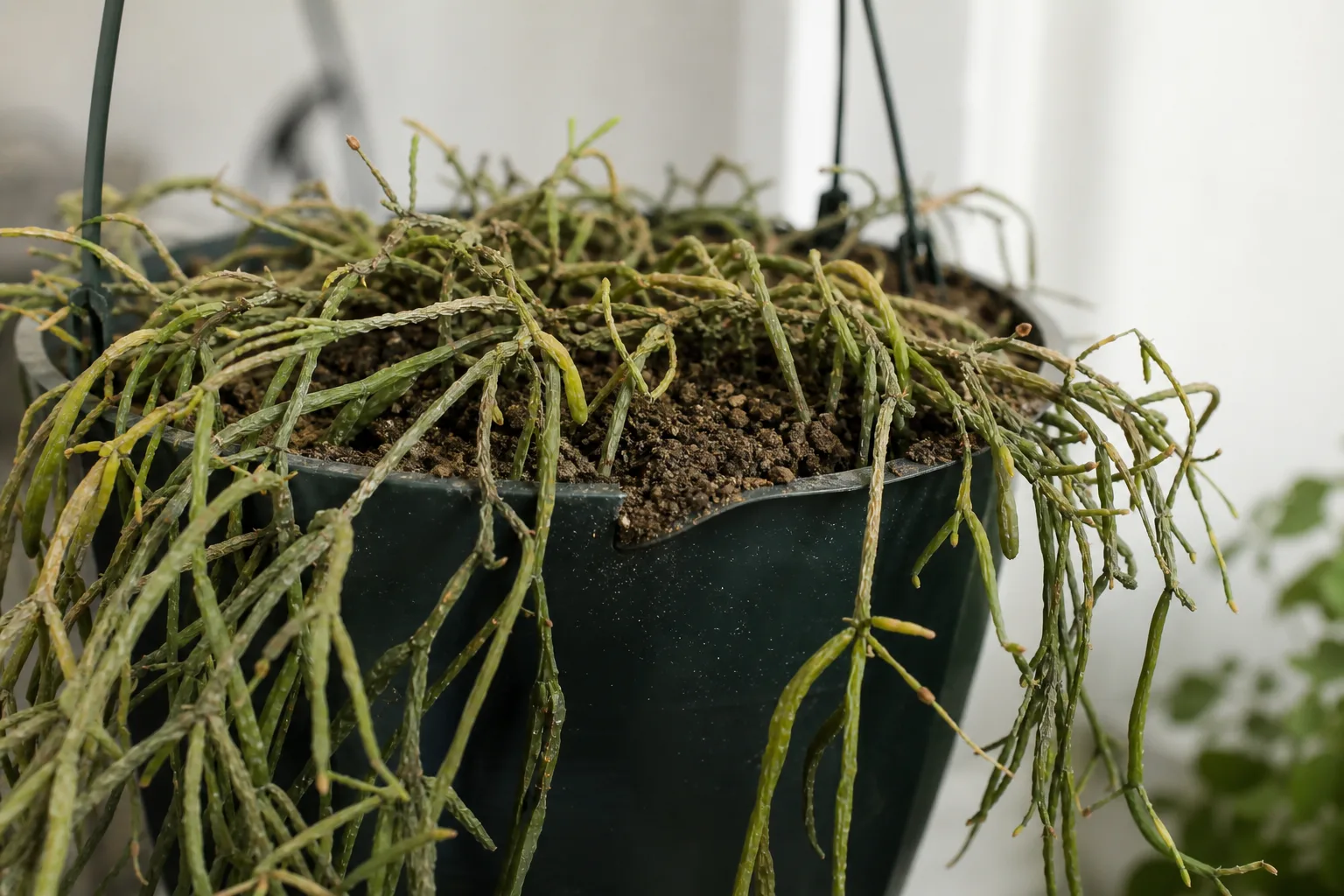
Underwatering on Rhipsalis: Causes, Checks & Fixes
This guide covers underwatering on Rhipsalis. See also the general Underwatering guide, watering, and light pages for this plant.
Underwatering on Rhipsalis: Causes, Checks & Fixes
Quick answer
Underwatering on Rhipsalis happens when the pot goes too long without a full drink-often because growers fear root rot and treat this trailing rainforest epiphyte like a desert cactus. Tendrils pucker and lose their rigidity when they are thirsty. The fix is a thorough soak-and-drain, then resuming the top-half-dry rhythm-not daily teaspoon sips.
This page is drought rescue when segments look puckered on bone-dry, lightweight soil. If the mix is wet and segments are soft or collapsing, that is overwatering or root rot-not thirst. For full seasonal rhythm, pot-weight checks, and skewer triage, see the Rhipsalis watering guide.
First step: confirm dryness at mid-pot depth, then soak. Insert your finger halfway down the mix. If it is dusty dry and segments are firm but flattened, water thoroughly until excess runs from drainage holes and empty the saucer.
What underwatering looks like on Rhipsalis
Rhipsalis shows drought stress on jointed stem segments-the pencil-thin cladodes that trail from the crown-not broad leaves. Underwatering damage usually appears along the length of trailing stems while the crown may still look green, which makes it easy to miss on hanging baskets until the whole cascade looks thin.
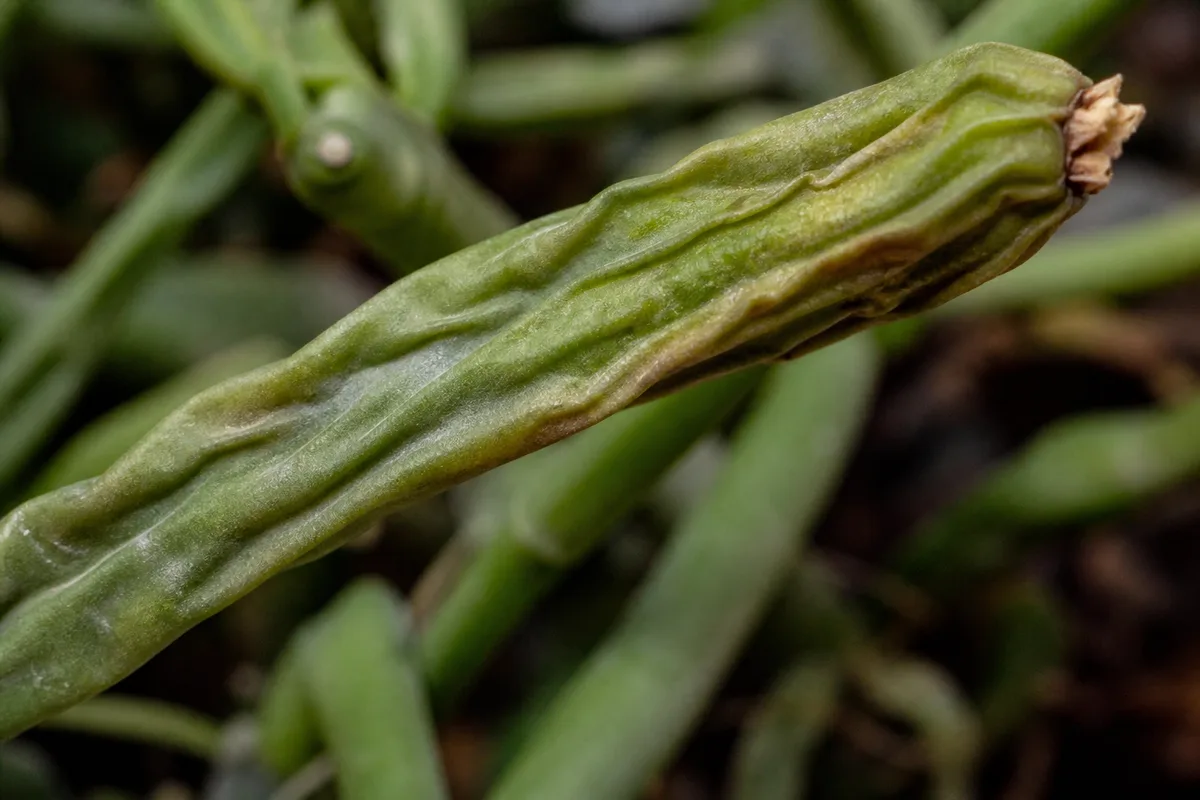
Underwatering symptoms on Rhipsalis - compare with healthy tissue on the same plant.
Puckered, flattened cladode segments
Typical underwatering patterns:
- Segments flatten, wrinkle, or feel thin instead of plump along much of their length
- Tips may turn brown and crisp while the rest of the segment stays firm
- Soil pulls away from the pot edge on peat-heavy or hydrophobic mix
- The basket or pot feels noticeably lighter than after a recent soak
- New growth stalls; existing segments may look dull or slightly gray-green
What underwatering does not look like:
- Yellow, translucent, or mushy segments at the soil line on wet, heavy mix-that is overwatering
- Wilted segments on damp soil with a sour smell-that is root failure; see root rot
- Only crisp brown tips on otherwise plump stems in dry winter air-that is often humidity or sun stress, not drought throughout the pot
Firm drought stems vs. overwatering softness
Under drought, Rhipsalis segments stay firm when you pinch them-they look deflated but not squishy. Overwatered segments turn soft, yellow, or translucent, especially near the crown. That firm-vs-mushy distinction is one of the fastest ways to separate dry-soil drought from wet-soil root failure without unpotting.
BBC Gardeners’ World notes that drying stems or lack of growth can mean you are not watering enough-while yellowing or dropping segments on wet mix points to overwatering. The symptom cluster plus soil moisture tells you which guide to follow.
Why Rhipsalis gets underwatered
Growers underwater Rhipsalis for understandable reasons: the plant is sold as a cactus, care tags repeat “let it dry out,” and fear of root rot pushes owners toward desert-cactus neglect. On a rainforest epiphyte, that timing starves shallow roots and puckers trailing stems within days in bright, warm rooms.
Desert-cactus watering confusion
Rhipsalis is a jungle cactus-an epiphyte from tropical forests, not an arid succulent. It needs more consistent moisture than desert cacti during active growth. Waiting until the entire pot is bone dry for weeks mimics desert drought, not rainforest rhythm.
BBC Gardeners’ World states plainly that although Rhipsalis is a cactus, it is native to South American rainforests and needs more watering than a regular cactus-with frequency tied to how much light the plant receives.
Hanging-basket fast dry-down in bright windows
Epiphytic roots are shallow. A small hanging basket in a warm east or west window transpires through thin stems quickly-especially when air conditioning or heating dries the room. Water runs down pot sides and leaves a dry-looking rim while the center may still hold some moisture, but bright placements can still go from adequately moist to drought-stressed in under two weeks if you skip checks.
Thinner-stem species such as Rhipsalis cereuscula may show puckering sooner than thicker R. baccifera types. When in doubt, feel mid-pot moisture and pot weight rather than guessing from stem thickness alone.
Winter neglect without total abandonment
From autumn through winter, Rhipsalis growth slows and needs less water-but not zero water for months. RHS mistletoe cactus guidance recommends keeping compost just moist in winter during dormancy. Skipping every drink for six to eight weeks in a heated room still shrivels segments even when the plant is semi-dormant.
How to confirm the cause
Run these checks in order before soaking. Underwatering, overwatering, and root rot all cause shriveled segments-but soil moisture, pot weight, and stem firmness tell them apart.
Soil depth check, basket weight, and segment firmness
- Finger to mid-pot depth - Insert near the pot wall. Dusty dry mix at half depth with puckered segments confirms drought during active growth.
- Pot weight - Lift the basket or pot. Noticeably light compared to right after a soak means moisture has depleted.
- Wooden skewer - Push to the bottom, wait thirty seconds, pull out. Clean, dry wood at depth on a light pot confirms underwatering.
- Segment firmness - Pinch a puckered segment. Firm and flattened suggests drought; soft and yellow on wet soil suggests overwatering.
Compare your last full soak to the calendar: during active growth, most indoor Rhipsalis need water every 7–14 days when the top half dries; in cool winter rooms, every 3–4 weeks is common-but always let soil checks override the calendar.
Lookalikes: overwatering vs. root rot (shriveled with wet soil)
The most dangerous misread is adding water to a plant that looks thirsty while roots are failing. When roots cannot absorb moisture, segments shrivel even though the mix is wet-the same wet-soil wilt paradox that appears on overwatered houseplants.
| What you see | Soil / pot | Stem feel | Likely cause | First move |
|---|---|---|---|---|
| Puckered, flat segments along length | Bone dry, light pot | Firm but flattened | Underwatering | Thorough soak (this page) |
| Yellow, mushy segments at base | Wet, heavy, cool | Soft, translucent | Overwatering | Overwatering triage |
| Wilt + shrivel on wet soil | Wet, sour smell | Soft at crown | Root rot | Root rot rescue |
| Crisp brown tips only | Variable | Firm, plump elsewhere | Low humidity / sun | See low humidity or brown tips |
The Spruce describes drying stems with little new growth as a sign of underwatering-but notes that falling segments on wet mix signal overwatering. Soil moisture at the root zone matters more than stem appearance alone.
First fix for Rhipsalis
The first fix is one action: water thoroughly until excess runs from drainage holes, then empty the saucer. Do not fertilize, repot, or move into direct sun on day one.
Thorough soak-and-drain
- Take the plant to a sink or shower.
- Water slowly until water runs freely from drainage holes-do not stop at the first drip.
- Wait ten minutes and water once more if the mix absorbed quickly from a very dry state.
- Let the pot drain completely; empty saucers and cachepot liners.
- Resume top-half dry-down checks before the next drink.
For a typical mild case-puckered tips on a light basket after ten to fourteen days without water in a bright east window-segments often look plumper within 12 to 24 hours after a proper soak.
Hydrophobic mix: bottom-water 20–30 minutes then drain
When soil has pulled away from the pot edge and water runs straight through without absorbing, the mix has gone hydrophobic from prolonged drought:
- Fill a basin with room-temperature water to just below the pot rim.
- Set the pot in the basin for 20–30 minutes so the mix wicks moisture upward.
- Remove, let drain fully, then run a slow top-water pass to settle the root zone.
- Never leave the pot sitting in standing water overnight.
Daily teaspoon top-ups without a periodic full soak fail on trailing epiphytes-shallow roots never get evenly rehydrated, and the center stays inconsistently dry.
Recovery timeline
Recovery is judged by new growth and segment plumpness, not by old scarred tissue.
| Timeframe | What to expect |
|---|---|
| Hours 12–24 | Mild drought: puckered segments should look visibly plumper and less wrinkled after one thorough soak. |
| Days 2–7 | Firm segments stop flattening further. Crisp brown tips stay marked-that is normal. |
| Weeks 2–4 | New crown tips should look green and plump in Rhipsalis light guide. No new tips after four weeks with correct watering suggests hidden root damage-check for wet-soil shrivel instead. |
| Month 2+ | Trailing length recovers slowly. Old shriveled segments do not fully plump back; prune cosmetically once new growth is established. |
Chronic drought over many weeks may have killed fine roots. If segments stay puckered on wet, heavy soil after you soaked, route to overwatering or root rot-not another soak.
What not to do
- Do not sprinkle teaspoons of water daily without soaking. Roots need periodic full hydration through the entire root ball.
- Do not assume all shriveling is drought. Wet, heavy soil with limp segments means roots cannot absorb-adding water worsens failure.
- Do not place in direct sun to compensate for drought stress. Bright indirect light is fine; hot direct sun burns thin epiphytic stems.
- Do not fertilize drought-stressed plants until segments look plump and new growth resumes.
- Do not skip winter drinks entirely. Reduce frequency, but keep compost just moist in winter-not dust dry for months.
How to prevent underwatering next time
Water when the top half of soil feels dry-not on a fixed desert-cactus calendar. During active growth, that often means every 7–14 days in bright indirect light; in winter, stretch to every 3–4 weeks in cool rooms while still preventing prolonged desiccation. The Rhipsalis watering guide covers finger, weight, and skewer checks in full.
In bright, warm hanging placements, check more often during heat waves-every five to seven days may be needed. Use airy bark-perlite mix per the soil guide so water penetrates evenly. Rhipsalis is non-toxic to dogs and cats, so you can hang it within reach for easier moisture checks.
Reduce-but do not eliminate-winter watering when growth slows. Reduce watering through winter dormancy while stems stay firm, not shriveled.
When to worry
Escalate beyond a simple soak when:
- Stems soften at the base on wet or dry soil-that may be advancing rot, not cosmetic drought
- Damage spreads through multiple branches despite correct dry-down afterward
- Pot stays wet with sour smell while segments collapse-wet-soil root failure; see root rot
- No new tips after four weeks of correct watering-inspect roots for decay
Slow cosmetic puckering on confirmed dry soil is not an emergency. A single thorough soak and resumed rhythm resolve most mild cases.
Related tool
Use the Plant Watering Calculator to narrow causes for underwatering on this plant before changing multiple variables at once.
Related guides
- Rhipsalis watering - top-half-dry rule, pot weight, skewer checks, and seasonal rhythm
- Overwatering on Rhipsalis - mushy segments on wet soil (dry-soil lookalike)
- Root rot on Rhipsalis - sour smell, mushy roots, wet-soil shrivel paradox
- Rhipsalis soil - epiphytic bark-perlite mix for even rewetting
- Wilting on Rhipsalis - when segments droop without clear dry soil
- Rhipsalis overview - epiphytic biology, light, and hanging-basket basics
When to use this page vs other Rhipsalis guides
- Rhipsalis watering guide - Use for routine moisture checks before assuming underwatering is the main issue.
- Rhipsalis problems hub - Browse all 3 common issues on this species.
- Brown Tips on Rhipsalis - Different entry point when symptoms overlap with underwatering.