Low Humidity on Rhipsalis: Causes, Checks & Fixes
Quick answer
Low humidity dries Rhipsalis segment tips in heated winter rooms because this trailing rainforest cactus evolved in humid canopy air-not desert dryness. First step: measure humidity near the basket and run a humidifier or pebble tray until readings stay in the 40–60% range without soaking the soil.
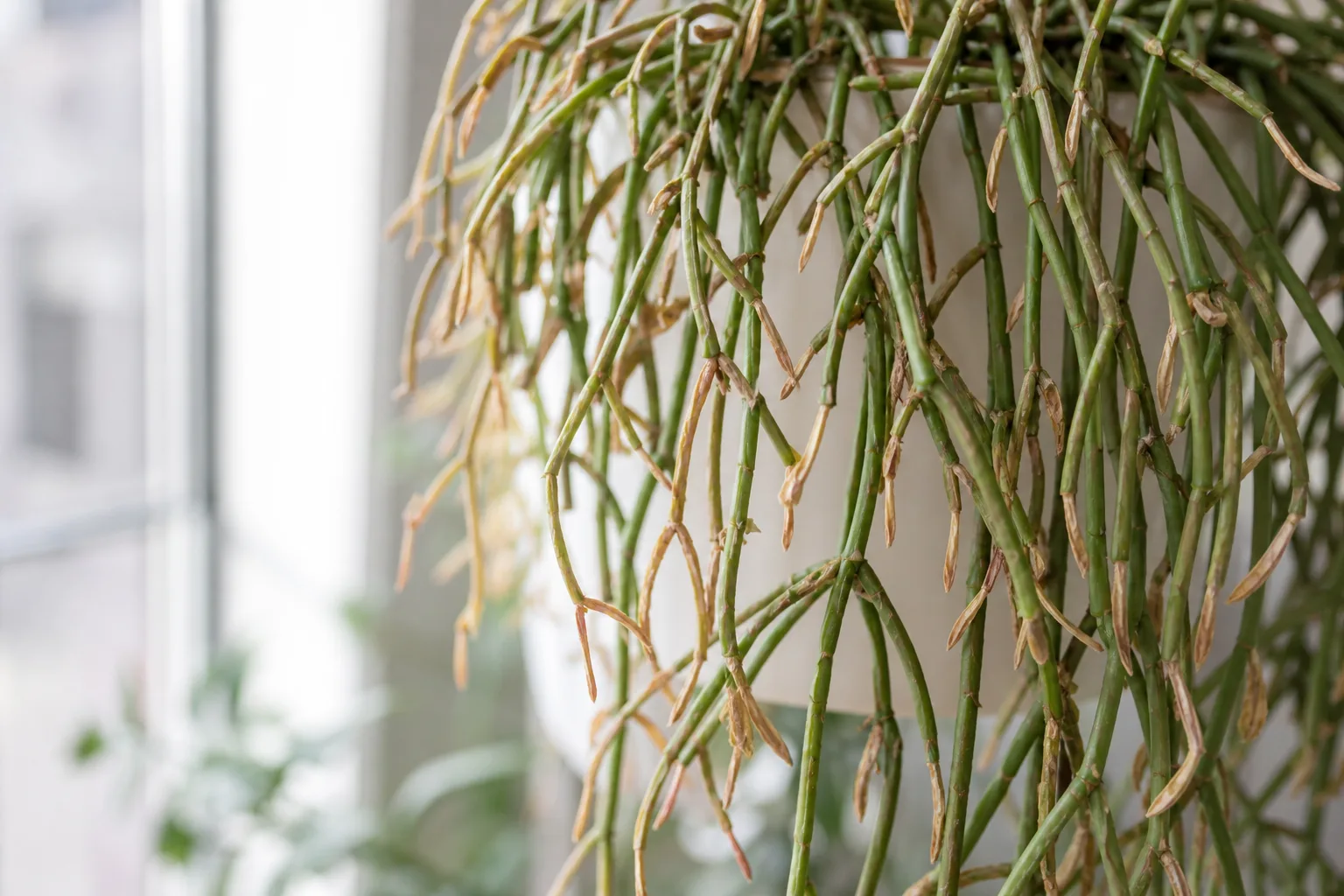
Low Humidity on Rhipsalis: Causes, Checks & Fixes
This guide covers low humidity on Rhipsalis. See also the general Low Humidity guide, watering, and light pages for this plant.
Low Humidity on Rhipsalis: Causes, Checks & Fixes
Quick answer
Low humidity on Rhipsalis is an environmental mismatch, not a disease. This trailing rainforest epiphyte prefers high humidity and Rhipsalis light guide-conditions that disappear once winter heating drops indoor air below 30% relative humidity. Thin, jointed segments lose moisture to dry air faster than thick desert cactus pads, so tips brown, color dulls, and spider mites multiply in warm, dry indoor conditions.
First step: place a hygrometer near the basket and run a humidifier or pebble tray until readings stay in the 40–60% range. Do not flood the pot to compensate for dry air-that invites root rot on Rhipsalis on a plant that needs moisture in the air, not soggy roots.
Why Rhipsalis suffers in dry air
Rhipsalis belongs to the jungle cactus group-epiphytic cacti from humid understory forests, not arid deserts. Missouri Botanical Garden notes that jungle cacti, including Rhipsalis, require higher humidity than typical succulents and benefit from pebble trays during dry indoor seasons.
In nature, Rhipsalis absorbs moisture from ambient humidity and rainfall while clinging to tree bark. Its segments are thin and exposed across a long trailing cascade-maximum surface area with minimal water storage compared to a barrel cactus. When forced-air heat, radiators, or sunny glass dry the microclimate around a hanging basket, segments transpire faster than roots can replace water, even if soil moisture is adequate.
Central heating is the usual trigger. UMN Extension reports that humidity levels drop sharply indoors during winter, which hits humidity-loving plants hardest. Rhipsalis hanging near a ceiling register or above a radiator sits in the driest zone in the room-hot, moving air that pulls water from segment tips before you notice soil drying.
Dry air also weakens defenses. Stressed segments attract spider mites, and mite damage mimics drought browning. Fixing humidity alone will not cure an active infestation, but leaving air dry guarantees repeat problems every heating season.
What low humidity looks like on Rhipsalis
Unlike broad-leaf tropicals, Rhipsalis shows dry-air stress on segments-the pencil-thin, jointed stems that make up the cascade.
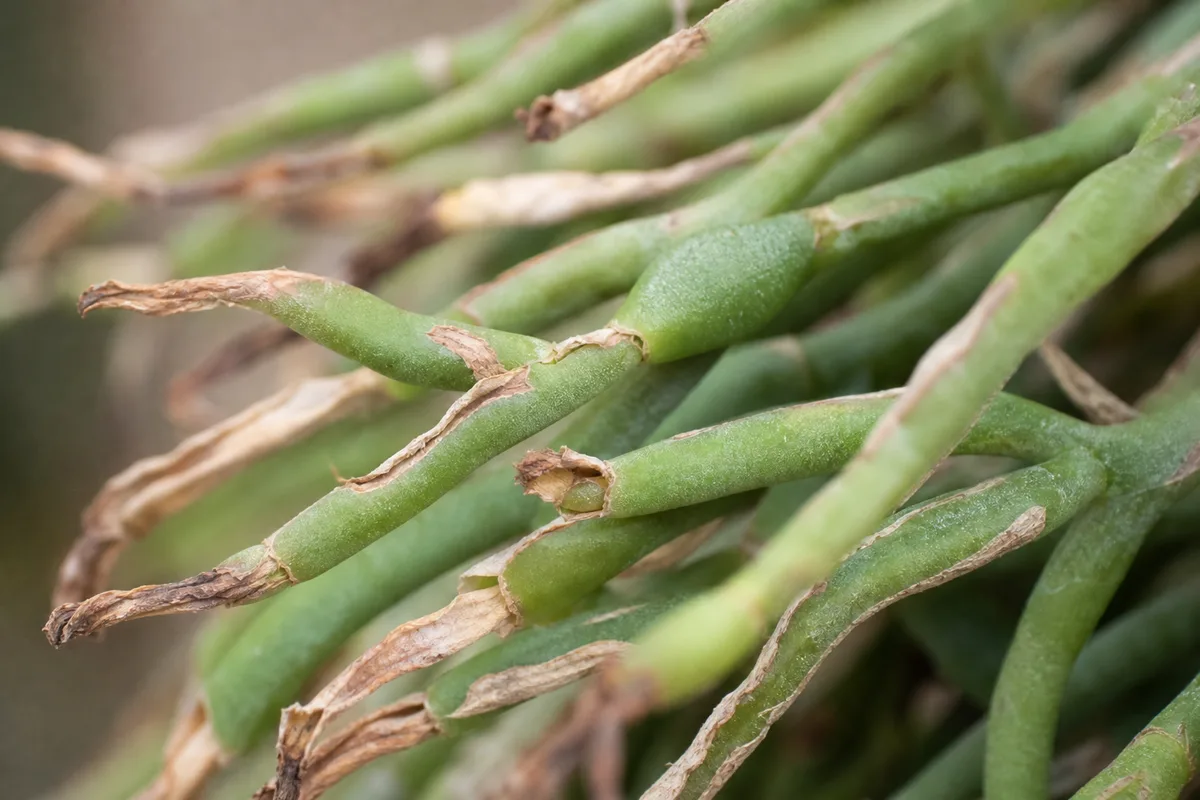
Low Humidity symptoms on Rhipsalis - compare with healthy tissue on the same plant.
Early signs:
- Tan or brown crisp tips on otherwise green segments, often worst on outer stems closest to a vent or window
- Dull, slightly gray-green color instead of plump glossy segments
- Faster surface drying of the potting mix without the deep puckering that marks true underwatering
Progressive signs:
- Tip browning spreading along multiple trailing branches over several weeks
- New crown growth stalling or emerging smaller and thinner than earlier segments
- Fine yellow stippling on segments if spider mites follow the dry spell
What low humidity does not look like:
- Mushy yellow segments with sour-smelling soil-that is overwatering or root rot
- Uniform bleaching on sun-facing sides only-that is direct light scorch
- White cottony masses or immobile brown bumps-that is mealybugs or scale, not dry air
NC State Extension notes that tendrils pucker and lose rigidity when thirsty-puckering on dry soil points to watering, while firm stems with only crisp tips in dry winter air points to humidity.
How to confirm the cause
Work through these checks in order before you change watering or repot:
- Hygrometer reading - Measure relative humidity at basket height, not across the room. Below 40% with firm stems and crisp tips strongly suggests dry air. Above 50% with continued browning means look elsewhere.
- Soil moisture depth - Push a finger into the top half of the mix. Rhipsalis should be watered when that zone dries. Bone-dry soil with puckered, soft segments means underwatering is primary. Evenly moist soil with only tip browning means humidity is the likely gap.
- Heat source map - Note whether the basket hangs above a radiator, beside a forced-air vent, or in the path of a space heater. Localized tip browning on the side facing the heat source confirms a dry microclimate.
- Window placement - Afternoon sun through glass raises temperature and lowers effective humidity on outer segments. Check whether damage concentrates on the window-facing cascade.
- Segment firmness - Pinch a marked segment. Dry-air damage keeps tissue firm but crisp at the tip. Thirsty segments feel flat and wrinkled along their length. Mushy segments mean rot.
- Pest scan - Hold white paper under a stem and tap. Moving specks, fine webbing at joints, or pinprick stippling mean spider mites have joined the problem-treat pests after you stabilize humidity.
If humidity reads low, soil moisture is appropriate, stems stay firm, and no pest signs appear, you have confirmed low-humidity stress.
First fix for Rhipsalis
Run a humidifier near the basket or set up a pebble tray until hygrometer readings at plant level reach 40–60%.
For a pebble tray, fill a saucer with pebbles and water to just below the stone surface so the pot never sits in standing water. UMN Extension recommends this method for humidity-loving houseplants in winter, and NC State Extension suggests the same approach for mistletoe cactus. Evaporation raises local moisture without soaking roots.
A room humidifier is more reliable for a trailing basket whose stems extend above a small tray. Place it close enough that the cascade sits in the moisture plume but far enough that foliage does not stay constantly wet overnight.
Do not increase watering frequency on day one to fix dry tips-that is the most common mistake on epiphytic cacti. Dry air and dry soil are separate problems; solving one by overwatering the other causes rot.
Step-by-step recovery
After humidity equipment is running:
- Move the basket away from heat vents and direct sun while humidity stabilizes. Even a good humidifier struggles against a register blowing dry air across the cascade.
- Group nearby humidity-loving plants if space allows. Clustered plants create a shared microclimate that supplements a tray or humidifier.
- Maintain normal Rhipsalis watering guide - water when the top half of soil dries, letting excess drain fully. Consistent moisture at the roots plus higher air humidity addresses both stress layers.
- Rinse trailing stems monthly during heating season with lukewarm water. This removes dust, raises local humidity briefly, and lets you spot early mite stippling before colonies spread.
- Trim only fully crisp dead tips if they bother you cosmetically. Wait until new growth looks plump before cutting back larger sections.
- Add spider mite treatment only if stippling, webbing, or moving dots appear after humidity correction. Dry air recovery and pest control run together but are not interchangeable.
- Hold Rhipsalis repotting guide and fertilizer until segments look stable for two to three weeks. Stressed Rhipsalis does not need root disturbance or fresh nitrogen while recovering from environmental shock.
Recovery timeline
Expect browning to stop spreading within one to two weeks once humidity stays in the 40–60% band and the basket sits away from heat sources. New crown tips should look plumper within two to three weeks; full recovery of the cascade’s appearance takes a full growing season because old browned tips do not regreen.
If tips continue browning despite verified humidity above 45%, recheck watering depth and light exposure before assuming the humidifier is failing. Persistent stippling after humidity correction means mites need direct treatment.
Lookalike symptoms to rule out
Underwatering puckers and flattens segments along their length on bone-dry soil. Humidity correction alone will not plump them-deep watering when the top half dries is required.
Direct sun scorch bleaches or browns the sun-facing side of outer segments while inner shaded stems stay green. Moving away from harsh glass fixes scorch without a humidifier if room humidity is already adequate.
Spider mites leave fine stippling, webbing at joints, and moving dots on paper taps. Dry air invites mites but does not cause stippling by itself-confirm with magnification before treating only humidity.
Overwatering turns segments mushy yellow with sour soil smell. Never raise watering to combat dry tips when the pot stays wet-that accelerates root rot on epiphytic cacti.
Normal aging occasionally dries the oldest basal segments while new crown growth stays firm. Limited tip browning on old stems at the soil line without spread to new growth may need no intervention.
Mistakes to avoid
Do not mist once daily and assume humidity is fixed. UMN Extension notes that misting is generally ineffective for raising humidity and can encourage foliar disease on crowded trailing stems.
Do not enclose the entire basket in a sealed bag long term- stagnant moisture around the crown risks rot on epiphytic cacti.
Do not place the pot directly in a pebble tray’s standing water. The drainage hole must stay above the water line or roots suffocate.
Do not blast heat vents toward hanging baskets because they look decorative above a sofa-upper wall and ceiling zones are driest in heated rooms.
Do not ignore a hygrometer reading in the center of the room while the basket sits next to a radiator. Measure where the plant actually lives.
Do not stack repotting, fertilizer, and heavy pruning during dry-air recovery. Fix the environment first.
How to prevent low humidity damage
Target 40–60% relative humidity at basket height through heating season-the range Rhipsalis already prefers in normal care. The mistletoe cactus prefers bright indirect light, high humidity, and consistent moisture compared to desert cacti.
Run a humidifier in rooms where multiple trailing plants share dry air. Use pebble trays under baskets where outlets are scarce. Group plants slightly to share evaporative moisture.
Hang away from heating vents, fireplaces, and direct afternoon sun through glass. Rinse cascades monthly when indoor air is driest.
Quarantine new plants before mixing them with your collection-pests arrive on dry-stressed specimens and spread across touching trailing stems.
Rhipsalis is listed as non-toxic to cats and dogs by the ASPCA, so humidifiers and pebble trays can run safely in shared living spaces-still keep pets from chewing wet segments or knocking over trays.
When to worry
Escalate care when tip browning races through most of the cascade within a week, new crown growth collapses despite adequate soil moisture and corrected humidity, or fine stippling and webbing follow the browning-those patterns suggest combined drought, mite infestation, or a placement so harsh that humidity equipment cannot keep up.
Low humidity alone rarely kills a healthy Rhipsalis with firm roots. It cosmetically marks segments and invites pests. A basket reduced to papery stems with rot smell at the base is beyond humidity correction-inspect roots for rot and consider propagating firm upper cuttings if the base is lost.
Conclusion
Low humidity on Rhipsalis is the gap between rainforest canopy conditions and dry winter living rooms. Crisp segment tips on firm stems, hygrometer readings below 40%, and placement near heat sources confirm the problem. Raise humidity with a humidifier or pebble tray first-without overwatering-then rinse stems, rule out spider mites, and judge recovery by plump new crown growth rather than old browned tips.
When to use this page vs other Rhipsalis guides
- Rhipsalis watering guide - Use for routine moisture checks before assuming low humidity is the main issue.
- Rhipsalis problems hub - Browse all 3 common issues on this species.
- Brown Tips on Rhipsalis - Different entry point when symptoms overlap with low humidity.