Aphids on Rhipsalis: Causes, Checks & Fixes
Quick answer
Aphids on Rhipsalis target tender new segment tips and flower buds on trailing epiphytic cacti-especially after outdoor summer hangs or new plant introductions. First step: isolate the basket and rinse every new tip and segment joint with lukewarm water before reaching for sprays.
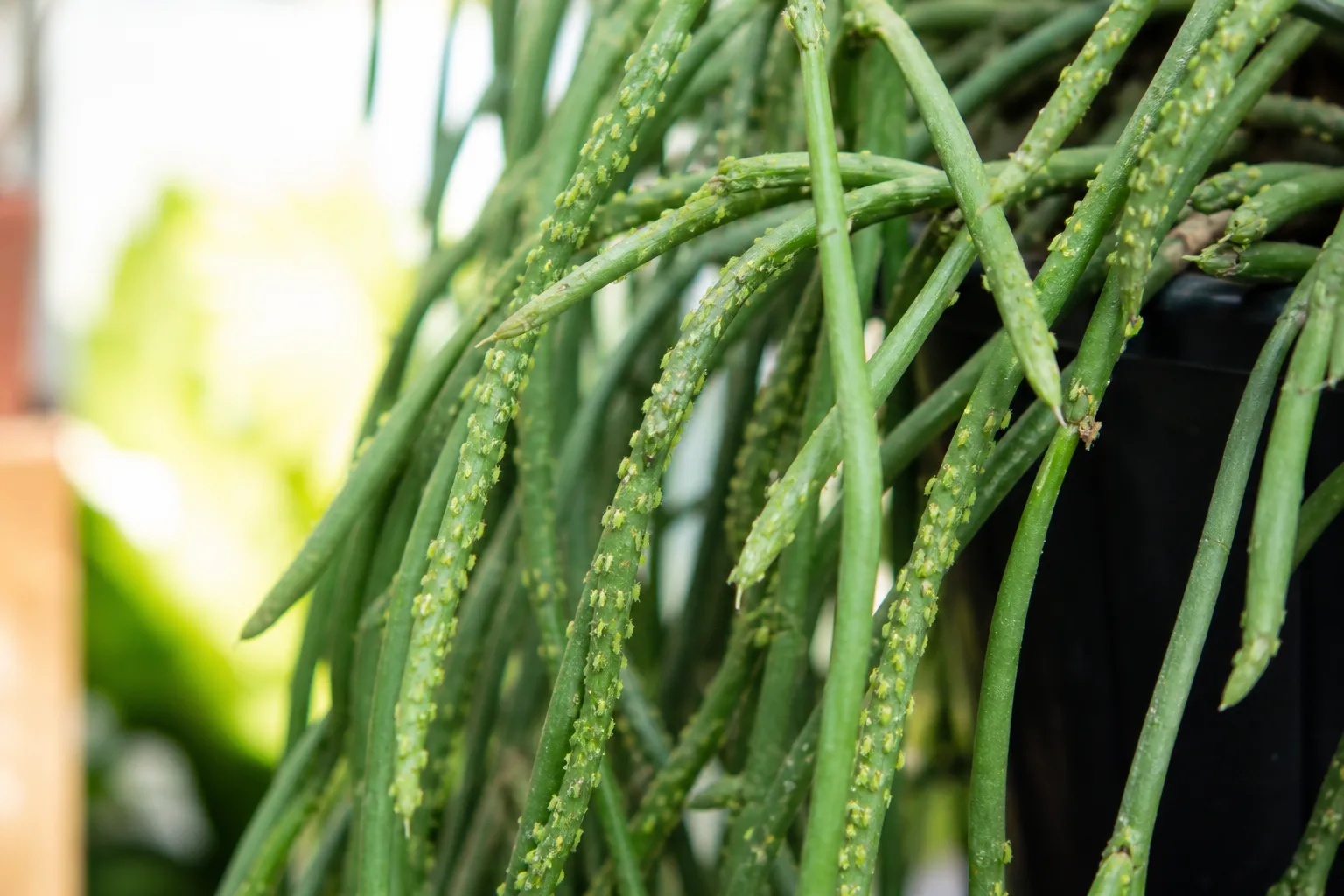
Aphids on Rhipsalis: Causes, Checks & Fixes
This guide covers aphids on Rhipsalis. See also the general Aphids guide, watering, and light pages for this plant.
Aphids on Rhipsalis: Causes, Checks & Fixes
Quick answer
Aphids on Rhipsalis are a sap-feeding pest problem on soft new growth-not a watering disease. These trailing epiphytic cacti push tender segment tips and small flower buds in spring and summer, exactly where aphids cluster and excrete sticky honeydew. Stunted new chains, shiny tacky stems, and ants on basket hooks are the classic signs on hanging mistletoe cactus.
First step: isolate the basket and rinse every new segment tip and joint with lukewarm water, targeting clusters before they curl into protected shelters. Hold trailing stems over a sink or shower and spray from below so water hits the soft growth aphids prefer. Only after you confirm live insects should you add insecticidal soap on a test segment.
Why Rhipsalis gets aphids
Rhipsalis is a trailing epiphytic cactus from humid tropical forests-not a desert succulent. NC State Extension notes that mistletoe cactus can be susceptible to aphids along with mealybugs and spider mites, especially when plants are stressed or recently moved indoors. The plant wants consistent moisture and moderate humidity, yet many infestations start when a hanging basket spends summer outdoors and garden aphids hitchhike inside on the first cool night.
Spring and summer growth pushes soft new segment tips that aphids prefer over older, firmer chains. Aphids feed on tender plant parts and reproduce rapidly in warm conditions-adult females can produce many offspring per day without mating, so colonies on a single new tip can spread across a cascade within one to two weeks if left alone.
Hanging baskets create extra risk. Trailing stems that touch neighboring pots, shared hooks, or overlapping foliage give winged aphids and crawlers a bridge across your collection. Outdoor summer placement near flowering shrubs, vegetables, or other aphid-prone garden plants introduces pests that rarely appear on a Rhipsalis kept indoors year-round.
Ants complicate control. Ants harvest honeydew and protect aphid colonies from lady beetles, lacewings, and other natural enemies. Ant trails on basket chains or pot rims often appear before you spot the aphids themselves on upper segment tips.
Overfertilized, nitrogen-rich growth is especially attractive to aphids. Rhipsalis already needs only modest feeding during active growth-heavy fertilizer while the plant is pushing soft new chains gives pests more tender tissue to colonize without making the basket healthier.
What aphids look like on Rhipsalis
Unlike broad-leaf houseplants, Rhipsalis damage shows on thin jointed segments-the pencil-like stems that make up the cascade.
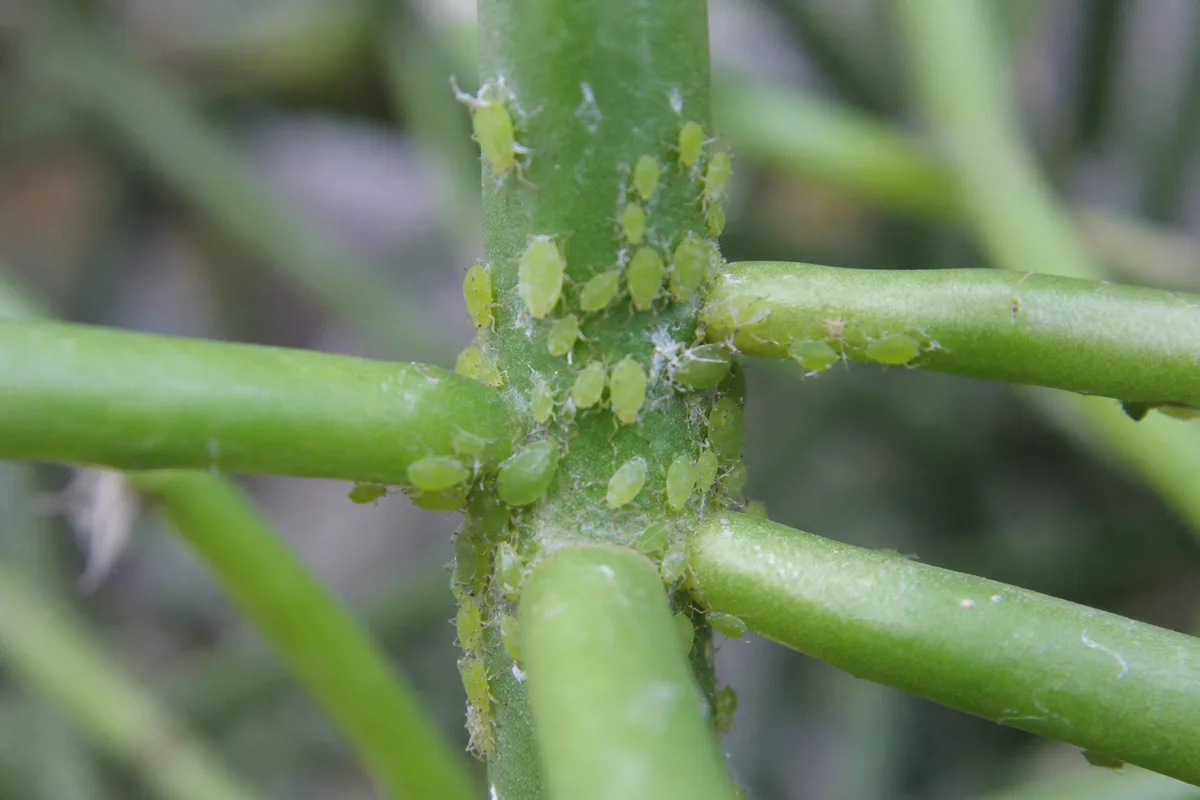
Aphids symptoms on Rhipsalis - compare with healthy tissue on the same plant.
Early signs:
- Clusters of tiny pear-shaped insects on newest segment tips or along young chains
- Soft green, black, yellow, or pinkish insects with visible legs-typically wingless but mobile when disturbed
- Sticky, shiny honeydew on stems below active feeding sites
- New segments curling, stunting, or failing to lengthen while older chains look normal
Advanced signs:
- Black sooty mold coating segments where honeydew accumulated
- Ant activity on basket hardware, pot rims, or nearby surfaces
- Flower buds dropping before opening when feeding is heavy at the crown
- Whitish cast skins left behind as aphids molt on segment joints
Aphids on houseplants are small soft-bodied insects that pierce stems and suck sap. Heavy feeding yellows tissue, stunts shoots, and produces honeydew that can turn black with sooty mold fungus. On Rhipsalis, the damage concentrates at growing tips because older segments are too firm for most colonies to establish-unlike mealybugs, which hide in cottony wax at segment forks year-round.
How to confirm the cause
Work through these checks before you treat:
- Tip inspection - Examine the newest segment tips and any flower buds with a hand lens. Soft pear-shaped insects that move slowly when touched confirm aphids. Immobile brown bumps suggest scale; white cottony patches suggest mealybugs.
- Honeydew pattern - Sticky shine concentrated below new tips and along young chains points to sap feeders. Uniform segment dullness on dry soil without tackiness or insects points to underwatering instead.
- Ant trails - Ants marching up hangers or pot sides strongly suggest aphids or other honeydew producers are present on the cascade above.
- Sooty mold check - Rub a dark segment patch with a damp cloth. Sooty mold smears and wipes away; sun scorch or old damage does not leave a black film tied to stickiness.
- Paper test - Hold white paper under a suspect tip and tap the segment. Aphids drop as soft-bodied specks that stay put. Whiteflies fly in a cloud when disturbed.
- Neighbor scan - Inspect plants on the same shelf or hook. Aphids often arrive on one basket and spread to trailing neighbors before the original plant looks badly damaged.
- Recent history - Note whether the basket was outdoors recently, came from a nursery, or sits near a heavily fertilized display. Those routes explain most Rhipsalis aphid introductions.
If mobile pear-shaped insects, honeydew, and tip-focused damage appear together, treat as confirmed aphids. If only segment puckering shows on dry soil with no insects or stickiness, fix watering first and recheck in a few days.
First fix for Rhipsalis
Move the basket away from other plants and rinse every new segment tip and joint with lukewarm water.
Wrap the pot in a plastic bag to keep soil contained, then shower or spray the cascade from below so water dislodges aphid clusters on soft growth. Focus on the newest tips and any flower buds-those are where colonies start and where curled segments later shelter pests from sprays.
Let segments air-dry the same day in Rhipsalis light guide-not direct sun, which can scorch wet epiphytic cactus tissue. Do not apply soap or oil on day one before you have confirmed live aphids and completed at least one thorough rinse.
Step-by-step recovery
After the initial isolation rinse:
- Repeat water rinses every two to three days until live aphids are gone on inspection. Aphid nymphs hatch on staggered schedules-single washes rarely eliminate an entire colony.
- Apply insecticidal soap on a test segment if colonies persist after several rinses. Cover new tips and segment backs thoroughly; repeat at label intervals through at least three applications to catch newly hatched nymphs.
- Manage ants if they protect colonies on basket hardware. Ant barriers on chains or bait stations near-but not on-the pot help natural predators reach aphids. Controlling ants is often necessary before biological control works.
- Wash sooty mold off segments with plain water once honeydew production stops. Sooty mold does not infect plant tissue directly but can reduce photosynthesis on heavily coated segments.
- Trim severely curled or stunted tips once new growth at the crown looks clean. Removing heavily infested tissue lowers pest load and improves spray coverage on remaining chains.
- Inspect adjacent plants weekly with a hand lens. Treat any early clusters on neighbors before the infestation re-crosses to your recovering Rhipsalis.
Do not repot, fertilize, or heavily prune on day one. Stressed roots and fresh nitrogen push tender growth that aphids prefer.
Recovery timeline
You should see honeydew production stop within one to two weeks of consistent rinsing on moderate infestations. A full soap course may take two to three weeks with label-interval repeats because aphid populations can increase rapidly in warm indoor conditions.
Curled or stunted young segments rarely regain full form; judge success by firm new tips emerging along chains, reduced ant activity, and clean growth at the crown. If colonies spread despite three rinse cycles and labeled soap applications, escalate treatment or consider isolating a severely infested basket to protect the rest of your collection.
Lookalike symptoms to rule out
Mealybugs show as white cottony masses in segment joints, not mobile pear-shaped clusters on new tips. They also excrete honeydew but hide in waxy filaments rather than open groups on soft growth.
Spider mites cause fine yellow stippling and silk webbing at segment forks in dry winter air-not sticky honeydew with soft green insects on spring tips.
Scale insects appear as immobile brown or tan bumps on older segments. They do not produce the mobile cluster pattern typical of aphids on fresh growth.
Underwatering flattens and puckers segments on dry soil without stickiness, sooty mold, or visible insects. Water deeply, then recheck in two days-thirsty Rhipsalis plumps back while aphid damage continues spreading on new tips.
Direct sun scorch bleaches or browns exposed outer segments on sunny windowsills without honeydew, ant trails, or insect clusters on growing points.
Mistakes to avoid
Do not increase nitrogen fertilizer hoping to outgrow aphids-fresh tender segments attract more feeding.
Do not spray only the visible outer cascade. Aphids concentrate on hidden new tips and curled segments that shelter colonies from contact treatments.
Do not ignore ants because the stems look manageable. Ant protection keeps colonies rebounding after every rinse.
Do not use homemade dish soap sprays. Products labeled for plants are safer on epiphytic cactus segments; harsh detergents can burn thin tissue.
Do not assume one shower cured the problem. Repeat treatments are necessary because aphid nymphs hatch continuously in warm conditions.
Do not return an isolated basket to the main collection until new growth stays clean for at least two weeks after the last live aphid sighting.
How to prevent aphids next time
Maintain the cultural basics Rhipsalis already needs: medium to bright indirect light, watering when the top half of soil dries, and humidity around 40–60%. Vigorous plants tolerate minor pest pressure better than stressed baskets in dim corners.
Quarantine new plants for two to three weeks before placing them near trailing baskets whose stems can touch neighbors. Rinse hanging stems after outdoor summer placement before bringing baskets back indoors.
Scout new segment tips weekly during spring and summer when growth is fastest. Avoid heavy nitrogen fertilizer during peak growth unless the plant is clearly underfed-soft excess growth feeds aphids without improving the cascade.
Keep ants off basket hooks and shared hanging hardware. Space trailing plants so stems do not overlap, and inspect segment tips whenever you water during warm months.
When to worry
Treat as urgent when colonies cover multiple new tips, ants swarm the basket, flower buds abort before opening, or aphids appear on several plants sharing one shelf. At that stage, isolate every affected plant and run concurrent rinse or soap cycles rather than treating only the worst basket.
Consider discarding a severely stunted, honeydew-coated Rhipsalis if repeated labeled treatments fail and the infestation threatens a large mixed collection. Most moderate cases recover with isolation, rinsing, and timed repeats-but a basket with curled tips throughout and active colonies on every new chain may cost more effort than replacing with clean stock.
Rhipsalis is listed as non-toxic to cats and dogs by the ASPCA, which makes rinsing and soap treatments safer around pets than on many ornamentals-still rinse treated segments and keep pets from chewing wet foliage until sprays dry.
Conclusion
Aphids on Rhipsalis exploit the soft new growth this trailing epiphytic cactus pushes in warm months-especially after outdoor hangs or new introductions. Pear-shaped clusters on segment tips, sticky honeydew, ant trails, and sooty mold separate aphids from underwatering, mites, and mealybugs. Isolate first, rinse thoroughly and repeatedly, manage ants, then add soap only if needed. Judge recovery by clean new crown growth-not old curled segments-and keep hanging baskets inspected through every growing season.
When to use this page vs other Rhipsalis guides
- Rhipsalis watering guide - Use for routine moisture checks before assuming aphids is the main issue.
- Rhipsalis problems hub - Browse all 3 common issues on this species.