Spider Mites on Rhipsalis: Causes, Checks & Fixes
Quick answer
Spider mites on Rhipsalis attack thin trailing segments in dry, warm indoor air-especially hanging baskets near heating vents. First step: isolate the plant and rinse every stem joint and segment underside with lukewarm water before reaching for sprays.
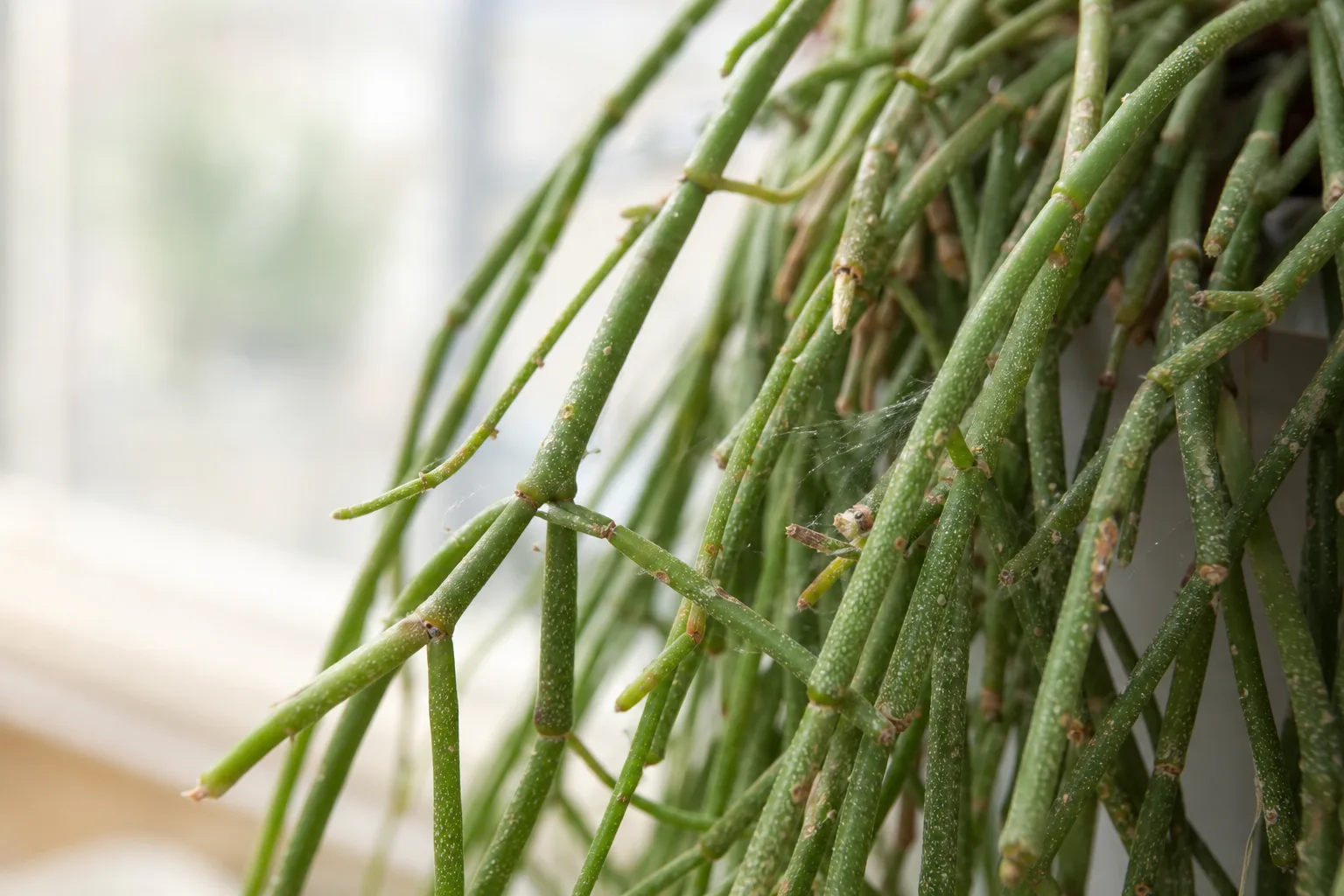
Spider Mites on Rhipsalis: Causes, Checks & Fixes
This guide covers spider mites on Rhipsalis. See also the general Spider Mites guide, watering, and light pages for this plant.
Spider Mites on Rhipsalis: Causes, Checks & Fixes
Quick answer
Spider mites on Rhipsalis are a dry-air pest problem, not a watering disease. These rainforest epiphytes trail from hanging baskets with dozens of thin, jointed segments-each one a hiding place for mites that thrive in warm, dry indoor conditions. Stippling, dull gray-green color, and fine webbing at stem forks are the classic signs.
First step: isolate the basket and rinse every segment thoroughly, including undersides and joints, with lukewarm water. Hold trailing stems over a sink or shower and spray from below so water reaches where mites feed. Only after you confirm active pests should you add insecticidal soap or horticultural oil on a test segment.
Why Rhipsalis gets spider mites
Rhipsalis is a trailing epiphytic cactus from humid understory forests-not a desert succulent. NC State Extension notes that mistletoe cactus can be susceptible to spider mites along with aphids and mealybugs. The plant wants consistent moisture and moderate humidity, yet many homes drop below 30% relative humidity once heating runs in winter.
That mismatch creates the perfect mite habitat. Spider mites reproduce rapidly in hot, dry air, and hanging baskets near heating vents, sunny glass, or forced-air registers dry out faster than floor pots. Rhipsalis segments are thin and offer countless crevices along cascading stems where colonies build before you notice stippling on the outermost tips.
Crowded plant shelves make spread worse. Trailing stems that touch neighboring pots, shared hanging hooks, or overlapping foliage give mites a bridge across your collection. Stressed Rhipsalis-underwatered, kept in dim corners, or recently moved-shows damage faster because weakened plants tolerate mite feeding poorly.
What spider mites look like on Rhipsalis
Unlike broad-leaf houseplants, Rhipsalis damage shows on segments-the pencil-thin, jointed stems that make up the cascade.
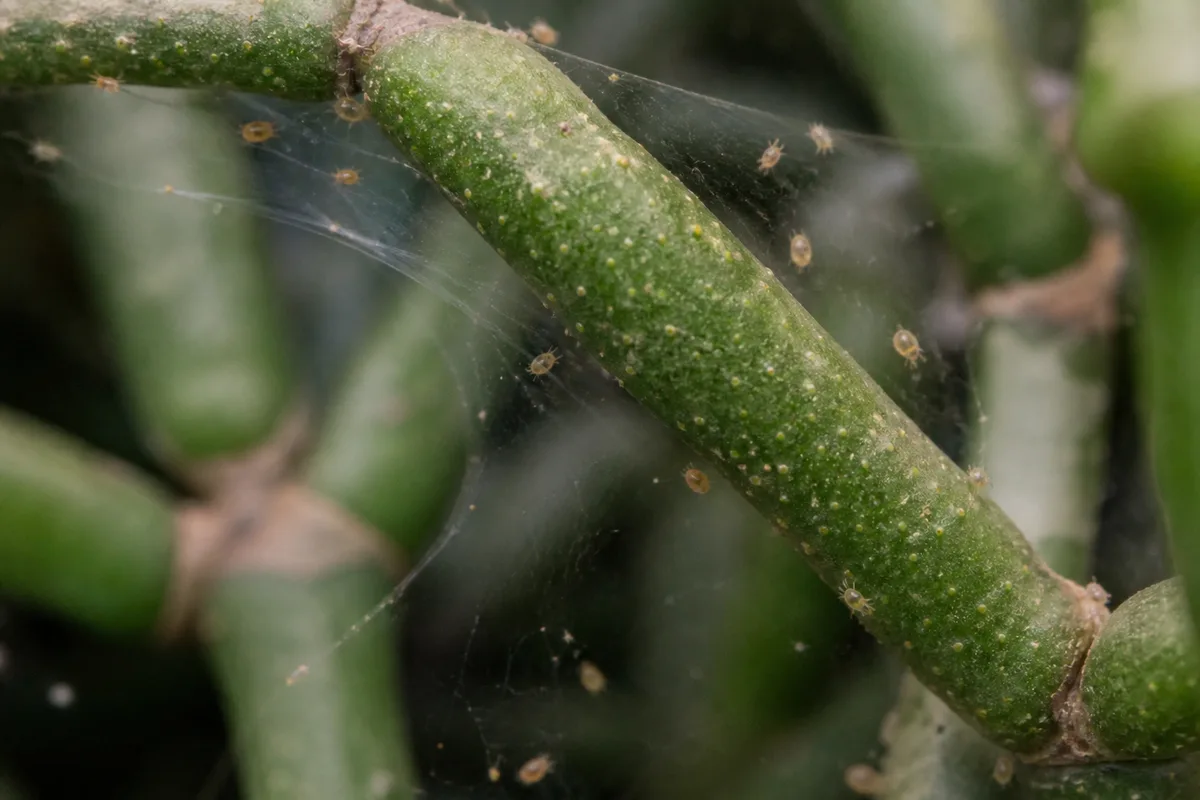
Spider Mites symptoms on Rhipsalis - compare with healthy tissue on the same plant.
Early signs:
- Fine yellow or white pinprick stippling across segment surfaces
- Segments losing their plump, glossy look and turning dull gray-green
- Barely visible moving dots at segment joints when viewed with a hand lens
Advanced signs:
- Fine silk webbing where branches fork or segments overlap
- Bronzed or tan segments that feel papery rather than firm
- New tips stalling while older segments continue to dull
Two-spotted spider mites are among the most common houseplant mites. They pierce individual cells and suck contents, which is why stippling appears before webbing. On Rhipsalis, webbing often shows up in the joints of hanging stems first-places you rarely see unless you lift the cascade.
How to confirm the cause
Work through these checks before you treat:
- Webbing test - Look at segment forks and undersides with a magnifier. Webbing plus stippling confirms mites. Puckered segments on dry soil with no webbing or moving dots points to underwatering instead.
- Paper tap test - Hold white paper under a suspect stem and tap sharply. Slow-moving specks that smear green when crushed are mites, not dust or pollen.
- Soil moisture check - Push a finger into the top half of the mix. Rhipsalis segments flatten and pucker when thirsty, which mimics mite dullness-but thirsty plants lack stippling and webbing.
- Segment firmness - Pinch a marked segment gently. Mite-damaged tissue feels thin and papery; underwatered segments feel soft and wrinkled but not stippled.
- Neighbor scan - Inspect plants on the same shelf or hook. Mites often arrive on one basket and spread to trailing neighbors before the original plant looks badly damaged.
- Heat source check - Note whether the basket sits above a radiator, near a heat vent, or in direct afternoon sun. Dry microclimates accelerate outbreaks even when room humidity seems acceptable.
If stippling, webbing, and moving dots appear together, treat as confirmed spider mites. If only segment puckering shows on dry soil, fix watering first and recheck in a few days.
First fix for Rhipsalis
Move the basket away from other plants and rinse every segment with lukewarm water, targeting joints and undersides.
Wrap the pot in a plastic bag to keep soil contained, then shower or spray the cascade from below so water hits segment backs and fork points where mites hide. WSU Extension recommends thorough rinsing at least weekly for light to moderate infestations, with particular attention to undersides.
Let segments air-dry the same day in Rhipsalis light guide-not direct sun, which can scorch wet epiphytic cactus tissue. Do not apply oil or soap on day one before you have confirmed live mites and completed at least one rinse cycle.
Step-by-step recovery
After the initial isolation rinse:
- Repeat water rinses every five to seven days for at least three cycles. Mite eggs survive single washes; new hatchlings need contact removal before populations rebound.
- Raise humidity around the basket without soaking the crown. A pebble tray, grouped plants, or humidifier helps Rhipsalis and discourages mite reproduction in dry air. Aim for the 40–60% range Rhipsalis overview prefers in normal care.
- Move the basket away from heat vents and direct sun while treating. Dry drafts extend mite life cycles and stress segments already losing cell contents to feeding.
- Apply insecticidal soap on a test segment if rinsing alone does not reduce stippling spread after two weeks. Cover joints and segment backs thoroughly; repeat at label intervals through at least three applications.
- Use horticultural oil cautiously only on segments that tolerate it in indirect light. Avoid oil on hot, sunny days-epiphytic cactus segments can scorch when oil and direct sun combine.
- Trim severely bronzed segments once new growth at the crown looks clean. Removing heavily infested tissue lowers pest load and improves spray coverage on remaining stems.
- Inspect adjacent plants weekly with a hand lens. Treat any early stippling on neighbors before the infestation re-crosses to your recovering Rhipsalis.
Do not repot, fertilize, or heavily prune on day one. Stressed roots and fresh nitrogen push tender growth that mites prefer.
Recovery timeline
You should see stippling stop spreading within one to two weeks of consistent rinsing plus humidity correction. Repeat treatments are necessary because mite eggs hatch on staggered schedules-expect a full control course to take three to four weeks.
Marked segments rarely regain full color; judge success by firm new tips, reduced webbing at joints, and clean growth emerging from the crown. If stippling spreads despite three rinse cycles and labeled soap applications, escalate treatment or consider removing a severely infested basket to protect the rest of your collection.
Lookalike symptoms to rule out
Underwatering flattens and puckers segments on dry soil without stippling, webbing, or moving dots. Water deeply, then recheck in two days-thirsty Rhipsalis plumps back while mite damage continues spreading.
Low humidity alone browns segment tips in dry winter air but does not produce pinprick stippling or silk. NC State Extension links tip browning to lack of humidity or under-watering rather than mites.
Mealybugs show as white cottony masses on stems, not fine stippling. They excrete honeydew rather than webbing-though both pests can coexist on stressed Rhipsalis.
Scale insects appear as immobile brown bumps on segments. They do not produce the fine stipple pattern or active webbing typical of mites.
Direct sun scorch bleaches or browns exposed outer segments on sunny windowsills without the joint webbing or moving dots mites leave behind.
Mistakes to avoid
Do not increase nitrogen fertilizer hoping to outgrow mites-fresh tender segments attract more feeding.
Do not spray only the visible outer cascade. Mites concentrate in hidden joints and segment backs on trailing stems.
Do not ignore neighboring plants because they look fine. Early colonies on a shelf mate often show stippling only under magnification.
Do not let wet segments sit in stagnant, cold drafts overnight. Good airflow after rinsing matters, but chill plus wet tissue stresses epiphytic cacti.
Do not assume one shower cured the problem. Single treatments rarely eliminate mite eggs.
Do not use strong pesticides labeled only for insects without checking mite efficacy-oils and soaps with repeat applications are the safer first chemical step on pet-accessible hanging plants.
How to prevent spider mites next time
Maintain the humidity band Rhipsalis already needs: 40–60% in normal home conditions. The mistletoe cactus prefers bright indirect light and high humidity-meeting those basics suppresses mites and keeps segments plump.
Rinse hanging stems monthly during heating season, especially before stippling appears. Quarantine new plants for two weeks before placing them near trailing baskets whose stems can touch neighbors.
Inspect segment joints weekly in winter when indoor air is driest. Keep baskets away from heat vents and use a humidifier in rooms where multiple humidity-loving plants share dry air.
Space trailing plants so stems do not overlap. One infested cascade touching another is the fastest spread route in a collection.
When to worry
Treat as urgent when webbing covers multiple branch forks, segments dull across most of the cascade within days, or mites appear on several plants sharing one shelf. At that stage, isolate every affected plant and run concurrent rinse or soap cycles rather than treating only the worst basket.
Consider discarding a severely defoliated, bronzed Rhipsalis if repeated labeled treatments fail and the infestation threatens a large mixed collection. Most moderate cases recover with isolation, rinsing, humidity correction, and timed repeats-but a basket reduced to papery stems with webbing throughout may cost more effort than replacing with clean stock.
Rhipsalis is listed as non-toxic to cats and dogs by the ASPCA, which makes rinsing and soap treatments safer around pets than on many ornamentals-still rinse treated segments and keep pets from chewing wet foliage until sprays dry.
Conclusion
Spider mites on Rhipsalis exploit the gap between this humidity-loving trailing cactus and dry winter homes. Stippling on thin segments, webbing at stem forks, and the paper tap test separate mites from underwatering and tip browning. Isolate first, rinse thoroughly and repeatedly, raise humidity, then add soap only if needed. Judge recovery by clean new crown growth-not old marked segments-and keep hanging baskets inspected through every dry season.
When to use this page vs other Rhipsalis guides
- Rhipsalis watering guide - Use for routine moisture checks before assuming spider mites is the main issue.
- Rhipsalis problems hub - Browse all 3 common issues on this species.
- Slow Growth on Rhipsalis - Different entry point when symptoms overlap with spider mites.