Mealybugs on Rhipsalis: Causes, Checks & Fixes
Quick answer
Mealybugs on Rhipsalis hide as white cottony clusters in stem joints, basket hangers, and sometimes roots. Isolate the plant, dab visible bugs with 70% alcohol on a swab, then inspect roots if segments keep declining without obvious stem pests.
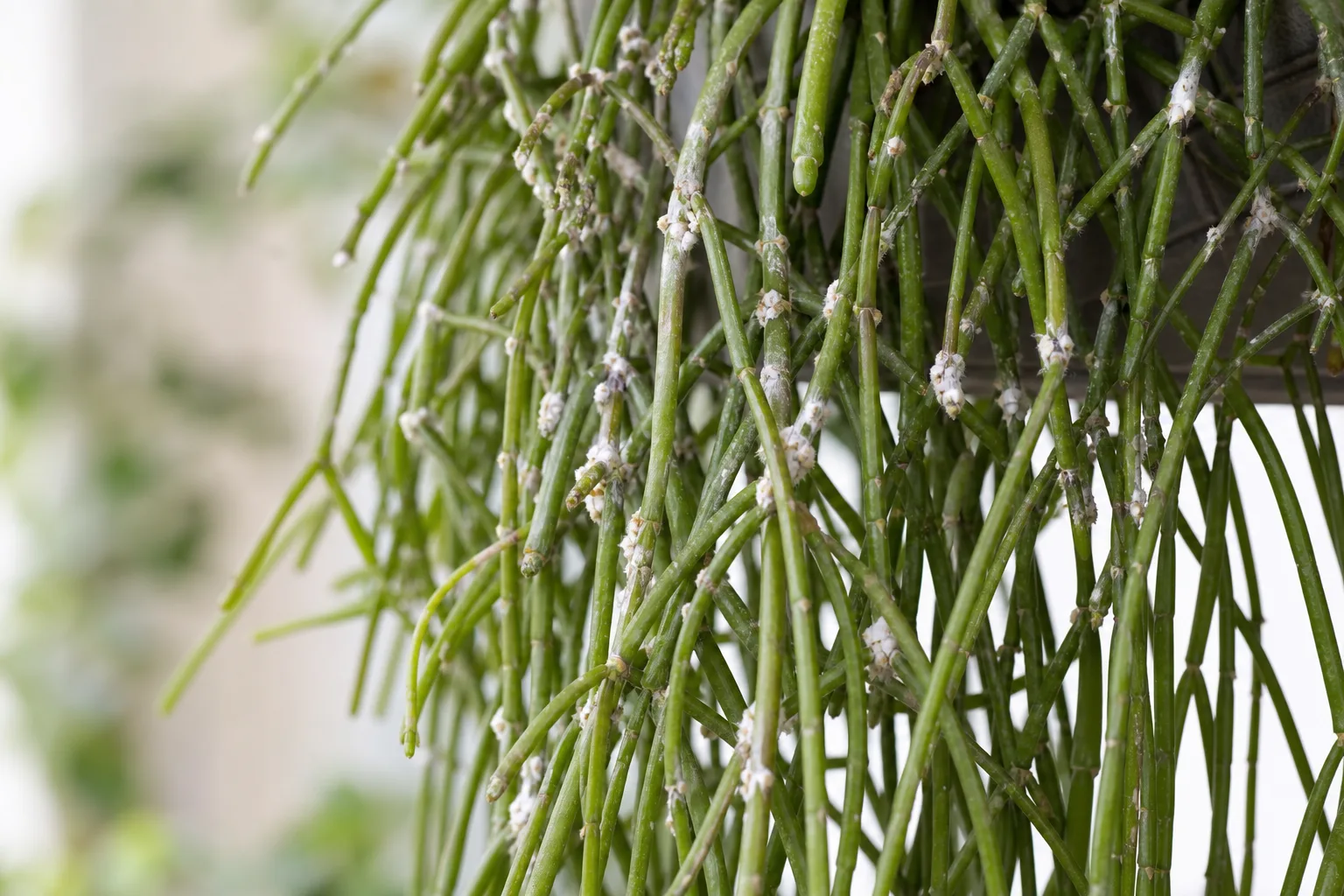
Mealybugs on Rhipsalis: Causes, Checks & Fixes
This guide covers mealybugs on Rhipsalis. See also the general Mealybugs guide, watering, and light pages for this plant.
Mealybugs on Rhipsalis: Causes, Checks & Fixes
Quick answer
Mealybugs on Rhipsalis show up as white cottony clusters tucked into stem crotches, crowns, and protected joints on trailing epiphytic cacti. They suck sap from thin photosynthetic stems, dull new growth, and leave sticky honeydew that can lead to sooty mold on segment surfaces.
First step: isolate the basket the same day you spot cottony wax. Move it away from other houseplants and hanging cacti before you dab, spray, or repot anything. Once isolated, remove visible bugs with a cotton swab dipped in 70% isopropyl alcohol, then follow with insecticidal soap on repeat intervals until two clean weeks pass.
Why Rhipsalis gets mealybugs
Mealybugs are common sap-sucking pests on houseplants, and cactus is among the most commonly infested groups. They usually arrive on new baskets, shared tools, or nearby infested specimens-not because Rhipsalis is uniquely prone, but because its trailing growth habit gives pests protected hiding spots year-round indoors.
Rhipsalis is an epiphytic jungle cactus that trails in long, jointed chains from hanging baskets. Each segment fork creates a sheltered crevice where mealybugs gather in cottony colonies out of casual view. Dense cascades, pot rims, and basket hooks add more surfaces where crawlers settle before you notice wax on the outer stems.
Warm indoor rooms suit mealybugs year-round. North Carolina Extension notes that mistletoe cactus can be susceptible to mealybugs, spider mites, and aphids, especially when humidity drops or plants sit in dim corners after a nursery arrival. Rhipsalis needs more moisture than desert cacti, but chronic overwatering that keeps mix soggy weakens stems and can coincide with the first visible clusters alongside root-feeding pests.
Rhipsalis grows slowly to moderately compared with fast vining foliage plants. That means sustained feeding at several segment joints can weaken the whole basket before upper chains look obviously damaged. Missouri Botanical Garden lists mealybugs and root mealybugs among the most common pests on cacti and succulents grown as houseplants-worth checking whenever sticky residue or white fluff appears on trailing stems.
What mealybugs look like on Rhipsalis
Early infestations are easy to miss because waxy filaments hide pinkish bodies beneath. On Rhipsalis, check these patterns together:
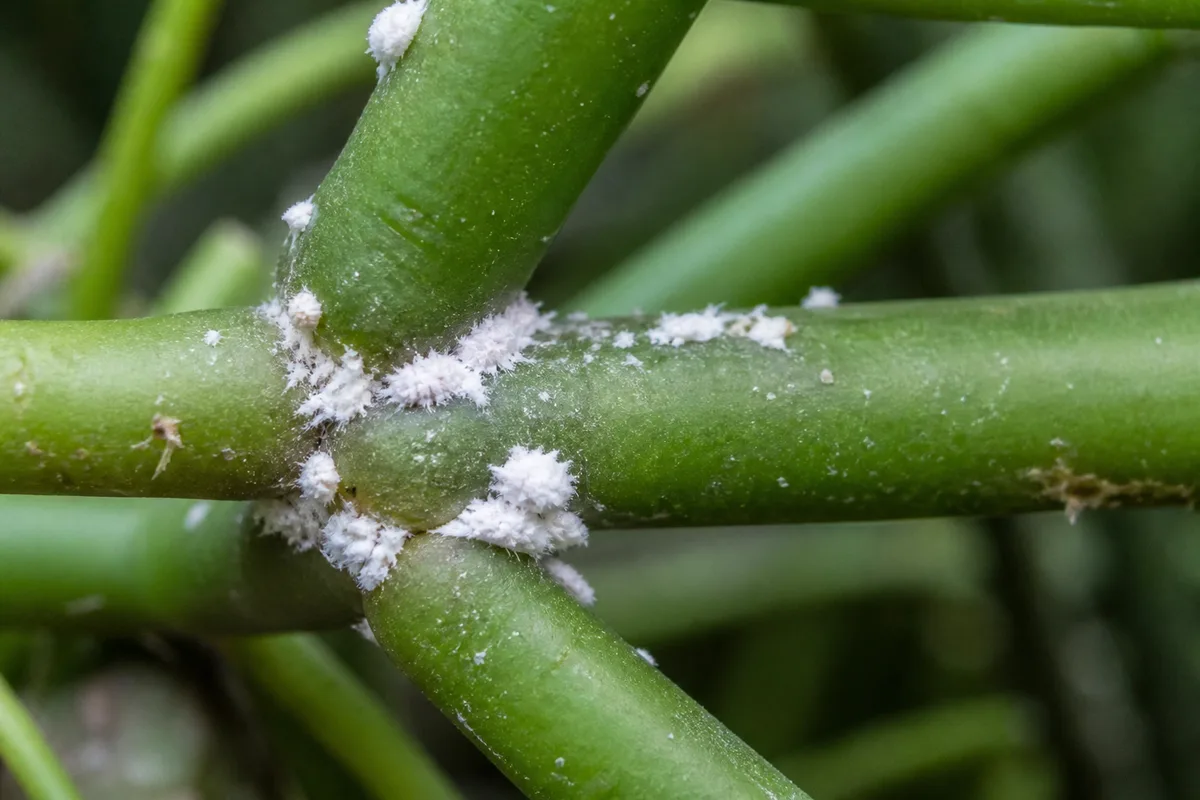
Mealybugs symptoms on Rhipsalis - compare with healthy tissue on the same plant.
- White fluffy tufts tucked into segment joints where one chain branches from another-not normal dried callus at a cut site
- Cottony patches at the soil line and crown where stems emerge from the mix
- Waxy masses on basket hangers, pot rims, and saucer edges where ants trail
- Clusters on undersides of pendant segments closest to the pot
- Sticky, shiny honeydew on stems below active colonies
- Black sooty mold on segments that honeydew has coated
- Yellowing or shriveling segments with slowed new tip growth from heavy sap loss
Do not mistake underwatering for pest damage alone. Shriveled segments on a very light pot with dry mix and no wax point to drought stress. Mealybug stress shows cottony wax in multiple joints, stickiness, and stalled new tips-not uniform wrinkling along the whole chain without white clusters.
Do not confuse scale insects with mealybugs. Scale looks like hard brown or tan oval bumps along stems, not fluffy wax. Missouri Botanical Garden notes that mealybugs are slow-moving and cluster in hidden joint areas, while scale forms dome-shaped shells you can scrape off.
How to confirm the cause
Do not treat from one white speck on a segment tip. Use this inspection order:
- Isolate first - Move the basket away from other houseplants before handling. Isolate infested plants so crawlers do not walk to neighboring pots.
- Soil line and crown - Inspect where stems meet the mix. Root mealybugs often start here with white deposits on roots and no obvious cotton on upper chains.
- Segment forks - Follow each trailing chain and inspect every joint and branch point with bright light.
- Inner cascade - Lift hanging stems and check segments tucked against the pot and hanger where airflow is poor.
- New growth - Check the firmest new tips at chain ends; crawlers settle in tight sheaths.
- Disturbance test - Touch a white patch with a dry cotton swab. Mealybugs smear pinkish when crushed; perlite, bark flecks, or dried sap do not.
- Neighbor check - Inspect baskets that shared a nursery bench, windowsill, or shelf for joint clusters or honeydew.
If the pot feels appropriately light between waterings on your normal schedule, mix smells neutral, and the only issue is cottony wax with stickiness, mealybugs fit. If the pot stays heavy for days, mix smells sour, and segments turn mushy yellow while the basket never dries, rule out overwatering and root rot on Rhipsalis before spraying.
Lookalike symptoms to rule out
Root mealybugs live in soil and look like white deposits on roots when you unpot. Stems may yellow and stall without obvious cotton above the soil line. Spider mites leave fine webbing and stippling in hot dry air, not cotton clusters. Powdery mildew forms flat white powder on segment surfaces, not tufts in axils. Normal drought stress shrivels segments when the top half of mix is bone dry; mealybugs leave wax and stickiness while weight may still match your usual dry-down rhythm.
First fix for Rhipsalis
Isolate the basket the same day you confirm mealybugs. Make one targeted treatment pass before stacking repot, heavy soaking, and multiple chemicals on the same day.
Dab every visible cottony cluster with a cotton swab dipped in 70% isopropyl alcohol. Colorado State Extension recommends swabbing individual mealybugs with alcohol as a primary control method. Work segment by segment through the cascade, including joints against the pot rim. Alcohol kills on contact but does not reach eggs or root-feeding stages-plan follow-up passes.
Do not soak the whole basket on day one unless you are also washing off honeydew. Rhipsalis stems are thin and sun-sensitive; a heavy wetting plus immediate bright window exposure can scorch segments after alcohol or soap treatment.
Step-by-step recovery
After the initial alcohol pass:
- Repeat alcohol dabbing every five to seven days on any new cotton you find. Iowa State Extension notes that neither alcohol nor soap kills 100% of mealybugs in one pass-plan weekly inspection time through several hatch cycles.
- Apply insecticidal soap per label directions if colonies persist after two alcohol rounds. Cover all segment joints, crown, and undersides of pendant chains. Test a small area first because cacti can be sensitive to soap; Missouri Botanical Garden warns that cacti have oils and waxes that may make them susceptible to soap damage.
- Inspect roots if stems keep declining without obvious upper-stem pests. Unpot, rinse roots gently, and look for white waxy deposits. Wash root mealybugs off with warm water during repot if found, then replant into fresh sterile mix in a clean pot.
- Manage ants on hangers or saucers. Ants protect mealybugs from natural enemies while farming honeydew-control ants or isolate the basket until mealybugs are gone.
- Trim only dead segments after the population drops. Do not prune healthy chains hoping to “reset” the plant while crawlers remain active.
- Hold fertilizer until new tips look firm for two weeks. Stressed Rhipsalis does not need nitrogen pushing soft growth that mealybugs prefer.
Keep the basket in medium to Rhipsalis light guide during recovery-not a dim corner and not harsh direct sun right after treatment.
Recovery timeline
Light joint infestations on one or two chains often clear within two to three weeks of weekly alcohol and soap passes. Moderate cases covering multiple segment forks may need four to six weeks because eggs hatch on staggered schedules. Severe crown damage with stalled new tips can take two months before firm segments return along the cascade.
Old yellowed or shriveled segments will not plump up again-judge success by clean new tips, stable Rhipsalis watering guide, and no fresh cotton for fourteen consecutive days.
Worsening signs: cotton spreads to new chains daily, segments turn mushy yellow with sour-smelling mix, or the whole basket collapses despite treatment-consider discarding heavily infested plants before neighbors are colonized, as UC IPM suggests for houseplants that do not respond to treatment.
Mistakes to avoid
Do not overwater while fighting pests. Wet mix plus sap loss compounds stress on epiphytic cacti already prone to rot when soil stays saturated.
Do not place treated baskets in direct sun immediately after alcohol or soap sprays. Thin Rhipsalis stems scorch easily; keep bright filtered light until segments dry.
Do not assume one alcohol pass finished the job. Mealybug eggs and crawlers hatch over weeks indoors where temperatures stay mild year-round.
Do not repot on day one unless root mealybugs are confirmed or mix is failing. Unnecessary root disturbance on a pest-stressed basket slows recovery.
Do not use homemade dish soap sprays. Colorado State Extension warns that household detergents can injure plants compared with labeled insecticidal soap products.
Do not return the basket to a shared display until two full weeks pass with zero new cotton on inspection.
Rhipsalis care cross-check
While treating mealybugs, keep basic care stable rather than overcorrecting:
- Light: Medium to bright indirect light keeps Rhipsalis vigorous. Dim corners slow recovery; direct afternoon sun scorches thin stems.
- Water: Let the top half of mix dry before watering again-the normal Rhipsalis rhythm. Chronic soggy mix weakens roots and favors rot alongside pest stress.
- Airflow: Trailing baskets packed against walls hold humidity in inner joints where mealybugs hide. A little space between plants helps inspection and drying.
- Quarantine: New hanging baskets should sit isolated two to three weeks before joining a collection, matching good cultural practice for cacti and succulents.
Rhipsalis is non-toxic to cats and dogs, but keep alcohol swabs and wet sprays away from pets until stems dry.
How to prevent mealybugs next time
Scout stem joints weekly when you water-pendant chains hide pests in inner forks. Lift segments and inspect the crown whenever you rotate the basket for even light.
Quarantine new Rhipsalis for two to three weeks before hanging near Schlumbergera, other cacti, or trailing houseplants. Mealybugs arrive on infested nursery stock and tools more often than they appear from nowhere.
Avoid excess nitrogen during active growth windows. UC IPM notes that over-fertilization with nitrogen stimulates tender growth where mealybugs prefer to lay eggs.
Keep plants vigorous with appropriate light and dry-down watering-not desert-cactus drought, but never bone-dry for weeks either. Stressed epiphytic cacti recover slowly from sap loss.
Inspect basket hardware and saucers when ants appear. Ant trails often reveal mealybugs before cotton covers visible stem tips.
When to worry
Treat as urgent when cottony masses spread across most chains within days, new segment tips abort or emerge thin, ants swarm the hanger, or segments yellow and drop despite correct moisture. Root mealybugs on cacti can collapse a basket before upper stems show obvious pests-unpot if decline continues without stem clusters.
Replace severely declining baskets rather than fighting endless reinfestation on a stressed plant sharing a crowded shelf. Starting fresh with a clean specimen and strict quarantine is often cheaper than repeated chemical cycles on a weakened cascade.
A single small cluster caught early on one joint is not urgent if isolation and alcohol dabbing start the same week-but do not wait until honeydew coats lower segments.
Conclusion
Mealybugs on Rhipsalis exploit the same sheltered stem joints that make mistletoe cactus beautiful in hanging baskets. Isolate early, dab visible cotton with alcohol, inspect roots when stems decline without obvious upper pests, and repeat treatment through several hatch cycles. That diagnostic path stops sap loss before trailing chains stall-and keeps mealybugs from walking to the rest of your indoor cactus collection.
When to use this page vs other Rhipsalis guides
- Rhipsalis watering guide - Use for routine moisture checks before assuming mealybugs is the main issue.
- Rhipsalis problems hub - Browse all 3 common issues on this species.
- Slow Growth on Rhipsalis - Different entry point when symptoms overlap with mealybugs.