Yellow Leaves on Rhipsalis: Causes, Checks & Fixes
Quick answer
Yellow segments on Rhipsalis usually mean overwatering, root stress, or too little light-not hunger. Check soil moisture deep in the pot and stem firmness before changing fertilizer or watering more.
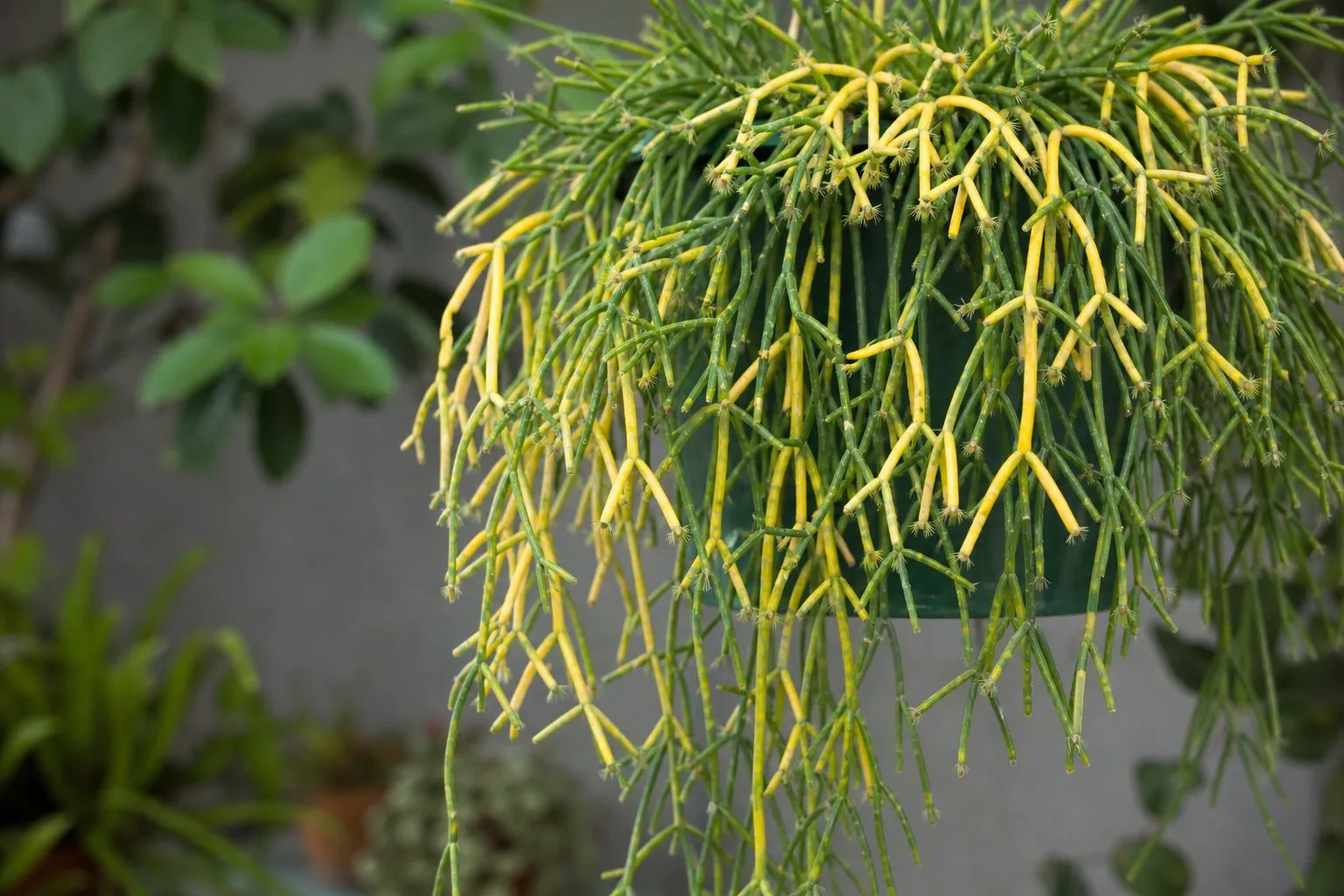
Yellow Leaves on Rhipsalis: Causes, Checks & Fixes
This guide covers yellow leaves on Rhipsalis. See also the general Yellow Leaves guide, watering, and light pages for this plant.
Yellow Leaves on Rhipsalis: Causes, Checks & Fixes
Quick answer
Yellow segments on Rhipsalis-the trailing mistletoe cactus or jungle cactus-are almost never a fertilizer shortage. This epiphytic cactus stores some moisture in pencil-thin stems but depends on healthy shallow roots to stay plump. When roots sit in wet mix too long, cannot breathe in dim winter rooms, or fail after desert-cactus watering habits, segments yellow, soften, or shrivel even though the problem looks different on the surface.
First step: push your finger into the mix to mid-pot depth, lift the hanging basket for weight, and squeeze the newest stem tips. Mushy yellow segments on a heavy wet pot mean pause watering and improve bright, indirect light-not more fertilizer. Puckered dull segments on a light dry pot mean one thorough soak, then resume the top-half-dry rhythm from the Rhipsalis watering guide. Do not water because segments look limp when soil is already wet; that is the classic wilt-with-wet-soil trap on epiphytic cacti.
What yellow segments look like on Rhipsalis
Rhipsalis does not have true leaves-it shows stress on stem segments (the jointed chains trailing from the pot). Pattern and soil moisture together matter more than color alone.
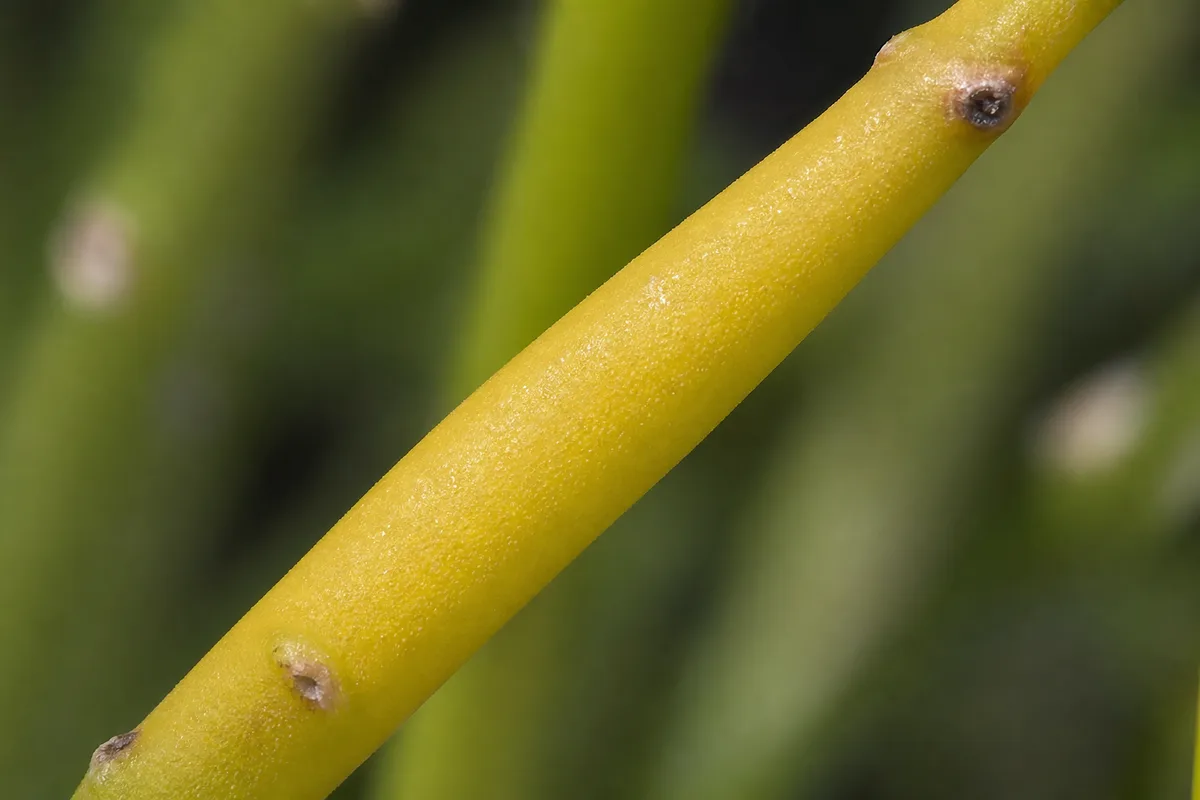
Yellow Leaves symptoms on Rhipsalis - compare with healthy tissue on the same plant.
Mushy yellow segments on wet soil (overwatering)
Multiple segments turn yellow or translucent at once, often starting near the soil line or on the lowest hanging chains. Segments feel soft instead of firm, the pot stays heavy for days after watering, and the mix may smell sour. Yellowing or dropping segments can signal overwatering that leads toward root rot-especially when new growth stalls. Fungus gnats on the surface often appear alongside chronic wetness. For rescue depth on this branch, see overwatering on Rhipsalis.
Puckered dull segments on dry soil (underwatering)
Segments flatten, lose their plump pencil-lead profile, and turn dull yellow-green from the tips inward while the pot feels light and the top half of mix is dusty dry. This is the opposite failure mode from mushy wet-soil yellowing-and the fix is opposite too. Drying stems with little new growth often mean underwatering on jungle cacti that still need more frequent drinks than desert types.
Pale yellow-green on stretched stems (low light)
New segments open paler, thinner, and farther apart on chains that lean toward the window. Soil may stay wet four to five days after watering because photosynthesis slowed. Uniform pale yellow-green without mushiness fits not enough light more than root rot-though chronic dim placement plus sympathy watering often produces both at once.
Natural old-segment aging vs. stress yellowing
The oldest segments on long mature chains-especially near the pot or at the ends of bare stems-slowly fade to pale yellow and drop while new tips stay firm and green. That turnover is gradual and limited to old tissue. Sudden branch-wide yellowing, base softness, or segments collapsing while mix is saturated is stress, not aging.
Why Rhipsalis gets yellow segments
Jungle cactus vs. desert cactus watering confusion
Rhipsalis shares the cactus family name but evolved in tropical rainforest canopy, not open desert. BBC Gardeners’ World notes it needs more watering than a regular cactus-but that means cycling moisture when the top few inches dry, not keeping soil soggy. Owners who underwater on desert-cactus timing see puckered yellow tips; owners who compensate with frequent shallow drinks in dim corners see chronic wet roots and mushy yellow segments. Neither extreme works.
Dim winter rooms and chronic wet soil
From autumn through winter, shorter days and cooler rooms slow Rhipsalis growth. The plant uses less water, so the same weekly rhythm that worked in July leaves mix wet for weeks. Reduce watering through winter dormancy and let compost dry more fully between drinks-while still preventing stems from shriveling bone dry. Yellowing in a back room in February often traces to slow evaporation plus unchanged watering, not a mysterious disease.
Poor drainage and oversized pots
Epiphytic roots are shallow. Oversized decorative pots, peat-heavy mix, cachepots without drainage, and saucers left full recreate the anaerobic conditions jungle cacti never face on tree bark. MOBOT notes overwatering as the most frequent cactus problem-on Rhipsalis it shows as yellow soft segments long before the whole basket collapses.
The wilt-with-wet-soil trap
The most confusing yellowing pattern: segments shrivel and yellow while soil feels wet and the pot feels heavy. Damaged roots cannot move water upward, so the plant looks thirsty when the real problem is too much water or root decline. Adding another soak worsens rot. If this matches your basket, stop watering, move to brighter indirect light, and inspect roots within a few days-not after another week on the calendar.
How to confirm the cause
Work through checks in this order before repotting, fertilizing, or pruning heavily.
- Soil at mid-pot depth. Insert your finger near the pot wall-not just the surface. Wet at depth with declining segments points to overwatering. Dusty dry throughout points to underwatering.
- Pot weight. Lift the hanging basket right after a known dry period versus after watering. A heavy pot days after the last drink means slow dry-down or poor drainage.
- Stem firmness. Squeeze the newest tips and the lowest segments near soil. Firm plump tips with yellow only on old chains suggest aging. Soft mushy tissue on wet mix suggests root stress.
- Light and stretch. Pale stretched chains leaning toward one window with slow dry-down suggest low light contributing-see the not enough light guide.
- Smell and roots when wet persists. Sour odor or segments collapsing on saturated mix means unpot and inspect-brown mushy roots confirm root rot.
Lookalikes decision table
| What you see | Likely cause | First branch |
|---|---|---|
| Mushy yellow segments; heavy wet pot; sour smell | Overwatering / root decline | Stop watering; see overwatering |
| Shriveled yellow tips; light dry pot | Underwatering | One thorough soak; resume top-half-dry rhythm |
| Pale thin segments; stretched chains; wet soil slow to dry | Low light ± overwatering | Improve light; adjust water per watering guide |
| Yellow only on oldest segments; firm new tips | Natural aging | No rescue needed; optional trim of bare chains |
| Yellow spreads fast; soft base; mushy roots on inspection | Advanced root rot | Root rot protocol |
| Fine stippling + webbing on segments | Spider mites | Rinse and isolate; see spider mites guide |
Root inspection when soil stays wet for weeks
If the top half has been wet for two weeks or more while segments yellow:
- Slide the root ball out gently. Healthy Rhipsalis roots are firm and pale; rotting roots are brown, translucent, or mushy with a bad smell.
- Brown roots at the bottom instead of pale firm roots indicate rot-trim affected tissue with clean scissors, let the root ball air-dry in bright indirect light for 24 hours, then repot into fresh airy mix with perlite and orchid bark.
- If most of the basket is still firm, mild overwatering may need only dry-down and brighter light-reserve full repot for mushy roots or spreading softness.
First fix for Rhipsalis
Match the first action to soil moisture-not segment appearance alone.
If mix is wet and segments are mushy or yellowing: Stop watering until the top half dries. Empty saucers and remove cachepot liners holding standing water. Move the basket to medium bright indirect light so the plant can use moisture faster. If softness spreads or soil smells sour, unpot and trim rotted roots before repotting-see root rot for the full sequence.
If mix is dry and segments are puckered: Water thoroughly until runoff exits the drainage hole, wait ten minutes, empty the saucer, then resume checking the top half of soil for dryness before the next drink during active growth.
If segments are pale and stretched but firm on slow-drying soil: Improve light first-east window or several feet back from south or west glass-then adjust watering after one week. Do not fertilize a stressed yellowing plant.
Make one major correction at a time and watch new tips for two weeks before stacking repot, feed, and prune.
Recovery timeline
Yellowed or mushy mature segments do not re-green-damaged tissue stays marked. Judge recovery by new stem tips, not old chains.
Within one to two weeks of corrected watering and light, yellowing should stop spreading. Two to four weeks after root-zone stability, new segments should look firmer, plumper, and closer-spaced than the stressed growth before the fix-faster in warm bright spring, slower in dim winter.
After root trim and repot, expect three to six weeks before confident new growth; hold fertilizer until tips look healthy.
Signs of improvement: firm new tips, richer green on the latest segment, pot weight cycling predictably between waterings, no new mushiness.
Signs of worsening: yellow climbing multiple branches, base softness, sour smell on wet mix, or shriveling continuing on heavy wet soil-escalate to full root inspection.
What not to do
Do not increase watering because segments look pale or limp when soil is already wet-that deepens the wilt-with-wet-soil trap. Do not apply desert-cactus dry-down timing (monthly neglect) to a rainforest epiphyte; puckered yellow tips will follow. Do not fertilize stressed, soggy roots; nitrogen without a functioning root zone worsens yellowing. Do not repot into pure sand or grit without organic matter-Rhipsalis still needs open mix that holds light moisture. Do not prune heavily and repot and feed in the same week unless rot is confirmed.
How to prevent yellow segments next time
Water when the top half of mix dries during active growth-not on a fixed calendar. Use the finger test, pot-weight lift, or wooden skewer from the watering guide. Give bright indirect light so the plant cycles moisture efficiently. Reduce winter frequency when growth slows in cool rooms. Repot every two to three years into epiphytic mix with bark and perlite; inspect roots for crowding or breakdown. Empty saucers after every drink. Rhipsalis is non-toxic to cats and dogs-still wash hands after handling mushy tissue.
When to worry
Treat as urgent when stems soften at the base, the mix smells sour while segments collapse, yellowing spreads through multiple branches within days, or more than one-third of roots are mushy on inspection. Those patterns need root rescue-not another dry spell.
Lower urgency when only the oldest segments on one chain fade slowly while new tips stay plump, or when a single pale tip appeared after one missed watering on otherwise dry soil.
Conclusion
Yellow segments on Rhipsalis reward owners who read soil moisture and stem firmness before segment color. Wet heavy pots with mushy chains, dry light pots with puckered tips, and pale stretched growth on slow-drying mix are three different problems with three different first fixes. Use the decision table above, link outward to cause-specific guides when one branch is clear, and judge success by the next firm segment tip-not by old yellow tissue turning green again.
Related tool
Use the Yellow Leaves Diagnosis Tool to narrow causes for yellow leaves on this plant before changing multiple variables at once.