Root Rot on Sago Palm: Causes, Checks & Fixes
Quick answer
Root rot on Sago Palm follows chronic overwatering or poor drainage-the cycad declines slowly, so crown fronds yellow while soil stays wet. First step: stop watering and unpot to inspect roots and trunk firmness before any other fix.
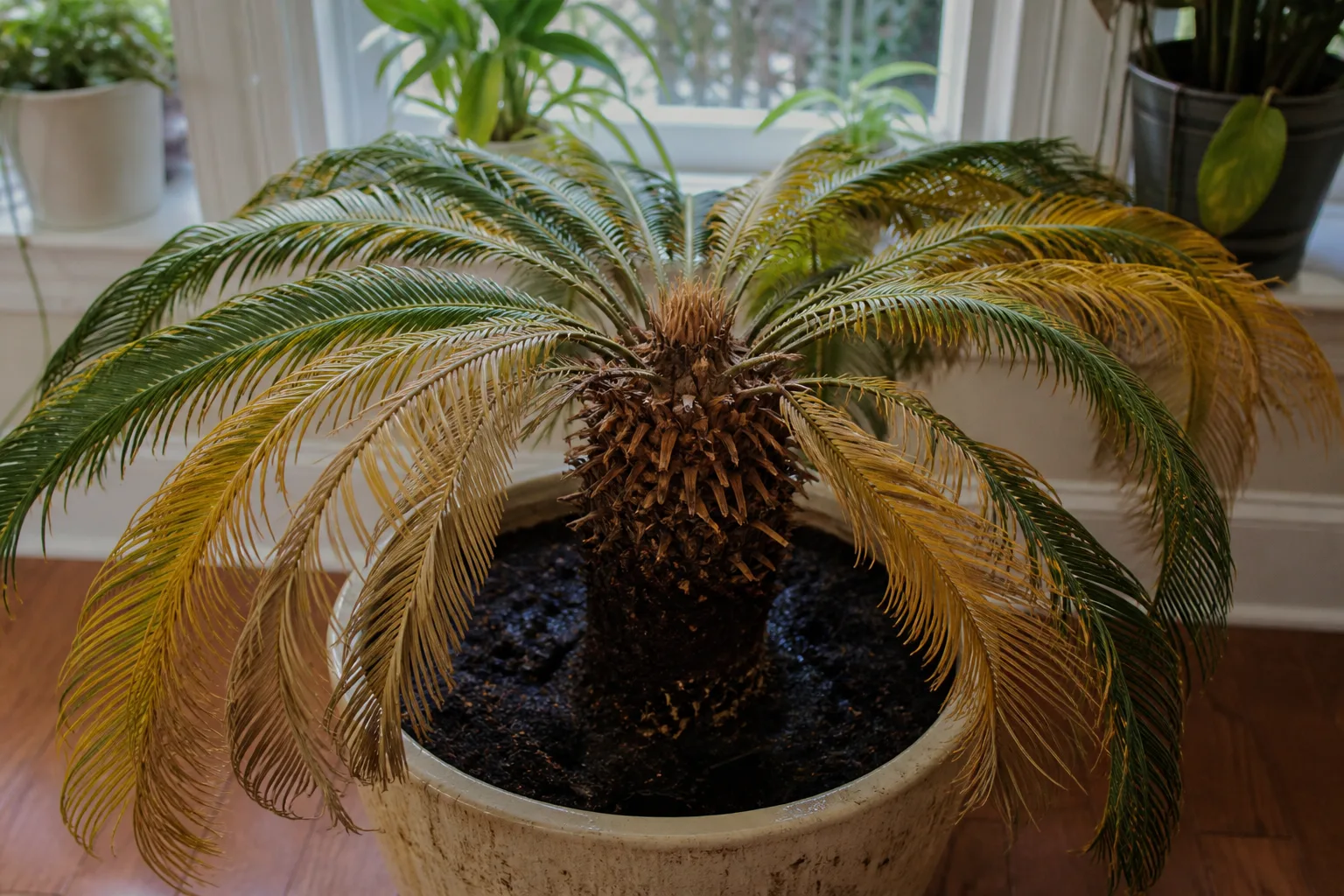
Root Rot on Sago Palm: Causes, Checks & Fixes
This guide covers root rot on Sago Palm. See also the general Root Rot guide, watering, and light pages for this plant.
Root Rot on Sago Palm: Causes, Checks & Fixes
Quick answer
Root rot on Sago Palm (Cycas revoluta) almost always traces to roots sitting wet too long-especially in dense peat mix, oversized pots, or dim rooms where soil never dries. This cycad is not a true palm; it stores reserves in a thick trunk and grows very slowly, so root damage can hide for weeks before multiple fronds yellow.
First step: stop watering and unpot the plant today. You need to see whether roots are firm or mushy and whether the trunk base is hard or soft before Sago Palm repotting guide, pruning, or spraying anything. Waiting for the soil to dry on its own rarely saves a sago once decay has started.
What root rot looks like on Sago Palm
Above soil, rot often mimics thirst. Fronds may yellow, droop, or look wilted even though the mix feels damp-damaged roots cannot move water upward. Unlike the gradual browning of one or two oldest lower fronds (normal aging on a slow cycad), rot tends to hit several fronds at once, stall new crown spears, or leave the plant looking limp while the pot stays heavy.
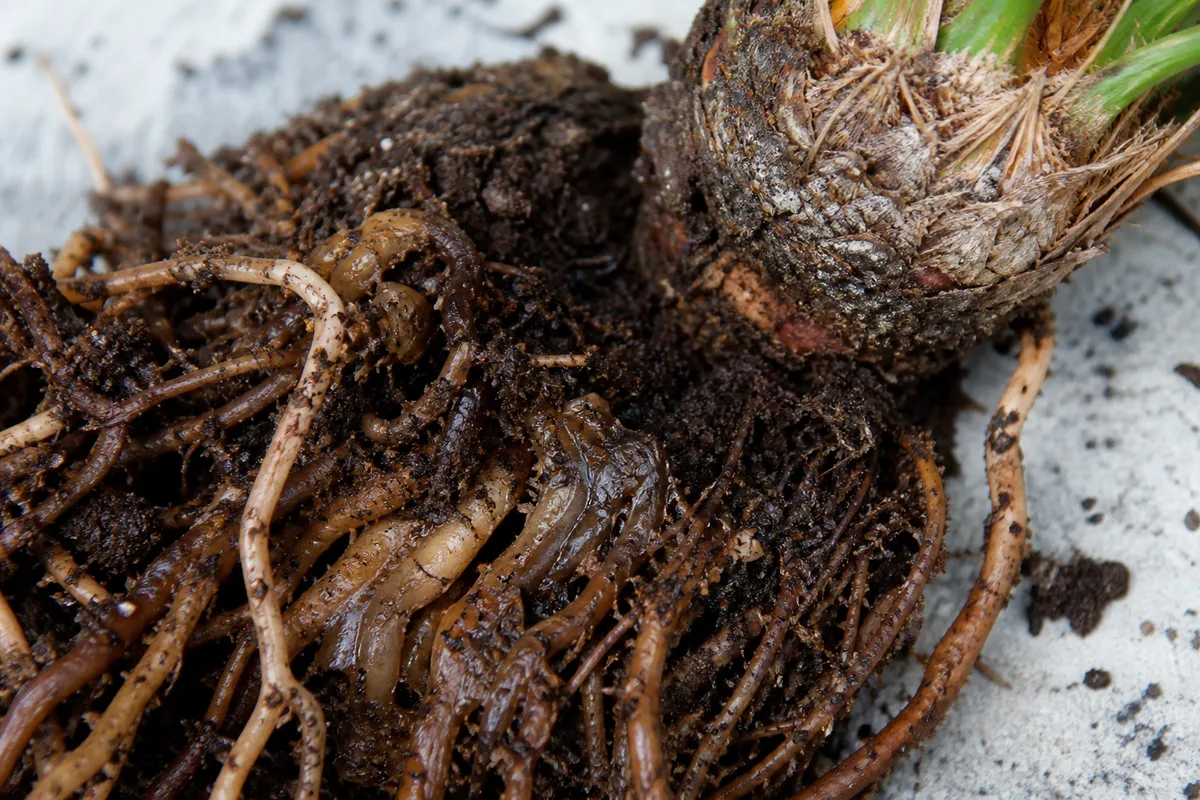
Firm pale roots are healthy; brown translucent mushy roots with sour odor confirm rot - unpot before repotting.
The decisive checks are below soil and at the trunk:
- Roots - Healthy sago roots are firm and pale. Rot turns them brown, translucent, or mushy; they may pull apart between fingers or smell sour.
- Trunk base - A healthy caudex feels solid, like dense wood. Soft, dented, or waterlogged tissue at soil line means advanced trouble.
- Smell - A swampy odor from the drainage hole is a strong rot clue.
- Crown - New central leaves fail to unfurl, stay brown, or collapse while older fronds also decline.
White or gray fuzz on rotted roots is fungal growth, not healthy root hairs. Yellowing that continues for weeks while soil stays wet for days after one watering fits rot better than a single dry spell.
Why Sago Palm gets root rot
Sago Palm evolved on well-drained slopes in Japan and southern China-not in constantly moist potting soil. Indoors it needs bright light and a mix that dries between drinks. It is drought tolerant once established but intolerant of overwatering and poor drainage-the most common indoor killer for Sago Palm overview.
Overwatering on a calendar is the leading trigger. Sagos use water slowly, especially in winter or low light. Watering every week because “houseplants need weekly water” keeps the root zone saturated when the plant is barely growing.
Other Sago-specific triggers:
- Heavy or peat-rich mix that stays damp for days after one drink
- Pots without drainage or saucers that hold standing water
- Oversized pots where a small root ball sits in a large wet zone
- Low light plus frequent watering-slow photosynthesis uses less moisture, so the same schedule becomes excessive
- Cool rooms with damp soil-growth slows, roots lose oxygen, and decay organisms such as Phytophthora finish the job once tissue is oxygen-starved
Because the trunk stores starch, the plant can look stable while roots fail. That slow decline is why many owners notice rot only after three or four fronds have already yellowed.
How to confirm the cause
Work through these checks in order:
- Trunk firmness - Press the base gently with a gloved finger. Hard = likely drought stress or normal lower-frond drop; soft = suspect rot.
- Soil moisture at depth - Dry several inches down with a firm trunk suggests underwatering. Wet deep mix with a soft trunk confirms trouble.
- Frond pattern - One or two lowest fronds browning on an otherwise green plant often means aging. Multiple tiers yellowing together with wet soil points to roots.
- Pot and mix - Drainage holes open? Mix gritty or dense peat? Saucer empty after watering?
- Smell and roots - Unpot if the base is soft or smell is sour. Rinse roots gently under lukewarm water. Healthy tissue is firm; rot collapses when squeezed.
- Light and season - Is the plant in a dim corner during winter? Have you watered on your summer schedule anyway? That pattern fits culture rot.
If the pot is light, mix is dry throughout, and the trunk is firm but leaflets look slightly crisp, underwatering may explain wilt better than rot-do not rush to soak a plant you have not inspected.
First fix for Sago Palm
Stop all watering and unpot the plant.
Lay the sago on newspaper, knock away wet mix, and identify where tissue turns from firm to mushy. That single inspection tells you whether you are treating rot, drought, or normal frond aging-everything else depends on it.
Do not fertilize, mist the crown heavily, or repot into fresh mix until you have cut away decay and let wounds dry. Stacking fixes the same day stresses an already failing root system.
Step-by-step recovery
Once rot is confirmed, work in this order:
- Trim all decay - With clean, sharp pruners, cut mushy roots back to firm, healthy tissue. If the trunk base is soft, cut back to hard wood-keep going until you see solid flesh, not brown jelly. Sterilize blades between cuts with rubbing alcohol.
- Rinse and air-dry - Gently rinse remaining roots to remove soggy soil. Let the root ball and any trunk cuts air-dry 24–48 hours in Sago Palm light guide with good airflow so wounds callus.
- Discard old mix and clean the pot - Reusing wet soil reintroduces pathogens. Scrub the container or use a fresh one with drainage holes.
- Repot dry into gritty mix - Use fast-draining cactus or palm mix amended with perlite or coarse sand if needed. Choose a pot only slightly larger than the trimmed root mass-extra wet soil volume slows drying. Do not water immediately; wait until cuts have callused (often five to seven days after repotting).
- First water lightly - When you do water, moisten the mix once and let the surface dry before the next drink. Judge by trunk firmness and mix dryness, not a calendar.
- Light and warmth - Place in bright filtered light with some direct sun so the plant can photosynthesize without harsh midday scorch on stripped roots. Keep above roughly 65°F (18°C); cold wet roots rot again quickly.
- Hold fertilizer - Skip feed until new crown growth looks healthy. Salt stress on damaged roots slows recovery on a plant that already flushes slowly.
If the trunk above the rot line stays firm and at least some roots remain healthy, the plant can survive losing much of its root mass. If rot has hollowed the crown or trunk, survival odds drop sharply-sagos do not root easily from cuttings like many houseplants.
Recovery timeline
Stabilization often takes two to four weeks after trimming and dry repotting-during that window the trunk should stop softening.
New crown spears are the best sign of success. On Cycas revoluta, expect them once per warm season at best, sometimes four to twelve months after rescue if recovery started in late fall. Old yellow fronds will not green up again-trim them for hygiene once the plant is stable.
Full root mass rebuild takes years, not weeks, matching the species’ slow growth. A saved sago may look sparse for a season before the next flush.
Worsening signs: trunk softens further after dry treatment, new spears collapse, or multiple fronds continue yellowing with wet soil-those point toward tissue that cannot be salvaged.
Lookalike symptoms
- Normal lower-frond aging - Oldest bottom fronds brown and drop while the crown stays green and the trunk is firm; no root surgery needed.
- Underwatering - Firm trunk, very light pot, dry mix throughout; deep soak once, then resume dry-down schedule.
- Manganese deficiency (frizzle top) - New crown leaves emerge yellow and distorted on otherwise firm roots; fix nutrition and pH, not root trimming.
- Scale or mealybug stress - Sticky residue or insects on fronds with firm trunk; treat pests, not roots.
- Repotting shock - Temporary wilt after root disturbance with firm base; hold water briefly and keep stable light.
What not to do
Do not water more because fronds look wilted while soil is already wet-that accelerates rot. Avoid standard peat-heavy potting mix without sand or perlite. Do not feed immediately after root pruning or during winter rest.
Skip fungicide alone without removing mushy tissue and fixing drainage-chemicals do not restore oxygen to waterlogged roots. Do not repot into a much larger pot; extra wet soil volume slows drying. Do not leave the plant in a full saucer or water directly into the crown.
When trimming roots or fronds, wear gloves-Sago Palm is highly toxic to pets and humans, and sap may irritate skin. Wash tools and hands after handling. Keep trimmed debris away from pets and children.
How to prevent root rot next time
Match watering to how fast your pot dries in your light. Water thoroughly, then wait until the surface and upper inches feel dry before the next drink. Empty saucers after every watering.
Use fast-draining cactus or palm mix, pots with open drainage, and bright light so the plant uses moisture predictably. Reduce watering in cool months when growth slows. Quarantine new sagos and press the trunk base monthly during the growing season-early softness is easier to fix than a collapsed crown.
When to worry
Escalate immediately if the trunk dents under light pressure, new crown spears fail while soil is wet, or inspection shows mostly mushy roots. Slow yellowing on one lower frond with a firm trunk can wait for a care tweak.
If more than half the trunk base is soft after trimming, or the crown collapses inward, the plant is unlikely to recover-dispose of the plant safely given its toxicity, and replace the mix before reusing the pot.
Conclusion
Root rot on Sago Palm is a drainage and timing problem more than a mystery disease. Confirm it with a firm versus soft trunk, a root inspection, and wet-soil smell-then stop water, cut decay, dry, and repot gritty. This cycad forgives drought far more willingly than it forgives a wet winter in dense soil.
When to use this page vs other Sago Palm guides
- Sago Palm watering guide - Use for routine moisture checks before assuming root rot is the main issue.
- Sago Palm problems hub - Browse all 3 common issues on this species.
- Yellow Leaves on Sago Palm - Different entry point when symptoms overlap with root rot.