Underwatering on Satin Philodendron: Causes, Checks & Fixes
Quick answer
Underwatering on satin philodendron shows as inward-curling silver leaves, a very light pot, and dry mix 2–3 cm down with firm stems. First step: water deeply until excess drains, then resume watering when the top 2–3 cm is dry-not on a fixed calendar.
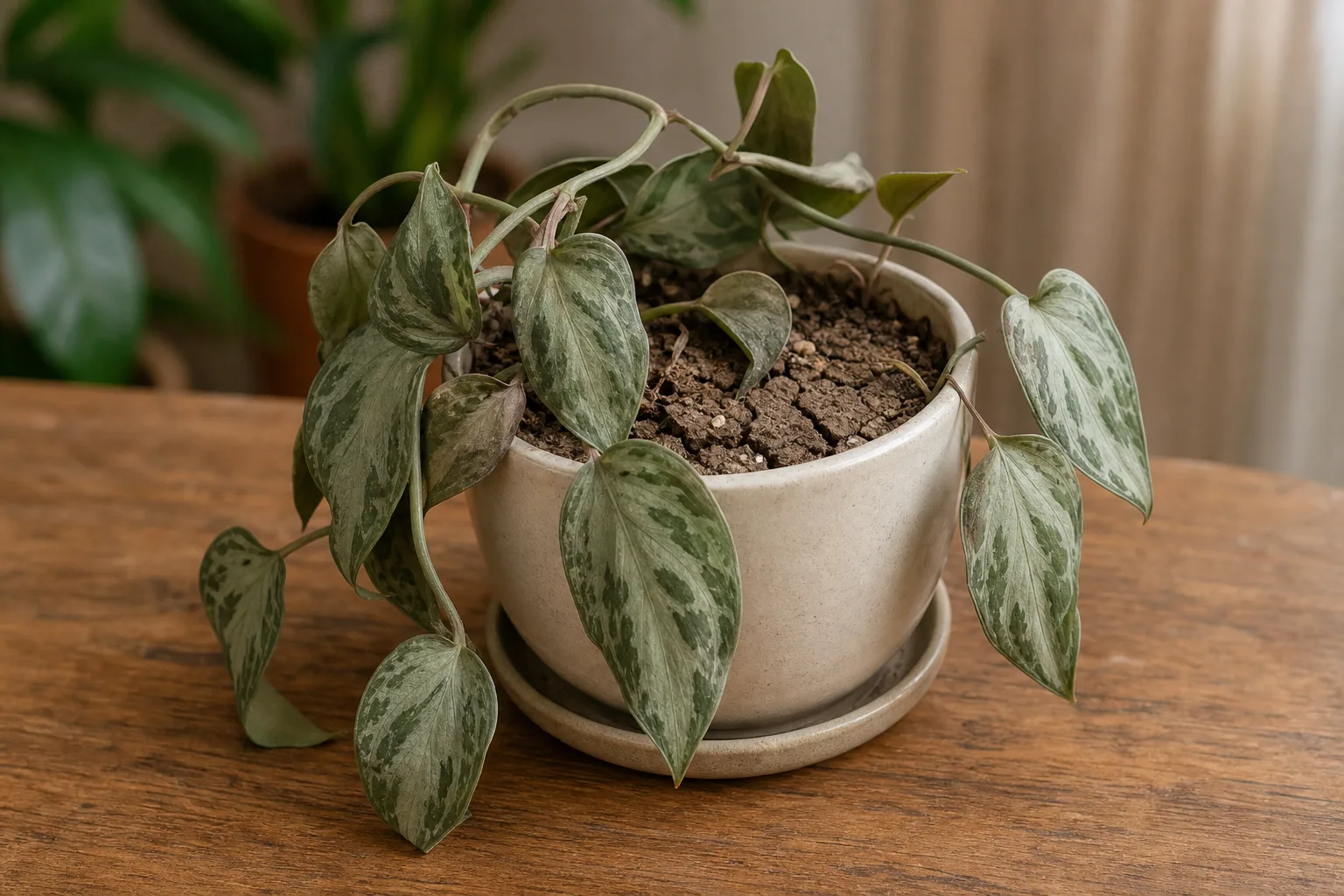
Underwatering on Satin Philodendron: Causes, Checks & Fixes
This guide covers underwatering on Satin Philodendron. See also the general Underwatering guide, watering, and light pages for this plant.
Underwatering on Satin Philodendron: Causes, Checks & Fixes
Quick answer
Satin philodendron is the retail label for Scindapsus pictus-a slow-growing tropical vine with matte, silver-splashed heart leaves sold alongside true philodendrons and pothos. It is not drought-tolerant like a succulent. Underwatering shows up as inward-curling satin leaves, a noticeably light pot, and mix that is dusty dry 2–3 cm below the surface-not soggy and heavy.
First step: water deeply until excess runs from the drainage holes, then discard saucer water within 30 minutes. Do not mist leaves, fertilize, or repot on day one. After the soak, wait until the top 2–3 cm feels dry before watering again.
Dry pot + firm stem = thirst. Wet pot + soft stem = not underwatering-stop and read our overwatering guide before adding more water.
| Signal | Underwatering (dry soil) | Overwatering (wet soil) |
|---|---|---|
| Pot weight | Light, dry | Heavy, stays wet |
| Soil at 2–3 cm | Dry, crumbly | Wet or clammy |
| Leaf pattern | Inward curl, crisp edges | Yellow lower leaves, dull silver |
| Stem at soil line | Firm | Soft if advanced |
| Smell | Neutral | Sour or swampy |
| After one deep soak | Perks within hours | Worse or unchanged |
For full watering rhythm and seasonal schedules, see our satin philodendron watering guide. This page covers drought diagnosis only-not general care or wilting from root failure.
Which plant is this?
Nurseries sell Scindapsus pictus as satin philodendron, satin pothos, or silver pothos-names that confuse buyers because the plant is neither a true philodendron nor a pothos. If your vine has velvety, silver-blotched heart-shaped leaves on matte dark green, you likely have Scindapsus. Our overview guide explains the naming mix-up and how to tell Scindapsus from Philodendron hederaceum or golden pothos. The underwatering fixes below apply to all Scindapsus pictus cultivars, including Argyraeus and Exotica.
When to use this page vs. the watering guide
Use this page when leaves look thirsty-limp, curling, or crisp at edges-and you suspect you skipped drinks or the mix dried out faster than expected. Use our watering guide for routine dry-down rhythm, seasonal adjustment, and the finger-and-weight checks that prevent drought in the first place.
If multiple vines collapsed suddenly, start with our wilting guide-whole-plant collapse can mean root rot with wet soil, not simple thirst. If only one outer trailing strand sags while the rest stays firm, see drooping leaves for localized vs. plant-wide patterns.
What underwatering looks like on satin philodendron
Scindapsus wilts from the outside in. The longest trailing stems and outer leaves droop first because water has the farthest to travel through thin vines. On this species, the silver pattern often dulls before full collapse-a subtle stress signal distinct from whole-plant pale wash-out on moist soil from light stress.
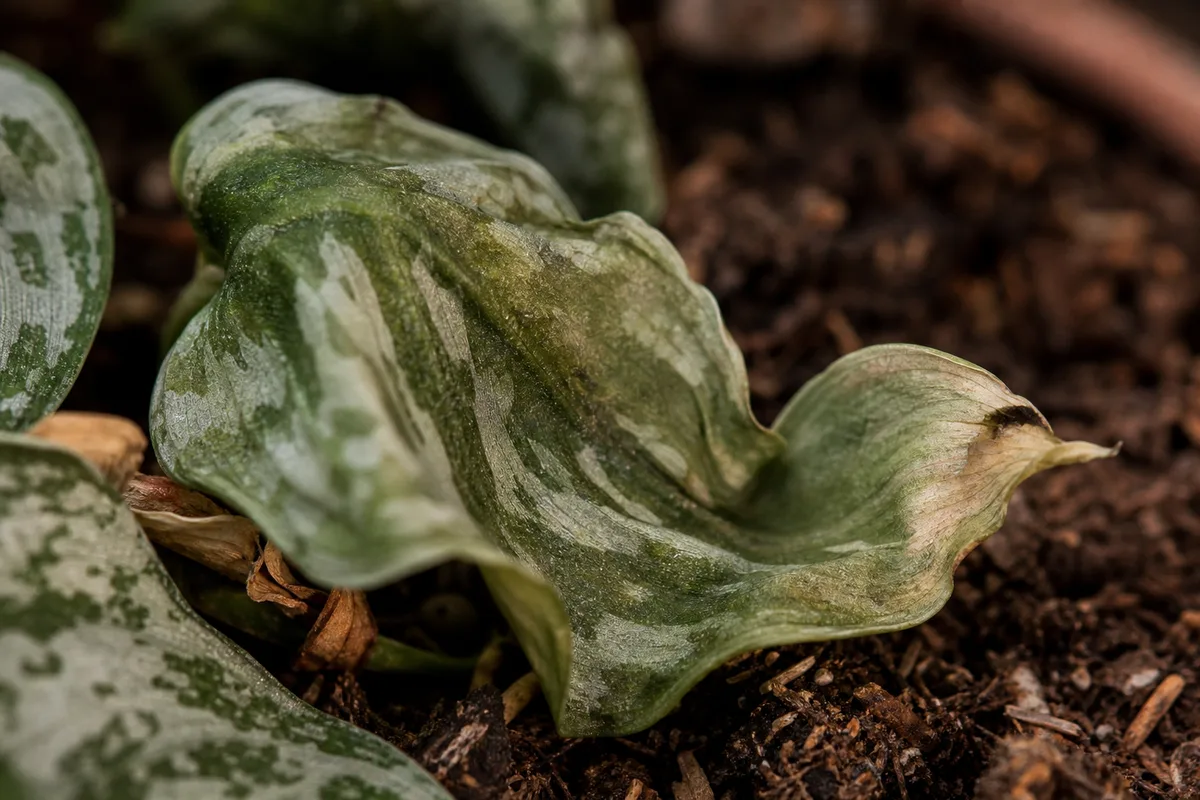
Underwatering symptoms on Satin Philodendron - compare with healthy tissue on the same plant.
Early and mid-stage signs:
- Inward leaf curl toward the midrib-curling leaves may be a sign of underwatering on Scindapsus when soil is genuinely dry
- Limp, soft-feeling trailing vines that hang lower than usual along the pot rim
- Thin-feeling matte leaves with less crisp silver contrast than healthy growth
- Dry, pale tan mix 2–3 cm down-not cool and damp
- A pot that feels unusually light when lifted
- Crisp brown edges on leaf margins if dryness persists several days
- Older lower leaves turning yellow and dropping after repeated dry cycles
- Stalled new growth or smaller new leaves during prolonged drought
Unlike overwatering, stems at the soil line stay firm. Soil smells neutral, not sour. There is no mushy base or waterlogged saucer. Mix may pull slightly away from the pot wall when bone dry.
Case note (June 2026): A trailing Exotica in a 15 cm hanging basket skipped 11 days in a bright east window during a heat wave. Mix was dusty dry 3 cm down, pot felt feather-light, and outer vines showed inward curl with dull silver blotches. Two-pass deep watering perked most leaves within five hours; two oldest leaves kept crisp tips that never re-greened. New silver-marked growth appeared three weeks later once watering stabilized.
Why satin philodendron gets underwatering
Scindapsus prefers moist, well-drained potting soil with a real dry-down between drinks-not constant saturation and not weeks of bone dryness. Several factors push this slow-growing vine into drought stress indoors:
Calendar watering in bright light. A satin philodendron in a bright east or west window transpires faster than the same plant in a dim hall. Watering every two weeks regardless of soil moisture misses summer dry-down in hanging baskets that may need water every 5–7 days.
Hydrophobic old mix. Peat-heavy soil that has gone bone dry repels water on the surface while the root ball inside stays dry. Water runs down the gap between mix and pot wall and out the drainage hole without rewetting the center-the pot stays light and leaves stay curled.
Heat and airflow. Heating vents, air-conditioning drafts, and sunny windowsills pull moisture from mix faster than a stable corner. Scindapsus tolerates brief dryness better than constant wetness, but repeated drought cycles weaken fine roots and stall the silver-patterned growth that makes this plant worth keeping.
Trailing vines increase dry-down speed. Long hanging stems expose more pot surface area relative to root volume. The outermost leaves wilt first because water must travel farther through thin vines-outside-in drought is normal on trailing specimens, not a separate disease.
Winter neglect swinging to spring drought. Cooler rooms and shorter days slow water use in winter, so many growers stretch intervals correctly-then forget to tighten the schedule when growth resumes in warm bright light.
How to confirm the cause
Work through these checks before you treat:
- Soil moisture at depth - Push your finger 2–3 cm into the mix near the pot edge, not just the surface. Bone dry and dusty confirms drought. Cool damp mix means look elsewhere-possibly overwatering or root rot.
- Pot weight - Lift the container. A very light pot after several days without water strongly supports underwatering. A heavy wet pot with limp vines suggests root damage from overwatering.
- Stem firmness - Pinch the base of a trailing vine near the soil. Firm green tissue with dry mix fits underwatering. Soft mushy tissue at the crown with wet soil fits rot.
- Perk test - Water deeply once, then recheck vines in four to six hours. Wilting from dry soil often improves within hours when roots are healthy. No improvement after two thorough soaks warrants an unpot check.
- Drainage flow - Pour water slowly. If it races straight through and the surface stays dry while the pot stays light, suspect hydrophobic mix rather than simple forgetfulness.
- Recent care context - Travel, a new hanging location in brighter light, or switching from a cache pot to open drainage changes drying speed. Match diagnosis to the last two weeks, not last month.
If mix is wet and heavy, stop here-underwatering is unlikely. Treat as overwatering or root failure instead.
First fix for satin philodendron
Water slowly and deeply until liquid runs freely from the drainage holes, then empty the saucer.
Use room-temperature water and wet the entire root zone-not a quick splash on the surface. For a standard 15–20 cm pot, that usually means adding water in two passes: once until it drains, wait five minutes, then water again so the mix absorbs fully.
If water channels through dry gaps and the pot still feels light, bottom-water for 30–45 minutes: set the pot in a basin of water up to the rim, let the mix wick moisture upward, then drain fully. Poke a few shallow holes into the surface with a chopstick if the root ball has shrunk away from the pot sides.
Do not compensate for drought by keeping soil constantly wet-that invites the root rot Scindapsus is more vulnerable to than brief dryness. Do not fertilize a dry plant; rehydrate first. Do not prune heavily until turgor returns-you need leaves to tell you whether the fix worked.
Step-by-step recovery
After the initial deep soak:
- Recheck vines in four to six hours. Most mild underwatering cases perk the same day. Still limp with dry-feeling mix may need a second bottom-water session.
- Adjust your dry-down rhythm. Resume watering when the top 2–3 cm is dry-Missouri Botanical Garden recommends keeping soil consistently moist during the growing season for Scindapsus pictus ‘Argyraeus’, with reduced frequency in winter. Summer bright light may need water every 5–10 days; winter may stretch toward 14–21 days.
- Refresh hydrophobic mix if rewetting fails. If two deep soaks still leave a light pot and limp vines, slide the plant out. Crumbly dry root balls that resist water need repotting into fresh mix with 20–25% perlite-not emergency surgery on day one, but within the week if drought persists.
- Trim only fully crisp tissue. Brown dead edges will not re-green. Remove leaves that are more brown than green if they bother you, but keep healthy foliage until new growth appears.
- Hold fertilizer until new growth looks normal. Feeding drought-stressed roots adds salt stress without fixing the original problem.
- Monitor for two weeks. Track pot weight and leaf turgor after each watering. One change at a time makes it clear whether frequency or mix was the real issue.
If stems soften at the base or soil smells sour after rewetting, unpot and inspect for rot-chronic underwatering can kill fine roots, but mushy tissue with foul odor is a different problem. See our root rot guide.
Wear gloves when handling wilted vines-satin pothos contains insoluble calcium oxalate crystals toxic to pets if ingested, and sap can irritate skin.
Recovery timeline
Mild dehydration on a healthy satin philodendron often shows improvement within several hours of a deep watering. Vines that were limp but not crispy usually stand back up the same day. Leaf edges that turned brown during prolonged drought stay brown permanently; expect clean new silver-blotched leaves within two to four weeks once watering stabilizes.
A plant that has gone through multiple dry cycles may stall new growth for several weeks even after soil moisture returns. Judge success by firm stems, new nodes pushing leaves with crisp silver patterning, and stable pot weight between waterings-not by old damaged foliage re-greening.
Severely shrunken root balls that required repotting may need four to eight weeks before trailing length resumes normally-Scindapsus’s slow growth rate means patience, not failure.
Lookalike symptoms to rule out
Overwatering also causes limp vines, but soil stays wet and heavy for days. Yellow lower leaves on saturated mix, soft stems at the base, and sour-smelling soil point to too much water-not too little. See our overwatering guide.
Low humidity browns leaf tips and edges on satin philodendron without necessarily making the whole vine limp. Firm stems with normal soil dry-down and crisp margins in heated winter rooms fit humidity stress. Check soil moisture first; misting will not fix dry roots. See low humidity.
Not enough light produces pale, stretched vines with wide node spacing. Soil may stay wet too long because the plant uses little water. Underwatering in bright light dries fast; underwatering in dim corners is less common unless you rarely water at all. See not enough light.
Root rot from past overwatering creates wilt with wet soil-the roots cannot supply water even though mix is moist. Stem softness and brown mushy roots confirm this; dry dusty mix does not.
Spider mites cause stippling and fine webbing on leaf undersides, not typically whole-vine collapse from dry soil alone. Confirm with a white-paper tap test. See spider mites.
Wilting vs. drooping scope - Sudden whole-vine collapse may need our wilting guide. Slow petiole hang on one outer strand fits drooping leaves and often corrects after one soak when soil was simply dry.
Mistakes to avoid
Do not assume every limp satin philodendron is overwatered. Dry light pots with firm stems need water, not more drying time.
Do not mist instead of soaking roots. Surface humidity does not replace soil moisture for a vining aroid.
Do not water on a fixed weekly schedule without checking soil. Season, light, and pot size change drying speed every month.
Do not keep soil soggy for weeks after drought “to make up for it.” That pattern causes more Scindapsus losses than brief underwatering.
Do not fertilize or repot on day one unless mix is hydrophobic and will not rewet. Fix moisture first.
Do not discard a plant because old leaves have crisp edges-new silver-marked growth can look excellent once watering stabilizes.
Do not soak a wilted plant when soil is already wet- that worsens root failure, not thirst.
Satin philodendron care cross-check
Underwatering recovery sticks only when the rest of the setup matches Scindapsus needs:
- Light: Bright indirect light most of the day increases water use compared with a dim corner. Pair your new watering rhythm with how fast the pot actually dries in that spot.
- Soil: Well-draining mix with perlite and bark so roots get oxygen between waterings. Dense water-retentive soil without structure makes it harder to tell whether you are underwatering or sitting in stale wet pockets.
- Water rhythm: Every 7–14 days in active growth when the top 2–3 cm is dry; every 14–21 days in cool winter-always confirm with a finger probe, not memory.
- Humidity: Moderate to high humidity helps leaf quality but does not replace soil moisture. Below about 40% relative humidity, edges may crisp even when soil is fine-do not compensate by overwatering.
- Temperature: Stable 18–27°C (65–80°F). Extreme heat above a radiator dries hanging baskets fast; check soil every few days during heat waves.
Remember satin philodendron is toxic to pets if chewed. Keep collapsed vines away from curious animals during recovery.
How to prevent underwatering next time
Learn your pot’s weight when freshly watered versus ready to water again. That hand-feel check beats any calendar.
Water when the top 2–3 cm is dry-typically every 5–10 days in active summer growth in bright indirect light and every 14–21 days in cooler winter months for satin philodendron in hanging baskets. Adjust when you move the plant, upsize the pot, or change seasons.
Refresh peat-heavy mix every one to two years before it turns hydrophobic and repels water. Top-dressing alone rarely fixes a root ball that has shrunk from repeated drought.
Size the pot to the root mass. An oversized pot dries unevenly; an undersized crowded pot may need water every few days in summer heat. Match container to how often you realistically check plants.
For hanging baskets, set a reminder to lift the pot on hot weeks-not to water blindly, but to notice when weight drops sharply. Our watering guide covers finger tests, skewer probes, and seasonal adjustment in detail.
When to worry
Underwatering is rarely an emergency on satin philodendron, but act promptly when:
- Mix has pulled away from pot walls and will not rewet after one surface pour
- Two deep soaks fail to restore turgor within 24 hours
- Crisp brown edges are spreading across most leaves during a heat wave
- Fine roots appear shriveled and gray on unpot inspection after repeated drought cycles
Worry more if limp vines come with wet heavy soil and soft stems-that is not underwatering. Unpot immediately and see our root rot guide.
Replace the plant only if the crown is shriveled, stems are brittle and brown throughout, and no new nodes activate after four to six weeks of stable care. Scindapsus propagates easily from healthy stem cuttings if part of the vine survived-salvage firm sections with nodes before you discard the whole pot.
Conclusion
Underwatering on satin philodendron is one of the easier problems to fix when you read the pot instead of the calendar. Dry mix deep in the container, a light pot, and limp firm-stemmed vines with inward leaf curl point to thirst-not rot. Water deeply once, confirm perk-up within hours, then return to a dry-down rhythm when the top 2–3 cm feels dry. Crisp old edges stay crisp, but new silver-blotched growth tells you the plant is back on track. For comprehensive watering rhythm, bookmark our watering guide alongside this drought triage page-and use our overwatering guide the moment limp leaves meet wet mix.
Related tool
Use the Plant Watering Calculator to narrow causes for underwatering on this plant before changing multiple variables at once.