Low Humidity on Satin Philodendron: Causes, Checks & Fixes
Quick answer
Low humidity on satin philodendron shows as brown crispy leaf tips on firm trailing vines while soil moisture stays normal. First step: move the plant away from heating vents and raise ambient humidity to 40–60% with a humidifier or pebble tray-not daily misting.
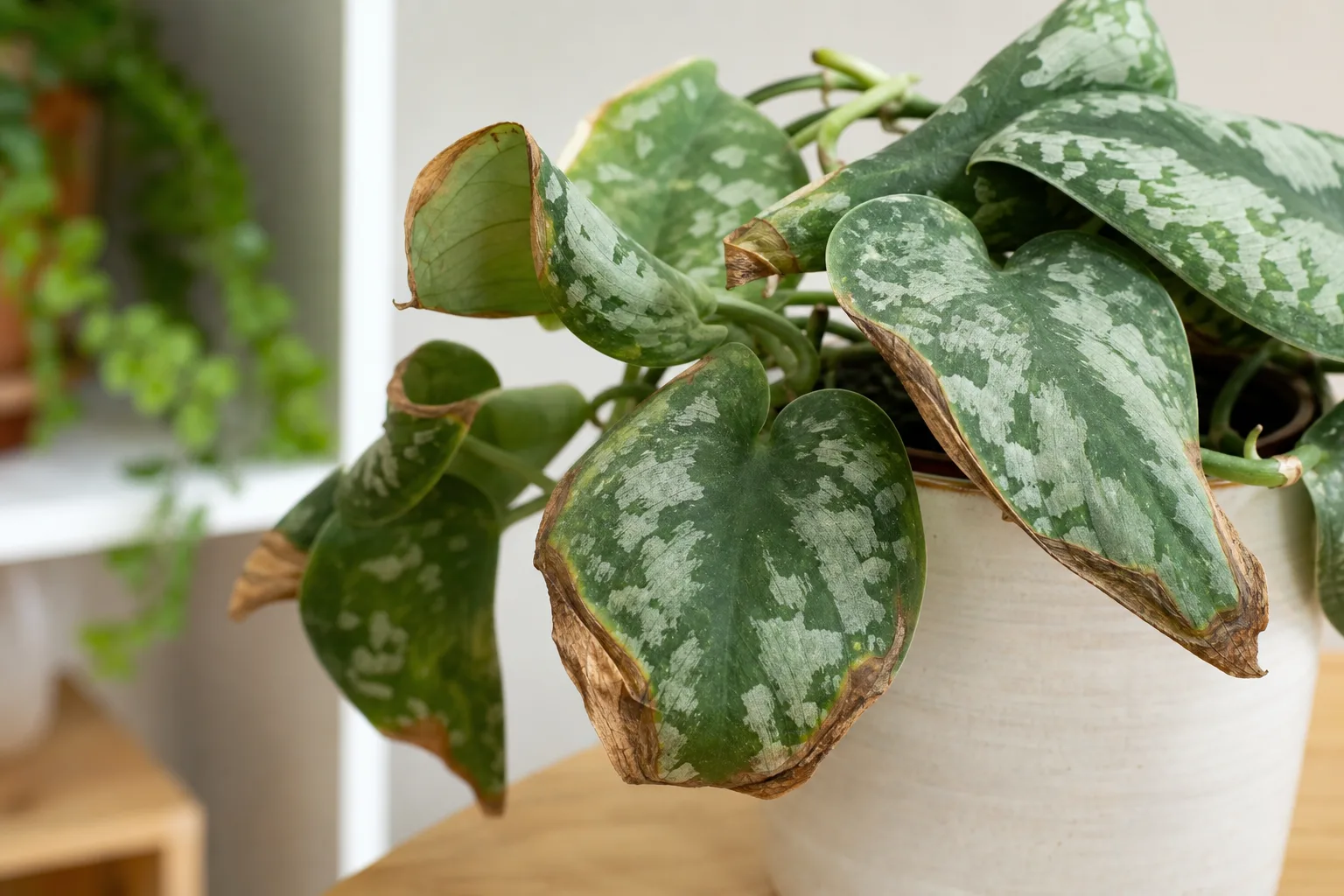
Low Humidity on Satin Philodendron: Causes, Checks & Fixes
This guide covers low humidity on Satin Philodendron. See also the general Low Humidity guide, watering, and light pages for this plant.
Low Humidity on Satin Philodendron: Causes, Checks & Fixes
Quick answer
If your plant arrived labeled satin philodendron, check the leaves: silvery satin texture on heart-shaped foliage points to Scindapsus pictus - satin pothos or silver pothos - not a true philodendron. That matte, silver-blotched surface loses moisture at the margins when indoor humidity drops for weeks. Winter heating, air conditioning, and forced-air vents can pull relative humidity below what trailing tropical vines prefer.
First step: move the plant away from heating vents, radiators, and cold draft paths, then raise ambient humidity toward 40–60%. Crispy brown tips on firm vines with normally drying soil usually mean dry air-not root rot. Do not increase watering to fix crisp edges; that pattern invites the yellow leaves and mushy stems that NC State Extension links to overwatering on Satin Philodendron overview. For watering rhythm details, see our satin philodendron watering guide.
Why satin philodendron struggles in dry air
Scindapsus pictus climbs tree trunks in damp tropical forests across Southeast Asia. Indoors it becomes a slow-growing trailing or climbing vine with broad leaf surfaces that transpire steadily. The more leaf area your basket or shelf holds, the faster dry air pulls water from tissue-especially at thin margins on the matte green blades. Trailing stems hanging over warm electronics or radiator tops get a double hit of dry, moving air.
Satin philodendron tolerates typical household conditions better than many finicky tropicals, but room temperatures of 65 to 85°F paired with winter heating often drop humidity into the 20–30% range. That gap shows up first on exposed leaf edges, not in the root zone. The silver variegation dulls slightly before whole blades crisp because the pale blotches contain less chlorophyll and the plant loses water fastest where tissue is thinnest.
Dry air also sets up a secondary problem. Spider mites thrive in warm, dry environments and NC State notes mites as a common pest on satin pothos. A vine already stressed by low humidity becomes easier for mites to colonize on leaf undersides, where the pale, unblotched surface makes stippling easier to spot once you look. If webbing appears, treat it as a separate escalation-see spider mites on satin philodendron.
What low humidity looks like on satin philodendron
Low-humidity stress on this plant is usually cosmetic and patterned-not a sudden vine collapse.
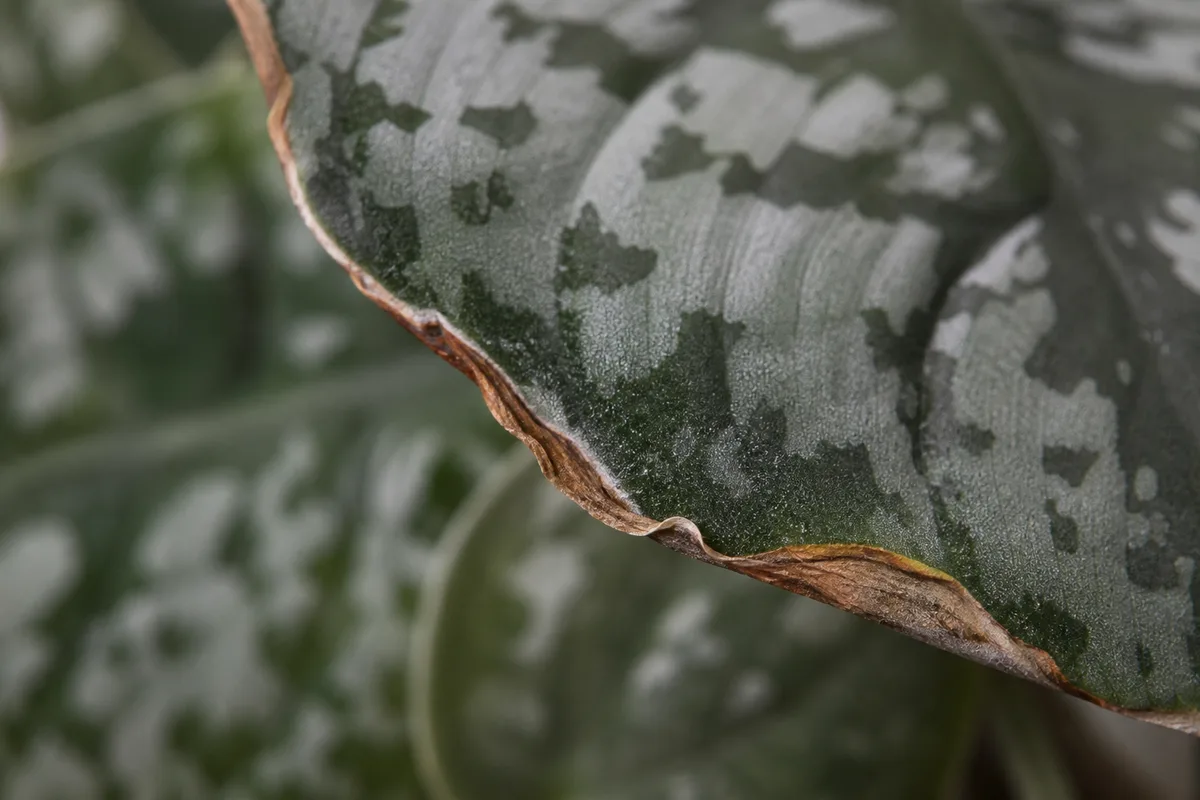
Low Humidity symptoms on Satin Philodendron - compare with healthy tissue on the same plant.
Typical signs:
- Dry, brown, crispy tips or edges on otherwise firm heart-shaped leaves
- Silver variegation still visible; damage concentrated at margins, not across whole blades
- Older leaves on outer trailing stems affected before inner new growth
- Slight leaf curl at edges without the limp, wilted feel of severe underwatering
- Smaller or slower new leaves during long dry spells, even when watering rhythm is unchanged
- Symptoms worsen after heat turns on or when a basket moves near an AC vent
What you should not see if dry air alone is the issue:
- Yellow lower leaves with wet, heavy soil (overwatering pattern on this plant)
- Mushy stems or sour-smelling mix (root rot)
- Uniform wilting that recovers within hours of watering (underwatering-NC State links curling leaves to too little water)
- Round tan patches on leaf faces from direct sun through glass (scorch, not humidity)
The satin surface holds less glossy shine when tissue desiccates at the edge, but the central silver-gray mottling usually stays intact until damage is advanced. Margin burn that looks like salt damage but appeared in winter without fertilizer changes still fits dry air if a hygrometer reads below 35% near the foliage.
How to confirm the cause
Work through these checks before changing your whole care routine:
- Hygrometer reading at vine height - Most houseplants prefer 40–60% relative humidity; readings below 35% near the foliage support dry-air stress. Place the sensor at the same height as trailing stems, not on the floor.
- Placement audit - Note heat registers, radiators, fireplace proximity, and cold window drafts. Damage clustered on the side facing a vent is a strong environmental clue. Hanging baskets above a register often show crisp tips only on the lowest dangling leaves.
- Soil moisture vs. your norm - Stick a finger into the top 4–5 cm. Satin philodendron wants the top half of soil dry before watering per our watering guide. If soil matches your usual dry-down and stems are firm, extra water will not fix crisp tips.
- Seasonal timing - Symptoms appearing or spreading in the first weeks of heating season fit low humidity better than sudden root failure.
- Pest scan on undersides - Hold trailing stems up and check pale leaf backs with a hand lens. Fine webbing, stippling, or moving specks mean mites may be compounding dry-air damage.
- Water source check - If tips appeared after Satin Philodendron repotting guide or a fertilizer spike, rule out salt or fluoride burn before blaming humidity alone. Clemson HGIC lists hot dry air, salts, and watering issues as overlapping causes of brown leaf margins.
If humidity near the plant is adequate, stems are firm, and pests are absent, look next at tap-water quality, recent light changes, or overlapping brown tips from multiple causes-not more misting.
First fix for satin philodendron
Move the plant away from heating vents, radiators, and direct AC blasts, then run a small humidifier nearby or set the pot on a pebble tray filled with water-keeping the pot bottom above the waterline.
This single step targets the actual stressor without triggering overwatering. Relocate hanging baskets so trailing stems do not hang in the warm air column above a register. Aim for stable 40–60% humidity at foliage height, which matches what this species handles best in real homes.
Do not reach for the spray bottle as a default fix. Brief misting raises humidity for minutes, not hours, and wet satin leaves in stagnant corners can encourage fungal issues. UC IPM notes low relative humidity among causes of brown leaf tips but cultural fixes work better when ambient moisture stays consistent.
Do not increase watering frequency to “hydrate” crisp leaves-that is how firm vines develop yellow basal leaves and soft roots on a plant that already tolerates some drought between waterings.
Step-by-step recovery
After the initial relocation and humidity boost:
- Run the humidifier daily through the heating season, refilling as needed. Position it within a few feet of the plant but not blowing directly onto foliage.
- Group the satin philodendron with other houseplants if space allows. Shared transpiration creates a modest microclimate, especially in smaller rooms with limited airflow.
- Trim fully dead brown tip tissue with clean scissors once conditions stabilize. Cut back to healthy green tissue; do not pull dried edges by hand on this somewhat brittle aroid foliage.
- Hold fertilizer and repotting until new growth looks normal for two to three weeks. Stressed vines do not need extra inputs while recovering from environmental injury.
- Inspect for spider mites weekly on leaf undersides. If stippling appears, rinse undersides with lukewarm water in the morning and keep humidity up-mites reproduce faster in warm, dry air.
- Switch to room-temperature filtered or rainwater if tips persist after humidity improves. Fluoride and salt burn can mimic humidity damage on thin margins.
Expect gradual improvement rather than overnight reversal. The plant directs energy to new nodes once air moisture steadies.
Recovery timeline
Humidity corrections show in new growth, not old leaves. Within one to two weeks of stable 40–60% humidity, you should see fresh leaves emerging with intact margins at vine tips. Older crisp edges remain brown permanently-that is normal.
A full trailing basket may take four to six weeks to look uniformly healthy again because outer leaves stay scarred while inner new foliage replaces the worst damage. If tips keep spreading after three weeks of verified higher humidity, revisit watering rhythm, water quality, or active mites before assuming the plant is failing.
Lookalike symptoms to rule out
Underwatering makes the whole vine limp and leaves curl inward along their length. Soil pulls from pot edges and feels bone dry through much of the root ball. A thorough soak restores turgor within hours. Humidity stress keeps stems firm with only marginal crispness. See underwatering on satin philodendron if the whole vine wilts.
Overwatering and root rot bring yellow lower leaves, soft stems at the soil line, and a sour mix smell. NC State links yellow leaves to overwatering on satin pothos. Dry-air damage does not soften healthy roots.
Brown tips from fluoride or salt buildup can appear even at good humidity, especially after heavy fertilizing or chronic tap-water use. White crust on the soil rim suggests salts; leaching and filtered water help more than a humidifier.
Spider mites cause stippled yellowing and fine webbing, often starting on stressed, dry plants. Humidity alone will not clear an active infestation once colonies establish.
Direct sun scorch produces bleached or tan patches on leaf faces near a hot window, not uniform edge crisping on vines in indirect light. Missouri Botanical Garden recommends bright indirect light and avoiding direct sun indoors for this species.
Mistakes to avoid
Do not compensate for crisp tips by watering more often. Satin philodendron already prefers drying between drinks; soggy roots create a worse problem than dry winter air.
Do not mist leaves every day instead of raising room humidity. Satin surfaces that stay wet in dim corners invite leaf spot and botrytis-both listed as possible issues on this plant.
Do not place the pot inside a closed terrarium long-term unless you manage airflow. Trailing vines need space and gentle circulation; stagnant ultra-humid pockets can rot stems.
Do not expect old damaged tissue to green up. Trim for appearance if brown edges bother you, but judge success by new silver-mottled leaves.
Do not ignore mites just because the primary complaint is crispy edges. Dry air and mites often arrive together on trailing houseplants.
How to prevent low humidity next winter
Before heating season starts, decide how you will hold 40–60% humidity in the room where your satin philodendron lives. A dedicated humidifier beats pebble trays for large trailing baskets because evaporation from one tray barely reaches upper hanging stems.
Keep the plant in bright indirect light at 65–85°F away from cold window glass in winter. Stable temperature plus moderate humidity supports the slow, even growth this vine is known for indoors. Our overview guide covers cultivar differences-heavily variegated forms such as Exotica may show margin burn slightly sooner in dry air because thin silver tissue desiccates faster. The same vine is also filed under its botanical trade name in our Scindapsus pictus low-humidity guide.
Maintain your established watering check-top half dry before watering-rather than changing multiple variables at once when leaves look stressed. When you bring home a new plant from a humid greenhouse, give it a few weeks to acclimate before judging leaf edges harshly; gradual placement beats bouncing it between rooms.
When to worry
Low humidity alone rarely kills Scindapsus pictus. Worry when brown edges spread quickly despite corrected humidity, stems soften at the base, or widespread yellowing follows increased watering. Those patterns suggest root problems or severe pest pressure, not dry air alone.
Act promptly if you find active spider mite webbing combined with crisp foliage-populations can explode in warm, dry rooms over a few weeks. Isolate the affected vine, rinse undersides, and keep humidity consistently above 40% while monitoring new growth.
If the plant produces no new leaves for more than two months in spring and summer after humidity fixes, reassess light intensity and root health. Environmental stress and leggy growth from dim corners can overlap, but persistent stall usually means something beyond winter dryness.
Conclusion
Satin philodendron margin crisping is one of the most common-and most misdiagnosed-winter complaints on Scindapsus pictus. Firm stems, dry-down soil, and patterned edge burn point to air moisture, not thirst. Fix placement and humidity first, judge recovery on new silver-mottled leaves at the vine tips, and escalate only when crisping spreads despite verified 40–60% humidity or when mites and root symptoms appear alongside dry-air damage.
When to use this page vs other Satin Philodendron guides
- Satin Philodendron watering guide - Use for routine moisture checks before assuming low humidity is the main issue.
- Satin Philodendron problems hub - Browse all 5 common issues on this species.
- Leaf Drop on Satin Philodendron - Different entry point when symptoms overlap with low humidity.