Split Rock Plant Watering Guide
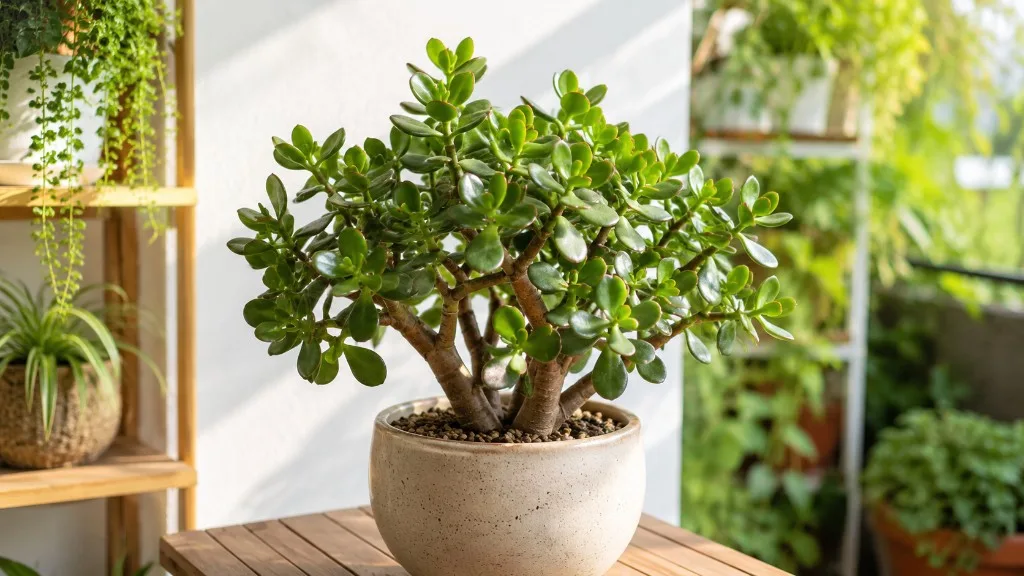
Split Rock Plant Watering: Plant-Specific Guide
Split Rock Plant Watering: Plant-Specific Guide
Split Rock Plant watering starts with the plant’s structure, not a generic houseplant schedule. Split Rock Plant (Pleiospilos nelii) belongs to Aizoaceae; its native-range and taxonomy are best checked against Kew Plants of the World Online. That background matters because when to water, when to stay dry, and how to avoid rot. The first useful action is simple: check the root zone, not the surface, and water only when the plant’s seasonal cycle says it is ready.
For this plant, the safe baseline is bright light, mineral drainage, and restraint. Kew records Pleiospilos nelii in Aizoaceae and native to South Africa. RHS describes Pleiospilos nelii as a compact succulent perennial grown for paired, stone-like leaves. The plant should normally carry one active pair, sometimes with an old pair being absorbed; stacked pairs usually indicate excess water. The practical care rhythm is therefore narrower than it is for pothos, philodendron, or other leafy tropical houseplants. If the pot is cool, dim, or slow to dry, do less. If the plant is in active growth under strong light, make small measured changes and wait for the plant to respond.
What watering means for Split Rock Plant
Split rock plant is Pleiospilos nelii, a compact South African mesemb with thick paired leaves divided by a fissure. It needs brighter light and much less water than most houseplants, especially while old leaves are being absorbed. Source material from RHS Pleiospilos nelii supports treating this plant as a dry-adapted succulent, while RHS Pleiospilos provides species or genus context for the plant’s form. In a home, that translates to a bias toward air around the roots, enough light to use moisture, and no rescue watering when the plant is resting.
If you are working on watering, keep the rest of the care system stable. Pair this page with Split Rock Plant overview, Split Rock Plant light, and Split Rock Plant soil when you are changing more than one condition. Most failures come from stacking changes: a bigger pot, richer mix, more water, and lower light all at the same time.
The best indoor baseline
Use this baseline before fine-tuning:
- Light: bright window light or a strong grow light, introduced gradually.
- Water: Water sparingly in active growth and keep dry when old leaves are being absorbed.
- Soil: Very gritty mineral mix with minimal organic matter around the thick roots.
- Pot: drainage holes, modest size, and no standing runoff.
- Feeding: low dose only during active growth.
- Repotting: every 3-4 years, or when the mix collapses, preferably in early growth before the next cautious watering cycle.
These points are conservative on purpose. RHS Splitrock Royal Flush and University of Minnesota Extension both support the broader succulent rule that water, light, and drainage must be judged together, not separately. A plant in weak light cannot safely use the same water as one in sun. A plant in peat-heavy soil cannot be watered like one in a gritty mineral mix.
Seasonal timing
Season matters more than the calendar date on your reminder app. During active growth, Split Rock Plant can use careful watering, light feeding, and recovery time after repotting or propagation. During rest or leaf renewal, it needs patience. For watering, that means you should make changes when the plant is firm, lit well, and already showing signs of activity.
Winter and low-light months require stricter restraint. The pot dries slowly, roots take up less water, and small errors linger. If the plant is cool or not growing, pause fertilizer, delay repotting, and avoid propagation. When spring light returns, resume care gradually instead of trying to compensate for months of quiet growth in one week.
Warning signs to watch
Overcare signs on Split Rock Plant include more than two leaf pairs retained, body splitting from excess water, soft or translucent tissue. These symptoms usually point to water staying around roots or tissues longer than the plant can tolerate. The first response is not fertilizer. Stop watering, improve light cautiously, and inspect whether the mix is compacted or wet at depth.
Under-care signs include persistent severe wrinkling outside rest, failure to plump after a seasonal soak, root loss in old exhausted mix. These are less common than rot symptoms but still matter. If the plant is dry at depth and in active growth, a thorough soak may be appropriate. If it is wrinkled while the soil is damp, suspect root loss rather than thirst.
Topic-specific care path
For watering, use a three-step decision path. First, confirm the plant is in enough light to use water. Second, confirm the potting mix drains quickly and does not stay damp around the base. Third, adjust only the topic you are working on: water amount, light distance, soil texture, feeding dose, propagation timing, or repotting timing.
This plant rewards small corrections. Move it closer to light over several days. Change mix at the next sensible repot instead of disturbing healthy roots every month. Feed weakly, if at all. Propagate only from firm tissue. Water deeply only when seasonal and root-zone checks agree.
When to use this page vs other Split Rock Plant guides
- Use Split Rock Plant overview when you need the whole-plant baseline before changing watering.
- Use Split Rock Plant light when dry-down or root moisture is part of the symptom.
- Use Split Rock Plant soil when growth is stretched, stalled, scorched, or color is fading.
- Use Split Rock Plant fertilizer when the pot stays wet, collapses, or sheds water too quickly.
- Use Split Rock Plant repotting when the plant is being moved, divided, or restarted.
Related Split Rock Plant guides
- Split Rock Plant overview
- Split Rock Plant watering
- Split Rock Plant light
- Split Rock Plant soil
- Split Rock Plant fertilizer
- Split Rock Plant repotting
- Split Rock Plant propagation
Conclusion
Split Rock Plant watering is successful when it respects the plant’s dry-adapted anatomy and slow response time. Give the plant strong light, a gritty root zone, modest pot size, and long enough pauses for the plant to show what it actually needs. If you are unsure, choose the lower-risk move: more light before more water, better drainage before more fertilizer, and patience before repotting.