Is Your Stromanthe Triostar Root Bound? Signs and Repotting
Quick answer
A Stromanthe Triostar may be root bound when roots densely fill and circle the root ball, the mix has little room left, and the pot dries much faster than its usual pattern. A single root at a drainage hole or a naturally crowded clump is not enough to diagnose it. Slide the plant out to inspect before repotting, then move it only one pot size up if the root ball is genuinely crowded.
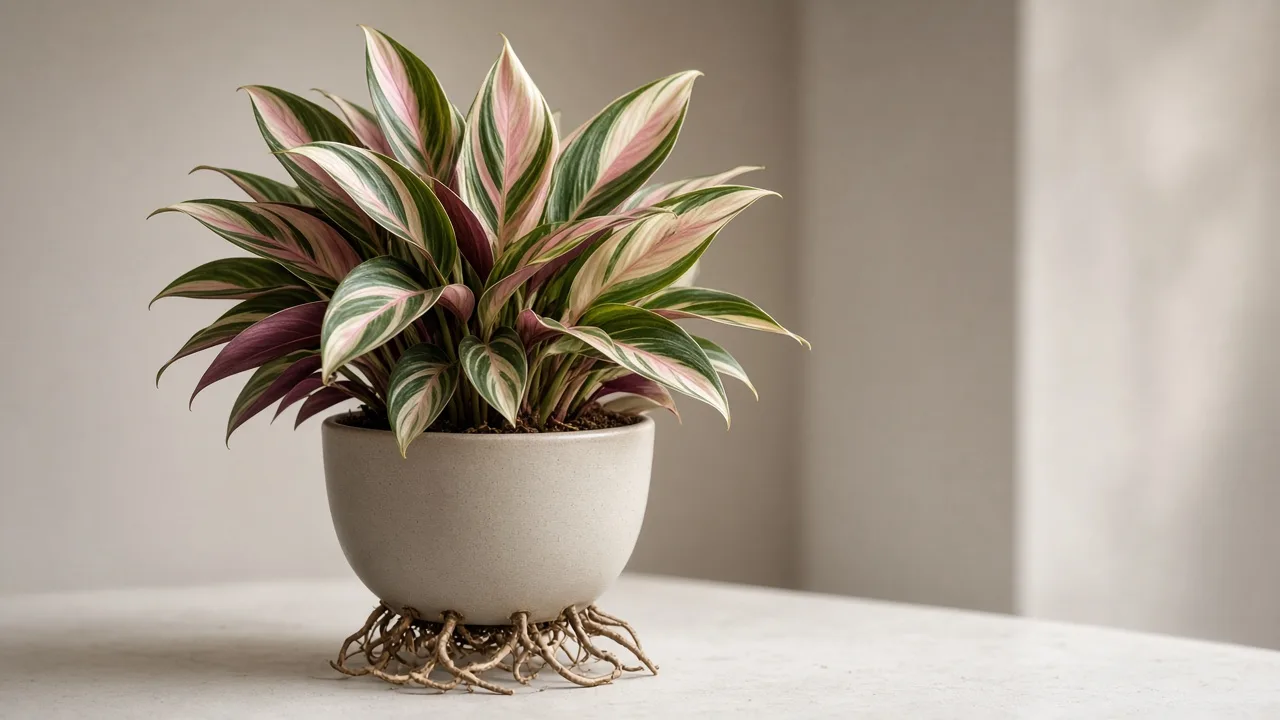
Root Bound on Stromanthe Triostar: Signs, Checks & Repotting
This guide covers root bound on Stromanthe Triostar. See also the general Root Bound guide, watering, and light pages for this plant.
Root Bound on Stromanthe Triostar: Signs, Checks & Repotting
Quick answer
On Stromanthe Triostar, “root bound” should describe what the roots and pot show, not just a clump that looks full. Check for a root ball densely occupied by circling roots, very little potting mix left between them, and repeated signs that the container has become too small. A single root poking from a drainage hole is a clue to inspect, not a diagnosis. The Royal Horticultural Society includes Stromanthe and the Triostar cultivar in its clump-forming group of foliage plants, so a naturally close cluster of leaves can be healthy rather than a reason to repot (RHS growing guide).
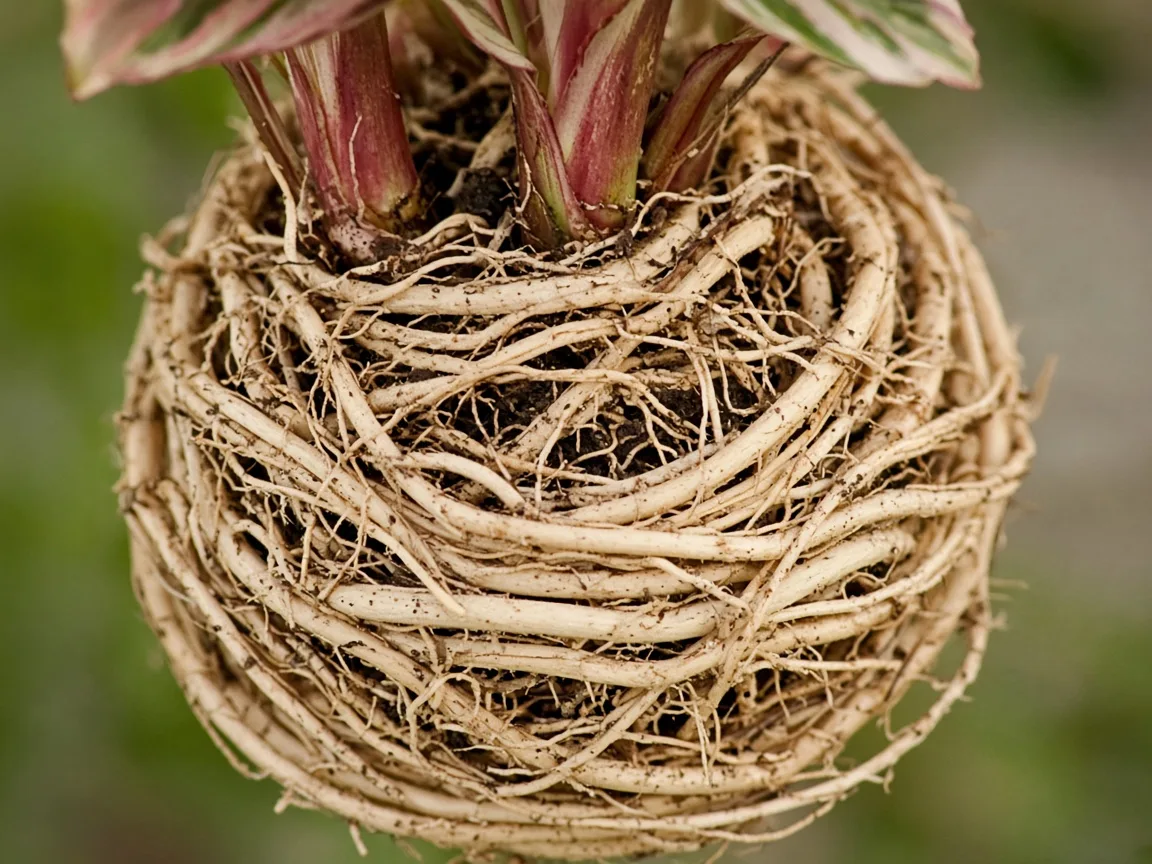
A crowded root ball is different from a leafy crown: assess the roots and mix after gently sliding the plant from its pot.
For general symptoms and terminology, compare the root-bound symptom guide. For Triostar, the practical decision is whether its root ball has outgrown its container, or whether a watering, mix, or root-health problem is making the leaves look stressed.
What root bound means for Stromanthe Triostar
Roots need enough space in the container to hold the plant and take up water and nutrients. A plant becomes root bound when its roots have occupied most of the root ball and begin circling or packing tightly against the pot, leaving too little usable mix. Extension guidance lists roots coming through drainage holes or appearing at the soil surface, a soil mass filled with roots, smaller new leaves, and wilting between normal waterings as possible repotting indicators (Illinois Extension’s repotting guide). No single clue proves that the Triostar is root bound; the strongest case is several root and growth clues occurring together.
The distinction matters because Stromanthe is naturally clump forming. A broad crown, many upright leaf stalks, or leaves emerging close together can be normal for the plant group (RHS describes the group as clump-forming). Do not separate or divide a healthy clump just because the top looks crowded. Inspect the pot contents first and only repot if the roots, depleted mix, or drying pattern support the diagnosis.
Signs to check before you repot
Use several observations rather than relying on leaf posture alone:
- Look below the pot. Roots extending through drainage holes are a useful prompt to inspect the root ball. Roots can reach a hole before every part of the container is crowded, so this clue is stronger when paired with roots circling the sides or a root mass that holds its shape.
- Check the surface and the root ball. Roots visible across the soil surface, a root ball with a web of roots around its outside, and little loose mix between roots suggest the container is nearly filled. A few surface roots around an otherwise loose, soil-filled root ball do not necessarily justify moving up.
- Notice how quickly the pot dries. A Triostar that needs water much sooner than it used to may have less mix available to retain moisture because roots have filled the container. But warmth, brighter light, airflow, seasonal growth, and a change in watering can also change drying time. UF/IFAS advises regular watering for Triostar while allowing soil to dry between waterings, so compare the pot’s recent pattern rather than watering by a fixed calendar (UF/IFAS Triostar care).
- Compare recent growth. Smaller than usual new leaves or wilting between otherwise normal waterings can accompany a full root ball, but these signs are nonspecific. Check the plant’s care history and inspect roots before concluding that the pot is the problem.
- Slide the plant out only if it is stable enough to handle. Support the stems near the base, tip the pot, and ease out the root ball. If roots densely circle its perimeter and little mix remains, you have direct evidence. If the root ball is loose, moist, and still has plenty of mix, return it to the same pot and investigate water, light, or soil instead.
The University of Minnesota Extension also lists circling roots, roots through drainage holes, and potting mix that dries quickly among useful houseplant repotting cues (UMN Extension’s houseplant care article). Use these as inspection prompts rather than a calendar rule: a healthy plant does not need a larger pot simply because a certain number of months have passed.
Separate a full root ball from lookalike problems
A dense but healthy Stromanthe clump
Stromanthe Triostar grows as a leafy clump. Its crown may fill the top of the pot even while the root ball remains loose enough to hold plenty of mix. If leaves are opening normally, new growth is progressing, the mix absorbs and drains water predictably, and roots do not form a dense circling layer, leave the plant where it is. The RHS notes that its clump-forming group is usually repotted every few years, but inspection and plant condition matter more than an automatic schedule (RHS growing guidance).
Underwatering or a fast-drying root ball
A genuinely crowded pot can dry sooner because there is less mix relative to the roots. However, a dry pot does not establish why it dried. Check the mix at more than one depth, pot weight, recent light and temperature changes, and whether water runs down the sides without wetting the root ball. If the root ball is not crowded but is simply dry, use the Stromanthe Triostar watering guide and restore even moisture instead of repotting automatically. UF/IFAS’ plant-specific advice is to water regularly while allowing the soil to dry between waterings; it does not recommend keeping the container continuously saturated (UF/IFAS).
Root rot in wet mix
Root rot can also cause wilting, yellowing, and poor growth, but its root-zone pattern differs from simple crowding. Wisconsin Extension describes plants that wilt while the soil is wet, may be stunted or discolored, and have soft brown roots that can smell unpleasant (Wisconsin Extension’s root-rot guide). If the mix stays wet and roots are soft or decaying, do not treat the plant as merely root bound and move it into a larger pot. Follow the Stromanthe Triostar root-rot guide and correct the wet-root condition first.
Compacted or broken-down potting mix
Old or compacted mix can keep water from moving evenly even when roots have not filled the pot. If the root ball is not densely circled but the center stays wet, water pools, or it bypasses a dry core, compare the compacted-soil guide and soil guide. A mix problem may call for refreshing the medium; it is not proof that the plant needs a substantially wider container.
| What you find | More likely explanation | Next step |
|---|---|---|
| Dense roots circling the root ball, little mix remaining, pot dries much faster than before | Root crowding is plausible | Repot modestly larger after checking roots |
| Full leafy crown but loose roots and a normal moisture pattern | Healthy clump, not confirmed root bound | Keep the current pot and observe new growth |
| Dry mix throughout, light pot, but no dense circling roots | Underwatering or changed conditions | Rehydrate evenly and review the watering routine |
| Wet mix plus wilting and soft brown or foul-smelling roots | Possible root rot | Follow the root-rot guide; do not overpot |
| Water pools or bypasses the core, but roots are not crowded | Compacted or degraded mix | Evaluate the mix and drainage separately |
How to repot a root-bound Triostar
Repot when the plant is actively growing if practical; Illinois Extension says houseplants generally handle repotting best during active growth, often spring or early summer (Illinois Extension). For an indoor Triostar, respond to actual growth and root condition rather than delaying an urgent repair because it is not a particular month.
- Choose a restrained pot increase. Select a container with drainage holes that is only one size larger, around 1–2 inches wider in diameter than the current container. Illinois Extension cautions that overpotting leaves excess soil wet for too long and can contribute to poor growth or root rot (container guidance).
- Prepare fresh container mix. Use a clean, suitable indoor potting mix that retains some moisture but still drains. Avoid garden soil in a houseplant container; Illinois Extension recommends a disease- and pest-free potting mix and says garden soil alone does not provide adequate container drainage (Illinois Extension potting guidance).
- Ease the root ball free. Hold the pot on its side and support the plant at its base. Avoid pulling hard on the leaves or stems. If the pot is flexible, gently squeeze its sides; if roots have grown through holes, cut the pot if necessary rather than tearing the root mass.
- Inspect and loosen only what is needed. Look for firm roots and identify roots that circle tightly around the outside. Gently unwind those that release without force; trim only a circling root that cannot be loosened safely with a clean blade. Illinois Extension recommends cutting or unwinding circling roots and setting the plant at its prior depth (repotting steps). Do not tear apart the whole clump or aggressively strip healthy roots to make it fit.
- Set the plant at the same depth. Add mix beneath the root ball if needed so the base sits level with its former soil line. Fill the sides loosely and settle the mix without compressing it into a hard mass. Keep the leaf bases and crown above the medium.
- Water and drain. Water through the mix to settle it around the roots, then let excess water drain completely. Empty any cachepot or saucer so the new root zone is not left standing in water.
For the plant-specific potting setup, see the Stromanthe Triostar repotting guide. Keep the plant in stable bright, indirect light and avoid stacking repotting with division, heavy pruning, and fertilizing on the same day; one change at a time makes recovery easier to judge.
Recovery and prevention
After repotting, check the moisture of the new mix before watering again. The added volume may dry more slowly than the old root ball, so do not continue the former schedule automatically. A brief pause in new leaf production after handling is not enough by itself to show that the repot failed. Watch for a firm clump, a pot that gradually returns to a predictable wet-to-dry rhythm, and new leaves that emerge without continued collapse. Existing damaged leaves may retain their old marks; judge recovery by the plant’s overall stability and fresh growth.
To avoid a repeat, choose a pot that matches the inspected root ball, keep drainage openings clear, and check roots when the plant’s drying pattern changes substantially or growth stalls. Do not repot solely because the crown is dense, and do not keep sizing up on a fixed annual schedule. If the mix dries quickly but inspection shows open, healthy roots and plenty of medium, first review watering and conditions rather than assuming crowding.
Related tool
Use the Plant Problem Diagnosis Tool to compare root crowding with soil, watering, and root-health problems before making another change.
Related Stromanthe Triostar guides
- Stromanthe Triostar overview — for the plant’s general care conditions.
- Stromanthe Triostar repotting guide — for pot choice and repotting technique.
- Stromanthe Triostar soil guide — for the potting medium and drainage.
- Stromanthe Triostar root-rot guide — for wet-soil wilting and damaged roots.
- Stromanthe Triostar wilting guide — for other causes of persistent droop.
- Stromanthe Triostar problems hub — to browse the plant’s other diagnostic articles.