Small Flowers on Stromanthe Triostar: Normal Blooms & Checks
Quick answer
Small flowers are normal on Stromanthe Triostar: blooms are modest compared with its variegated foliage, and indoor flowering is uncommon. If leaves and stalks look healthy, do not chase larger flowers with bloom fertilizer or harsh sun. First confirm whether you are seeing open flowers on firm stalks or buds that shrivel before they open.
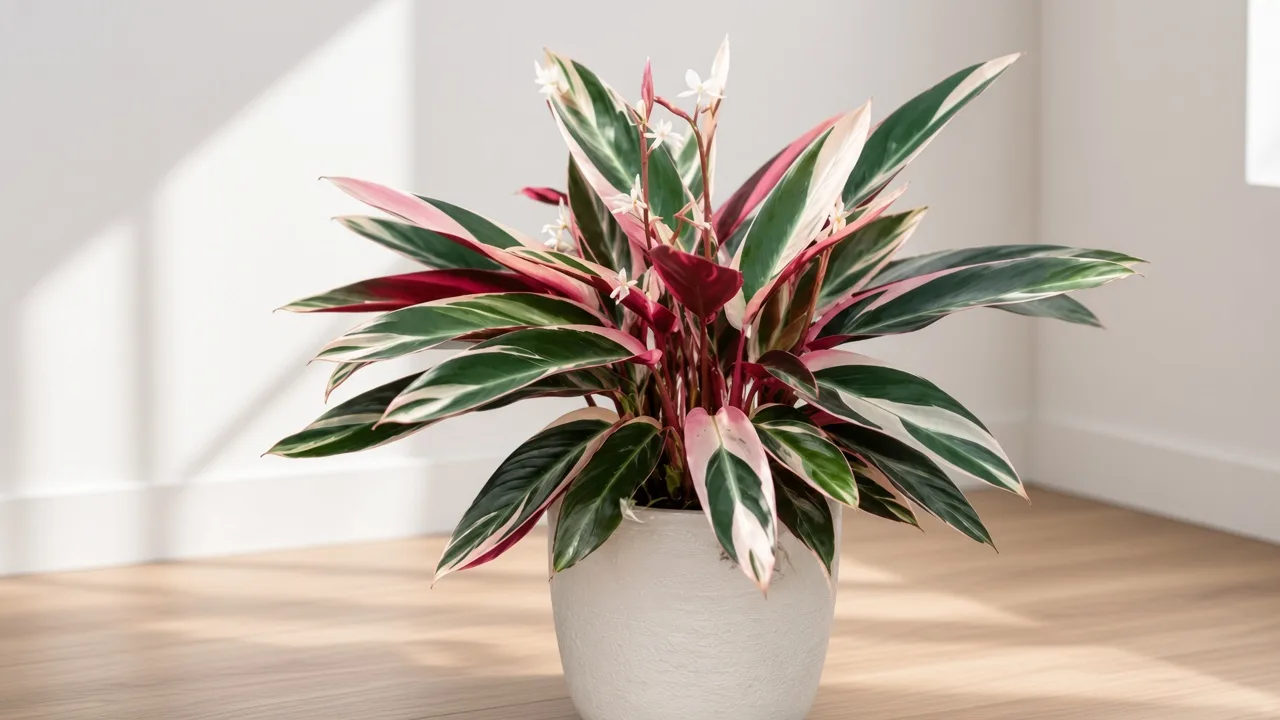
Small Flowers on Stromanthe Triostar: What's Normal & What to Check
This guide covers small flowers on Stromanthe Triostar. See also the general Small Flowers guide, watering, and light pages for this plant.
Small Flowers on Stromanthe Triostar: What's Normal & What to Check
Quick answer
Small flowers on Stromanthe Triostar are usually normal, not proof that the plant is weak. The RHS describes white flowers with orange sepals among red bracts, and houseplants rarely bloom. Growers keep Triostar for its tricolor leaves, not for a large floral show.
First look at the whole plant. If variegated leaves stay firm, new spears unfurl cleanly, and any flowers sit on upright stalks, leave the care routine steady. If buds shrivel before opening, stalks soften, or leaves also curl, fade, or brown at the edges, treat those as separate symptoms rather than trying to enlarge the blooms.
Related: small-flowers guides — for how modest flower size works in general. On Triostar, the pattern usually shows up as tiny white flowers tucked beside cream-pink-green foliage that folds upward at night.
What small Triostar flowers look like
Triostar blooms are much less showy than the foliage. The cultivar profile notes white flowers with orange sepals and red bracts in winter and spring; indoors, timing is less predictable. Gardeners’ Path describes white flowers in pinkish-red clusters during spring or summer outdoors, though that display is uncommon on a windowsill.
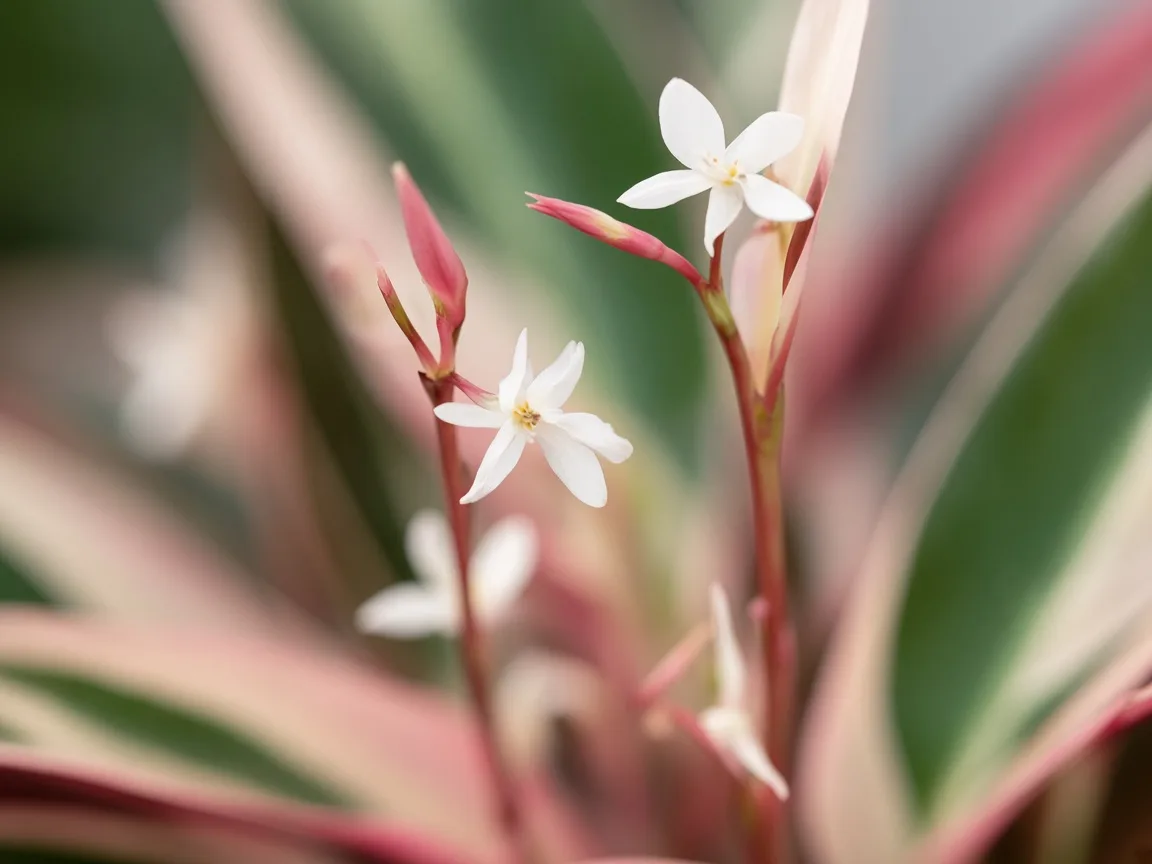
Small sparse Triostar flowers on thin stalks are underwhelming next to the bold cream-pink-green foliage on the same plant.
Planet Natural lists March and April bloom time but notes that Triostar rarely flowers. Seeing a modest cluster, by itself, is different from seeing buds abort or open flowers brown quickly.
Don’t mistake folded leaves for flowers or buds
Triostar is a prayer-plant relative: its lance-shaped leaves close upward at night. In the morning, rolled spears and pink leaf undersides can look like something new is forming, but flower stalks rise separately from the rhizome and stand above the leaf blades.
Before you change care, trace the structure you are looking at. A true inflorescence has a distinct stalk and bracts around small white blooms. A new leaf spear stays attached to the main shoot and opens into variegated foliage. Pulling or cutting a folded leaf by mistake damages the plant without helping flowers.
Why Triostar flowers stay small
Small scale is part of the species habit, not a nutrient shortage by default. The RHS species profile groups Stromanthe with herbaceous perennials that produce cup-shaped flowers with showy bracts, but the houseplant trade selects Triostar for variegation, not flower size.
Indoors, stable foliage is the practical success metric. Gardeners’ Path notes that inflorescences are rarely seen on houseplants, so a few tiny blooms can mean conditions are already reasonable. Flower size is a poor stand-in for root health; judge the plant by firm stems, even variegation on new leaves, and a root zone that dries on schedule described in the Triostar watering guide.
Small blooms or a different flower problem?
Compare the flower’s condition and the rest of the plant before changing care:
| What you see | How to read it | Next step |
|---|---|---|
| Tiny flowers open on a firm stalk; leaves look normal | Typical rare Triostar bloom | Leave the routine steady. |
| Buds shrivel or fall before opening, or open flowers fade fast | Flower decline, not just small size | Check moisture and placement; see flowers turning brown on Triostar. |
| No stalks appear while the plant otherwise grows | No-flower pattern | Review light, humidity, and season; see no new growth on Triostar if the whole plant has stalled. |
| Leaves also fade, curl, or develop brown edges | A leaf-care issue may be present | Match the leaf symptom on the Stromanthe Triostar problems hub. |
Do not read calendar month alone as failure. Reference bloom windows differ between sources, and an indoor plant may flower off-cycle or skip years entirely.
What to check before changing care
If you have both small flowers and declining growth, inspect conditions that affect the whole Marantaceae clump:
- Look at new leaves and stalks. Firm spears with strong pink, cream, and green patterning suggest the plant is doing well even when flowers are small. Yellowing, drooping, or soft stalks deserve their own diagnosis.
- Check light at leaf height. The RHS recommends bright filtered light for this cultivar. Triostar that is too dim may lose color before it loses flowers. Follow the Triostar light guide rather than moving the plant into direct sun to chase blooms.
- Feel the potting mix. The species profile recommends moist, well-drained conditions. Peat-based mix that swings between bone-dry and waterlogged stresses roots and can abort buds while still leaving occasional tiny open flowers on healthier stems.
- Review humidity and water quality. Smart Garden Guide notes that Triostar is a prayer-plant relative that needs high humidity and that indoor blooms are an undependable bonus. Hard tap water and dry air often show on leaf edges first; fix those patterns before fertilizing for flowers.
The first fix for small Triostar flowers
If flowers are small but open normally and the foliage looks sound, the first action is to do nothing special for the blooms. Keep bright filtered light, even moisture in the Triostar soil mix, and the watering rhythm that matches your pot size and room humidity.
That single decision matters because stacked changes make it impossible to read whether a real problem is improving. Only after you confirm a separate care mismatch—such as a saturated root zone or a dim location fading variegation—should you correct that one factor using the linked care guides.
Why bloom boosters won’t enlarge Triostar flowers
Triostar is maintained for foliage, not fruit or seed. High-phosphorus bloom formulas add salts without changing the genetics that produce modest Marantaceae inflorescences. Follow the Triostar fertilizer guide at half-strength during active growth, and skip winter feeding unless you are running strong supplemental light and seeing continuous new spears.
If leaves look pale, start with light and humidity before feeding. Extra fertilizer on a stressed root zone can worsen fertilizer burn or brown tips while leaving flower size unchanged.
What not to do
- Do not move Triostar into direct sun to force flowering. Harsh sun bleaches cream and pink panels first; filtered light is the safer baseline.
- Do not repot, prune heavily, and increase fertilizer on the same week when the only concern is small open flowers.
- Do not cut healthy foliage hunting for hidden blooms. Remove only a spent flower stalk if you prefer a tidier look.
- Do not treat a single tiny cluster as urgent when stems and leaves remain firm.
When to use this page vs other Stromanthe Triostar guides
Use this page when flowers are open but look small. If open blooms or unopened buds are browning, start with flowers turning brown. If variegation is washing out to mostly green, check not enough light and the main Triostar care page. For other symptoms, begin at the problems hub.
Related Stromanthe Triostar guides
- Flowers turning brown: use when buds or open clusters deteriorate, not when size alone is modest.
- Brown tips and low humidity: use when leaf edges crisp while you are watching flowers.
- Watering, light, and fertilizer: use for steady foliage care instead of chasing bloom size.
Related tool
Use the Plant Problem Diagnosis Tool to compare small flowers with a separate leaf, stem, or soil symptom before changing multiple variables at once.