No New Growth on Stromanthe Triostar: Causes, Checks & Fixes
Quick answer
A Stromanthe Triostar can pause between leaves, especially in cooler, darker months or after a change of location. First inspect the clump crown and soil; then correct one confirmed issue, such as dim light, cold exposure, waterlogged mix, or pests, rather than fertilizing or repotting on guesswork.
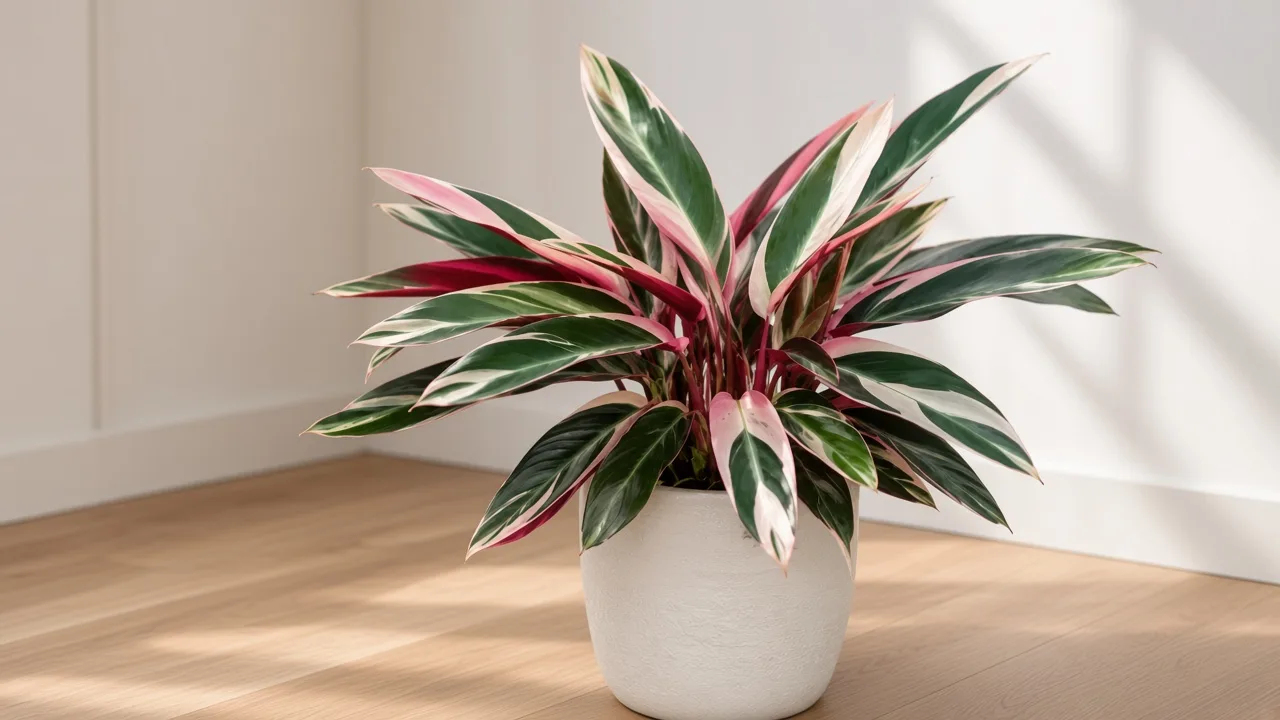
No New Growth on Stromanthe Triostar: Causes, Checks & Fixes
This guide covers no new growth on Stromanthe Triostar. See also the general No New Growth guide, watering, and light pages for this plant.
No New Growth on Stromanthe Triostar: Causes, Checks & Fixes
Quick answer
A Stromanthe Triostar does not make leaves on a fixed calendar. A gap between leaves can be normal when days are short and indoor light is low, but a stalled crown plus yellowing, limp leaves, persistently wet soil, cold exposure, or visible pests deserves a closer check. First look at the crown and feel the potting mix; if the plant is otherwise firm and the room is dim, move it gradually to bright, indirect light. Do not use fertilizer as a substitute for diagnosis.
Start from the plant’s own baseline: compare its current clump with a photo from a few weeks earlier, and use the Stromanthe Triostar overview to check whether recent changes in placement or care coincide with the pause. The general no-new-growth symptom guide can help with causes shared across houseplants; the checks below focus on this rhizomatous, variegated plant.
What no new growth looks like on Stromanthe Triostar
For this guide, “no new growth” means that no fresh rolled leaf or shoot has appeared from the plant’s crown for a period when it would normally be growing in your home. Look at soil level, not only at the largest leaves. Stromanthe forms an upright clump from short, creeping rhizomes, so new leaves appear as small spears from the crown rather than as a new vine extending from a long stem. NC State Extension describes Stromanthe as rhizomatous and clumping.
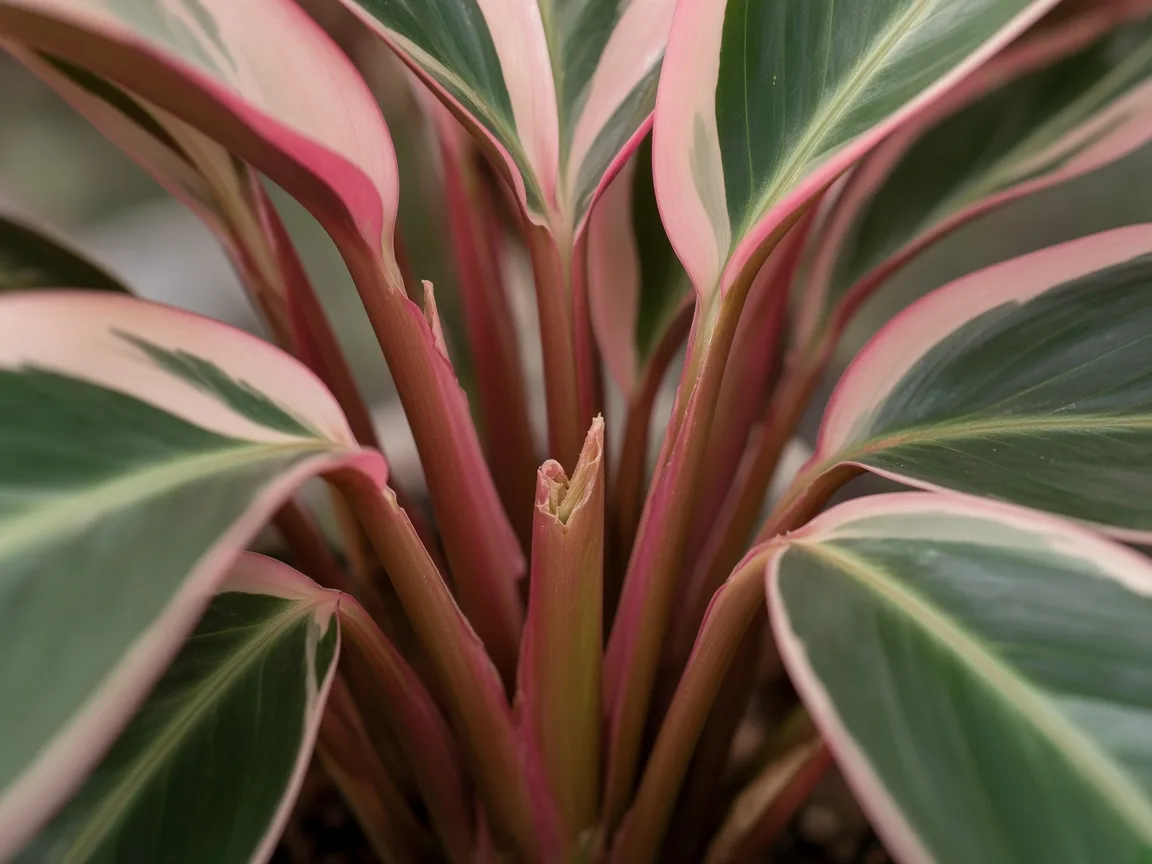
Check the crown and newest rolled leaf on your own plant; the photo is a visual reference, not proof that growth has stopped.
Do not count the daily lifting and folding of existing leaves as a new shoot. Stromanthe leaves can change position with light and time of day, as Wisconsin Extension notes for this plant, while a new leaf is a separate rolled blade rising from the crown. If your concern is that Triostar is not flowering, that is different: houseplants rarely flower, so a lack of flowers is not evidence that leaf growth has failed. NC State describes the plant as a rhizomatous clump, notes that houseplant flowers are rarely seen, and flags root or stem rot plus mealybugs, aphids, and spider mites as issues to monitor (NC State Stromanthe profile).
When a pause can be normal for Triostar
There is no reliable “one new leaf every X days” schedule for every Stromanthe Triostar. Clump size, light, warmth, the growing season, recent transport, and root disturbance all affect visible leaf production. A mature plant may hold the same number of leaves for a while and still be healthy if its existing leaves stay firm, the crown is solid, and the pot dries in a predictable way.
Season matters. Wisconsin Extension recommends keeping the medium evenly moist during the growing season, then allowing it to dry a little more between waterings in cooler, darker months; fertilizing is also limited to the growing season. That seasonal shift is a reason to expect slower activity indoors in winter, not a reason to declare the plant dormant or to keep it bone dry. Colorado State Extension also notes that Triostar needs a seasonal adjustment in moisture and tolerates lower light while showing its strongest color in brighter light.
If the pause began after bringing the plant home, moving it, or dividing or repotting the clump, give it stable conditions and observe before adding another stressor. A brief pause with no other symptoms is different from a crown that softens or leaves that continue to decline. If it still makes no leaves during a warm, bright active-growth period, proceed through the checks below.
Read Triostar’s variegation before changing the light
Triostar tolerates lower light, but filtered brightness helps preserve its pink, cream, and green pattern. If a growth pause began after a move to a dimmer spot and the petioles are also leaning toward a window, low light is a plausible limiting factor; that pattern is a clue, not proof. Bright indirect light gives the cultivar better conditions for color, while harsh direct sun can burn the leaves. UF/IFAS recommends a shady placement and warns that excess sun can burn the leaves.
Check the light where the leaves sit, not at the window alone. If the plant spends most of the day in a dim corner, move it nearer a bright window with filtered light, or use a suitable grow light on a consistent schedule. Make the change gradually over several days so pale leaves are not suddenly exposed to strong sun. The Stromanthe Triostar light guide can help you choose a brighter location without jumping to direct afternoon sun. If the leaves are stretched and leaning, compare the diagnosis with not enough light on Stromanthe Triostar; if the plant is simply slow but compact and healthy, low light may not be the only cause.
Check temperature and drafts around the crown
Because Stromanthe is tropical and prefers warmth, cool air is a plausible cause of a growth pause, especially if the pause began after the plant was moved near a cold window or air-conditioning outlet. The air beside exterior glass or a vent may be cooler than the room thermostat suggests. Wisconsin Extension says this cultivar prefers temperatures above 65°F and that the variegated form is less cold-tolerant than non-variegated forms. Use that warm-condition guidance as a placement check.
Move the pot away from cold glass and direct vent flow, then keep the temperature steady rather than placing it beside a heater. Do not try to compensate for a chilly room with extra watering: cooler roots use water more slowly, so the mix can remain wet longer. If a recent cold exposure also caused limp or damaged leaves, use the cold-damage guide for Stromanthe Triostar to separate that issue from a quiet but otherwise healthy crown.
Use the pot and roots to test for a moisture problem
Stromanthe prefers a moist growing medium, but roots still need a mix that drains. A pot that stays saturated can deprive the root zone of air and increase the risk of root or stem rot; a pot that repeatedly dries completely can stress this moisture-sensitive plant. Missouri Botanical Garden recommends moist, well-drained soil for Stromanthe.
Check moisture below the surface with a finger or wooden skewer and lift the pot to learn how heavy it feels. Water when the upper layer begins to dry, then let excess drain; do not follow a weekly calendar if the soil is still wet. If the pot remains heavy for many days, drainage is blocked, or the crown is soft and the mix smells sour, inspect the roots and correct the failing mix or drainage. Repotting is justified when the roots are damaged or the medium has broken down, not simply because a leaf has not appeared. The Stromanthe Triostar watering guide and soil guide cover the moisture balance in more detail. For yellowing or collapse alongside wet mix, compare with root rot on Stromanthe Triostar.
Rule out pests hiding in the folded foliage
When growth stalls and new leaves look distorted, inspect both leaf surfaces, the folded leaf bases, and the crown with a phone camera or magnifier. Look for visible insects or cottony clusters, sticky residue, and the stippling or fine webbing associated with spider mites; do not treat for pests unless you find evidence. UC IPM describes spider mite stippling and webbing. NC State also lists mealybugs and aphids among the insects to monitor on Stromanthe, as noted above.
If you confirm pests, isolate the pot and follow the matching plant-specific instructions rather than increasing fertilizer or humidity as a substitute for treatment. The spider-mite guide and mealybug guide explain those lookalikes in more detail. If no pests are present and the newest leaves are simply smaller or less colorful, return to the light and root-zone checks instead of applying a pesticide “just in case.”
The first fix: correct the confirmed limiting condition
If the crown and roots are firm but the plant is in a dim spot, the first correction is to move it gradually to bright, indirect light. If the pot is staying wet or the roots are failing, fix drainage and root health first; more light alone will not repair damaged roots. If the mix is drying completely or the plant is cold, stabilize that specific condition. Make one change at a time and record the date so you can tell whether the plant responds.
Skip a “growth boost” fertilizer dose. Wisconsin Extension recommends feeding during the growing season, not as a cure for a stressed plant. Fertilizer cannot replace light, warmth, or healthy roots, and adding it when the plant is not actively using water can leave salts concentrated in the pot. Resume the normal, restrained feeding routine only after the underlying conditions are sound; see the Stromanthe Triostar fertilizer guide for feeding context.
What recovery looks like, and when to escalate
Do not expect an old leaf to become larger or more colorful after you improve care. Evidence of recovery is a firm crown, stable existing leaves, a root ball that no longer stays waterlogged or dries out completely, and eventually a new spear from the clump. That spear may take longer to appear in low-light or cool conditions, so there is no honest fixed recovery deadline for every Triostar.
Escalate from observation to root inspection when the soil stays wet, the crown softens, leaves collapse successively, or a sour smell comes from the pot. If the rhizome and every crown have become soft and dark, recovery is unlikely; save only firm, healthy sections if any remain. For a stable plant without those warning signs, keep the conditions consistent and compare dated photos rather than unpotting it repeatedly.
Prevent another growth pause
Give Triostar a bright, filtered position, protect it from cold drafts, and keep a moisture-retentive but well-drained mix. Check the upper soil and pot weight before watering, then adjust the interval with season and room conditions instead of reusing a fixed schedule. During cooler, darker months, expect the pot to dry more slowly and reduce watering accordingly; return to active-season feeding only when the plant is growing.
At each watering, glance at the crown and leaf undersides. That simple habit helps you notice a forming spear, an emerging pest, or a change in leaf posture before you respond with several care changes at once. If your plant’s main issue is limp leaves rather than absent shoots, use the drooping-leaves guide; if new leaves continue to form but arrive slowly, the slow-growth guide is the closer match.
Related tool
Use the Plant Problem Diagnosis Tool to compare the signs on your Stromanthe Triostar before changing several conditions at once.
Related Stromanthe Triostar guides
- Stromanthe Triostar repotting — use this when the mix has failed or roots are crowded or damaged; a growth pause by itself is not a reason to repot.
- Brown tips on Stromanthe Triostar — use this for dry or crisp leaf edges, which can point to humidity or water-quality issues even when the crown is still producing leaves.
- Overwatering on Stromanthe Triostar — use this when persistently wet mix is the main problem and you need a watering correction plan.