Aphids on Syngonium Albo: Causes, Checks & Fixes
Quick answer
Aphids on Syngonium Albo show up as soft clusters on new stem tips and leaf bases, often with sticky honeydew and curled young leaves. First step: isolate the plant and rinse aphids off new growth with a firm water spray before reaching for soap or oil.
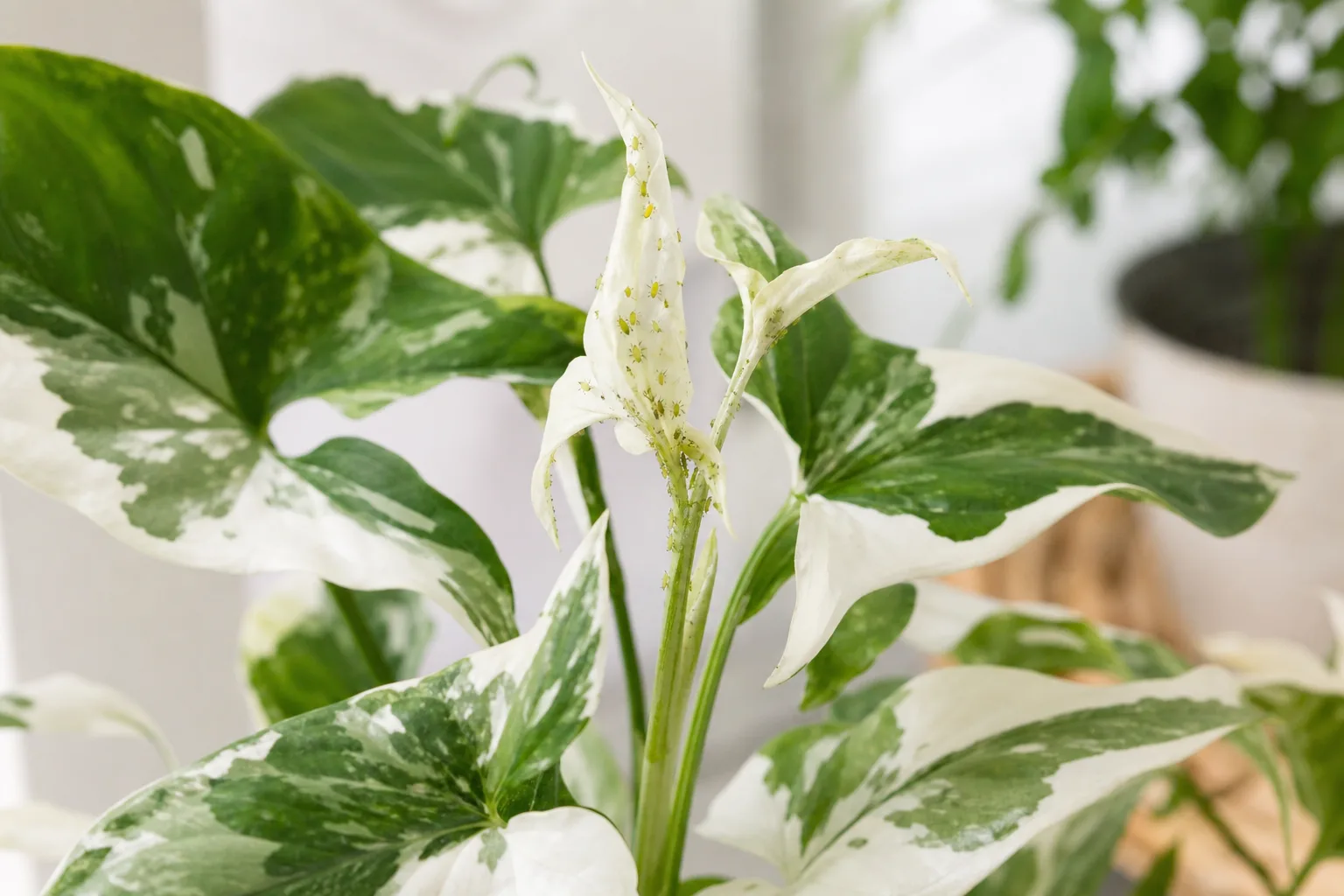
Aphids on Syngonium Albo: Causes, Checks & Fixes
This guide covers aphids on Syngonium Albo. See also the general Aphids guide, watering, and light pages for this plant.
Aphids on Syngonium Albo: Causes, Checks & Fixes
Quick answer
Aphids are common sap-feeding insects on houseplants that colonize the soft new growth Syngonium Albo produces as it climbs. On this variegated arrowhead vine, they cluster at unfurling leaf tips, stem joints, and leaf bases-exactly where the next white-and-green leaf is forming. They pierce tender tissue, excrete sticky honeydew, and can curl or stunt young leaves before you notice yellowing lower on the vine.
First step: isolate the plant and rinse aphids off new growth with a firm stream of water. Hold the pot steady, angle the spray at stem tips and leaf undersides, and let foliage dry in Syngonium Albo light guide the same day. Do not reach for insecticide until you have confirmed live aphids and knocked down what you can mechanically.
What aphids look like on Syngonium Albo
Aphids are small, pear-shaped soft-bodied insects roughly 1/16 to 1/8 inch long. On Syngonium Albo they are usually green, but colonies can also appear yellowish, brown, black, or pink depending on species and life stage. Most individuals are wingless and cluster in dense groups; when populations surge you may see winged adults that can fly to neighboring plants.
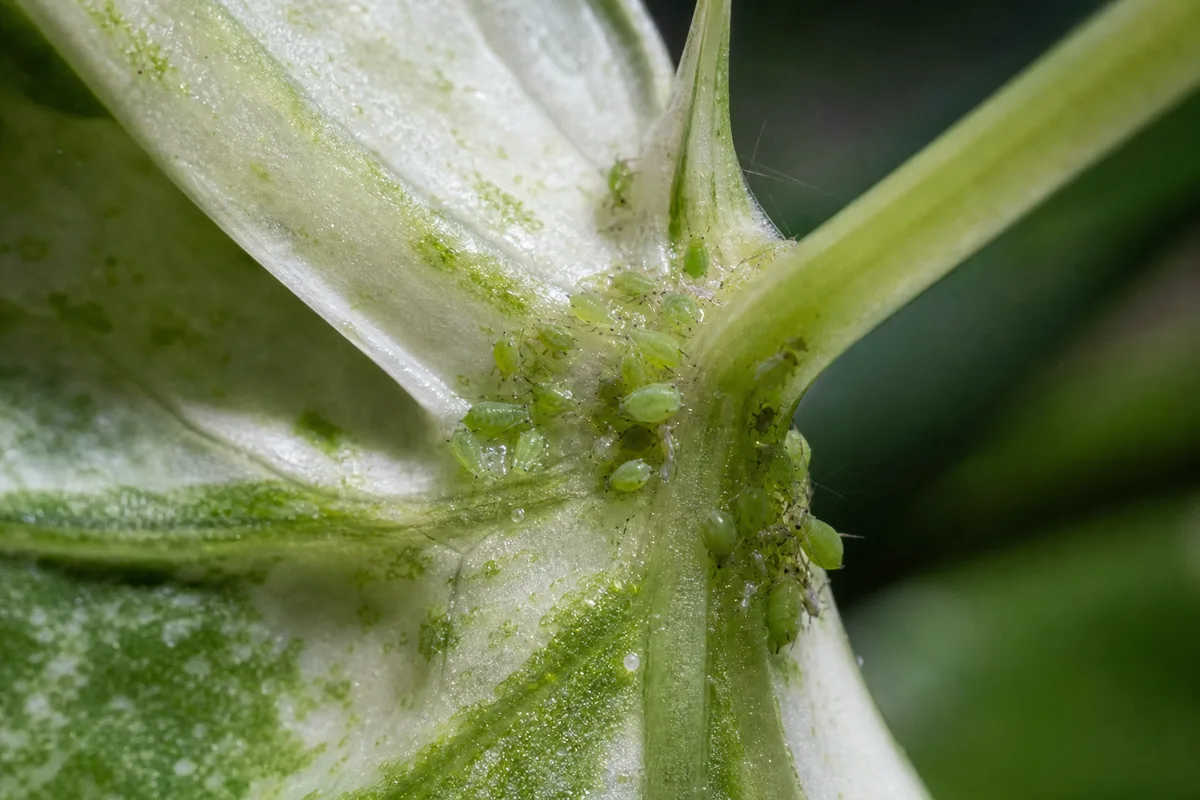
Aphids symptoms on Syngonium Albo - compare with healthy tissue on the same plant.
On Syngonium Albo overview, check these spots first:
- Newest unfurling arrowhead leaves - aphids gather where the next leaf is still soft and rolled
- Stem tips and nodes - especially on vines pushing spring or summer growth
- Leaf axils - the crotch where petiole meets stem on climbing sections
- Undersides of upper leaves - honeydew often drips onto lower foliage, but feeding starts above
Visual clues beyond the insects themselves:
- Sticky, shiny honeydew on leaves, moss poles, or shelf surfaces below the plant
- Black sooty mold growing on honeydew deposits (wipes off; it does not infect syngonium tissue directly)
- Ant trails on pot rims, stakes, or walls near the vine - ants harvest honeydew and protect aphid colonies
- Curled or puckered new leaves - distortion shows on the youngest tissue before older leaves yellow
- Whitish cast skins left behind as aphids molt - easy to miss without magnification
On variegated albo, damage often appears first on white sectors of new leaves because those areas lack chlorophyll and cannot compensate for sap loss the way green tissue can. A single infested growing tip can produce a small, twisted leaf with browned white patches while the rest of the vine still looks fine-do not wait for whole-plant yellowing before acting.
Why Syngonium Albo gets aphids
Syngonium podophyllum is a tropical climbing aroid that produces frequent soft shoots when light, humidity, and nutrients align. Aphids feed on that tender phloem sap. Indoor collections lack the lady beetles, lacewings, and parasitic wasps that keep aphid numbers low outdoors, so a few hitchhikers can multiply fast on a single vine.
Common introduction routes on albo:
- New plants without quarantine - nursery stock, cuttings trades, and mixed greenhouse shipments often carry aphids on hidden stem tips
- Summer outdoors - a few hours on a patio or balcony can pick up winged aphids that then spread indoors
- Open windows - winged forms can drift in during warm weather
- Stressed growth flushes - plants recovering from Syngonium Albo repotting guide, low light, or irregular watering push soft tissue pests prefer
Care patterns that raise risk on this species:
- Excess nitrogen fertilizer - lush, soft shoots attract aphids; over-fertilizing encourages the lush new growth they target
- Crowded plant shelves - vines touching neighbors let crawlers and honeydew bridge infestations
- Dusty foliage in bright windows - albo needs bright indirect light for variegation, but dusty leaves in hot dry air weaken the plant and make pest buildup harder to spot
- Overwatered, stagnant conditions - while aphids are not a root pest, constantly wet soil and poor airflow stress the plant and slow recovery after infestation
Albo’s slower growth rate compared with all-green arrowhead vines means each damaged growing tip costs more time. A pest hit on three active nodes in spring can mean a thin, leggy summer instead of the compact variegated flush you expected.
How to confirm the diagnosis
Work through these checks in order before you treat:
- Find live insects - Use a 10× hand lens on the top two nodes of each vine. Aphids have visible legs and antennae and move slowly when disturbed. If you see only stickiness with no insects, consider mealybugs, scale, or whiteflies instead.
- Check honeydew pattern - Sticky residue concentrated near growing tips and leaf axils supports aphids. Uniform dust-like film without insects may be something else entirely.
- Look for ants - Ants on the pot or moss pole strongly suggest aphids or other honeydew producers above them.
- Note which leaves are affected - Aphids hit newest growth first. Yellowing on old lower leaves with clean tips points to watering or root issues, not aphids.
- Shake test for whiteflies - Gently shake a stem over white paper. A small cloud of white flying insects means whiteflies, not aphids. Aphids mostly stay clustered on the plant.
- Review recent history - New plant in the last month, outdoor summer stint, or open-window season aligns with introduction timing.
Confirmed aphids: soft-bodied clusters on tender tissue plus honeydew or cast skins. Suspected but not confirmed: stickiness alone, single curled leaf without insects, or yellow lower foliage with clean growing tips-keep inspecting before spraying chemicals.
First fix for Syngonium Albo
Move the plant away from other specimens, then rinse aphids off new growth with a firm stream of lukewarm water.
Place the pot in a sink, shower, or outdoors in shade. Wrap the soil surface in plastic if you worry about wash-through saturating an already wet mix. Direct water at stem tips, leaf undersides, and axils where colonies hide. A forceful spray knocks aphids off sturdy foliage without chemicals on day one.
Let leaves dry the same day in bright indirect light-not hot direct sun on wet white sectors, which can scorch variegated tissue. Check that the pot is not left sitting in drained water after the rinse.
Do not fertilize a pest-hit albo hoping to push new growth. Soft nitrogen-rich flushes feed the aphids as much as the plant. Do not repot on day one unless soil pests are also confirmed-foliage aphids rarely require a soil change.
Step-by-step recovery
After the initial isolation and rinse:
- Repeat water sprays every two to three days until live aphids are gone on inspection. Aphids reproduce quickly indoors; one rinse rarely clears eggs and crawlers on the next node up.
- Apply insecticidal soap if colonies persist after several rinses. Use a product labeled for houseplants, cover stems and undersides thoroughly, and repeat at label intervals. Insecticidal soap kills on contact by smothering soft-bodied insects and has no residual effect-missed aphids survive until the next round.
- Wipe honeydew and sooty mold off leaves with a damp cloth once feeding stops. This improves light capture on variegated sectors still photosynthesizing.
- Trim only when necessary - Remove a growing tip if it is heavily distorted and still covered in aphids you cannot rinse off. Do not mass-prune healthy variegated vines; albo recovers slowly and you may cut away irreplaceable white sectors.
- Manage ants if they are protecting colonies. Sticky barriers on stakes or isolating the pot until aphids clear helps natural enemies reach the insects-indoors, you are often the natural enemy.
- Re-check the collection weekly for six weeks. Inspect every syngonium, pothos, and philodendron nearby-aphids are not species-loyal and many houseplant aphids colonize a wide range of hosts.
If soap and rinses fail after two full weeks of label-interval treatment, consider horticultural oil on a test leaf first-some aroids are sensitive when stressed. Never apply oil to a drought-stressed plant or in midday heat.
Recovery timeline
Water knockdown shows results within two to three days on light infestations. A full soap course with repeated rinses typically takes one to two weeks to clear crawlers and newly hatched nymphs. Because albo nodes activate more slowly than green syngonium, expect the next clean variegated leaf two to four weeks after pests are gone-not overnight.
Judge success by pest-free growing tips and normal unfurling, not by old curled leaves flattening. Honeydew stickiness dries up within days once feeding stops; sooty mold clears as you wipe leaves or as new growth replaces coated ones.
Lookalike symptoms to rule out
Mealybugs form white cottony masses in stem joints and node wrinkles. They move slowly and look fluffy, not pear-shaped and translucent.
Scale insects appear as immobile brown or tan bumps on stems and leaf veins. They do not cluster in moving groups on new tips the way aphids do.
Whiteflies fly in a cloud when you shake the plant; nymphs are flat and pale on undersides. Sticky leaves occur, but distortion pattern differs from aphid tip clustering.
Spider mites cause fine stippling and webbing in hot dry conditions-not typical heavy honeydew. Confirm with a tap test over white paper.
New leaf curl from low humidity can mimic aphid distortion on albo without insects, stickiness, or ants. Raise humidity and re-check tips with a lens before spraying.
Overwatering yellowing hits older lower leaves while growing tips stay firm and green. Roots smell sour or soil stays wet-aphids do not cause that pattern alone.
Mistakes to avoid
Do not treat once and assume the vine is clear. Eggs and nymphs hide in folded new leaves; repeat applications are usually necessary.
Do not use homemade dish soap sprays. They burn leaves, especially pale variegated sectors. Use labeled insecticidal soap only.
Do not ignore ants. Controlling aphids is harder while ants defend colonies on the moss pole or pot rim.
Do not blast dry, heat-stressed plants with ice-cold water in a sunny window. Rinse in moderate conditions and let foliage dry in indirect light.
Do not handle heavily infested vines bare-handed if you have pets-Syngonium Albo contains calcium oxalate crystals toxic to cats and dogs. Sap release during pruning or crushing aphids is a skin irritant for some people; gloves are reasonable during cleanup.
Do not return an isolated plant to the main shelf until you have seen no live aphids for at least two weeks.
Syngonium Albo care cross-check
While treating aphids, keep baseline care steady-swings in light, water, and fertilizer add stress on top of sap loss.
- Light - Maintain bright indirect exposure so the plant can outgrow damage. Leggy, pale new leaves after treatment may mean light is too low, not that aphids remain.
- Water - Water when the top inch of mix dries; avoid keeping roots soggy while you are rinsing foliage repeatedly.
- Humidity - Target 50–65% for steady unfurling without stagnant wet air that encourages fungal issues on damaged leaf edges.
- Fertilizer - Pause feeding until new growth looks normal and pests stay gone for several weeks. Resume at half strength during active growth only.
A healthy albo in appropriate light and a well-draining aroid mix tolerates minor pest pressure better than a stressed specimen in a dark corner with wet soil.
How to prevent aphids next time
Quarantine every new plant, cutting, and trade specimen for two to four weeks in a separate room. Inspect vine tips twice weekly before integrating it with your collection.
Scout Syngonium Albo growing tips each week from late winter through summer-that is when the plant pushes the tender shoots aphids prefer. A thirty-second lens check at each watering catches colonies before honeydew spreads.
Avoid excess nitrogen during the growing season. Use balanced or slow-release products at reduced strength so flushes stay firm, not soft and aphid-friendly.
Keep leaves lightly dust-free in bright placements. A damp cloth wipe every few weeks improves inspection and plant vigor without leaf shine products.
When moving albo outdoors for summer, isolate it for two weeks on return and rinse foliage before it rejoins indoor shelves.
Preserve beneficial insects if you summer plants outside-broad-spectrum sprays indoors leave you as the only predator.
When to worry
Escalate treatment when winged aphids appear, colonies cover most active nodes, or ants swarm multiple vines. Those signs mean the population is established and mobile.
Replace or heavily cut back only when every growing tip is infested, new leaves fail to open for more than a month after repeated treatment, and neighboring plants are also affected. Albo is recoverable from moderate hits; total tip loss on a small specimen may make restarting from a clean cutting more practical than endless chemical cycles.
Sooty mold alone is not an emergency once insects are controlled. Severe whole-vine wilting with soft stems points to root or crown problems beyond aphids-investigate roots rather than spraying again.
Conclusion
Aphids on Syngonium Albo concentrate on the new variegated growth you care about most. Isolate early, rinse stem tips and leaf bases before you spray, and repeat until growing tips stay clean. On this slow-climbing aroid, protecting the next unfurling leaf is the whole game-catch colonies at the tip, and the vine keeps producing the white-and-green foliage you bought it for.
When to use this page vs other Syngonium Albo guides
- Syngonium Albo watering guide - Use for routine moisture checks before assuming aphids is the main issue.
- Syngonium Albo problems hub - Browse all 1 common issues on this species.
- Yellow Leaves on Syngonium Albo - Different entry point when symptoms overlap with aphids.