Brown Tips on Syngonium Albo: Causes, Checks & Fixes
Quick answer
Brown tips on Syngonium Albo usually mean the white variegated margins are drying faster than roots can replace moisture-often from low humidity, inconsistent watering, or minerals in tap water. First step: measure humidity at the pot and check whether the top inch of soil is dry or wet before changing anything else.
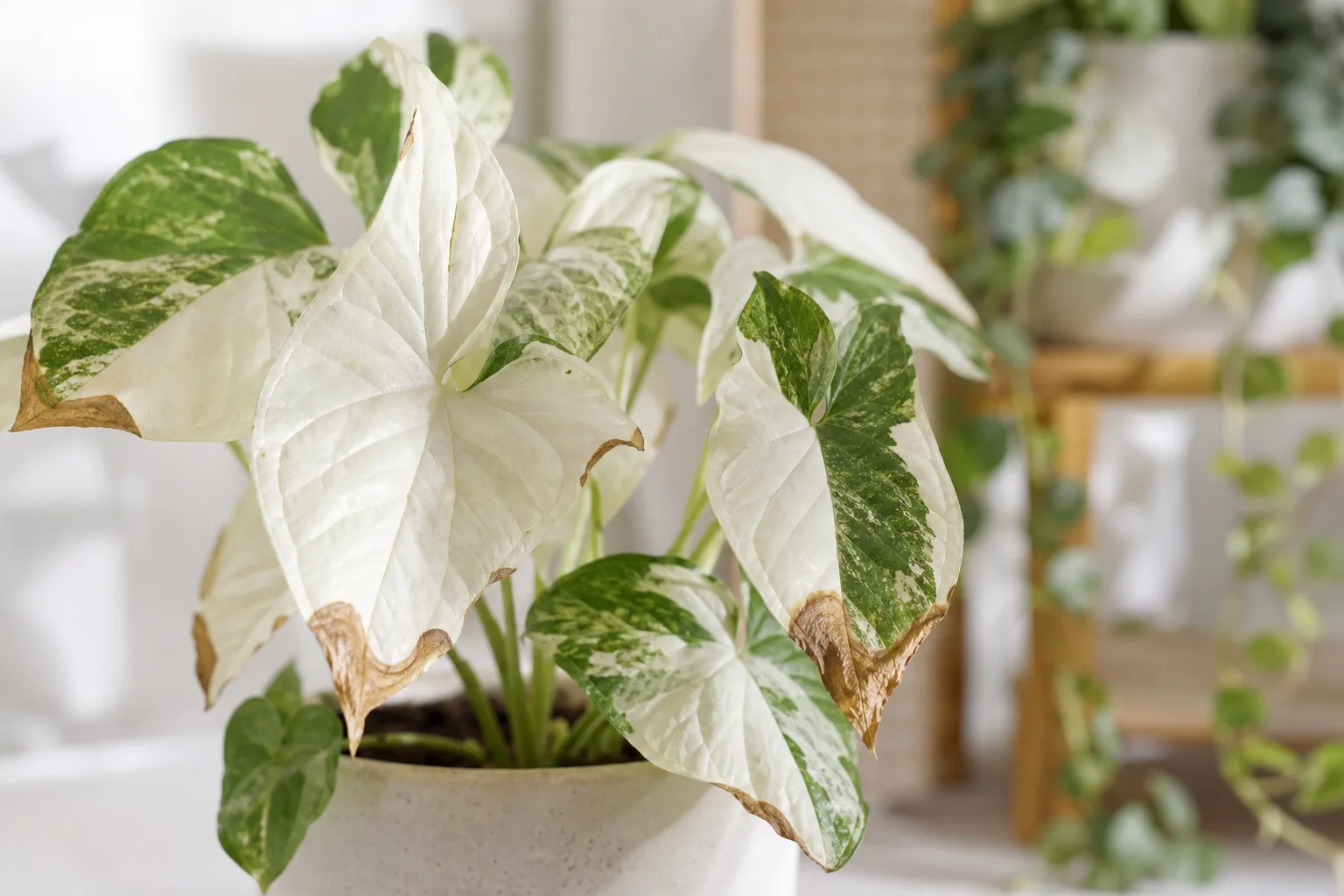
Brown Tips on Syngonium Albo: Causes, Checks & Fixes
This guide covers brown tips on Syngonium Albo. See also the general Brown Tips guide, watering, and light pages for this plant.
Brown Tips on Syngonium Albo: Causes, Checks & Fixes
Quick answer
Brown leaf tips on Syngonium Albo (Syngonium podophyllum ‘Albo Variegatum’) are almost always an environmental stress signal-not a contagious disease. The creamy white sectors on each leaf have less chlorophyll and less structural resilience than green tissue, so they lose moisture first when humidity drops, watering swings, or minerals build up in the root zone.
First step: measure humidity at the pot and check the top inch of soil with your finger before Syngonium Albo repotting guide, fertilizing, or trimming heavily. If humidity reads below 50% and white margins feel papery while the mix is appropriately dry, raise moisture in the air around the plant. If soil stays wet for days with soft lower stems, suspect root stress instead of dry air alone.
What brown tips look like on Syngonium Albo
On this cultivar, tip burn usually announces itself on white or pale green variegation before solid green areas. Typical patterns include:
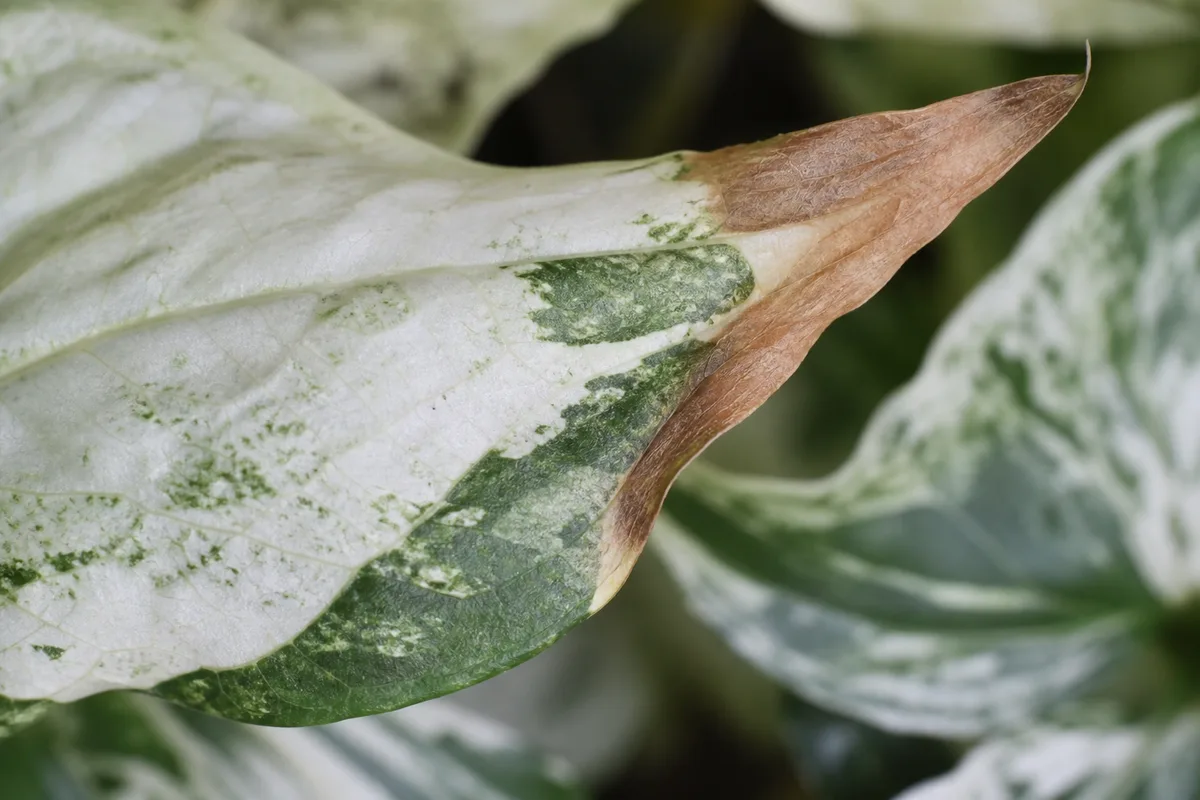
Brown Tips symptoms on Syngonium Albo - compare with healthy tissue on the same plant.
- Dry, tan-to-brown tips on arrow-shaped juvenile leaves or lobed mature foliage
- Crispness along the outer margin of white patches, sometimes with green tissue still healthy nearby
- Browning that appears on several leaves at once during winter heating season or after a relocation near a vent
- No sticky residue, webbing, or soft wet lesions-those point to pests or rot instead
Fully brown tips feel papery and brittle. A thin dark line sometimes separates dead tissue from living green. New leaves may open with minor edge damage if conditions were poor while the leaf was forming; fixing care now prevents the next leaf from repeating the pattern.
Older leaves at the base naturally age and can show minor edge wear. Worry when newest growth keeps emerging with brown tips, or when browning climbs down from tips into large sections of white variegation within days.
Why Syngonium Albo gets brown tips
Syngonium Albo is a tropical aroid that prefers steady moisture, warm temperatures, and high humidity above typical winter household levels. Several mechanisms hit variegated tissue hardest.
Low humidity dries white margins first
Indoor air often drops well below what tropical foliage prefers, especially when heat or AC runs. Leaf tips are the farthest point from roots and transpire heavily in dry air. White sectors dehydrate faster because they cannot photosynthesize or store water as efficiently as green tissue. Iowa State Extension notes low humidity is the most common cause of brown leaf tips on houseplants-and variegated Syngonium shows that pattern early on pale edges.
Inconsistent watering stresses root delivery
Alternating long dry spells with heavy soaking damages fine feeder roots. Inconsistent watering can cause brown leaf tips or edges when roots cannot hydrate margins reliably-even when soil eventually feels wet, impaired roots leave tips brown while the plant looks otherwise alive. Syngonium Albo is sensitive to both extremes: it wants the top inch of mix to dry between drinks, but not to stay bone dry for weeks while actively growing.
Tap-water minerals and salt buildup
Fluoride, chlorine, and dissolved salts from tap water or excess fertilizer accumulate in potting mix over time. University of Missouri IPM notes fluoride toxicity translocates to leaf edges and tips where it kills tissue. White variegated margins show damage sooner because they have less margin for error. White crust on soil surface or pot rims is a salt-buildup clue.
Direct light scorching pale tissue
Syngonium Albo needs Syngonium Albo light guide to hold variegation, but direct sun-especially through south or west glass-can burn white patches to brown within hours. Scorched tips feel dry and papery like humidity burn but appear suddenly after a placement change, often on the side facing the window.
Root crowding or chronic wet soil
A severely rootbound plant dries out unevenly and may fail to hydrate all foliage despite watering. Conversely, soggy aroid mix suffocates roots; damaged roots mimic drought at the leaf tips even when soil is wet. Both patterns are common on Syngonium kept in dense peat mixes without enough chunk for drainage.
How to confirm the cause
Work through these checks in order. Stop when one pattern clearly matches.
- Humidity at the plant - Place a hygrometer at leaf height, not across the room. Below 45% with crispy white edges strongly suggests dry air. Syngonium Albo performs best around 50–65% in most homes.
- Soil moisture at depth - Stick a finger into the top inch. Dry and light pot with curled leaves suggests underwatering stress. Wet, heavy mix that has not dried in a week suggests overwatering or poor drainage-tip browning may follow root damage, not humidity alone.
- Pot weight rhythm - Lift the pot after a thorough water, then again when the top inch is dry. If you cannot predict wet versus ready, inconsistent watering may be the driver.
- Water quality clues - Look for white mineral crust on soil or pot edges. If tips worsened slowly over months on the same tap-water routine, minerals deserve suspicion.
- Light exposure - Trace which leaves browned first. Sudden margin burn on the window-facing side after a move points to scorch, not humidity.
- Root spot-check (only if soil smells sour or stays wet) - Slide the plant partly out of the pot. Firm pale roots and dry-ish mix fit environmental tip burn. Mushy dark roots with sour smell mean rot-different first fix.
Confirmed humidity tip burn: dry papery white margins, humidity below 50%, soil drying at a normal pace, firm stems, no sour smell. Confirmed salt or fluoride stress: slow worsening, crust on soil, tips persist despite good humidity and watering. Confirmed root stress: wet mix, soft lower stems, or yellowing spreading beyond tips.
The first fix to try
Raise humidity to 50–65% at the plant for two weeks while keeping your current Syngonium Albo watering guide unchanged.
Use a cool-mist humidifier within a few feet of the pot, or set the container on a pebble tray with water below pot bottom level. Iowa State Extension recommends humidifiers, pebble trays, or grouping plants to raise local humidity-grouping helps Syngonium Albo without turning the room into a steam bath.
Do not repot, fertilize, or switch to daily watering on day one. Those changes stack stress while you still lack a clear diagnosis. Do not mist heavily as your only humidity strategy; surface moisture evaporates quickly and can encourage fungal spotting on crowded foliage.
If humidity was clearly fine above 55% but soil swings between desert-dry and soggy, your first fix shifts to stabilizing watering when the top inch dries instead-but measure humidity first so you do not underwater a plant that already has dry air working against it.
Step-by-step recovery
After the first humidity fix (or watering stabilization if that was the confirmed issue):
- Switch to filtered, distilled, or rainwater for four to six weeks if mineral crust or chronic tip burn persisted despite good humidity. Flush the pot with clean water equal to two to three times pot volume once, letting it drain fully, to leach accumulated salts.
- Move the plant out of direct sun if white sectors scorched. Bright indirect light-such as an east window or filtered south light-maintains variegation without cooking pale tissue.
- Trim only fully dead tip tissue with clean scissors, following the natural leaf curve and leaving a thin brown margin if needed to avoid cutting into green cells. Wear gloves when handling cut tissue; Syngonium Albo contains irritating insoluble calcium oxalates.
- Reduce fertilizer to half strength monthly during active growth, or pause feeding until new leaves open clean. Excess fertilizer adds salts that Iowa State Extension links to brown leaf tips.
- Repot only if roots circle densely and water runs straight through in seconds, or if mix stays wet too long in a pot without drainage. Move one size up into chunky aroid mix with bark and perlite- not on the same week you fix humidity.
- Inspect for pests if tips accompany stippling or webbing - spider mites thrive in dry air and can worsen margin damage. Treat confirmed pests separately; tip burn alone rarely means insects.
Recovery timeline
Humidity corrections show up on the next one or two leaves, not on tissue already dead. Expect two to four weeks before you can judge whether new growth opens with clean white edges. Switching water source may take a full month before crust stops forming and tips stabilize on fresh foliage.
Existing brown tips stay brown permanently. Improvement means new leaves emerge without fresh burn, the pot dries at a predictable pace, and variegation on new growth stays creamy rather than bleached or crispy.
If tips keep appearing on every new leaf after four to six weeks of stable humidity and watering, revisit water quality, light intensity, or root health with a partial unpot check.
Lookalike symptoms to rule out
Bacterial leaf spot or soft rot creates wet, dark patches often with yellow halos-not uniformly dry papery tips. Missouri Botanical Garden lists soft rot and bacterial leaf spot as possible Syngonium diseases; these need isolation and dry foliage, not just a humidifier.
Root rot from overwatering pairs brown tips with yellowing lower leaves, limp stems, and sour soil. Tips alone without wet mix or soft base rarely mean rot.
Spider mites cause stippling, fine webbing, and dull gray-green leaves in hot dry conditions. Margin crispness without webbing or speckling is usually environmental.
Normal leaf senescence affects one or two older bottom leaves while new top growth stays clean. Replace worry with monitoring only when the newest leaves repeat the damage.
Reversion stress - fully green new growth from low light is a variegation issue, not tip burn. Move to brighter indirect light; that is separate from brown crispy margins on white tissue.
Mistakes to avoid
Do not cut deep into healthy green tissue when trimming tips-cosmetic trimming follows the leaf shape and stops at living cells.
Do not increase fertilizer to “green up” browned leaves. Stressed Syngonium Albo needs stable environment first, not extra salts.
Do not place the plant in direct sun to “help” variegation after white sectors crisp-stronger sun scorches pale tissue faster.
Do not assume misting twice daily replaces a humidifier in a dry heated room.
Do not repot into a much larger pot hoping moisture will fix itself-oversized pots stay wet longer and invite root problems on aroids.
Do not let the pot sit in a full saucer after watering. Missouri Botanical Garden recommends regular watering during growth but reduced watering from fall to late winter-Syngonium Albo still needs drainage year-round.
Syngonium Albo care cross-check
Tip burn often means one pillar of baseline care slipped while others stayed fine. Quick audit:
- Light: Bright indirect all day; no direct rays on white sectors. Missouri Botanical Garden advises bright indirect light and protection from direct sun for Syngonium podophyllum.
- Water: Top inch dry before the next soak; reduce frequency in cooler months when growth slows.
- Humidity: Target 50–65%; higher helps white margins, but stagnant soggy air without airflow can invite leaf spot.
- Mix: Chunky, well-draining aroid blend-not straight peat that holds water for days.
- Temperature: Roughly 18–27°C (65–80°F); cold drafts near winter windows brown edges quickly on tropical foliage.
When all five align, tip burn usually stops without heroic intervention.
How to prevent brown tips next time
Run a humidifier during heating season or keep the plant grouped with other tropicals to buffer dry air. Check humidity at the pot monthly, not just room average.
Water on soil readiness-top inch dry-rather than a fixed calendar. Learn your pot’s weight after watering so summer and winter rhythms differ naturally.
Use filtered or rainwater if your tap supply is hard or heavily chlorinated. Flush salts from the pot two to three times pot volume every few months during active growth if you fertilize regularly.
Keep Syngonium Albo in bright indirect light with sheer curtains on intense windows. Rotate the pot occasionally so one side does not take all the scorch risk.
Repot every one to two years before roots pack tightly enough that water channels out without soaking the root ball. Refresh tired mix that has collapsed and holds water unevenly.
When to worry
Cosmetic brown tips on a few leaves with firm stems and steady new growth are manageable. Treat as urgent when:
- Brown spreads from tips into most of each leaf within days
- Lower leaves yellow widely while soil stays wet and stems soften at the base
- No new leaves appear for six or more weeks after you corrected humidity and watering
- Black mushy roots or sour smell appear on inspection
- White sectors brown entirely while the plant collapses-not just crisp edges
Those patterns suggest rot, bacterial infection, or severe root failure-not dry air alone. Reduce watering, inspect roots, and trim decay back to firm tissue before repotting into fresh mix if rot is confirmed.
Conclusion
Brown tips on Syngonium Albo look alarming on prized white variegation, but they usually trace to fixable environment: dry air, uneven watering, minerals in water, or too much direct sun on pale tissue. Measure humidity and soil moisture first, raise local moisture around the plant, then adjust water quality and light if new leaves still burn. Old tips will not re-green-watch the next leaf unfurl. Clean edges there mean your diagnosis worked.
When to use this page vs other Syngonium Albo guides
- Syngonium Albo watering guide - Use for routine moisture checks before assuming brown tips is the main issue.
- Syngonium Albo problems hub - Browse all 1 common issues on this species.
- Yellow Leaves on Syngonium Albo - Different entry point when symptoms overlap with brown tips.