Slow Growth on Syngonium Albo: Causes, Checks & Fixes
Quick answer
If your Syngonium Albo has firm stems but no new variegated leaves through a full warm spring, the usual limits are too little light, wet soil in dim rooms, or a root-bound pot-not disease. Move to brighter indirect light first; do not fertilize until new leaves open.
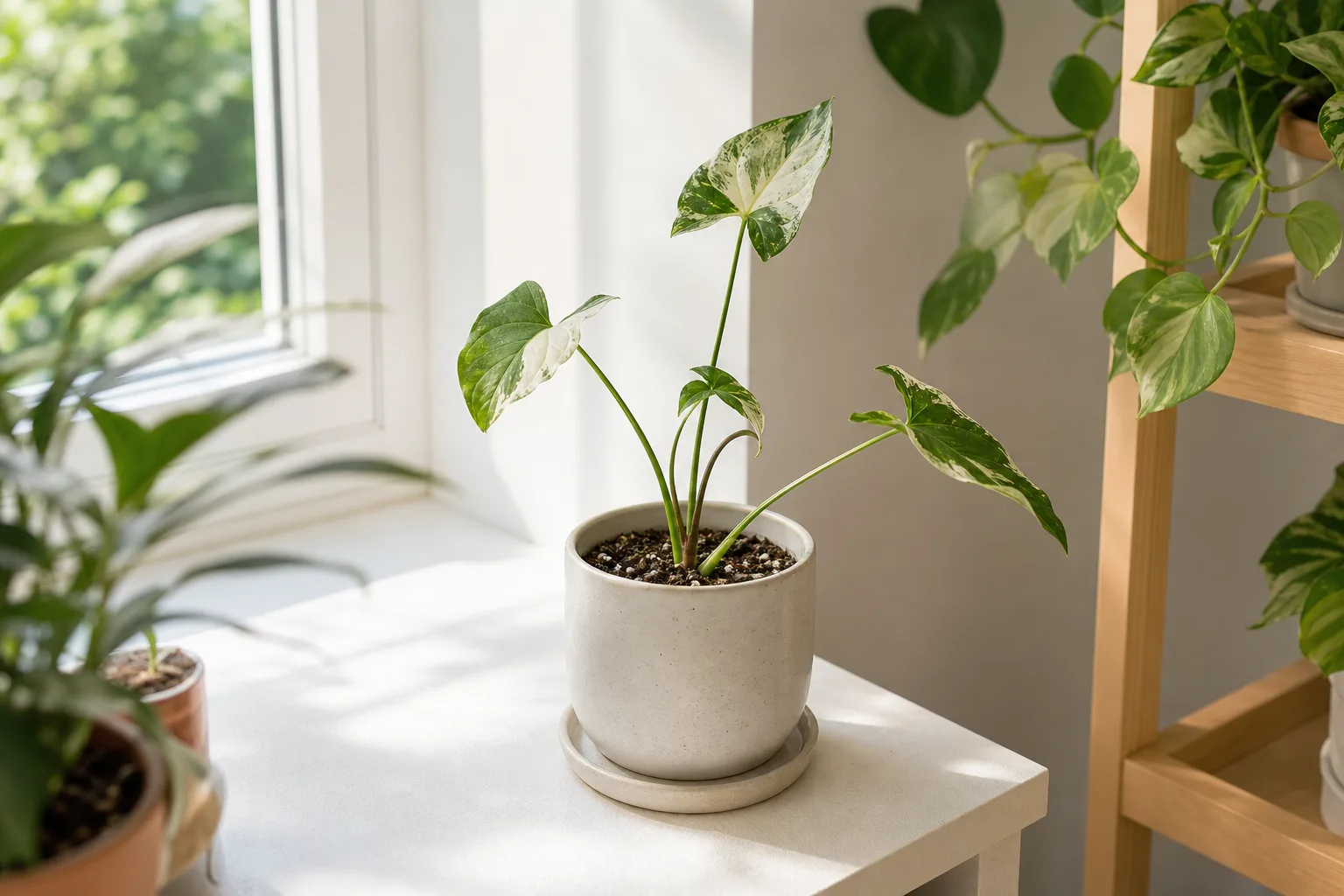
Slow Growth on Syngonium Albo: Causes, Checks & Fixes
This guide covers slow growth on Syngonium Albo. See also the general Slow Growth guide, watering, and light pages for this plant.
Slow Growth on Syngonium Albo: Causes, Checks & Fixes
Quick answer
If your Syngonium podophyllum ‘Albo Variegatum’ has firm stems but no new white-variegated arrowhead leaves through a full warm spring, you are dealing with a fixable care stall-not normal variegated pace. Quiet winter months with occasional small leaves are expected; a whole active season without fresh tips is the signal to act.
This page is for growth stalls-the plant looks idle, produces few or no new leaves, or pushes mostly green foliage while variegation fades. If stretching, long bare stems, or dramatic reversion is your main complaint, start with the not enough light guide. If long internodes with lean toward windows dominate, see leggy growth. For measurable placement targets, use the Syngonium Albo light guide.
First fix: move the plant to brighter filtered indirect light over one to two weeks and confirm the top inch of soil dries before the next watering. UF/IFAS places commercial Syngonium at 250 to 1,000 foot-candles for good interior performance; albo variegation needs the upper half of that band because white sectors cannot photosynthesize. Do not reach for fertilizer until light and Syngonium Albo watering guide look right and new leaves start opening.
Slow growth vs. not enough light vs. leggy growth on Syngonium Albo
These three problems share low light as a root cause but feel different at the pot:
| Your main complaint | Best starting page | What you usually see |
|---|---|---|
| No new leaves for weeks; plant looks “stuck” | This page (slow growth) | Firm stems, little stretch, few or no new tips through warm months |
| New leaves mostly green; variegation fading | Not enough light | Reversion on newest foliage; washed-out white sectors |
| Long bare stems; leaves far apart | Leggy growth | Etiolation toward windows; thin new leaves |
| Soft stem base; sour wet soil | Root rot | Decline despite damp mix; not normal sluggishness |
Many albo owners under-light to “protect” white tissue-and stall growth faster than a green arrowhead vine in the same corner. Slow growth and low light overlap; this guide focuses on diagnosing idle growth and getting the first new variegated leaf back, not re-teaching window placement (see the light guide for foot-candle targets and grow-lamp distance).
Why Syngonium Albo grows slowly
Normal variegated pace vs. a real care stall
Albo is inherently slower than solid green Syngonium podophyllum because variegated tissue carries less functional chlorophyll-the green portions must compensate for sectors that cannot photosynthesize. Expect modest new leaves through summer, not Monstera-speed flushes. Compare your plant year over year, not to fast tropical vines in the same room.
A real stall means no new tips through an entire warm spring despite normal room temperatures, or new leaves that stay tiny and mostly green for multiple flushes after light should have improved. Winter quiet with firm stems is not that signal.
Low light and green reversion on new leaves
Missouri Botanical Garden recommends bright indirect light for syngonium indoors. Albo needs real brightness-not survival-level shade. When light drops, the plant may stop producing new leaves entirely, or push all-green shoots that grow faster than variegated sections because green tissue harvests light more efficiently.
Dim north rooms, decorative shelves far from glass, and spots more than two metres from a bright window often deliver far less than the 250 foot-candle floor UF/IFAS cites for interior Syngonium. Hold your hand 10–15 cm above a leaf at midday: almost no shadow means growth will stay slow until you brighten the spot.
Wet soil in dim rooms
In low light, albo uses moisture slowly. Soil stays wet longer than growers expect, suffocating roots without dramatic wilting-growth simply stops while older leaves hang on. Overwatering stunts growth because damaged roots cannot absorb water or nutrients efficiently, even when the mix looks damp on top. This pattern is common on albo parked in attractive low-light shelves where the pot never dries on schedule.
Cool root zone
Syngonium grows best around 16°C to 27°C (60°F to 80°F) at the root zone. Pots on cold windowsills, against uninsulated exterior walls, or above drafty floors slow metabolism even when room air feels comfortable. Winter pause near a chilly window is normal; sluggish growth through a warm spring often points to light or roots instead.
Root-bound pots
Healthy albo can become root-bound within one to two years in active growth. When roots circle densely, water runs straight through dry channels while outer root mats stay stressed. The plant may look alive but fail to push new leaves because there is no room for fresh root tips to support shoot growth. Syngonium Albo repotting guide into fresh well-drained potting mix helps only after you confirm roots are actually crowded-not as a day-one response to vague slowness.
Oversized pots staying wet
Upsizing to a huge pot hoping for faster growth often backfires. Extra wet volume keeps roots oxygen-starved in dim rooms. Slow growth with chronically damp mix in an oversized container points to soil volume mismatch, not hunger.
Seasonal winter rest
Like other tropical understory vines, syngonium often slows when daylight shortens. Low light reduces photosynthesis and limits energy for new tissue. Quiet winter months with firm stems and occasional small leaves are expected. Concern starts when growth does not resume after light and warmth improve for several weeks.
Nutrient gaps-rarely first
Depleted substrate or skipped feeding can produce pale, small new leaves during active season. Nutrient deficiency slows foliage production when nitrogen and micronutrients are unavailable. Fertilizer helps only after light and root conditions are adequate; feeding a stressed, waterlogged, or dark-grown plant rarely speeds growth and can burn tender roots. See the fertilizer guide only after new leaves prove active growth has resumed.
What slow growth looks like on Syngonium Albo
Signs that point to a real growth problem:
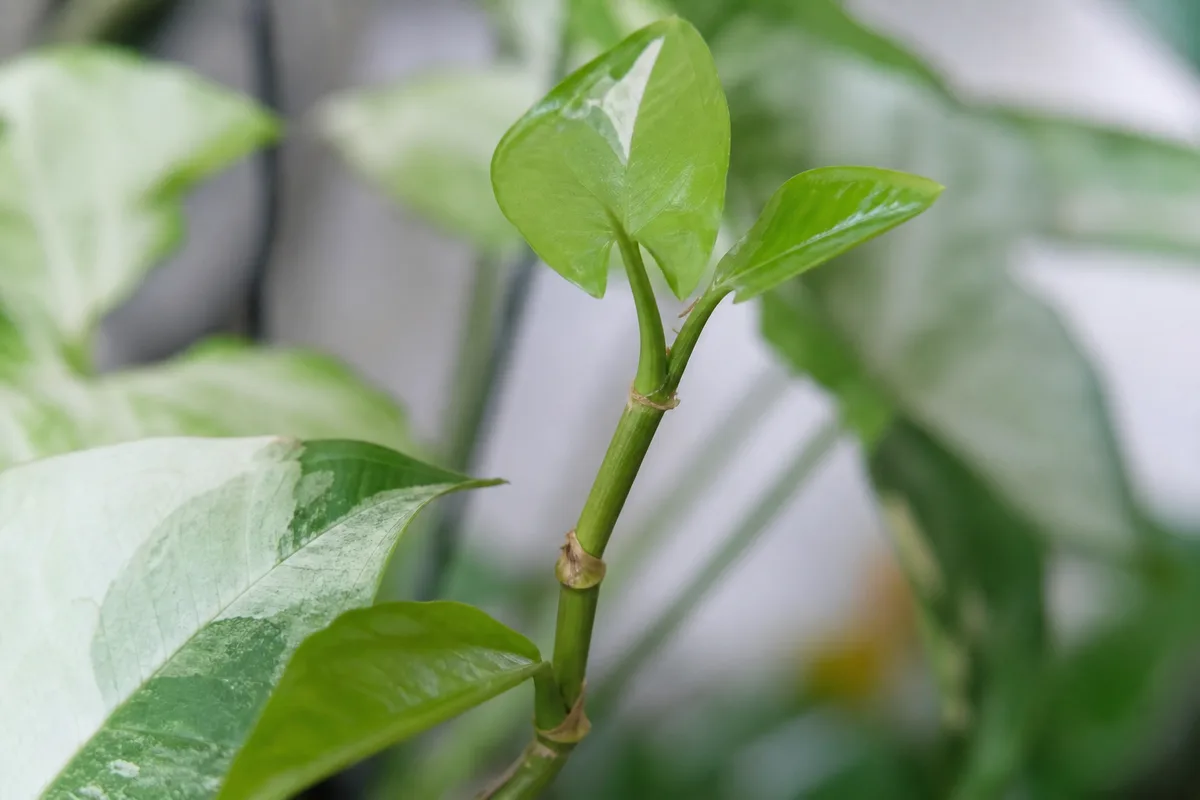
Slow Growth symptoms on Syngonium Albo - compare with healthy tissue on the same plant.
- No new leaves for four to eight weeks through spring or summer despite warm room temperatures
- New leaves opening smaller, with much less white variegation than leaves from a brighter period
- Soil that stays damp more than ten days between waterings in an average indoor pot
- Pot drying in hours after watering while no new shoots appear-possible root-bound pattern
- Long gaps between leaves on new growth even without dramatic leggy stretch
What normal seasonal slowdown looks like:
- Few or no new leaves from late fall through winter while stems stay firm
- Slightly smaller winter leaves that still show some white on the newest foliage
- Growth resuming within two to four weeks once days lengthen and the plant sits in brighter light
Judge albo by newest leaves, not oldest foliage. Juvenile arrowhead shapes and variegation intensity change as leaves mature; stalled white on the latest flush is the signal. Old reverted green leaves will not regain white variegation-recovery is forward-looking.
How to confirm the cause
Work through these checks in order before changing multiple variables:
- Season and warm-month stall benchmark - Is it winter quiet, or has a full warm month passed with no new leaves? No new tips through an entire warm spring with adequate light is a real problem.
- Hand-shadow light test - Hold your hand 10–15 cm above a leaf at midday. A soft, faint shadow means marginal light for albo; almost no shadow means growth will stay slow until you brighten the spot. Compare against the light guide placement targets.
- New growth color - Compare the last three leaves to older variegated ones. Mostly green new foliage strongly suggests light decline or reversion driving the stall.
- Soil moisture rhythm - Stick a finger into the top inch. If soil is wet while growth is stalled, suspect overwatering or poor drainage-not hunger. If soil is bone dry for days yet no new leaves appear, check roots and light before assuming thirst alone is the limiter.
- Pot weight and drainage - Lift the pot after watering and again when you think it is dry. A pot that never lightens suggests chronic wetness. Water running straight through in seconds suggests root-bound dry channels or hydrophobic old mix.
- Root inspection - Slip the plant from the pot if soil smells sour, leaves yellow at the base, or growth stalled for months. Healthy roots are firm and pale; mushy brown roots explain stalled growth better than fertilizer deficiency-see root rot if stems soften.
- Root crowding - Visible root mats circling the pot wall, roots emerging from drainage holes, or a tight root ball that holds its shape when lifted confirm crowding. Repotting may help after light is corrected.
- Temperature at the pot - Feel the container near a window or floor. Cold surfaces below about 16°C (60°F) at the root zone slow growth even when you are warm across the room.
If light is adequate, soil dries on schedule, roots are firm, and temperatures are warm-but growth is still minimal through summer-consider light feeding during active growth after confirming the other bottlenecks are cleared.
First fix for Syngonium Albo
Move the plant to brighter filtered indirect light and pause watering until the top inch of soil dries.
Place it within one to two metres of an east window, behind a sheer curtain on a south or west exposure, or under a full-spectrum LED grow lamp 30–45 cm above the canopy for 10–12 hours daily in winter. Acclimate over a week if it came from deep shade-shift a few centimetres closer every few days rather than jumping into harsh direct sun, which can scorch thin white tissue.
Once placement improves, resume watering only when the top inch feels dry and the pot weight drops noticeably. Albo in stronger light uses water faster, so your interval may shorten-that is healthy, not a sign to water more while soil is still damp.
Do not fertilize, repot, or prune heavily on day one. Light plus correct dry-down addresses the majority of indoor slow-growth cases on this cultivar.
Step-by-step recovery
After the first light and watering correction:
- Wait for the first new leaf - Give the plant two to three weeks in brighter light with stable watering. The first new arrowhead leaf opening with tighter spacing and stronger white variegation confirms the bottleneck was light or water rhythm.
- Adjust watering to match new light - Plants in brighter spots dry faster. Check every few days rather than following an old calendar from a dim corner.
- Prune fully green reverted stems - Once growth resumes, cut all-green shoots back to the last node showing white variegation in the stem or leaf. Remove reversion promptly so green growth does not take over the variegated character. See pruning for technique.
- Repot in spring if roots crowd - Choose a pot one size up with drainage holes and fresh chunky aroid mix. Trim only mushy roots; do not upsize dramatically-a pot too large stays wet and can restart the stall cycle.
- Feed lightly after active growth resumes - Apply diluted balanced liquid fertilizer once monthly through spring and summer only when new leaves keep opening. Stop if the plant is recently repotted, soil is wet, or growth has not restarted-details in the fertilizer guide.
- Rotate weekly - Prevent one-sided leaning toward the brighter window so new growth stays balanced.
Isolate from other plants only if you find pest webbing or sticky residue during inspection-slow growth alone is not a pest emergency.
Recovery timeline
Expect gradual improvement, not overnight transformation. After light correction during active season, the first new leaf often appears within two to four weeks. A full flush of tighter, more variegated growth may take four to eight weeks as the plant rebuilds momentum.
Winter corrections move slower even with supplemental light. Repot recovery adds another two to three weeks of quiet while roots settle-do not interpret that pause as failure if stems stay firm.
Signs you are on track: new leaves opening closer together, stronger white variegation on the latest flush, soil drying on a predictable schedule, and firm stems without yellowing at the base.
Signs the problem is worsening: sour soil smell, increasing yellow leaves, soft stems at the base, or new leaves that stay tiny and green for multiple flushes after you brightened light-inspect roots before the next intervention.
Lookalike symptoms to rule out
| Pattern | Likely cause | Key differentiator |
|---|---|---|
| Firm stems, no new tips, little stretch | Slow growth (this page) | Idle nodes; may still have good variegation on old leaves |
| Long bare stems, strong lean | Leggy growth | Etiolation; internodes stretched |
| Mostly green new leaves, faded white | Not enough light | Reversion lead symptom |
| Drooping on wet soil | Root rot / overwatering | Soft stem base, sour smell |
| Quiet fall through winter only | Normal seasonal rest | Resumes when days lengthen |
| Pause after recent repot | Repot shock | Growth resumes in 2–4 weeks if light adequate |
Spider mites - Fine stippling, webbing on undersides, and dusty leaf surfaces can slow vigor without obvious collapse. Inspect before assuming the plant is simply idle.
Wilting with wet soil - Drooping leaves on damp mix point to root damage from overwatering or rot, not drought. Fixing light without drying the root zone leaves growth stalled.
No flowers expected - Syngonium albo is grown for foliage; lack of blooms is not a growth failure.
What not to do
- Fertilizing heavily in dim light to force growth-burns roots and produces weak pale shoots without solving the real limiter.
- Upsizing to a huge pot hoping more soil equals faster growth-extra wet volume often worsens root oxygen stress.
- Watering on a fixed calendar without checking dryness-especially dangerous after moving to lower light.
- Comparing growth rate to Monstera or golden pothos in the same room-variegated albo will always look slower even when healthy.
- Judging recovery by oldest leaves-white sectors on old reverted foliage will not come back; watch the newest flush.
- Repotting before diagnosing light and moisture-adds stress without removing the bottleneck.
Wear gloves when handling cut stems; Syngonium contains calcium oxalate crystals toxic to cats and dogs. Keep fertilizers and pruned tissue out of pet reach.
How to prevent chronic slow growth
Place albo where bright indirect light is realistic most of the day, not only where the pot looks decorative. Supplement winter light with a grow lamp if new leaves stay pale from November through March-see the light guide for placement.
Water when the top inch dries-faster in bright warm months, slower in winter. Use well-draining mix and pots with drainage holes; empty cachepots after every soak.
Repot every one to two years or when roots circle visibly, using fresh airy mix rather than waiting until the plant dries in hours daily with zero new shoots.
Track new leaf frequency monthly through spring and summer so you notice slowdown early, when a light adjustment fixes the issue in weeks instead of months. Prune green reverted shoots promptly once growth resumes so they do not outcompete variegated tissue.
Feed lightly during active growth only after basics are stable-see the fertilizer guide.
When to worry
Slow growth alone is rarely an emergency. Investigate promptly when:
- Soil smells sour or roots are mushy when you unpot
- Yellow leaves climb the plant while growth is stalled
- Stems soften at the base or collapse
- New leaves stay tiny and green through an entire warm season after you corrected light
- Ants, sticky residue, or heavy stippling suggest active pests draining vigor
If roots are largely rotten and the crown is soft, recovery may not be possible-propagate healthy stem cuttings above firm nodes if you want to salvage the genetics.
FAQs
How can I confirm slow growth is a problem on Syngonium Albo?
No new leaves through an entire warm spring with adequate light is a real problem. Quiet winter rest with firm stems and occasional small leaves is normal seasonal slowdown, not a care failure. Compare growth to the same plant last year-not to faster tropical vines nearby.
What should I check first for slow Syngonium Albo growth?
Check usable light at the leaf surface with a hand-shadow test, whether new leaves are emerging mostly green, pot size relative to roots, and stem firmness. Low light is the most common indoor limiter and accelerates reversion on albo. If stems are soft and soil is wet, inspect roots before assuming a simple light stall.
Why are my new Albo leaves all green-is that slow growth or reversion?
Mostly green new foliage in a previously variegated plant is an early stall signal, not a separate problem. Green tissue photosynthesizes more efficiently in dim light and can outcompete white sectors. Brighten placement first; prune fully green shoots back to the last variegated node once growth resumes. Old green leaves will not turn white again.
When is slow growth urgent on Syngonium Albo?
Slow growth paired with sour soil smell, yellowing lower leaves, or soft stems at the base may signal chronic overwatering or root rot-not normal variegated sluggishness. Inspect roots before fertilizing. If the crown is soft, see the root rot guide and consider propagation from firm nodes above the damage.
How do I prevent slow growth on Syngonium Albo?
Track new leaf frequency monthly through spring and summer, keep bright indirect light year-round per the light guide, repot when roots crowd the pot, and prune green reverted shoots promptly so they do not dominate the plant. Do not under-light to “protect” white tissue-that stalls growth and speeds reversion.
Conclusion
Slow Syngonium Albo growth is usually a resource problem-light, root oxygen, warmth, or pot space-not a mysterious disease. Variegated tissue needs brighter filtered light than green arrowhead forms, and albo stalls fast when wet soil meets dim rooms. Brighten the spot, let the top inch dry between waterings, then repot, prune reversions, or feed only after new white-variegated leaves prove the plant is moving again. Quiet winter months are normal; a full warm season without fresh arrowhead foliage is the signal to act.
When to use this page vs other Syngonium Albo guides
- Syngonium Albo watering guide - Use for routine moisture checks before assuming slow growth is the main issue.
- Syngonium Albo problems hub - Browse all 1 common issues on this species.
- Yellow Leaves on Syngonium Albo - Different entry point when symptoms overlap with slow growth.