Root Rot on Syngonium Albo: Causes, Checks & Fixes
Quick answer
If your Syngonium Albo droops while the pot is still heavy and damp, treat it as likely root rot. Stop watering, unpot immediately, and inspect roots and crown; brown mushy roots, sour odor, or stem-base softening confirm rot.
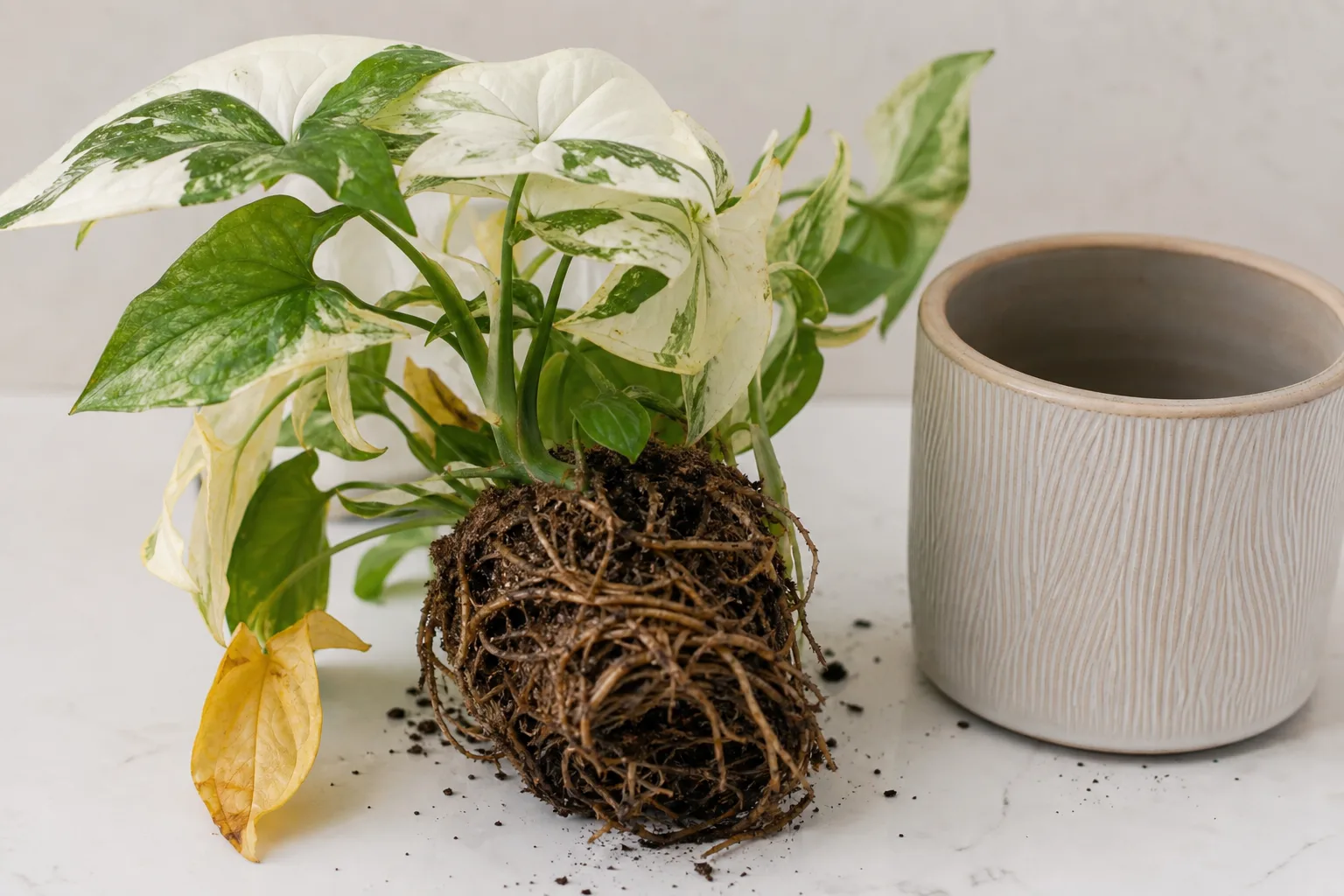
Root Rot on Syngonium Albo: Causes, Checks & Fixes
This guide covers root rot on Syngonium Albo. See also the general Root Rot guide, watering, and light pages for this plant.
Root Rot on Syngonium Albo: Causes, Checks & Fixes
Quick answer
If your Albo looks thirsty but the mix is still wet and smells sour, do not water again. On houseplants, wilt in wet media is a classic root-failure pattern because overwatered roots lose oxygen and cannot move water normally when media stays saturated. Your first action is one clear move: stop watering, unpot the plant now, and inspect roots plus crown tissue before trying any other treatment.
Active root rot is different from early overwatering on Syngonium Albo-that page covers firm-root rescue before decay spreads. This guide is for confirmed or highly likely rot: mushy roots, sour odor, or softening at the stem base.
What root rot looks like on Syngonium Albo
Syngonium podophyllum ‘Albo Variegatum’ is a variegated climbing aroid whose stems produce adventitious roots along the vine. Root rot does not announce itself on the white patches first-it usually shows up as a mismatch between how the plant looks and how wet the pot feels.
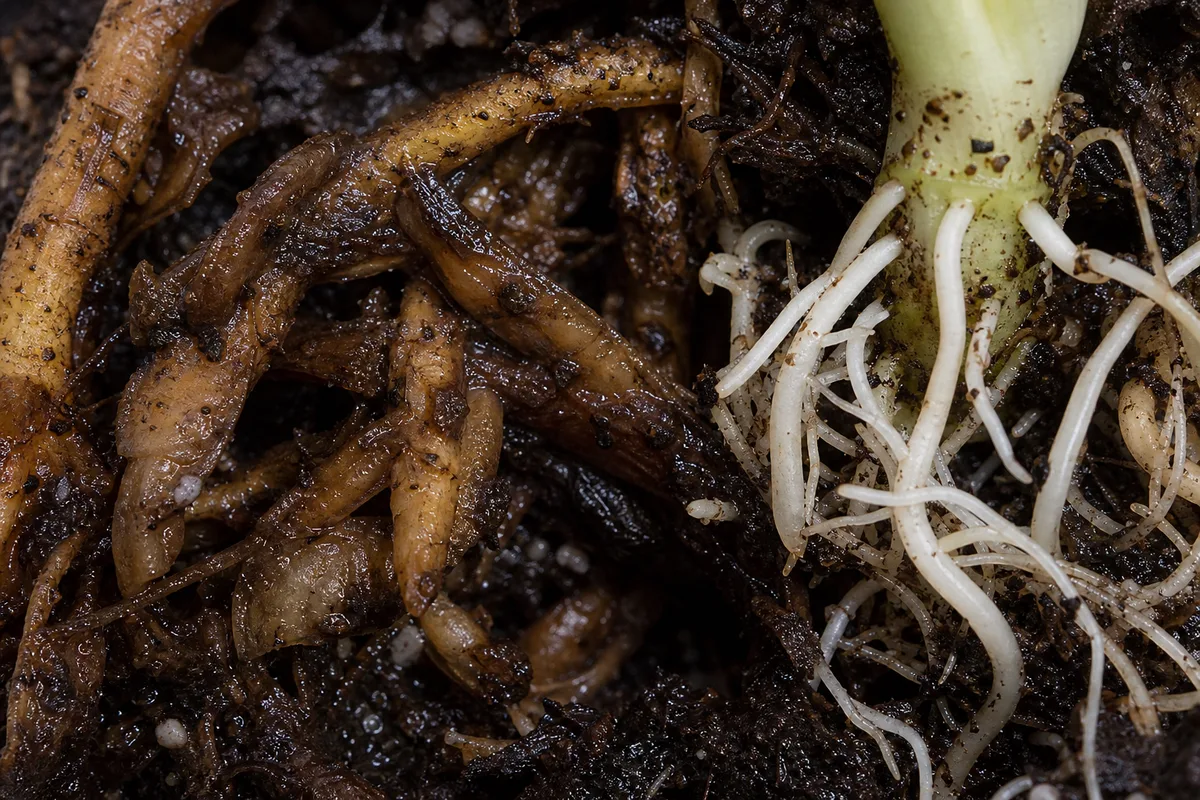
Root Rot symptoms on Syngonium Albo - compare with healthy tissue on the same plant.
Early rot often mimics thirst:
- arrow-shaped leaves droop or yellow even though soil is damp
- white variegated sectors brown or soften before greener tissue
- new leaves stay small, washed out, or stall before unfurling
- the pot stays heavy several days after the last watering
- a sour or swampy odor rises from drainage holes
The stem base tells the truth faster than leaf tips. Press the tissue at the soil line: firm is hopeful; soft, squishy, or blackening tissue while the mix is moist is a red flag. Advanced rot may show rapid lower-leaf collapse and crown blackening. NC State lists soft rot among common disease problems on Syngonium podophyllum when roots stay in poorly aerated, chronically wet mix.
Collectors sometimes mistake white-sector browning for sun stress or low humidity. If the top inch is wet, the pot is heavy, and stems are not firm, treat moisture failure-not light or air-as the primary suspect until roots are inspected.
Root rot vs. lookalikes on Albo
Read the pot before you pour. Wrong diagnosis here kills plants: adding water to wet rotting roots deepens the damage, while trimming and Syngonium Albo repotting guide a merely dry plant wastes time.
| What you see | Likely cause | Key check |
|---|---|---|
| Limp leaves, heavy wet pot, sour smell | Root rot | Mushy brown roots; soft stem base |
| Yellowing, wet pot, firm pale roots | Overwatering (early) | No sour smell; crown still firm |
| Limp leaves, light dry pot | Underwatering | Mix dry below surface; roots firm |
| Crisp white tips only, damp soil | Low humidity | Top inch moist; no mushy roots |
| Slow growth, faded variegation, firm roots | Not enough light | No sour odor; pot not chronically heavy |
| Tiny flies when soil stays wet | Fungus gnats | Often co-occurs with overwatering; confirm root texture |
If symptoms are mixed, use the wilting decision guide before you treat.
Why Syngonium Albo gets root rot
Syngonium podophyllum is a tropical aroid that prefers moist-but-aerated potting conditions, not continuously soggy roots as a houseplant. Root rot pressure climbs when water input exceeds how quickly your room conditions let the pot dry.
Albo owners hit this pattern often:
The collector habit. White variegation looks fragile, so growers water early to “protect” pale leaves. That keeps the root zone saturated while the plant uses water slowly-especially in dim corners. Chronic wetness is what enables soft rot in oxygen-poor media, not the white tissue itself.
The wilt paradox. Damaged roots cannot move water even when soil is wet. The plant droops, you reach for the watering can, and roots suffocate further. Indoor plant wilt can happen in both too-dry and too-wet conditions-on Albo, wilt on wet soil is the branch that points here.
Cool winter light and slow uptake. Variegated cultivars typically need stronger light than solid-green forms to maintain patterning and growth balance. In dim rooms, dry-down slows, so a summer watering rhythm keeps roots wet for days. Missouri Botanical Garden recommends reducing watering from fall to late winter when growth slows.
Oversized pots, dense peat, and standing water. Extra soil volume holds moisture around sparse roots. Peat-heavy mixes without bark or perlite collapse air pockets. Water left in saucers or decorative cachepots keeps the bottom profile anaerobic. Containers need drainage holes, and saucers should be emptied after watering so roots are not sitting in runoff.
How to confirm the cause
Use this sequence before any treatment:
- Check pot weight and depth moisture. A dry surface can hide wet lower media in overwatered pots.
- Slide the root ball out. Healthy syngonium roots are firm and white or pale; rot-affected roots are brown to black and soft with outer tissue that sloughs.
- Smell the root zone. Sour smell supports prolonged oxygen-poor conditions common in chronic overwatering.
- Press the stem base. Mushy crown tissue raises urgency immediately.
If at least two checks are positive-especially mushy roots plus sour odor or soft crown-treat as confirmed root rot and move to recovery. If roots are still mostly firm, you may be in early overwatering territory; see the overwatering guide for dry-down rescue before full trim-and-repot.
First fix for Syngonium Albo
Stop watering and unpot immediately. Do not fertilize, flush, or spray first.
Then follow this order:
- Rinse off old wet media so you can see root color and texture clearly.
- Trim all mushy roots back to firm tissue with sanitized scissors.
- If crown tissue is still firm, let the trimmed root ball air-dry in Syngonium Albo light guide for 24–48 hours, then repot into fresh airy mix.
- If crown is soft or blackening, cut healthy nodes above the rot line and move to propagation instead of repotting the compromised base.
That single unpot-and-inspect step prevents the most common mistake: watering again because variegated leaves look limp while soil is already saturated.
Step-by-step recovery after trim
Day 0 to Day 2
- Work over a tray or newspaper; wear gloves when handling cut tissue.
- Cut away every brown, translucent, or mushy root until only firm white or tan tissue remains. Plants with partial rot may be salvaged by pruning out the rotted part.
- Let the trimmed root ball sit in bright indirect light and warm stable temperatures so cut surfaces callus slightly before repotting.
- Do not drench repeatedly; the goal is oxygen, not more moisture.
Repot mix and container
Repot into a chunky aroid blend, not straight peat or dense bagged potting soil. A practical starting ratio many growers use after rot:
- 60% orchid bark or coco chips
- 20% perlite or pumice
- 20% quality potting mix or coco peat
Use a pot only slightly larger than the trimmed root mass, with open drainage. A too-large recovery pot holds wet soil the rebuilt root system cannot use yet. NC State notes this species should be watered deeply and then allowed to dry slightly-that rhythm matters more after rot than before.
Water once lightly to settle fresh mix, then wait. Resume irrigation only when the top inch dries and pot weight drops, matching the Syngonium Albo watering guide check rhythm (roughly every four to seven days in warm bright growth, every ten to fourteen days when light and temperatures fall).
Week 1 to Week 3
- Recheck stem base firmness every few days.
- Watch for continued collapse or new blackening at the crown.
- Hold fertilizer until you see clear stabilization.
- Remove collapsed leaves only after you confirm stem firmness; old yellow or browned white sectors on prior leaves will not green up again.
Week 3 to Week 8
- Recovery is measured by new growth and stable stems, not by old damaged foliage.
- Expect the first healthy new leaf-often smaller at first-within two to four weeks once root function returns in typical indoor conditions.
- If no improvement appears and crown softness progresses, escalate to node propagation from firm upper stems.
Propagation salvage when the crown is lost
When the stem base is soft but upper nodes are still firm, repotting the base is usually futile. Syngonium vines root along nodes naturally-adventitious roots form on climbing stems-so salvage is often the highest-success path.
- Identify the highest firm node above all soft tissue.
- Cut the vine into sections with at least one node and one leaf per cutting.
- Root in moist perlite, sphagnum, or water, changing water every few days if submerged.
- Keep cuttings in bright indirect light and moderate humidity until new roots are an inch or longer.
- Pot rooted cuttings into the same airy mix ratio above.
You may lose the original pot form, but you preserve the cultivar. Judge propagation success by new root growth and the first unfolded leaf-not by whether damaged white sectors on old tissue recover.
Recovery timeline and salvage limits
Most mild-to-moderate cases stabilize first, then regrow. Expect stem firmness and neutral odor before you see attractive new variegated leaves.
- First 3–7 days: no cosmetic rebound; existing yellow or browned leaves stay damaged.
- 1–3 weeks: stem firmness should stabilize if roots are recovering.
- 2–6 weeks: clear new growth confirms success.
Do not judge recovery by old foliage. Judge by:
- no new crown softening
- no spreading yellow collapse
- neutral root-zone smell
- healthy new leaves opening over time
If the crown is soft through most of the base, saving the original crown is unlikely. At that stage, preserving healthy upper nodes for propagation is usually safer than waiting.
What not to do
- Do not keep watering a wilted plant if the pot is still wet.
- Do not move to a much larger pot “for recovery”; extra wet volume slows root oxygenation.
- Do not add fertilizer to a stressed, rotting root system.
- Do not repot into regular potting soil without perlite or bark.
- Do not leave runoff in saucers or cachepots.
- Do not confuse a heavy wet pot (rot) with a light dry pot (thirst)-the wrong fix accelerates decline.
- Wear gloves when trimming; arrowhead plant contains calcium oxalate crystals toxic to pets.
How to prevent root rot next time
Prevention on Albo is about moisture rhythm after recovery, not fear of watering altogether.
- Use the watering guide finger-plus-weight workflow: water when the top inch dries, not on a fixed calendar.
- Keep chunky aroid mix and a pot sized to the root mass.
- Move the plant to brighter indirect light so it uses water steadily and variegation holds; dim placement slows dry-down.
- Empty saucers and cachepots within minutes of watering.
- Reduce frequency during slower seasons, aligned with species guidance to water less from fall to late winter.
- If tiny flies appear whenever soil stays wet, treat fungus gnat pressure alongside watering corrections-wet soil breeds both problems.
When to worry
Treat as urgent if any of the following are present:
- crown or stem base becomes soft within days
- more than a third of roots are black and mushy on inspection
- collapse spreads quickly up stems
- sour odor persists after repot and trim
At that point, preservation by stem propagation is usually safer than waiting for a fully compromised crown to rebound.
When this is early overwatering instead
If you unpot and find mostly firm pale roots, sour smell is absent, and the crown is hard, you may not need full rot surgery yet. Stop watering, improve drainage and light, and let the upper mix dry per the overwatering guide. Return here only if roots turn mushy, odor develops, or the stem base softens.
Related tool
Use the Root Rot Risk Checker to narrow causes for root rot on this plant before changing multiple variables at once.
Related guides
- Watering - moisture rhythm, top-inch checks, and seasonal dry-down
- Overwatering - firm-root rescue before active decay
- Underwatering - light pot and dry mix differentiation
- Wilting - wet-wilt vs. dry-wilt triage
- Fungus gnats - wet-soil pest crossover
- Propagation - node salvage when the crown is lost
- Not enough light - dim-room slow uptake compounding factor
When to use this page vs other Syngonium Albo guides
- Syngonium Albo watering guide - Use for routine moisture checks before assuming root rot is the main issue.
- Syngonium Albo problems hub - Browse all 1 common issues on this species.
- Yellow Leaves on Syngonium Albo - Different entry point when symptoms overlap with root rot.