Brown Tips on Syngonium Neon Robusta: Causes, Checks & Fixes
Quick answer
Brown tips on Syngonium Neon Robusta are usually cosmetic stress from inconsistent watering, dry winter air, or minerals in tap water-not disease. First step: water only when the top inch of soil dries, then watch whether new pink leaves open with clean tips.
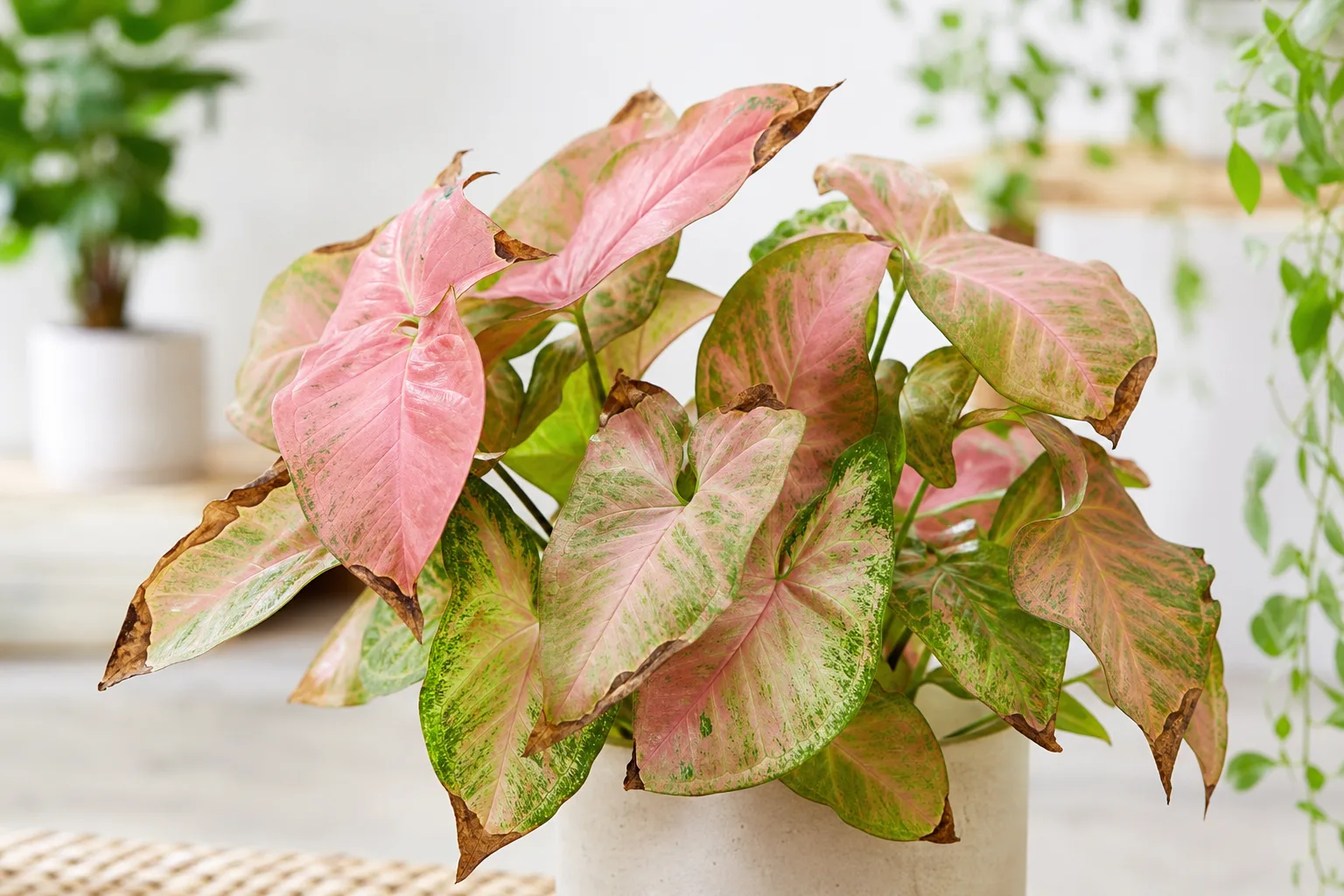
Brown Tips on Syngonium Neon Robusta: Causes, Checks & Fixes
This guide covers brown tips on Syngonium Neon Robusta. See also the general Brown Tips guide, watering, and light pages for this plant.
Brown Tips on Syngonium Neon Robusta: Causes, Checks & Fixes
Quick answer
Brown tips on Syngonium Neon Robusta (Syngonium podophyllum ‘Neon Robusta’) are almost always a water-balance warning, not a fungal infection. The soft pink-green arrowhead leaves lose moisture at the farthest point from the roots first, so pale cultivars like Neon Robusta show damage before darker syngoniums do.
Common triggers include swinging between dry soil and heavy watering, low humidity near heaters, fluoride or salt in tap water and fertilizer, and damaged roots that cannot hydrate leaf edges evenly. Soft rot with wet soil is a different problem-do not treat that like cosmetic tip burn.
First step: water only when the top inch of potting mix feels dry, then soak until water runs from the drainage holes and empty the saucer. Hold that rhythm for two weeks and judge progress on new leaves, not old crispy tips.
What brown tips look like on Neon Robusta
On this cultivar, tip burn usually appears on the arrow-shaped juvenile leaves you bought it for-broad pink-blushed blades with a pointed tip. Healthy tissue stays flexible and pink-green; affected tips turn dry, papery, and tan to dark brown. The damage often starts at the very point and may creep a few millimeters inward along the margin, but the leaf base and petiole stay firm.
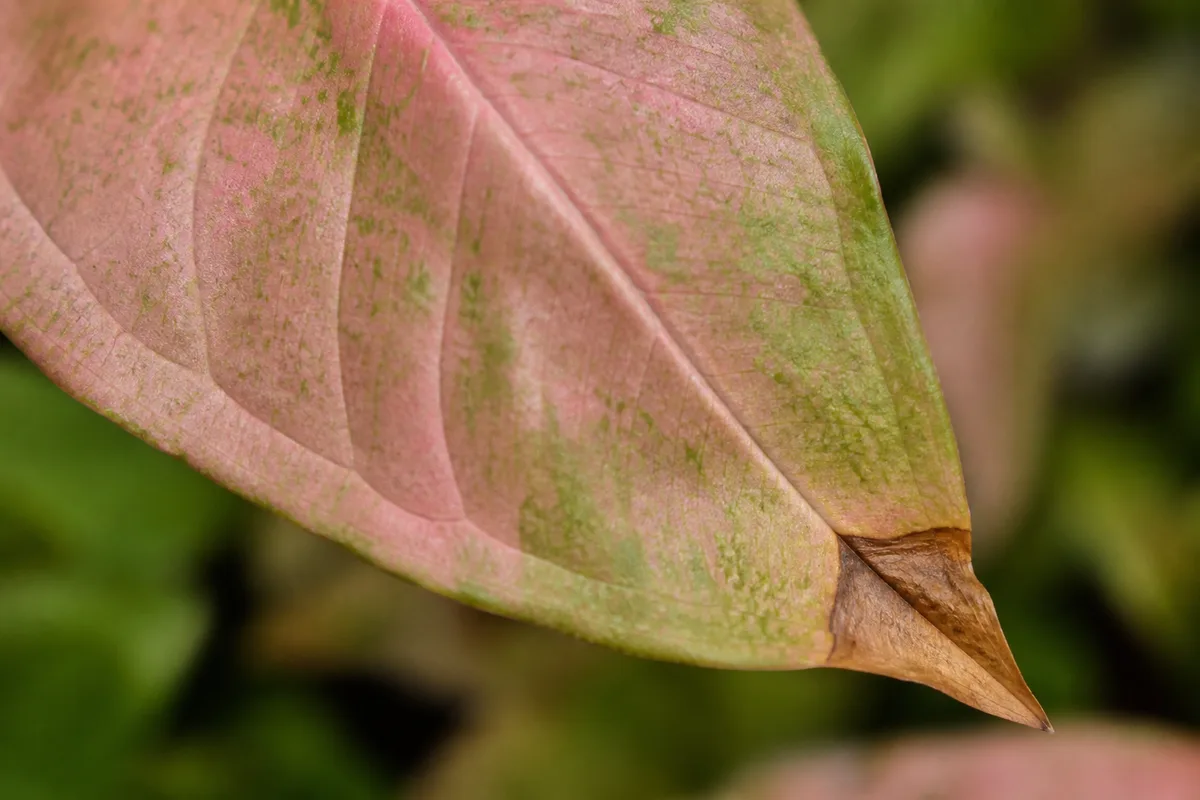
Brown Tips symptoms on Syngonium Neon Robusta - compare with healthy tissue on the same plant.
Patterns that fit environmental tip burn:
- Crispy brown only at tips or thin margins; rest of leaf still colored
- Several leaves affected in the same week after a dry spell, heavy feeding, or a move near a heater
- White or tan mineral crust on the soil surface
- Newest leaves opening with small brown points when winter air is dry
Patterns that do not fit simple tip burn:
- Soft, water-soaked brown patches spreading from the base
- Yellowing lower leaves while soil stays wet for many days
- Black spots with yellow halos (bacterial leaf spot)
- Fine webbing or stippling on undersides (spider mites)
Neon Robusta’s thin, pale tissue makes marginal necrosis easier to see than on solid-green arrowhead cultivars. That visibility does not mean the plant is weaker-it means you are catching stress early if you act on the pattern.
Why Neon Robusta gets brown tips
Syngonium is a tropical aroid from the rainforest understory. In nature it gets frequent rain but fast-draining soil and high humidity. Indoors, Neon Robusta often sits on a desk or shelf where winter heating drops humidity, tap water carries fluoride, and calendar watering keeps roots alternately starved and drowned.
Inconsistent watering
UF/IFAS recommends allowing the potting surface to dry slightly before irrigating and warns that media should stay moist but not wet. Neon Robusta growers often interpret “moist” as “water every few days regardless of soil.” When the mix goes bone dry, fine roots die back; the next heavy soak leaves wet pockets while leaf tips still cannot pull enough water. The tip-the last stop in the transpiration stream-browns first.
Low humidity and dry air
Missouri Botanical Garden notes that arrowhead vine likes high humidity and performs best in humidified rooms or on pebble trays. UF/IFAS lists 40–60% relative humidity for interiorscape syngonium. Neon Robusta near a radiator, AC vent, or sunny window in heated winter air loses water through thin leaves faster than roots replace it-classic marginal burn.
Tap-water fluoride and mineral salts
Many municipalities add fluoride to drinking water. Oregon State Extension documents that fluoride accumulates in leaf margins and causes marginal and tip necrosis on sensitive foliage plants. While syngonium is not on the most sensitive list (dracaena and spider plant are), pale-leaved cultivars still show edge burn when fluoride and calcium salts build up over months of tap watering.
Fertilizer salts add the same stress. Heavy or year-round feeding without flushing leaves white crust on the soil and burns pale tips even when Syngonium Neon Robusta watering guide looks fine.
Root stress from overwatering
Overwatered syngonium roots lose function in soggy peat. Leaves may yellow and show brown tips at the same time because damaged roots cannot move water to margins-similar look, different trigger. NC State Extension lists soft rot among common syngonium problems when conditions stay too wet.
Direct sun on pale leaves
Neon Robusta needs Syngonium Neon Robusta light guide to hold its pink wash. Too much direct sun scorches thin, pale tissue at tips and edges-often tan and crisp like drought burn but tied to window placement, not soil dryness.
How to confirm the cause
Work through these checks in order before buying products or Syngonium Neon Robusta repotting guide:
- Soil moisture at the top inch - Dry and light pot with crispy tips suggests underwatering swings. Damp mix for days with yellow lower leaves suggests overwatering or poor drainage.
- Watering and feeding history - Note the last three weeks. Did you skip water, then soak heavily? Feed in winter or at full label strength?
- Soil surface - White or tan crust points to salt buildup; plain dry tips without crust point to humidity or drought rhythm.
- Air around the plant - Heater, AC, or fan blowing directly on leaves? Humidity often crashes below 40% in those spots.
- Water source - Hard tap water or softened water (high sodium) increases edge burn risk on pale foliage.
- Light - Midday sun on the leaves? Move a hand between plant and window; harsh direct light scorches tips.
- New growth - Are the newest arrowhead leaves opening with fresh burn? That confirms an ongoing cause. Only old lower tips brown while new growth is clean often means you already fixed the stressor.
If soil smells sour, stems feel soft at the base, or roots are brown and mushy on a gentle tug, stop tip-burn treatment and inspect for root rot instead.
First fix for Neon Robusta
Water only when the top inch of potting mix feels dry, then soak thoroughly until water exits the drainage holes-and empty the saucer within 30 minutes.
That single rhythm stabilizes both underwatering swings and the chronic slight overwatering that keeps syngonium roots weak. Do not water on a calendar day; water when the check says dry. Do not let the pot sit in runoff.
Hold this pattern for two weeks before adding other fixes. Watch the next two leaves that unfurl. If tips stay clean, you found the main issue. If new tips still burn while soil rhythm is stable, move to filtered or rainwater and humidity (secondary steps below)-not fertilizer.
Step-by-step recovery
After the first fix is in place, add these steps one at a time based on what your checks showed:
If tips burn during dry winter air
Move the pot away from heating vents. Group it with other plants or run a humidifier to keep relative humidity in the 40–60% range syngonium prefers indoors. Misting alone gives only minutes of relief; stable humidity matters more for thin-leaved Neon Robusta.
If you use hard tap water or feed heavily
Switch to filtered, distilled, or rainwater for one month. Fluoride injury accumulates gradually in margins-clean water stops new buildup even though old tips stay brown.
If white crust sits on the soil, flush salts: run plain water through the pot at roughly two to three times the pot volume, let it drain fully, and skip fertilizer for four weeks. Resume feeding at half strength only during spring and summer active growth.
If the pot dries out in one day
The plant may be rootbound or in too much direct sun. Check whether roots circle the pot wall. If the root ball is solid and water runs straight through, repot one size up in fresh well-draining mix during active growth-not as a day-one tip-burn fix, but after watering rhythm is stable.
Trim cosmetic damage
Snip fully dead brown tips with clean scissors, following the natural arrow shape. Leave a thin brown margin rather than cutting into green tissue-fresh cuts on healthy cells invite more browning on sensitive aroid leaves.
When trimming or handling leaves
Neon Robusta sap contains calcium oxalate crystals and the plant is toxic to cats and dogs. Wear gloves if sap irritates your skin, wash tools after pruning, and keep cuttings away from pets.
Recovery timeline
Stabilization: Once watering rhythm and water quality match what the plant needs, new tip burn usually stops within one to two weeks. Old damaged tips never re-green.
Visible success: The next two to four arrowhead leaves open with clean points and firm pink-green color. That is your best recovery signal-not the old leaves you trimmed.
Full cosmetic recovery: Lower leaves with historic brown tips can stay marked for months. Many growers trim them after new growth looks healthy. A compact tabletop Neon Robusta can look fresh again in four to eight weeks during spring and summer growth.
Worsening signs: Tips keep browning on every new leaf despite stable watering, lower leaves yellow in clusters, soil stays wet and smells sour, or stems soften-those mean root or rot problems, not edge burn alone.
Lookalike symptoms
- Root rot - Soft brown at leaf bases, wet soil, sour smell, limp plant despite damp mix. Fix drainage and inspect roots; do not flush with more water on a schedule.
- Bacterial leaf spot - Wet-looking spots with yellow halos, not uniform dry tips. Remove affected leaves and improve airflow; avoid overhead misting on damaged tissue.
- Spider mites - Stippling and webbing on undersides, not isolated crispy tips. Rinse and treat pests; humidity helps prevention but does not replace mite control.
- Cold draft damage - UF/IFAS notes cold irrigation water can injure syngonium leaves in winter. Brown patches after a cold window night differ from slow tip creep from fluoride.
- Sun scorch - Bleached or tan patches on the side facing the window after sudden sun exposure; soil may be appropriately moist.
What not to do
Do not increase fertilizer to “green up” browned tips-salts often make margins worse. Do not water more often because tips look dry while the mix is still damp at depth; that damages aroid roots. Do not repot on day one unless roots are clearly failing or the mix never dries.
Avoid letting tap water sit overnight as your only fix for fluoride; that off-gasses chlorine but does not remove fluoride. Do not mist alone expecting it to cure winter tip burn in a drafty room.
Do not cut deep into green leaf tissue when trimming; a thin dead edge is enough. Skip stacking repot, flush, humidifier, and fertilizer in the same afternoon-change one variable, then read the next new leaf.
How to prevent brown tips next time
Match Neon Robusta to its bright indirect spot and keep a consistent dry-down cycle: moist after watering, top inch dry before the next drink. Use a well-draining peat-based mix and never leave standing water in the saucer.
In heated months, maintain moderate humidity away from vents. If your tap water is hard, default to filtered or rainwater for this pale cultivar. Feed lightly during active growth only, and flush the pot occasionally if you fertilize regularly.
Rotate the pot weekly so one side is not scorched by a window, and press the soil with a finger every few days instead of relying on a fixed weekly schedule.
When to worry
Cosmetic tip burn on a few older leaves while new growth stays clean is not an emergency. Act quickly when every new leaf opens with burn, stems soften, soil stays wet for a week, or yellowing spreads up the plant. Those patterns need root inspection, not another humidity tray alone.
If more than half the plant shows spreading soft brown tissue after a cold exposure below about 55°F shipping stress, isolate it and check whether chilling injury or rot is involved.
Conclusion
Brown tips on Syngonium Neon Robusta look alarming on pink arrowhead leaves but usually trace to water rhythm, air dryness, or salts in water and fertilizer-not a mystery disease. Confirm with soil checks and the pattern on newest leaves, stabilize watering when the top inch dries, then adjust water quality and humidity if burn continues. Old tips will not heal; clean new growth is the sign you fixed it.
When to use this page vs other Syngonium Neon Robusta guides
- Syngonium Neon Robusta watering guide - Use for routine moisture checks before assuming brown tips is the main issue.
- Syngonium Neon Robusta problems hub - Browse all 1 common issues on this species.