Low Humidity on Syngonium Neon Robusta: Causes, Checks &
Quick answer
Dry winter air can crisp the pastel edges on Syngonium Neon Robusta, but uneven watering and heat vents often share the blame. First step: move the plant away from radiators and AC drafts, then check whether the top inch of soil is drying on a normal schedule.
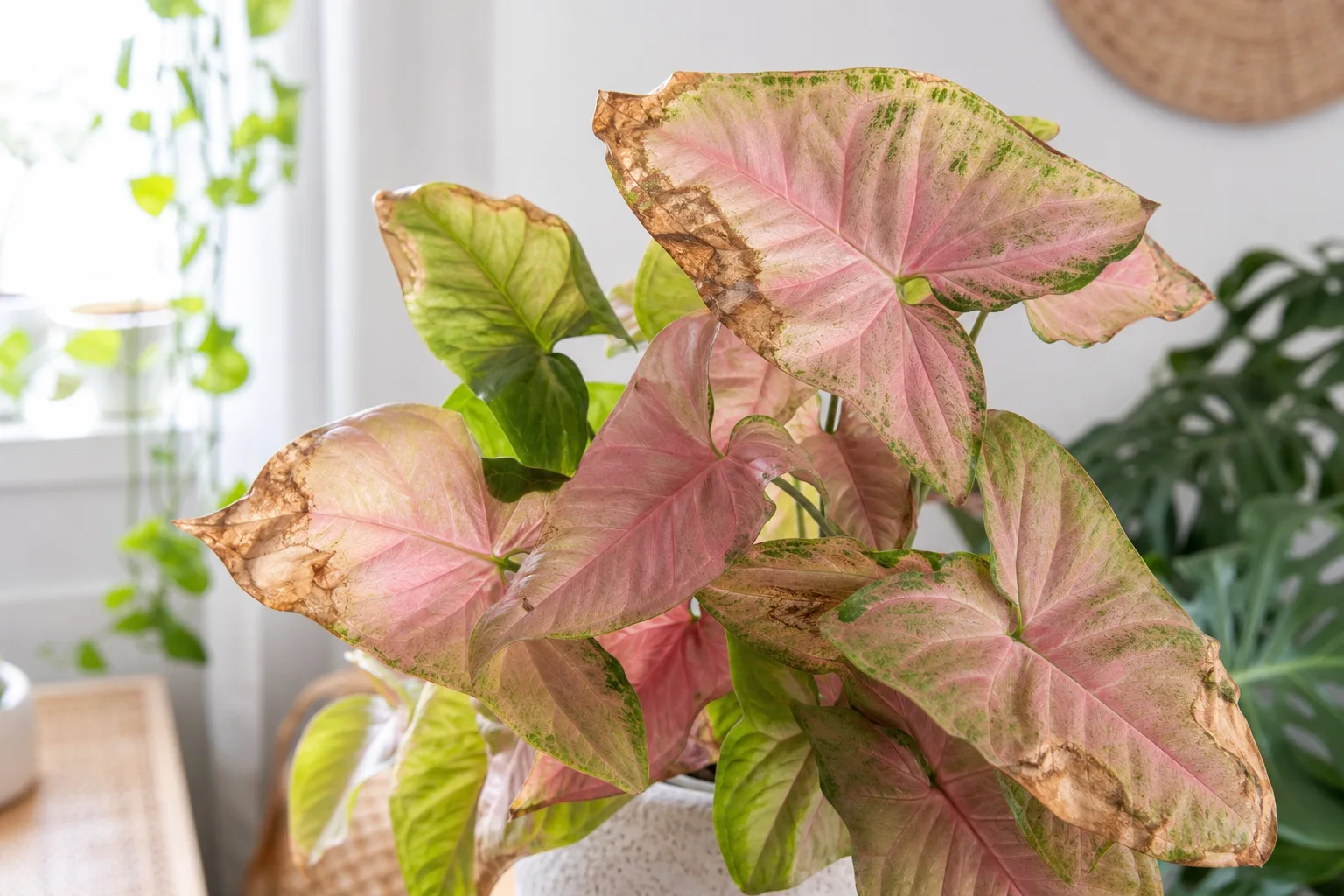
Low Humidity on Syngonium Neon Robusta: Causes, Checks & Fixes
This guide covers low humidity on Syngonium Neon Robusta. See also the general Low Humidity guide, watering, and light pages for this plant.
Low Humidity on Syngonium Neon Robusta: Causes, Checks & Fixes
Quick answer
Syngonium Neon Robusta (Syngonium podophyllum ‘Neon Robusta’) is a tropical arrowhead vine that prefers moderate humidity-not desert-dry air, but not the saturated fog of a closed terrarium either. When forced-air heat or a radiator dries the room in winter, the plant’s soft pink new leaves often show brown, papery edges before older green growth does. Pale juvenile tissue loses water faster than the darker mature leaves on the same stem.
That pattern is common, but humidity is not always the only culprit. Underwatering, fertilizer salt burn, spider mites, and dim light all produce similar edge browning on Neon Robusta. First step: move the pot away from heat vents, radiators, and cold window drafts. Once airflow around the leaves is stable, check soil dry-down and light before you add a humidifier or start misting.
What low humidity looks like on Syngonium Neon Robusta
Neon Robusta is valued for soft pink to pastel blush on new arrowhead-shaped leaves. Under dry air stress, damage usually starts at the leaf margins and tips of the newest, palest growth:
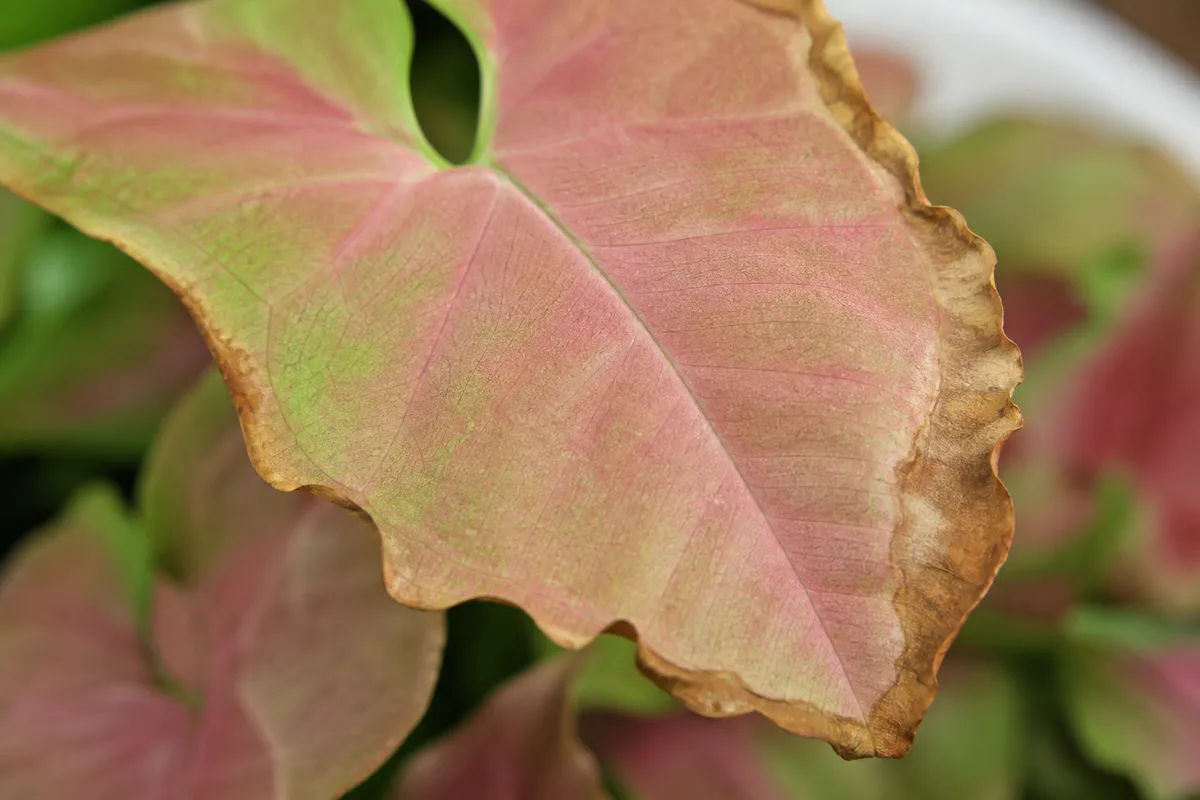
Low Humidity symptoms on Syngonium Neon Robusta - compare with healthy tissue on the same plant.
- Thin brown or tan crisp lines along the outer edge of pink-tipped leaves
- Tips that feel dry and papery rather than soft and flexible
- Slight leaf curl inward on the most exposed leaves facing a vent
- Older, greener leaves on the same plant looking mostly fine while top growth shows the burn
Because Neon Robusta is often kept as a compact tabletop plant, the upper leaves sit closer to desk height where heat rises from radiators and electronics. A trailing stem near a sunny window can also bake in afternoon dry air even when the rest of the room feels comfortable.
Low humidity rarely yellows the whole leaf overnight. Instead you see localized edge necrosis on tissue that was already pale. If entire leaves turn yellow from the base up, or the pot stays soggy for a week, suspect watering or root problems before humidity.
Why Syngonium Neon Robusta gets dry-air stress
Syngonium podophyllum evolved as a tropical understory climber in Central and South America. Indoors it wants warm, humidified conditions with bright indirect light-not direct sun that bleaches its pastel color. Neon Robusta is a selected cultivar with especially light leaf color; that paleness is attractive but leaves less chlorophyll-rich tissue at the margins, so edge burn shows up fast when transpiration outpaces root uptake.
Winter is the classic trigger. Most indoor environments lack sufficient humidity in winter, and central heating can drop relative humidity into the 20–30% range while the plant still photosynthesizes in whatever light it receives. Stomata stay open, water exits the leaf faster than roots replace it, and the thinnest margin tissue dies first.
Placement amplifies the problem on Neon Robusta specifically:
- Heat registers and radiators create a microclimate far drier than the rest of the room-indoor plants are sensitive to drafts and heat from registers
- Forced-air returns pull moisture away from clustered desk plants
- Single-pane windows combine cold glass with warm room air, drying leaves that touch or face the pane
- Bright, hot afternoon sun through glass accelerates water loss on pale leaves already stressed by dry air
Neon Robusta also fades toward green in low light. Growers sometimes keep it in a dim corner because the pink looks good at purchase; in that setup, dry edges plus weak light produce a dull, crispy plant that looks like a humidity failure when light is part of the equation.
Spider mites add a compounding layer. They thrive in warm, dry indoor air-the same winter conditions that crisp syngonium edges. Mite stippling on pale leaves can mimic drought stress until you inspect closely.
How to confirm the cause
Work through these checks in order before you treat humidity as the main problem:
- Placement audit - Is the pot within a few feet of a heat vent, space heater, radiator, or drafty door? Is any stem pressed against hot window glass? Move it temporarily and note whether new damage stops.
- Hygrometer reading - A simple digital hygrometer near the plant tells you more than guesswork. Readings consistently below 30% in winter strongly support dry-air stress on a tropical foliage plant.
- Soil moisture - Stick a finger into the top inch of mix. Neon Robusta should be watered when that layer dries. Bone-dry soil with limp stems points to underwatering; wet soil that never dries suggests overwatering or poor drainage-both can brown edges without low humidity being the root cause.
- Salt check - White crust on the pot rim or soil surface may mean fertilizer salts are burning margins. Flush the pot if salts are visible before chasing humidity.
- Light level - Are newest leaves opening greener and smaller than when you bought the plant? Dim light weakens Neon Robusta and makes edge damage look worse. Confirm bright indirect light for several hours daily.
- Pest scan - Hold a leaf over white paper and tap it. Orange or moving specks, fine webbing, or stippled pale patches suggest spider mites thriving in dry air-not humidity injury alone.
- Pattern on the plant - Humidity damage concentrates on exposed newest leaves. Uniform browning on all leaves regardless of position suggests watering, salts, or systemic stress instead.
If placement is bad, the room is objectively dry, soil moisture is appropriate, and pests are absent, you have a solid humidity diagnosis.
First fix for Syngonium Neon Robusta
Move the plant away from heat sources and drafts-at least several feet from active vents or radiators.
That single placement change stops the worst localized drying without adding equipment. Choose a spot with bright indirect light where air moves gently but does not blast the leaves. For a compact Neon Robusta on a desk, even shifting from the radiator side of the room to the interior wall often stops new crisping within one to two weeks.
Do not reach for a humidifier on day one if the plant still sits above a heat register. Do not mist heavily into a dim corner with wet soil-that raises leaf spot and rot risk without fixing ambient dryness. Do not repot or fertilize a stressed plant hoping to push new growth.
Step-by-step recovery
After the placement fix, work through these steps in order based on severity:
- Stabilize watering - Water when the top inch of soil dries, then let excess drain fully. Even moisture helps roots keep up with leaf transpiration once air humidity improves.
- Raise local humidity modestly - Group Neon Robusta with other houseplants so collective transpiration lifts humidity nearby. Set the pot on a pebble tray with water below pot level, or run a room humidifier in the driest rooms. Target moderate humidity around 50–60% rather than tropical greenhouse levels.
- Trim purely cosmetic damage - Snip brown crispy tips with clean scissors if they bother you. Cut following the leaf shape; dead margin tissue will not green up again.
- Improve light if needed - Move closer to a bright east or north window, or add a sheer curtain to filter harsh south or west sun. Better light helps Neon Robusta hold its pink color and grow resilient new leaves.
- Treat spider mites if present - Rinse leaf undersides with lukewarm water repeatedly, increase humidity, and isolate the plant until stippling stops. Dry air and mites often arrive together; fixing only humidity leaves the pest active.
- Flush salts if suspected - Run water through the pot until it drains freely, discard saucer water, and hold fertilizer until new growth looks healthy for two weeks.
Skip daily misting as your primary humidity strategy. Misting may not significantly increase humidity; light morning mist on healthy plants in bright spots can rinse dust, but it does not substitute for a humidifier or pebble tray in a heated room.
Recovery timeline
Once the plant sits in stable air and receives appropriate water and light, the next one or two leaves tell the story. Clean pink margins on fresh growth usually appear within two to four weeks during spring and summer active growth. Winter recovery may take longer if the plant grows slowly in cooler, dimmer conditions.
Old leaves with browned edges keep those scars permanently. Judge success by new arrowhead leaves, not by old tissue reverting. If the third consecutive new leaf still opens with crisp margins after placement and humidity fixes, revisit watering depth, salt buildup, and pest checks.
Lookalike symptoms to rule out
Underwatering - The whole plant may droop, and soil pulls away from the pot sides. Edges brown, but leaves feel thin and limp rather than firm with only marginal crispness. Weight the pot; a very light container confirms drought.
Overwatering and root stress - Yellowing often starts on lower leaves while soil stays wet. Brown edges can appear, but stems may feel soft and gnats may hover over the surface. Fix drainage before humidifying.
Fertilizer salt burn - White deposits on soil or pot rim with browning leaf tips across multiple leaves regardless of vent proximity. Flush the pot and reduce feed frequency.
Low light - New leaves open smaller and greener; the plant stretches toward the window. Edge browning may be mild, but the main issue is weak growth, not dry air alone.
Spider mites - Fine stippling, webbing, and moving specks on leaf undersides. Pale Neon Robusta leaves show damage quickly. Increase humidity and treat the pest.
Direct sun scorch - Bleached or washed-out patches on leaves facing the window, not just margin crispness. Neon Robusta loses its pink wash in too much direct sun.
Mistakes to avoid
Do not assume every brown tip means you need 80% humidity. Neon Robusta does well at moderate indoor levels when placement and watering are correct.
Do not mist heavily into low light with wet soil. Syngonium foliage that stays wet overnight in dim conditions invites bacterial leaf spot and soft rot.
Do not leave the plant on a radiator cover or beside a space heater because “tropical plants like warmth.” Warm dry air is worse than cooler stable air with moderate humidity.
Do not fertilize a crispy plant to force pink new growth. Salts on stressed roots worsen tip burn.
Do not ignore spider mites because you already bought a humidifier. Dry air and mites share the same season.
How to prevent dry-air stress next time
Place Neon Robusta where it gets bright indirect light without afternoon sunbeams on the leaves. Keep it off radiator ledges and away from HVAC vents year-round, not only in winter.
Run a humidifier or use pebble trays in the rooms you heat most aggressively. Group humidity-loving plants to build a shared microclimate.
Water on the pot’s schedule-when the top inch dries-not on a fixed calendar that ignores seasonal slowdown.
Rotate the pot weekly so one side is not always facing a dry heat source. Pinch long stems if you want a compact tabletop shape; fewer trailing tips near floor vents means less exposed tissue.
During the first winter with a new Neon Robusta, watch newest leaf color and margins weekly. That cultivar shows stress on pink tips before the rest of the plant looks unhappy.
When to worry
Treat as urgent when most new leaves keep opening with heavy edge necrosis despite good placement and a humidifier, or when spider mite webbing spreads faster than your rinsing controls. Also act quickly if stems soften, soil smells sour, or lower leaves yellow while the mix stays wet-those patterns point away from humidity and toward root failure.
Humidity stress alone is rarely fatal on a healthy syngonium. A plant that keeps producing firm stems and clean new growth after you fix placement is on track even if older leaves look rough.
When to use this page vs other Syngonium Neon Robusta guides
- Syngonium Neon Robusta watering guide - Use for routine moisture checks before assuming low humidity is the main issue.
- Syngonium Neon Robusta problems hub - Browse all 1 common issues on this species.