Best Soil for Syngonium Pink Splash: Mix & Drainage
Best Soil for Syngonium Pink Splash: Mix & Drainage
Best Soil for Syngonium Pink Splash: Mix & Drainage
Why Soil Drives Pink Splash Health and Foliage Quality
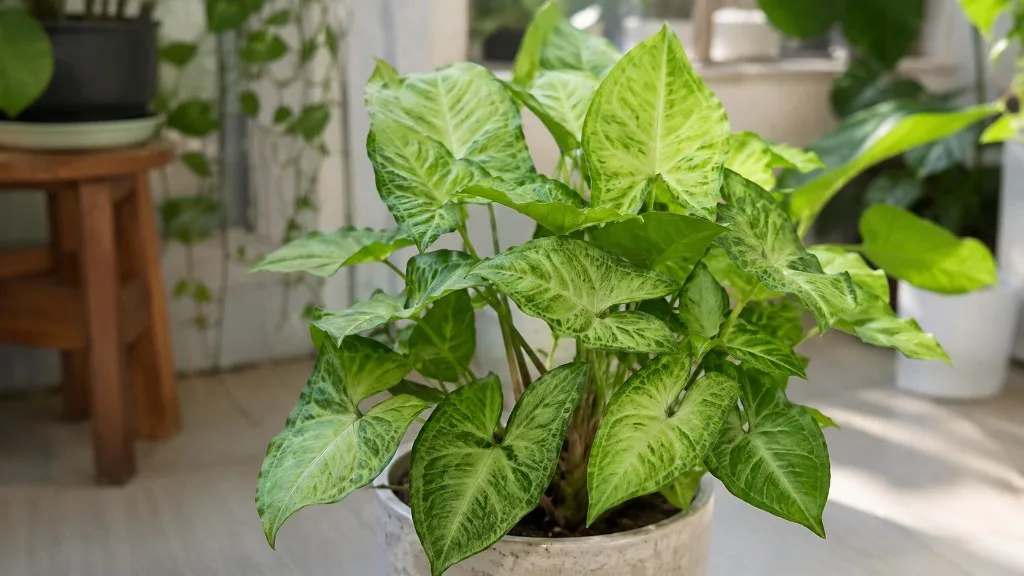
Syngonium Pink Splash (Syngonium podophyllum ‘Pink Splash’) is sold for blush-to-salmon arrowhead leaves on a compact juvenile plant that can climb into larger lobed foliage when mature. Most growers focus on Syngonium Pink Splash light, pruning shape, and keeping pink tones from washing out. Those choices matter, but the root zone is where watering, humidity, and placement either succeed or fall apart. Soil is not inert filler. It decides how fast water moves through the pot, how much oxygen reaches aroid roots, how minerals accumulate over months of feeding, and how quickly the plant recovers after a missed drink or an overenthusiastic pour.
Syngonium Pink Splash is an aroid in the Araceae family, native to moist, shady tropical forests from Mexico through Central America and into parts of South America. Indoors, you compress that habitat into a pot a fraction of the plant’s natural scale. The best soil for Syngonium Pink Splash must hold steady, even moisture without turning the lower root zone into a swamp—the same functional balance its native forest floor provides in loose, organic-rich ground that drains after rain yet stays lightly damp at depth.
If your pink arrowhead wilts between waterings despite careful attention, or new leaves emerge smaller and greener than older growth, inspect the mix texture before changing light or fertilizer. A well-built soil system makes every other care decision easier to read. Pink color intensity is primarily a light question, but stressed roots produce weak, pale growth regardless of how good your window is.
What Syngonium podophyllum ‘Pink Splash’ Needs From Its Root Zone
Syngonium podophyllum is a climbing or trailing aroid that can reach several meters in its native range but usually stays 30 to 60 cm as a bushy indoor plant unless given a moss pole or trellis (Missouri Botanical Garden). It spreads through nodes along the stem and develops fibrous, moisture-sensitive roots with adventitious roots at nodes—clues that it prefers an open, organic medium rather than heavy, airless clay. University of Florida IFAS Extension recommends commercial media combining peat, pine bark, vermiculite, and/or perlite with pH of 5.5 to 6.5 for Syngonium production, keeping potting media moist but not wet (UF IFAS EP244).
That combination—moist but not soggy, fertile but not dense—defines container mix design for Pink Splash. Heavy garden soil, unamended all-purpose potting mix in oversized plastic pots, and mixes that have collapsed after 12 to 18 months all work against aroid architecture. Syngoniums are often described as more forgiving than many philodendrons when watering slips, but they still decline quickly when the root zone stays anaerobic for weeks. The goal is consistently moist, well-aerated soil that dries down gradually at the surface while staying lightly damp at depth—not a desert mix and not a bog.
The Tropical Aroid Model
In its native range, Syngonium grows in warm, humid, partly shaded forest where organic matter accumulates, rain drains through the upper layer, and deeper humus holds moisture. Climbing aroids also root into leaf litter and bark crevices—airy, organic environments that never stay waterlogged for long. Your container mix should mimic the function of that forest floor, not the exact materials: organic matter for moisture exchange, coarse amendments for air pockets, and a pot sized to the root mass. When growers say Syngonium wants moist soil, they mean damp like a wrung-out sponge, not saturated like a wet towel in a sealed bag.
Pink Splash is selected for pink to salmon variegation on arrowhead-shaped juvenile leaves. Compared with Neon Robusta, it often reads bolder and less pastel, though exact color depends on light and leaf age. Trade listings sometimes blur Pink Splash with Pink Allusion, another pastel pink-green arrowhead the RHS describes as needing moist but well-drained conditions in partial shade—the same baseline rhythm Pink Splash follows indoors.
Four Jobs Your Mix Must Do
Every ingredient in a Syngonium Pink Splash soil recipe should serve at least one of four jobs. First, moisture retention: aroid roots desiccate when the mix dries completely in small pots on a bright windowsill; the medium must hold enough water between drinks without staying wet for days. Second, drainage and aeration: excess water must exit the pot, and air must remain in pore spaces after watering so roots can breathe. Third, structure over time: the mix should resist collapsing into an anaerobic block within one to two active seasons. Fourth, nutrient compatibility: the medium should stay in a slightly acidic pH range and support steady feeding without rapid salt buildup on sensitive foliage.
If your mix fails any of those jobs, the plant may develop wilting, yellow lower leaves, curling foliage, or stalled growth—symptoms that overlap with light and Syngonium Pink Splash watering problems, which is why checking how the soil actually behaves matters so much.
Signs Your Current Syngonium Pink Splash Soil Is Wrong
Soil problems on Syngonium Pink Splash often announce themselves indirectly. Water sits on the surface for minutes after you pour, then runs down the gap between the root ball and pot wall—usually a sign the mix has become hydrophobic from drying too hard or from peat breakdown. The pot stays heavy for days after a single thorough watering while the top inch looks merely damp, especially common in dense commercial mixes or oversized containers. New leaves emerge smaller, thinner, or more green than pink despite adequate light and regular feeding. A sour or stagnant smell from the drainage hole points to anaerobic conditions and possible root decline even before lower leaves yellow and drop.
On Syngonium specifically, watch for curling leaves paired with soil that never quite dries at depth—the roots may be stressed by moisture imbalance while you blame insufficient humidity. NC State Extension notes that bacterial leaf spots and soft rot can occur when arrowhead vine conditions stay too wet—a warning that applies directly to container culture. If you lift the plant and see dark, mushy roots or a root ball that is solid and smell-free but rock-hard, the soil system has failed in opposite ways—too wet or too compacted—but both require a fresh, airier mix rather than more frequent watering.
If you adjust watering and light and the same symptoms return within two weeks, inspect the mix texture and pot size before changing Syngonium Pink Splash fertilizer or repotting again without fixing the medium.
Best Soil Mix for Syngonium Pink Splash
The best soil for Syngonium Pink Splash is a chunky, well-draining aroid mix with good organic content and enough coarse amendment to keep the root zone open. UF IFAS Extension describes suitable commercial media as peat- and bark-based blends with perlite or vermiculite, kept moist but not wet during production (UF IFAS EP244). For home growers, the practical target is a medium that feels light and crumbly when moist, not sticky mud or pure grit. When you squeeze a handful lightly, it should hold shape briefly and fall apart. If it forms a tight ball, add perlite and orchid bark. If water runs through instantly and the plant wilts within a day, you have gone too coarse or the pot is too small for the root mass in peak summer heat.
Syngonium Pink Splash does not need the ultra-fast drainage of a cactus mix, but it also cannot sit in dense peat mud for weeks. You are aiming for the middle ground most aroid growers call a rainforest or aroid blend—moisture at depth, air throughout, and predictable dry-down at the surface. The RHS lists S. podophyllum as needing moist but well-drained soil under glass, which translates indoors to an open aroid recipe in a pot with a drainage hole.
The Quick-Answer Aroid Recipe
A dependable Syngonium Pink Splash soil mix you can blend at home:
| Ingredient | Proportion | Role |
|---|---|---|
| Quality peat-based or coir-based potting soil | 40–50% | Organic base, moisture, starter nutrients |
| Orchid bark (fine to medium grade) | 25–30% | Chunky aeration, slow decomposition, drainage channels |
| Perlite or pumice | 20–25% | Non-decomposing air space, fast drainage |
A widely used equal-parts shortcut that also performs well: 1 part potting mix, 1 part orchid bark, 1 part perlite. For a plant that dries too slowly in a plastic indoor pot, shift to 35% base mix, 35% bark, 30% perlite. For a climbing Pink Splash on a bright windowsill in terracotta that dries every two to three days, use 50% base mix, 25% bark, 25% perlite to slow dry-down slightly and protect against chronic drought stress.
Optional additions at 5 to 10% each: worm castings, horticultural charcoal, or coco coir chips. Moisten dry peat or coir before blending so the first watering absorbs evenly.
Core Ingredients Explained
Understanding what each component does helps you adjust the recipe without starting from scratch every time a plant behaves differently in your home.
Potting Base: Peat and Coconut Coir
Sphagnum peat-based potting soil is lightweight, holds moisture evenly, and supports the slightly acidic conditions Syngonium tolerates well. The downside is compaction and hydrophobicity within 12 to 18 months in active growth—a hidden cause of root stress when the bottom of the pot turns dense and oxygen-poor while the surface looks acceptable. Most bagged indoor or all-purpose mixes are peat-based and work as the foundation if you amend them.
Coconut coir is the leading peat alternative. It rewets more easily than aged peat, holds moisture well, and typically sits near pH 5.8 to 6.5, comfortably inside the Syngonium range. Choose low-salt, horticultural-grade coir; poorly rinsed coir can carry salts that accumulate in the root zone over a season of feeding. Coir alone can stay wet too long in cool indoor rooms; pair it with generous perlite and bark rather than using straight coir.
Perlite, Bark, and Optional Additives
Perlite creates non-decomposing air space; use coarse grade. Orchid bark (fine to medium) keeps mixes open and decomposes slowly over one to two years. Pumice can replace part of the perlite in very dry homes. Avoid sand as the main amendment, garden soil, and gravel layers at the pot bottom—all reduce aeration or create perched water tables that keep the lower root zone wetter, not drier.
pH and Fertilizer Compatibility
UF IFAS EP244 places Syngonium in slightly acidic soil, roughly pH 5.5 to 6.5. That range supports nutrient availability in peat- and coir-based mixes. You do not need a pH meter for every repot if you use a balanced commercial or homemade aroid recipe with bark and perlite, but if growth stays pale and weak despite good light and watering, testing is worthwhile.
Syngonium responds well to light feeding during active growth—often a balanced soluble fertilizer diluted to half strength every four to six weeks in containers. Soil interacts with fertilizer because salts accumulate in the root zone over months of feeding, especially if tap water is hard. A white crust on the soil surface, worsening brown leaf tips after feeding, or stalled growth all suggest flushing or repotting into fresh mix may help as much as adjusting the feed rate. See the dedicated fertilizer guide for timing; soil quality determines how safely those feeds land on the roots.
Drainage Speed and Moisture Retention Balance
Drainage for Syngonium Pink Splash does not mean dry. It means excess water leaves the pot quickly while the mix retains even moisture for aroid roots. UF IFAS recommends keeping potting media moist but not wet during Syngonium production. After a thorough watering, water should exit the drainage hole within minutes, not pool in the bottom for hours. The root ball should feel heavier and evenly moist, not sodden.
Use this one-minute drainage check after watering: pour until water runs from the hole, then lift the pot. Excess should stop streaming within 30 to 60 seconds. If water keeps dripping for many minutes and the saucer fills repeatedly, the mix is too dense, the pot lacks sufficient hole area, or the plant sits in a cachepot that traps runoff. Empty saucers and cachepots after 15 minutes—roots should never sit in standing water overnight. RHS guidance on waterlogging notes that saturated soil displaces oxygen and leads to yellow leaves and root rot—exactly what dense indoor mixes cause when paired with dim light.
The top-inch dry-down rule describes target moisture between waterings for most indoor Pink Splash. Stick a finger into the top 2 to 3 cm (about 1 inch). It should feel barely dry to the touch when you water during warm active growth, not bone dry throughout the pot and not cool-wet on the surface. Deeper in the pot, the mix should still feel lightly moist. Syngonium dislikes going completely dry—lower leaves yellow quickly when the whole root ball desiccates—but it also cannot sit wet for a week in a dim room.
| Observation | Likely soil issue | First adjustment |
|---|---|---|
| Top dry, bottom wet for days | Dense or degraded mix; oversized pot | Repot with chunkier aroid recipe; reduce pot size |
| Water beads on surface | Hydrophobic peat | Bottom-water once, repot, or pre-moisten mix |
| Wilting with wet soil | Root rot from past overwatering | Inspect roots, repot into rescue mix |
| Wilting with hard dry soil | Underwatering or compacted mix | Rehydrate thoroughly; refresh mix |
| Salt crust on surface | Mineral/fertilizer buildup | Flush or repot; reduce feed strength |
| New leaves small and green | Root stress or nutrient lockout | Check roots and mix; refresh if compacted |
Pot Choice and How It Changes Soil Behavior
The same Syngonium Pink Splash soil mix behaves differently depending on the container. Plastic and glazed ceramic retain moisture longer, which suits indoor growers and humid rooms. Terracotta breathes through the walls and pulls moisture from the mix, speeding dry-down—helpful for overwaterers, risky on a bright windowsill where Syngonium transpires heavily in summer. Cachepots (decorative outer pots without holes) are fine only if the inner nursery pot drains freely and you never let runoff accumulate in the outer shell.
Every pot for long-term container care needs a drainage hole. Without one, even a perfect aroid mix will eventually fail because excess water has nowhere to go. Missouri Botanical Garden recommends growing Syngonium in a soil-based potting mix with regular watering during the growing season and reduced watering from fall to late winter—the seasonal rhythm pairs with how fast your chosen pot and mix dry in your room.
Pot size matters as much as mix. When repotting Syngonium Pink Splash, move up only 2 to 5 cm (1 to 2 inches) in diameter—roughly one pot size. An oversized pot holds a large volume of mix the roots cannot colonize quickly; that unused mix stays wet and invites rot while the plant channels energy into roots instead of new pink leaves. Match the pot to the root ball, not only the current leaf spread.
Commercial Mixes vs. DIY Aroid Blends
Commercial all-purpose or premium potting soils can work well if they are genuinely light and not peat-only mud. Read the label and feel the bag if possible. A good store mix contains visible perlite, feels springy, and does not clump into a brick when moistened. Many standard all-purpose potting soils are acceptable as the base for Syngonium Pink Splash if you add 25 to 30% orchid bark and 20 to 25% extra perlite. A simple amendment rule: take 3 parts bagged potting mix and add 1 part perlite as a minimum upgrade; for Pink Splash long-term health, add bark as well.
Can you use regular potting soil without amendment? Only temporarily, and only if you watch dry-down closely. Regular mix in a small plastic pot under moderate indoor light often stays wet too long for aroid roots in winter. If that is what the plant came in from the nursery, plan to refresh or repot within the first month of active growth rather than waiting for obvious decline.
Pre-mixed aroid or houseplant blends from reputable suppliers often contain bark, perlite, and peat in reasonable proportions and save time. Compare labels for visible chunk and avoid mixes that are pure fine peat with no structural amendments. Cactus or succulent mix alone is usually too fast-draining for Syngonium unless you blend it 50/50 with peat- or coir-based potting soil. Straight cactus mix forces repeated drought cycles, showing up as wilting, yellow lower leaves, and curled foliage that mimics underwatering.
DIY mixing costs less at scale, lets you tune aeration for your windowsill or shelf, and guarantees freshness at the start of a growth phase. Commercial mixes save time and often include starter fertilizer—useful, but remember to dilute feeding after the first month because Syngonium shows salt stress on leaf tips quickly.
Adjusting the Recipe for Your Home Environment
No single recipe is perfect for every room and season. Adjust based on how fast the pot dries, not on a calendar. If the mix is still wet at depth after 7 to 10 days in spring and lower leaves yellow, increase perlite and bark by 10% combined at the next repot or refresh. If the plant wilts every morning on a bright east window and the skewer comes out dry halfway down, increase the base mix fraction or move to a plastic inner pot inside a decorative sleeve.
Seasonal shifts change soil behavior dramatically. In winter indoors, lower light and cooler rooms slow evaporation; the same mix that worked in August stays wet longer in January. Water less often, and consider holding major repotting until spring unless the mix is clearly degraded or root-bound. In summer, active growth pulls water faster; check the top inch more frequently without assuming the whole root ball dried evenly.
Grow lights and AC vents change dry-down speed independently of humidity—always confirm moisture at root depth before watering. Soil needs are similar across S. podophyllum cultivars including Pink Splash and Neon Robusta; differences in performance usually come from pot size, light, and watering habit, not pink genetics alone. If pink washes out on new leaves, fix light first—but do not ignore a soggy root zone that produces weak, pale growth even after you move the plant.
When to Refresh or Replace Pink Splash Soil
Peat-based mixes decompose and compact over time, and Syngonium benefits from fresh structure every 12 to 24 months even if it is not yet root-bound. Plan to refresh soil annually for a vigorously growing plant in a small pot, or every 18 to 24 months for a slower indoor specimen. Full repotting is not always required; top-dressing—removing the top 3 to 4 cm of old mix and replacing it with fresh aerated blend—can extend root-zone health between major repots when roots have not yet filled the pot.
Repot into entirely fresh mix when roots circle the pot bottom, emerge from drainage holes, or push the plant upward; when water runs straight through without absorbing because structure has collapsed; when the mix smells sour or looks muddy despite careful watering; when salt crust persists after flushing; or when growth stalls in warm weather with no other clear cause. Spring and early summer are the safest windows because Syngonium can root into fresh medium quickly. Avoid winter repotting unless you are rescuing root rot or severe compaction.
Even if the plant still fits its pot visually, soil age alone justifies refresh on an aroid grown for foliage display. Old mix loses pore space, holds water unevenly, and accumulates minerals. Syngonium rewards fresh medium with steadier new leaves and faster recovery after pruning or propagation.
Repotting into Fresh Mix: Step-by-Step
Repotting is the practical moment when soil theory becomes root health. Done correctly, it solves compaction, salt buildup, and pot-size mismatch without shocking a plant that may already be putting out new growth.
Water lightly the day before so the root ball holds together and roots are flexible. Choose a clean pot one size up with a drainage hole. Prepare fresh Syngonium Pink Splash soil mix and moisten it slightly. Slide the plant out and inspect roots: healthy Syngonium roots are pale, firm, and white to tan. Trim dark, mushy roots with sterilized scissors. If rot is extensive, repot into a rescue mix with extra perlite and reduce watering until new growth appears.
Loosen only the outer 1 to 2 cm of the old root ball—do not bare-root unless you are treating severe rot. Syngonium fibrous roots tear easily. Place a layer of fresh mix in the new pot, set the plant so the stem base and nodes sit at the same depth as before (never bury stems deeper), and fill around the sides with fresh mix. Tap the pot gently or use a chopstick to settle mix without compacting. Water lightly until drainage runs, empty the saucer, and place the plant in bright indirect light without harsh midday sun for one to two weeks. Hold fertilizer for three to four weeks so tender new roots are not burned.
After repotting, slight droop for a day or two is normal. Persistent yellowing after three weeks suggests the pot is too large or the mix is too wet. For rot recovery, use 30% base soil, 35% perlite, 25% bark, 10% charcoal, skip feeding until new growth appears, and avoid stacking pruning and relocation in the same week. Full timing and post-repot care are covered in the repotting guide.
Soil Mistakes That Damage Pink Splash Roots
Root decline on Syngonium Pink Splash is almost always prevention failure, not bad luck. The most common soil mistakes are easy to avoid once you know what they look like.
Using unamended dense potting soil in a large plastic pot is the top error. The mix stays wet at the bottom while the surface looks acceptable, so growers water again. Oversized pots multiply the problem by adding unused wet volume around a finite root system. No drainage hole, or a plugged hole, traps water regardless of mix quality. Gravel layers give a false sense of security while reducing root space. Reusing old, compacted mix at repotting imports salt problems and poor structure into a fresh container. Burying nodes or stems deeper at repotting places tissue in a zone that stays wetter longer and encourages rot at the crown.
Cachepots that trap runoff, garden soil in pots, and oversized bark chunks without fine material cause the same root stress as dense mix. If you suspect rot, unpot immediately, trim mushy roots, and repot into airy fresh mix. Syngonium podophyllum contains calcium oxalate crystals and is toxic to pets if chewed—wear gloves when handling cut stems during repotting if sap irritates your skin.
Conclusion
The best soil for Syngonium Pink Splash balances two demands that sound opposite but are not: hold steady moisture for moisture-sensitive aroid roots and drain fast enough that oxygen never disappears from the mix. Build around 40 to 50% peat- or coir-based potting soil, 25 to 30% orchid bark, and 20 to 25% perlite, then adjust bark and perlite up or down based on how your pot actually dries in your room. Keep pH near 5.5 to 6.5, pair the mix with a drainage hole and correctly sized pot, and refresh the medium every 12 to 24 months or when compaction, salt crust, or root crowding appears.
Syngonium Pink Splash will still need bright indirect light, consistent watering, and light feeding in active growth—soil does not replace those needs. What good soil does is make watering readable, reduce root rot risk, and give the plant a stable foundation so new leaves emerge healthy and pink tones stay as strong as your light allows. When in doubt, check the mix before buying another cultivar or moving the pot again. More often than not, the fix is chunkier, fresher, and better drained—not more complicated.
When to use this page vs other Syngonium Pink Splash guides
- Syngonium Pink Splash overview — Start here for whole-plant context before deep-diving this topic.
- Syngonium Pink Splash watering — Use when the mix is right but dry-down timing still feels unclear.
- Syngonium Pink Splash problems hub — Jump to symptom-specific fix guides when soil adjustments are not enough.