Wilting on Syngonium Pink: Causes, Checks & Fixes
Quick answer
Wilting on Syngonium Pink is almost always a water-pathway problem-either the mix is too dry or roots in wet soil can no longer take up moisture. Lift the pot and check soil an inch deep before you add water.
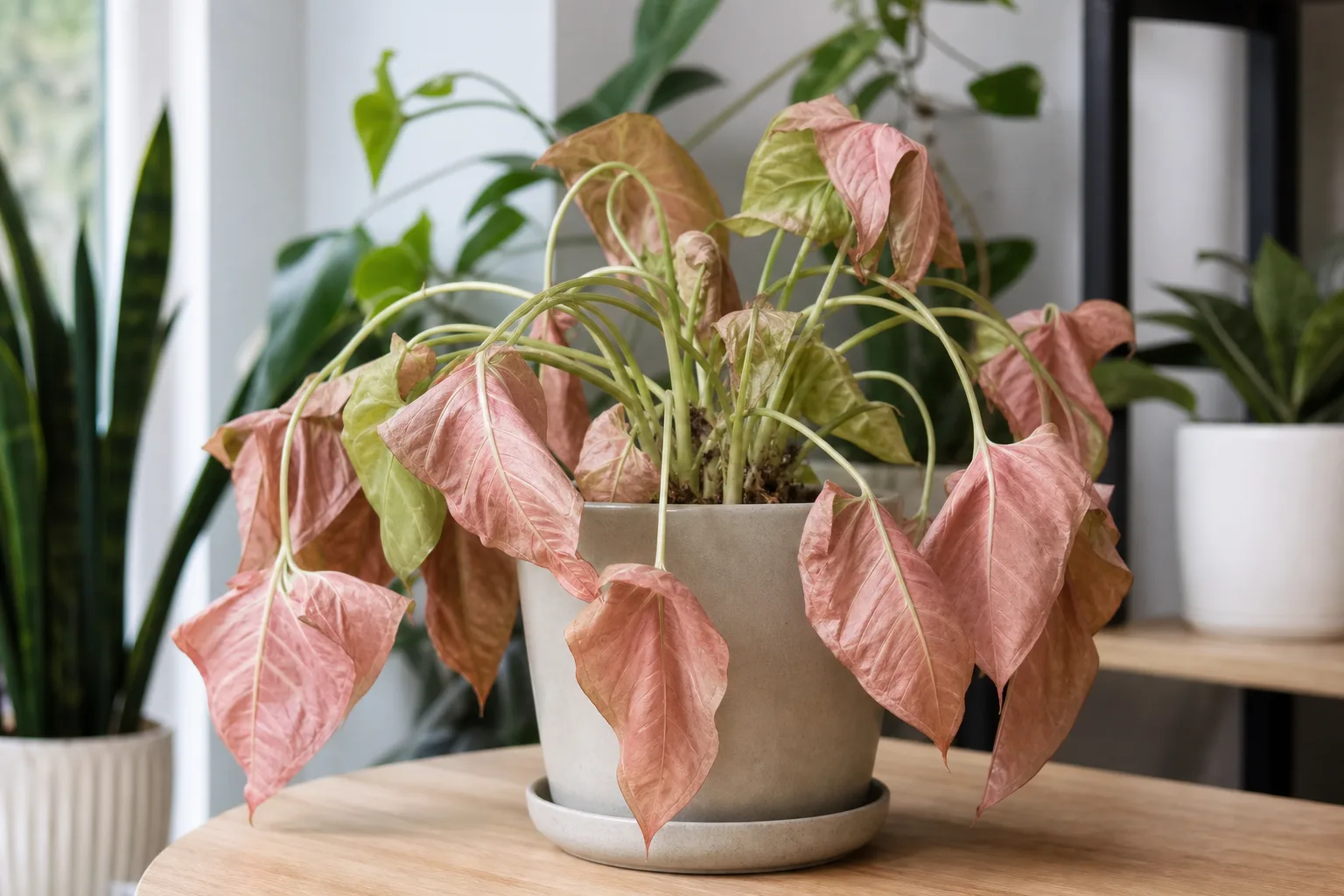
Wilting on Syngonium Pink: Causes, Checks & Fixes
This guide covers wilting on Syngonium Pink. See also the general Wilting guide, watering, and light pages for this plant.
Wilting on Syngonium Pink: Causes, Checks & Fixes
Quick answer
Wilting on Syngonium Pink means the plant has lost turgor-the internal water pressure that keeps soft arrowhead leaves upright. The confusing part is that drought and root rot produce the same limp look. A thirsty plant cannot pull water from dry mix; a rotting plant cannot pull water from wet mix.
First step: lift the pot and poke the soil an inch deep before you water. A light, dry pot needs a deep soak. A heavy, wet pot needs watering paused and roots inspected-not another drink.
What wilting looks like on Syngonium Pink
On Pink Syngonium, wilt shows up in thin juvenile arrowhead leaves and their long petioles first. Affected leaves hang flat or fold downward instead of holding their usual slight cup. Stems may lean toward the side of the pot that dries fastest. In advanced dehydration, leaf edges feel papery and pink blush on new growth looks washed out.
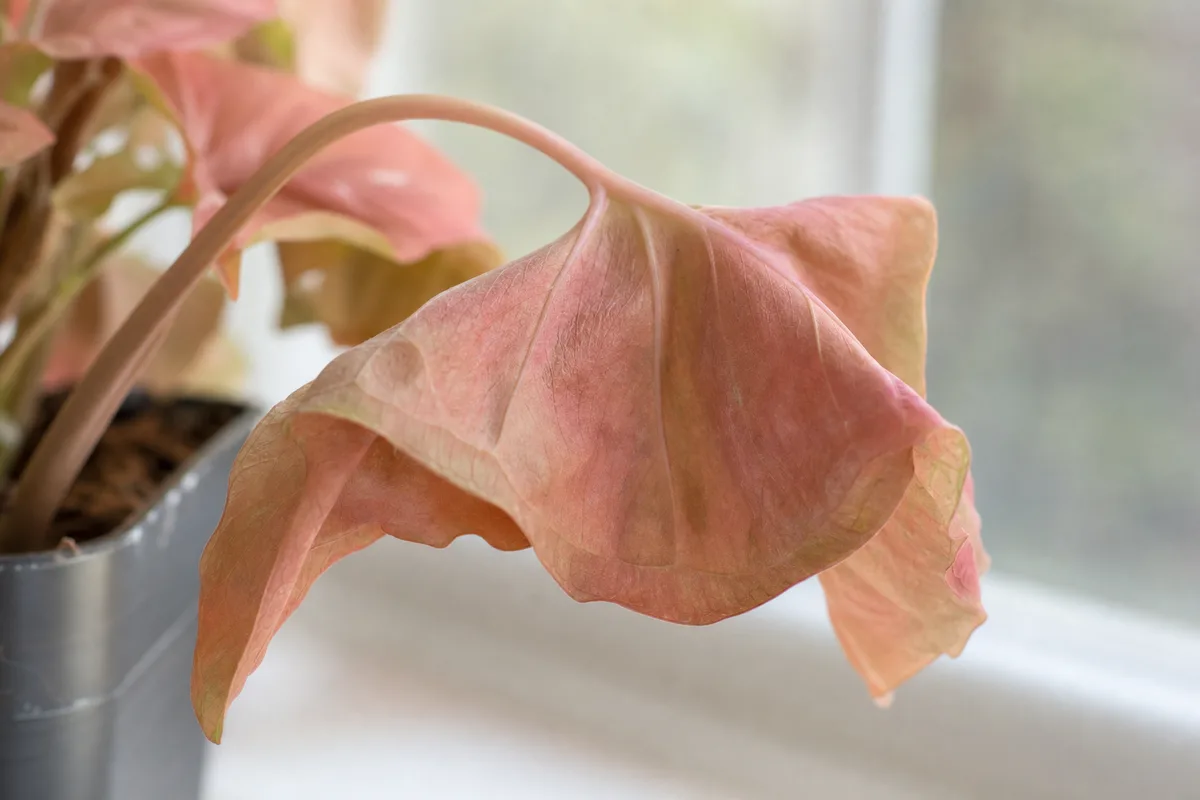
Wilting symptoms on Syngonium Pink - compare with healthy tissue on the same plant.
Wilt from root failure looks similar at first glance but comes with different soil clues. The pot stays heavy days after watering. Lower leaves yellow while the mix is still damp. A sour or musty smell from the drainage hole suggests anaerobic conditions in the root zone. Stem bases may feel soft when you pinch them gently near the soil line.
Temporary afternoon wilt can happen after a sudden move to stronger light or a heat spike near a radiator. In that case stems stay firm, soil moisture reads normal, and leaves often perk overnight once temperatures drop.
Why Syngonium Pink wilts
Syngonium podophyllum is a tropical aroid with succulent stems and thin foliage that does not store much water. In Syngonium Pink light guide, the plant uses moisture quickly through those soft leaves. Miss a watering cycle and turgor drops within a day or two-especially in small pots or during warm, dry weather.
Overwatering is equally common and more dangerous. Overwatering is among the most common causes of houseplant decline. Aroid roots need oxygen as well as moisture. Mix that stays wet in low light suffocates roots, and decayed roots cannot transport water even when the soil feels saturated. That is the classic wilt paradox: limp leaves above soggy soil.
Pink cultivars add a visual clue. Chronic stress from wet roots or weak light often dulls pink on the newest leaves before older foliage yellows. Faded color alongside wilt suggests the plant is struggling to maintain normal growth, not just having a single dry day.
Other triggers matter but are secondary. Recent Syngonium Pink repotting guide can cause short-term wilt while adventitious roots reattach. Cold drafts below comfortable room range slow water uptake. Spider mites or mealybugs feeding on sap can weaken turgor when infestations are heavy, though you would usually see stippling, webbing, or cottony patches as well.
How to confirm the cause
Work through these checks in order. Each step narrows the cause before you change care.
- Pot weight - Lift the pot after watering when the plant is healthy so you know what “properly watered” feels like. A wilted plant in a pot that feels unusually light is leaning dry.
- Soil moisture at depth - Stick a finger or wooden skewer into the top inch. Dusty dry means underwatering is likely. Cool, clinging wet mix means hold water and inspect roots.
- Stem firmness - Pinch the base of a petiole. Firm green tissue with dry soil confirms thirst. Soft, discolored tissue with wet soil suggests rot.
- New growth color - Check the pinkest leaf at the tip. Dull green or pale salmon on new leaves while soil stays wet fits chronic overwatering or low light slowing evaporation.
- Drainage history - Did water sit in the saucer for hours? Is the plant in a cachepot with no exit for runoff? Trapped water keeps roots wet and mimics overwatering.
- Recent changes - Repotting within the last two weeks, a new window seat, or a heating vent turned on can explain temporary wilt without root disease.
If dry soil and a light pot confirm underwatering, you can rehydrate. If wet soil and soft stems confirm root stress, unpotting is the next step-not more water.
First fix for Syngonium Pink
For dry wilt: Water thoroughly until excess runs from the drainage holes, then empty the saucer. If mix repels water and runs down the pot sides, bottom-soak for twenty to thirty minutes, then drain fully. Wait four to six hours and check whether petioles stiffen.
For wet wilt: Stop watering immediately. Move the plant to bright indirect light with good airflow so the mix can begin drying. If stems are soft or soil smells sour, unpot, rinse away wet mix, trim brown or mushy roots with clean scissors, and let the root ball air-dry for several hours before repotting into fresh, chunky aroid mix.
Do not fertilize, mist heavily, or repot on speculation alone. One clear action based on soil moisture beats stacking treatments on a stressed plant.
Step-by-step recovery
After the first fix, follow the path that matches your diagnosis.
Recovering from underwatering
- Soak until the entire root ball is evenly moist, not just the surface.
- Place the plant back in bright indirect light-not direct sun, which can scorch recovering leaves.
- Resume the normal dry-down rhythm: water when the top inch feels dry.
- Trim leaves that stay crispy or fully collapsed after forty-eight hours; they will not green up again.
- Watch for new pink-tinged leaves within two to three weeks as a sign roots are functioning.
Recovering from overwatering and root rot
- Withhold water until you have inspected roots if yellowing or odor is present.
- Remove the plant from its pot and shake off saturated mix.
- Cut away roots that are black, mushy, or smell rotten. Keep firm white or tan roots.
- Optionally dust cut surfaces with cinnamon or let cuts callus briefly-avoid sealing wet tissue in fresh mix.
- Repot into well-draining mix with perlite or bark. Use a pot only slightly larger than the root mass.
- Water lightly once after repotting, then let the top inch dry before the next soak.
- Expect some older leaves to yellow and drop as the plant reallocates energy to surviving roots.
Recovering from heat or repot shock
- Move away from heat sources, cold drafts, and direct sun.
- Maintain even moisture without keeping mix soggy.
- Give one to two weeks for roots to settle before changing pot size or fertilizer again.
Recovery timeline
Mild dry wilt often improves within hours of a proper soak. Moderate dehydration may take one to three days for petioles to stand fully upright. Severe underwatering with crispy leaf tissue can take two to four weeks for new growth to replace damaged foliage.
Wet-wilt recovery depends on how much root tissue survived. Plants with mostly firm roots may show new leaves in three to six weeks after repotting. Plants with extensive rot may decline for several weeks before stabilizing-or may not recover if the crown softens.
Judge progress by new growth and root firmness, not by old wilted leaves. Damaged blades rarely return to their former shape even when the plant is healthy again.
Lookalike symptoms
Wilting vs drooping: On Syngonium Pink the terms overlap. Drooping often describes gradual sag from chronic underwatering or low humidity. Wilting describes a sharper loss of firmness, sometimes reversible within hours. The diagnostic path is the same-check soil moisture first.
Wilting vs yellow leaves: Yellowing alone can precede wilt on overwatered plants. If leaves are yellow but still firm, fix watering before collapse spreads. See yellow-leaves guidance if color change is the main issue and stems are still stiff.
Wilting vs leggy growth: Leggy, pale stems in dim corners rarely wilt suddenly; they stretch over weeks. If a previously compact Pink Syngonium wilts in low light with wet soil, the problem is likely waterlogged roots, not light alone-though better light helps the mix dry.
Mistakes to avoid
- Watering without checking soil because wilt “always means thirst.”
- Leaving the pot in a full saucer after every watering.
- Moving a wilted plant into harsh direct sun to ” perk it up.”
- Repotting into a much larger pot, which keeps mix wet longer.
- Fertilizing a wilted plant hoping to stimulate recovery.
- Pruning heavily before the root cause is fixed, which adds stress.
- Ignoring sour-smelling soil because leaves still look partially green.
Syngonium Pink care cross-check
Wilting often traces back to a mismatch between Syngonium Pink overview’s normal rhythm and your room conditions.
- Light: Bright indirect light helps the pot dry at a steady pace. Dim winter rooms slow water use-extend the interval between checks.
- Water: Water when the top inch dries. Syngonium Pink dislikes bone-dry spells and chronic sogginess equally.
- Mix: Use well-draining potting mix amended with perlite or bark so roots get air between waterings.
- Humidity: Moderate humidity around fifty to sixty percent supports leaf texture but does not replace correct watering.
- Temperature: Keep the plant in its comfort range and away from cold windowsills or hot appliance exhaust.
When handling cut roots or sap during inspection, remember that arrowhead vine contains calcium oxalate crystals toxic to pets-keep pruned tissue out of reach and wash hands after contact.
How to prevent wilting next time
Build a simple check habit instead of a calendar schedule. Lift the pot weekly, note how fast the top inch dries in your light conditions, and adjust seasonally. In summer you may water more often; in winter, less-especially if the plant sits farther from windows.
Use pots with drainage holes and empty saucers within thirty minutes of watering. If you use decorative outer pots, lift the nursery pot out to water, then return it only after dripping stops.
Acclimate to brighter spots over a week rather than one move, so transpiration does not spike before roots adjust. After repotting, keep care boring for two weeks: stable light, cautious watering, no fertilizer.
Scout leaf undersides monthly for spider mites and mealybugs, which can weaken plants enough to wilt under otherwise normal watering.
When to worry
Seek a more aggressive rescue if wilt persists more than seventy-two hours after correct rehydration, if more than half the roots are mushy on inspection, if the stem base turns black and soft, or if new growth stops entirely for a month after corrective care.
Plants with a firm crown and at least some healthy white roots are worth saving. Plants where the crown collapses or odor returns within days of repotting are unlikely to recover-propagate firm stem cuttings above the damage if tissue is still green.
When to use this page vs other Syngonium Pink guides
- Syngonium Pink watering guide - Use for routine moisture checks before assuming wilting is the main issue.
- Syngonium Pink problems hub - Browse all 2 common issues on this species.
- Yellow Leaves on Syngonium Pink - Different entry point when symptoms overlap with wilting.