Syngonium Pink Problems: Causes & Quick Fixes
Quick answer
Syngonium Pink is prone to 16 common issues - each link below is a plant-specific fix guide.
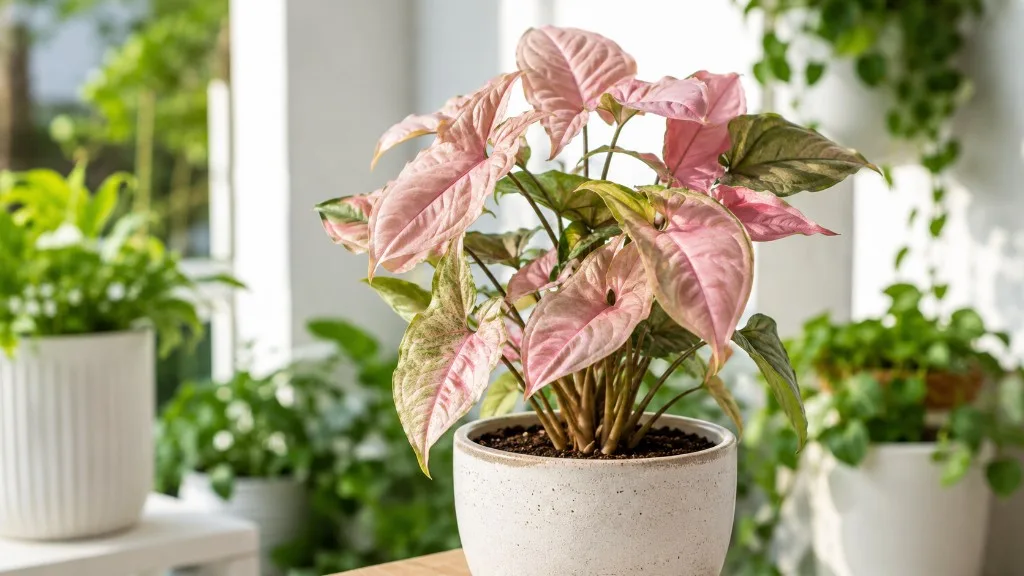
Syngonium Pink problems
Use the guides below to diagnose and fix common issues on Syngonium Pink. Each problem page explains why it happens on this species and what to do first.
Or use our problem diagnosis tool to narrow down symptoms.
Common problems on Syngonium Pink
Leggy Growth
MediumLikely cause: Low light.
Quick fix: Move to brighter indirect light.
Full fix guide →Yellow Leaves
MediumLikely cause: Overwatering.
Quick fix: Allow soil to dry between waterings.
Full fix guide →Aphids
MediumLikely cause: Aphids on Syngonium Pink gather on unfolding arrowhead leaves and soft stem tips, leaving sticky honeydew that can dull pale pink foliage. First step: isolate the plant and rinse leaf undersides and g
Quick fix: See plant-specific guide for step-by-step fixes.
Full fix guide →Brown Tips
MediumLikely cause: Brown tips on Syngonium Pink are almost always moisture or water-quality stress, not fungal disease. First step: stick a finger into the top inch of mix-if it is wet, wait; if dry, water thoroughly wi
Quick fix: See plant-specific guide for step-by-step fixes.
Full fix guide →Drooping Leaves
MediumLikely cause: Drooping leaves on Syngonium Pink mean soft arrowhead petioles have lost turgor-usually from dry mix or from soggy mix damaging aroid roots. First step: lift the pot and check moisture an inch deep be
Quick fix: See plant-specific guide for step-by-step fixes.
Full fix guide →Fungus Gnats
MediumLikely cause: Fungus gnats on Syngonium Pink mean the soil surface has stayed moist too long-often from watering before the top inch dries, especially in low light where pink color already fades. First step: let th
Quick fix: See plant-specific guide for step-by-step fixes.
Full fix guide →Low Humidity
MediumLikely cause: Dry heated air below 40% humidity can crisp pink arrowhead edges on Syngonium Pink even when watering is correct. First step: place a hygrometer near the foliage and run a humidifier until readings ho
Quick fix: See plant-specific guide for step-by-step fixes.
Full fix guide →Mealybugs
MediumLikely cause: Mealybugs on Syngonium Pink hide as white cottony clusters in leaf axils and along vining stems. Isolate the plant, dab visible bugs with 70% alcohol, then spray insecticidal soap on repeat intervals
Quick fix: See plant-specific guide for step-by-step fixes.
Full fix guide →Mold on Soil
MediumLikely cause: Fluffy white or gray mold on Syngonium Pink potting mix almost always means the surface stays wet too long-usually from overwatering, peaty mix, or low light-not a dangerous infection on healthy roots
Quick fix: See plant-specific guide for step-by-step fixes.
Full fix guide →Not Enough Light
MediumLikely cause: Not enough light makes Syngonium Pink stretch, lose its pink wash, and grow slowly. Move it to bright filtered light within one to two metres of an east or sheer-filtered south window-the pink color n
Quick fix: See plant-specific guide for step-by-step fixes.
Full fix guide →Overwatering
MediumLikely cause: Overwatering on Syngonium Pink shows as dull pink on new leaves, yellow lower foliage, and a heavy wet pot while mix stays damp for days. First step: stop watering, lift the pot, and probe moisture an
Quick fix: See plant-specific guide for step-by-step fixes.
Full fix guide →Root Rot
MediumLikely cause: Root rot on Syngonium Pink shows as limp arrowhead leaves on wet sour mix, dull salmon new growth, and brown mushy roots on inspection. Stop watering, unpot, trim decay to firm tissue, air-dry cuts, r
Quick fix: See plant-specific guide for step-by-step fixes.
Full fix guide →Slow Growth
MediumLikely cause: Slow growth on Syngonium Pink is usually too little light, cool roots, or wet soil in a dim room-not a disease. Move to brighter indirect light and confirm the top inch of soil dries before you water
Quick fix: See plant-specific guide for step-by-step fixes.
Full fix guide →Spider Mites
MediumLikely cause: Spider mites on Syngonium Pink show as pale stippling and fine webbing on arrowhead leaves, often near bright windows in dry winter air. First step: isolate the plant and rinse leaf undersides thoroug
Quick fix: See plant-specific guide for step-by-step fixes.
Full fix guide →Underwatering
MediumLikely cause: Underwatering on Syngonium Pink shows as washed-out pink on the newest arrowhead leaf, dramatic petiole droop, and a light pot when the top inch of mix has been dry too long. First step: water thoroug
Quick fix: See plant-specific guide for step-by-step fixes.
Full fix guide →Wilting
MediumLikely cause: Wilting on Syngonium Pink is almost always a water-pathway problem-either the mix is too dry or roots in wet soil can no longer take up moisture. Lift the pot and check soil an inch deep before you ad
Quick fix: See plant-specific guide for step-by-step fixes.
Full fix guide →