Underwatering on Syngonium Pink: Causes, Checks & Fixes
Quick answer
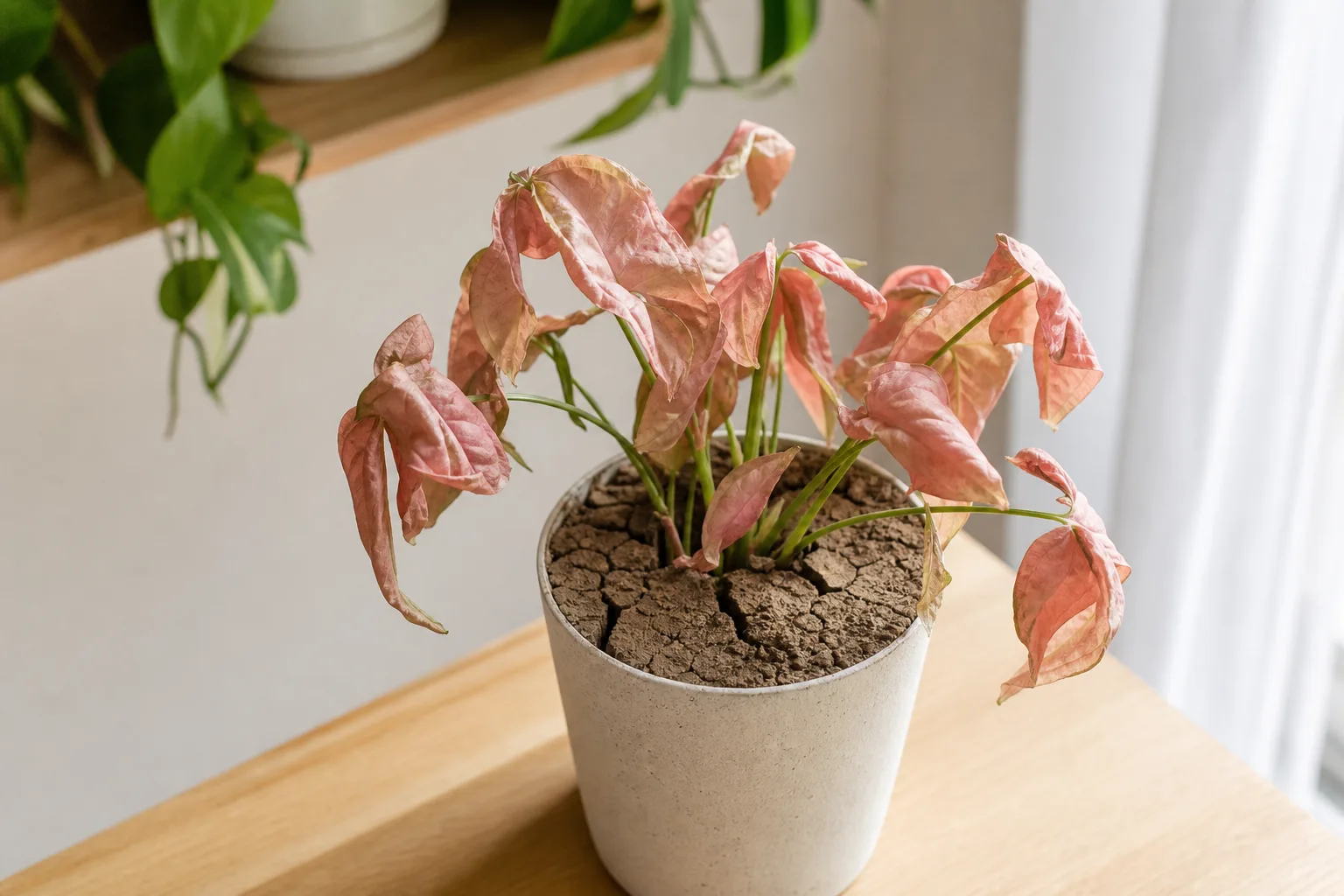
Underwatering on Syngonium Pink shows as washed-out pink on the newest arrowhead leaf, dramatic petiole droop, and a light pot when the top inch of mix has been dry too long. First step: water thoroughly once until excess drains, then resume your normal dry-down rhythm per our watering guide.
Underwatering on Syngonium Pink: Causes, Checks & Fixes
This guide covers underwatering on Syngonium Pink. See also the general Underwatering guide, watering, and light pages for this plant.
Underwatering on Syngonium Pink: Causes, Checks & Fixes
Quick answer
The first drought signal on Pink Syngonium is often subtle: the blush on the newest unfurling arrowhead leaf looks washed out or salmon-dull while petioles still hold their angle. Wait another day without water and the whole plant collapses-long stems hang straight down and the pot feels feather-light-even though tissue at the stem base is still firm. That pattern fits Syngonium podophyllum ‘Pink’ (trade names include Pink Allusion and Pink Perfection), a thin-leaved aroid that stores little moisture in its stems and depends on roots in consistently available-but not soggy-soil.
First step: water thoroughly once until water runs from drainage holes, discard saucer water, and wait. Leaves wilted from dryness usually perk within a few hours. If the pot was heavy and wet before you watered, stop-you are likely dealing with overwatering or root rot instead.
Underwatering vs. wilting vs. drooping on this cultivar: This page is for dry mix + light pot + firm stems-drought stress, hydrophobic rewetting, and pink-blush fade on new growth. Wilting covers the wet-soil paradox (limp leaves above damp, heavy mix, sour smell, rapid yellowing). Drooping leaves covers gradual petiole sag from thirst, heat, or low humidity when the main question is droop pattern-not bone-dry mix.
Dry pot or wet pot? Quick decision
| Signal | Pot weight | Top 1 in. moisture | Stem base | First action |
|---|---|---|---|---|
| Underwatering | Light | Dry, dusty | Firm, green | Deep soak; see recovery steps below |
| Overwatering | Heavy | Damp–wet | Firm to slightly soft | Pause water; see overwatering guide |
| Root rot | Heavy | Wet, sour smell | Soft, mushy | Unpot, trim; see root-rot guide |
| Heat wilt (temporary) | Normal | Moist, not dry | Firm | Wait 24 h; do not soak if mix is already wet |
Dry-down windows in this guide (for example two to four days in a bright summer window, three to seven days as a target rhythm) are home-climate heuristics-not fixed rules. Your pot size, mix, and room decide the real interval; use our watering guide for season rhythm.
What underwatering looks like on Syngonium Pink
Drought stress on this cultivar has a recognizable progression if you compare against healthy pink new growth from the last few weeks.
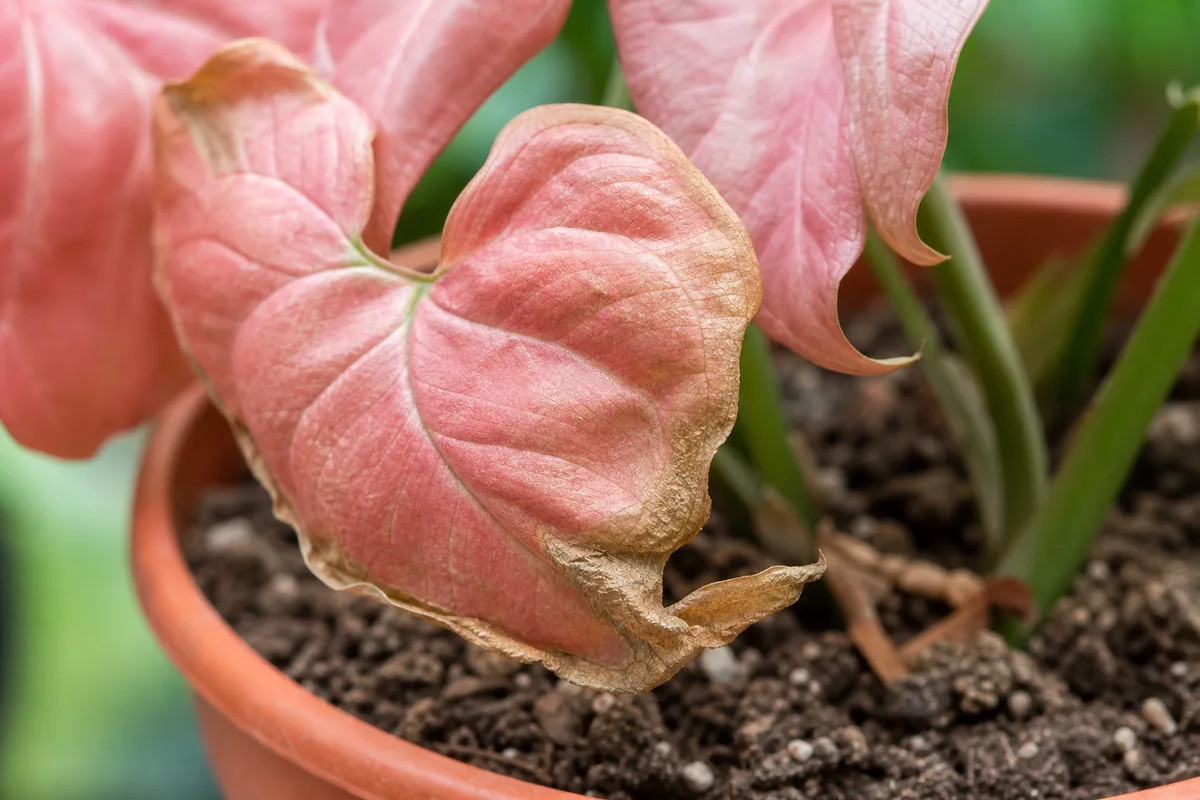
Underwatering symptoms on Syngonium Pink - compare with healthy tissue on the same plant.
Early signs-easy to miss:
- Pink or salmon blush on the newest leaf looks dull or washed out before petioles droop dramatically
- Petioles on the top growth hang first; lower leaves may still look acceptable
- Pot feels noticeably lighter when lifted
- Top inch of mix is dusty dry; a finger pushed deeper meets no cool moisture
As dryness continues:
- Soft arrowhead leaves fold inward and the whole plant can look collapsed by afternoon
- Oldest leaves develop crispy brown tips or edges-dead tissue that will not green up again
- Lower leaves may turn yellow and drop after repeated dry cycles as the plant sheds foliage to reduce water loss
- New growth slows or stalls; emerging leaves may open smaller than usual
- Soil pulls away from the pot wall, leaving gaps where water runs down the sides instead of soaking roots
What underwatering does not look like:
- Stems softening at the base or a sour smell from wet mix
- Yellow leaves on a heavy, cool pot that has stayed damp for days
- Mushy black tissue on stems or roots
Those patterns point to too much water, not too little. Syngonium Pink wilts from both causes-which is why the pot-weight table above matters before you react.
Pink cultivar vs. green syngonium in the same window
In identical Syngonium Pink light guide, pink-foliage cultivars often show drought sooner than all-green forms. Variegated and pink segments have less chlorophyll per leaf area, and growers frequently place Pink Syngonium closer to windows to keep color sharp-both factors increase transpiration and shorten the dry-down window. A green Syngonium podophyllum tucked six inches farther from the glass may need water two days after a pink pot feels light. Track each plant’s weight separately; do not assume one schedule fits the shelf.
Why Syngonium Pink gets underwatered
Pink Syngonium is often sold as an easy beginner plant, which leads growers to treat it like it can skip water for weeks. Syngoniums visibly droop when thirsty and stand tall again after watering-but allowing the plant to droop for too long or too many times leads to yellowing or browning of the oldest lower leaves. One dramatic wilt is a warning; repeated drought damages fine roots and leaf edges permanently.
Several habits push Pink Syngonium into drought stress:
Calendar watering in winter, then forgetting in summer. Growth and water use rise with longer days and warmer rooms. A schedule that worked in January will leave the pot dry by midweek in June. In dim winter rooms the opposite trap appears: you correctly water less often, then stop checking entirely-assuming slow dry-down means the plant needs nothing for two weeks. Reduced winter watering is correct care when the top inch stays moist longer; it is not permission to ignore a pot that has gone bone dry.
Bright light without matching checks. Stronger bright indirect light keeps pink color sharper but also pulls water from thin juvenile leaves faster. Pink cultivars in good light dry out quicker than green forms tucked in shade.
Hydrophobic old mix. Peat-heavy potting soil that has dried completely can repel water. You pour from the top, water channels through gaps, and the center of the root ball stays dry while leaves wilt.
Root-bound or small pots. A crowded root ball holds less water and dries unevenly. The surface may look briefly damp after a quick sip while the core is still thirsty.
Travel or missed checks. Syngonium Pink wilts dramatically when dry, which makes a single missed watering very visible compared with slower-draining plants.
Unlike succulents, Syngonium stores little moisture in its stems. It depends on roots in mix that cycles wet-then-dry-not permanently damp, not desert-dry for weeks.
How to confirm underwatering
Work through these checks in order. You are looking for dry roots with firm stems-not damaged roots in wet soil.
- Pot weight - Lift the pot with dry hands. A light pot that has not been watered recently strongly suggests drought. A heavy pot after several dry-looking days may mean water is trapped at the bottom or mix is compacted.
- Moisture at root depth - Push a finger into the top inch. For Syngonium Pink, that dry-down point matches UF/IFAS guidance to allow the potting surface to dry slightly before irrigating. If it is dry an inch down and the pot is light, underwatering is likely.
- Stem firmness - Pinch a lower petiole base. Firm green tissue supports a dry-soil diagnosis. Soft, discolored bases suggest rot even if leaves look wilted.
- Watering test - If steps 1–3 point to dryness, give one thorough soak. Check the plant again in four to six hours, then the next morning. Perked leaves confirm underwatering. Continued limp leaves on wet soil mean inspect roots-see wilting on Syngonium Pink.
- Hydrophobic check - After watering, wait ten minutes and probe an inch deep again. If the surface wettened but the core is still dry, the mix is repelling water and needs the bottom-soak sequence below.
If soil is already wet and stems are softening, do not add more water. Switch to the overwatering or root-rot path instead.
First fix for Syngonium Pink
Water thoroughly once until excess runs from drainage holes, then empty the saucer.
Use room-temperature water and pour slowly across the surface so the whole root zone gets a chance to absorb moisture-not a quick splash that runs down the pot sides. Let the pot drain fully before returning it to a cachepot or saucer. Syngonium Pink usually responds within hours when roots are intact; you should see petioles lift and leaves regain their normal arrowhead shape by the next day.
That single deep soak is the first fix. Do not stack Syngonium Pink repotting guide, fertilizer, or heavy pruning on the same day unless the mix is clearly failing or roots are exposed.
Step-by-step recovery when soil won’t absorb water
If water ran straight through or the root ball stayed dry inside, the mix has gone hydrophobic. Use this sequence before returning to normal top watering:
- Bottom-water 20–45 minutes - Set the pot in a basin of room-temperature water so the mix wicks moisture up from drainage holes. Remove when the top inch feels evenly moist, not just surface-damp. Duration varies by pot diameter-a 4-inch nursery pot may saturate in 20 minutes; an 8-inch ceramic pot may need the full 45.
- Repeat if needed - Very dry root balls sometimes need two sessions on consecutive days before the center holds moisture.
- Poke and slow-soak - For severely shrunken mix, use a chopstick to poke a few shallow holes, then water slowly from the top so water enters the core instead of sliding past it.
- Resume dry-down rhythm - After the root ball is evenly moist, wait until the top inch dries before watering again per our watering guide. One recovery soak does not mean daily sips forever.
If leaves still wilt after two thorough rewets and the pot feels properly heavy, unpot and inspect roots. Fine root dieback from long drought can limit uptake even after the mix is wet again.
Documented recovery pattern (editorial observation)
In a July 2025 home setup-a 15 cm (6 in.) Pink Syngonium in peat-heavy nursery mix on a south-facing windowsill with sheer curtain-the top inch went dusty dry after six days away. The newest leaf showed dull salmon-pink instead of the usual blush; petioles hung by afternoon while stem bases stayed firm. One 35-minute bottom-soak until the top inch felt cool and evenly moist, then saucer emptied, produced visible petiole lift within four hours. Two oldest leaves kept crispy tips; the next unfurling leaf regained stronger pink after roughly ten days under stable bright indirect light. This is one observed case, not a cultivar trial-your timeline will vary with pot depth, mix, and root health.
Lookalike symptoms to rule out
| Symptom cluster | Soil / pot | Stems | Likely cause | Where to go |
|---|---|---|---|---|
| Limp leaves, dull pink on new growth | Dry, light pot | Firm | Underwatering | This page |
| Limp leaves, yellow lower foliage | Wet, heavy, sour | Soft base | Root rot | Root rot |
| Limp leaves, no sour smell | Wet, heavy | Firm | Overwatering stress | Overwatering |
| Afternoon limp, perks overnight | Moist, normal weight | Firm | Heat or light after move | Wait; check before soaking |
| Crispy tips, mild sag, no light pot | Moist at 1 in. | Firm | Dry air | Low humidity |
| Yellow only on oldest leaves | Moist, perky new growth | Firm | Normal age | Monitor; not drought |
Overwatering and root rot - Wilt with wet soil, yellow lower leaves, sour odor, and soft stem bases. Adding water to an already saturated Syngonium Pink makes root damage worse.
Heat or light stress after a move - Temporary wilt on the first hot afternoon after shifting to a brighter window can mimic drought. Check soil moisture before watering; if the mix is already moist and stems are firm, give the plant a day to adjust rather than soaking again.
Low humidity alone - Crispy tips without dramatic whole-plant wilt and without a light dry pot often mean dry air rather than dry soil. Confirm the pot is light and the top inch is dry before treating as underwatering.
Normal older-leaf decline - Syngonium Pink sheds lower leaves over time. Yellowing only on the oldest foliage, with moist soil and perky new growth, may be age-not drought.
What not to do
- Do not give shallow daily sips - Frequent small amounts keep only the surface wet and encourage weak surface roots. Syngonium Pink needs a full soak when the top inch dries, then a real dry-down period.
- Do not assume every droop means thirst - This species wilts from dry soil and from failing roots in wet soil. Always check before watering.
- Do not fertilize a dry plant - Rehydrate first. Fertilizer on drought-stressed roots can burn tender tissue.
- Do not overcompensate after one dry spell - Watering every day to “make up” for a missed week keeps roots soggy and invites rot. One thorough soak, then return to checking the top inch.
- Do not mist instead of watering roots - Misting leaves does not replace soil moisture. Roots need water in the mix, not humidity on the surface alone.
- Do not leave a decorative cachepot full after emergency soaking - Runoff trapped at the bottom wicks back up and mimics overwatering within days.
Recovery timeline and what to expect
Timelines below are typical home-climate heuristics, not guarantees-cool rooms, dense mix, and damaged roots extend every phase.
Within hours: Petioles on leaves wilted from a single dry spell usually lift after one deep watering. Pink color on stressed new leaves may still look dull for a day or two.
One to two weeks: New leaves should open at normal size with stronger pink if light and watering rhythm are stable. Crispy brown edges on older leaves remain-they are permanent damage.
After repeated dry cycles: Lower leaf drop and stalled growth can persist until the plant rebuilds fine roots. Judge recovery by firm new leaves and a pot that holds moisture evenly after watering, not by old blemished foliage.
When improvement stops: If leaves stay limp after two proper soaks, soil smells sour, or stems soften, roots may be damaged from prior wet-dry swings or long drought. Unpot, trim mushy roots, repot into fresh chunky mix per our soil guide, and resume dry-down watering. Escalate via wilting and root-rot guides if wet-soil signs appear.
How to prevent underwatering next time
Match checks to how fast your pot dries in your home-not a fixed weekly date.
- Use the top-inch rule - Water when the top inch of mix is dry, then soak until runoff. That rhythm fits Syngonium Pink in most bright indoor setups; full season context lives in our watering guide.
- Adjust for season and placement - In summer near windows, many growers check every two to four days (heuristic-your pot may differ). In dim winter rooms, stretch intervals when the top inch stays cool and moist longer-but still lift the pot weekly so a silent dry spell does not run two weeks.
- Refresh hydrophobic mix - If water repeatedly channels through dry soil, repot into fresh well-draining potting mix with perlite or bark when the plant is stable-not on the same day as emergency rewetting unless the old mix is clearly dead.
- Right-size the pot - A pot that dries in one day may be too small for a vining Syngonium Pink; one that stays wet for two weeks may be too large or too dense. Aim for a dry-down cycle of roughly three to seven days in your normal light (target range, not a rule).
- Track weight, not memory - Lift the pot when you pass it. A sudden lightness is a faster signal than trying to recall the last watering date.
Pet safety during bottom-watering and recovery
Keep Syngonium Pink out of reach of pets and children when you are moving pots for bottom-watering or repotting-the sap can irritate skin and the arrowhead plant is toxic to cats and dogs if chewed because of calcium oxalate crystals. The drought itself does not change toxicity. If a pet chews any part of the plant during recovery, contact your veterinarian or the ASPCA Animal Poison Control Center at (888) 426-4435.
Conclusion
Underwatering on Syngonium Pink is usually fixable in one session when you catch dull pink on new growth or a light dry pot before fine roots die back. Confirm dryness, soak or bottom-water until the root ball actually holds moisture, and return to the top-inch rhythm in our watering guide. If perk-up fails with wet soil or soft stems, the problem was never thirst-pivot to wilting, overwatering, or root rot before the pink arrowhead loses more ground.
When to use this page vs other Syngonium Pink guides
- Syngonium Pink watering guide - Use for routine moisture checks before assuming underwatering is the main issue.
- Syngonium Pink problems hub - Browse all 2 common issues on this species.
- Yellow Leaves on Syngonium Pink - Different entry point when symptoms overlap with underwatering.