Overwatering on Syngonium Pink: Causes, Checks & Fixes
Quick answer
Overwatering on Syngonium Pink shows as dull pink on new leaves, yellow lower foliage, and a heavy wet pot while mix stays damp for days. First step: stop watering, lift the pot, and probe moisture an inch deep before you add more water.
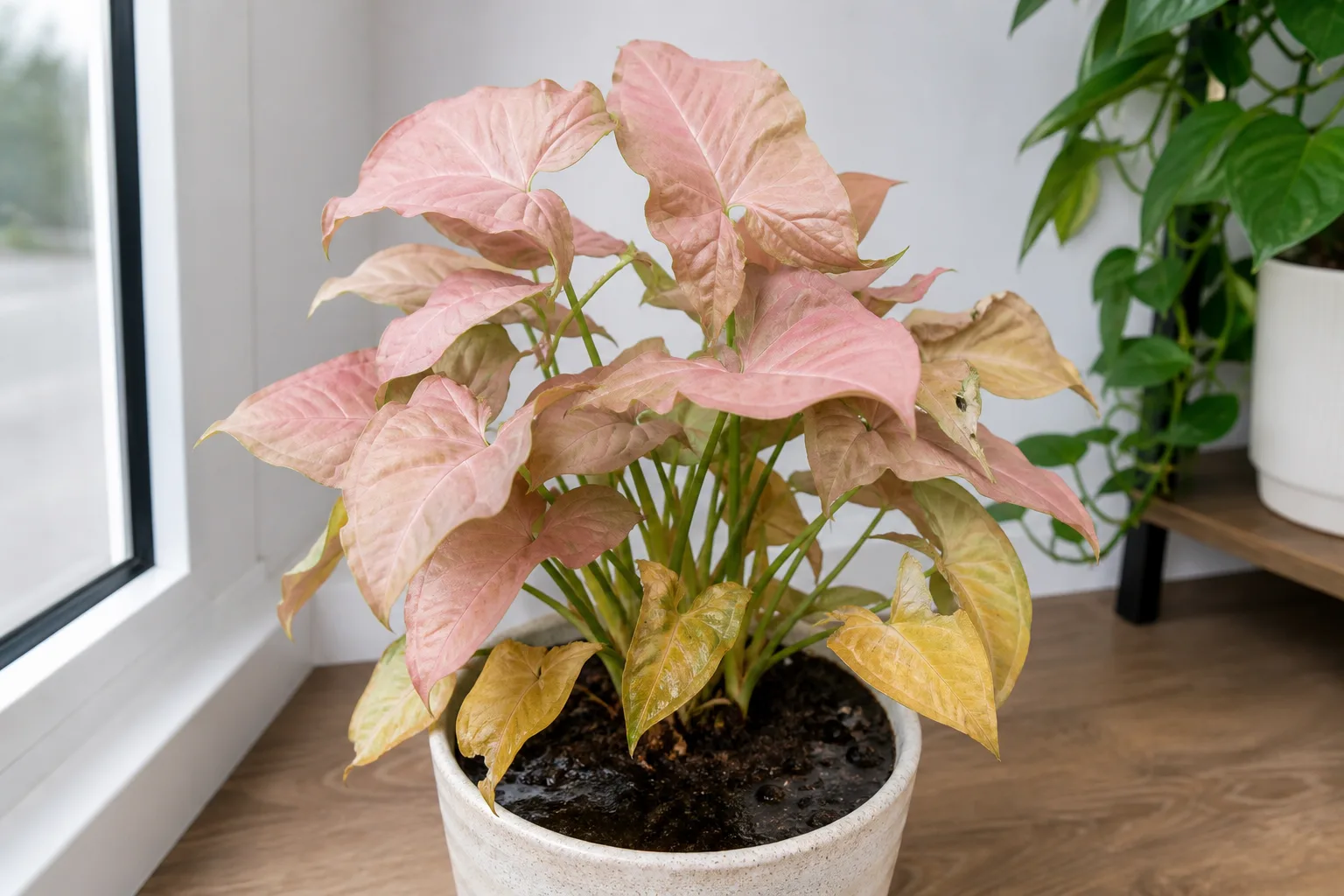
Overwatering on Syngonium Pink: Causes, Checks & Fixes
This guide covers overwatering on Syngonium Pink. See also the general Overwatering guide, watering, and light pages for this plant.
Overwatering on Syngonium Pink: Causes, Checks & Fixes
Quick answer
On Syngonium podophyllum ‘Pink’, overwatering often announces itself before full yellowing: new arrowhead leaves open dull salmon or washed-out pink while the mix below stays damp and the pot feels heavy for days-chronic wet soil stresses foliage and can dull variegation quality as growth stalls. Soft juvenile foliage looks thirsty, which pushes many growers to water again on already-wet roots-the fastest way to suffocate an aroid root system that needs oxygen between drinks.
First step: stop watering and check soil an inch deep before you change anything else.
| What you find | Likely cause | First action |
|---|---|---|
| Heavy, cool pot; mix damp an inch down; limp leaves | Overwatering / early root stress | Pause water; improve light and airflow; inspect roots if yellowing spreads |
| Light, dry pot; dusty top inch; firm stems | Underwatering | One thorough soak, then resume dry-down rhythm - see underwatering on Syngonium Pink |
| Wet soil, sour smell, soft stem base, rapid yellowing | Advanced root rot | Unpot, trim mushy roots, repot dry - see root rot on Syngonium Pink |
Overwatering vs. other Pink Syngonium pages: This URL covers chronic wet mix and early root stress-dull pink on new growth, heavy pots, and fungus gnats. If your main symptom is sudden limp leaves without knowing whether soil is wet or dry, start with wilting on Syngonium Pink for the full wet-vs-dry decision tree. If roots are already mushy and soil smells sour, go directly to root rot.
What overwatering looks like on Syngonium Pink
Overwatering on Pink Syngonium has a recognizable progression if you compare pot weight, soil moisture, and new leaf color together.
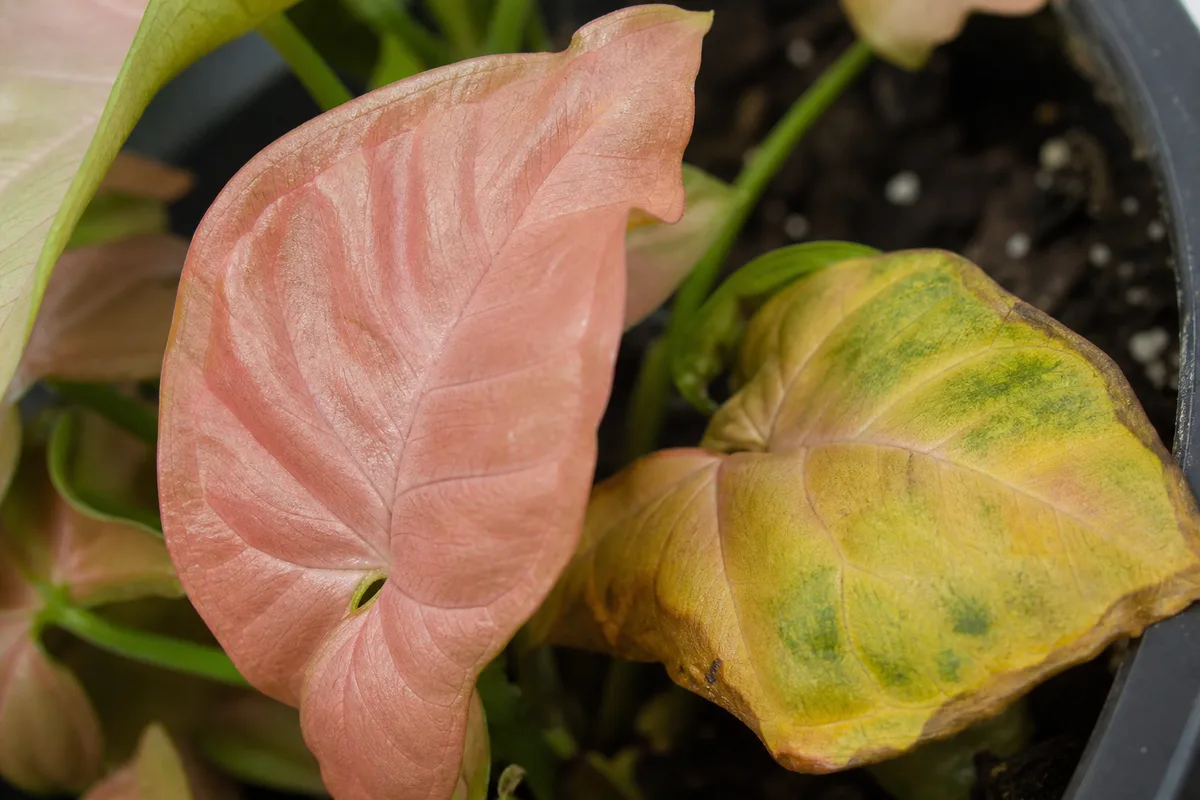
Overwatering symptoms on Syngonium Pink - compare with healthy tissue on the same plant.
Early signs:
- Pink blush on the newest leaves looks dull, pale green, or flat salmon compared with the last few weeks of growth
- Petioles hang soft even though the top inch of mix feels cool and damp
- Pot stays noticeably heavier than your “just watered” baseline for five or more days
- Lower leaves begin yellowing while soil has not dried down
As saturation continues:
- Mix smells sour or musty at the drainage hole
- Fungus gnats hover after watering-larvae thrive in chronically wet organic mix
- Yellowing spreads up the stem; oldest leaves drop first
- New growth stalls or opens smaller than usual
What overwatering does not look like:
- Light pot, dusty dry surface, leaves that perk within hours after one deep soak
- Crispy brown tips only, with firm stems and a pot that dried out days ago
- Single yellow leaf at the very base on an otherwise full plant with strong pink new growth-that pattern is often normal aging
Those dry-soil patterns point to thirst or low humidity, not saturated roots. Syngonium Pink wilts from both causes, which is why soil checks beat leaf appearance alone.
Why Syngonium Pink gets overwatered easily
Pink Syngonium is marketed as an easy beginner plant with soft, moisture-loving-looking leaves. That appearance hides how Syngonium Pink overview actually works: it is a tropical aroid with thick roots built for wet-then-dry cycles in loose forest litter-not permanent dampness in dense peat.
Several habits push Pink Syngonium into chronic wet soil:
- Calendar watering - Watering every Sunday regardless of dry-down keeps mix saturated in winter when growth slows and the pot uses water slowly.
- Thirsty-looking soft leaves - Juvenile arrowhead foliage droops when roots fail in wet mix, which looks identical to drought wilt. Growers add water to an already heavy pot and make root damage worse.
- Low light in winter - Dim corners slow transpiration so the same summer soak lasts days longer at the root zone. Overwatering is among the most common causes of houseplant decline because saturated soil excludes the oxygen aroid roots need.
- Cachepots and standing saucer water - Decorative outer pots without drainage trap runoff. Water sits around the nursery pot base and keeps roots wet even when the surface looks dry.
- Oversized or dense mix - A pot much larger than the root ball holds moisture at the core while the top inch dries first, tempting another premature watering.
Pink cultivars add a visual early warning: stressed new growth often loses pigment before lower leaves fully yellow, while green arrowhead forms may only show generic chlorosis at first.
Lookalike symptoms to rule out
| Problem | Key signals on Pink Syngonium | Pot / soil clue | Where to go next |
|---|---|---|---|
| Overwatering | Dull pink new leaves, soft yellow lower foliage, limp petioles on damp mix | Heavy wet pot 5+ days, sour smell, gnats | This page - pause water, inspect roots |
| Underwatering | Dramatic wilt, crispy edges, dull pink on dry plant | Light pot, dusty dry top inch | Underwatering guide - deep soak once |
| Root rot (advanced) | Rapid yellowing, collapsed new growth, soft stem base | Wet soil + sour odor + mushy roots on unpot | Root rot guide - trim and repot |
| Low light + slow dry-down | Long internodes, pale new leaves, mix wet a week after one watering | Heavy pot in dim corner without sour smell yet | Not enough light plus longer dry-down |
| Normal leaf drop | One yellow leaf at soil line, firm stems, healthy pink tips | Moisture normal, no odor | No rescue - watch next two new leaves |
| Repot shock | Mild wilt 3–7 days after Syngonium Pink repotting guide | Evenly moist new mix, firm stems | Hold steady light; avoid extra water |
How to confirm overwatering
Work through these checks in order before you repot or trim.
- Pot weight - Lift the pot with dry hands. Compare with how it felt right after your last thorough watering. A wilted or yellowing plant in a pot that still feels heavy and cool strongly suggests excess moisture, not thirst.
- Moisture at depth - Push a finger or wooden skewer into the top inch. Cool, clinging dampness means hold water. For Syngonium Pink, the usual watering trigger is when that inch is dry-details in our watering guide.
- New growth color - Inspect the pinkest leaf at the tip. Dull salmon or green-leaning new leaves while soil stays wet fit chronic overwatering better than a single pale leaf after shipping.
- Stem firmness - Pinch the base of a yellowing petiole and the main stem near soil. Firm green tissue with wet mix may still need an unpot if yellowing spreads; soft, discolored bases mean root failure is advancing.
- Smell and pests - Sour odor from the drainage hole or persistent fungus gnats after every soak confirm anaerobic conditions. See fungus gnats on Syngonium Pink when insects are your first clue.
- Root inspection (when steps 1–5 point to wet stress) - Gently slide the plant from its pot. Firm white or tan roots with only slight browning on the oldest tips may recover with drying alone. Brown, mushy, foul-smelling roots need trimming-escalate to root rot.
Roots in waterlogged soil cannot absorb the oxygen they need, so confirmation is about root-zone conditions, not leaf softness alone.
First fix for Syngonium Pink
Stop watering immediately and move the plant to Syngonium Pink light guide with good airflow so the mix can begin drying.
That single pause is the first fix-not repotting, fertilizer, or misting on day one. Bright filtered light speeds evaporation without scorching pink tissue. Tilt the pot slightly to check whether water pools in the saucer or cachepot; empty any standing water.
If stems are still firm, soil smells neutral, and only the top layer was kept too wet, drying the existing mix may be enough. Resume watering only when the top inch feels dry, then soak until runoff drains.
If yellowing spreads, soil smells sour, or stems soften, unpotting is the next step-not waiting another week to see if leaves recover on their own.
Step-by-step recovery when roots are damaged
Use this sequence when inspection shows mushy roots, sour mix, or soft stem bases. For plants with mostly firm roots, drying in place may suffice-do not repot on speculation alone.
- Unpot and rinse - Remove saturated mix gently under lukewarm water so you can see root color clearly.
- Trim damaged tissue - Cut away brown, black, or mushy roots with clean scissors until you reach firm white or tan tissue. Plants with partial rot may be salvaged by pruning out the rotted part.
- Air-dry cuts - Let trimmed roots and cut surfaces sit in open air for two to four hours so wet tissue is not sealed into fresh mix.
- Repot into chunky aroid mix - Use well-draining potting mix amended with perlite or bark. Size the pot to the remaining root mass, not the former foliage volume. Our soil guide covers mix structure for Pink Syngonium.
- One moderate soak after repot - Water lightly once so mix settles, then let the top inch approach dryness before the next drink.
- Withhold fertilizer - Do not feed until new firm leaves appear. Fertilizer on stressed roots adds salt burn risk.
- Watch fungus gnats - If larvae were present in old mix, let the surface dry between waterings and follow fungus gnat control if adults persist after the root zone stabilizes.
If the stem base above remaining roots is still firm, the plant can rebuild. If the crown collapses or odor returns within days of repotting, salvage firm stem cuttings for propagation before tissue rots through.
Recovery timeline and what to expect
First few days: Mix should lighten as water evaporates. Do not water during this dry-down unless you misdiagnosed and the pot is actually light with dusty dry soil.
One to two weeks: Yellow lower leaves may continue to drop as the plant sheds tissue it cannot support-old blemished blades will not re-green. Watch for the next emerging leaf: firmer petioles and stronger pink blush signal roots are working again.
Three to six weeks: Plants with mostly healthy roots often push one to two normal-sized new leaves with improved pink color after care stabilizes. Plants that needed heavy root trimming may take longer and shed more foliage before new growth appears.
When improvement stops: Limp leaves on wet soil after two weeks of corrected care, returning sour smell, or softening stem bases mean rot is still active-re-inspect roots rather than hoping leaves perk up on their own.
Judge recovery by new growth and root firmness, not by old yellow foliage. Stunted slow growth with yellowing leaves is a symptom of over-watering; reversing that pattern takes time once roots heal.
What not to do
- Do not water on a fixed weekly schedule year-round - Winter dry-down in a dim room can stretch to ten to fourteen days or longer; summer in a bright window may need checks every five to seven days.
- Do not mist leaves to fix wet roots - Surface humidity does not aerate a saturated root zone.
- Do not fertilize a stressed plant - Rehydrate roots on the correct schedule first.
- Do not repot into a much larger pot - Extra mix volume stays wet longer and invites repeat rot.
- Do not assume every droop means thirst - Wilt with wet soil means roots are failing, not dry.
- Do not ignore cachepot water - Lift the nursery pot out when watering; never let the outer pot hold standing runoff.
When inspecting roots or handling cut tissue, keep pruned material away from pets and children. Arrowhead vine is toxic to pets if chewed, and sap can irritate skin-wash hands after contact.
How to prevent overwatering next time
Build a check habit tied to your room, not a calendar date.
- Use the top-inch rule - UF/IFAS advises allowing the potting surface to dry slightly before irrigating. For Pink Syngonium in bright indoor light, that usually means every five to seven days in warm months and ten to fourteen days or longer in cool dim winter rooms-full rhythm in our Syngonium Pink watering guide.
- Track pot weight - Lift the pot when you pass it. Sudden heaviness days after a soak is a faster signal than memory.
- Match light to dry-down - Bright indirect light helps the mix dry predictably. Dim corners need longer intervals between soaks, not the same summer frequency.
- Use drainage and empty saucers - Water until runoff, then discard saucer water within thirty minutes. Cachepot users should never return a dripping nursery pot to a sealed outer shell.
- Choose airy mix - Chunky aroid mix with bark or perlite dries faster than straight peat and gives roots oxygen between drinks.
If chronic wet soil brought fungus gnats, fix moisture first-adult traps alone will not solve larvae in soggy mix.
When to worry
Treat overwatering as urgent when soil smells sour, stems soften at the base, or multiple leaves yellow within a few days while mix stays wet-especially in winter when the plant uses water slowly and damage can accelerate unnoticed.
Unpot immediately if you feel mushy tissue at the stem base or see black spreading from soil line upward. Firm crown with at least some white roots is worth saving; crown collapse with recurring odor after repotting is unlikely to recover in pot-propagate green stem cuttings above firm nodes if tissue allows.
Related Pink Syngonium problems
- Syngonium Pink watering - Top-inch checks, season rhythm, cachepot protocol
- Wilting on Syngonium Pink - Wet-soil vs. dry-soil wilt decision tree
- Root rot on Syngonium Pink - Full trim-and-repot when mushy roots confirmed
- Underwatering on Syngonium Pink - Light pot and deep-soak recovery
- Fungus gnats on Syngonium Pink - Chronic wet mix crossover
- Yellow leaves on Syngonium Pink - Multi-cause chlorosis hub
- Syngonium Pink soil - Chunky aroid mix for prevention
When to use this page vs other Syngonium Pink guides
- Syngonium Pink watering guide - Use for routine moisture checks before assuming overwatering is the main issue.
- Syngonium Pink problems hub - Browse all 2 common issues on this species.
- Yellow Leaves on Syngonium Pink - Different entry point when symptoms overlap with overwatering.